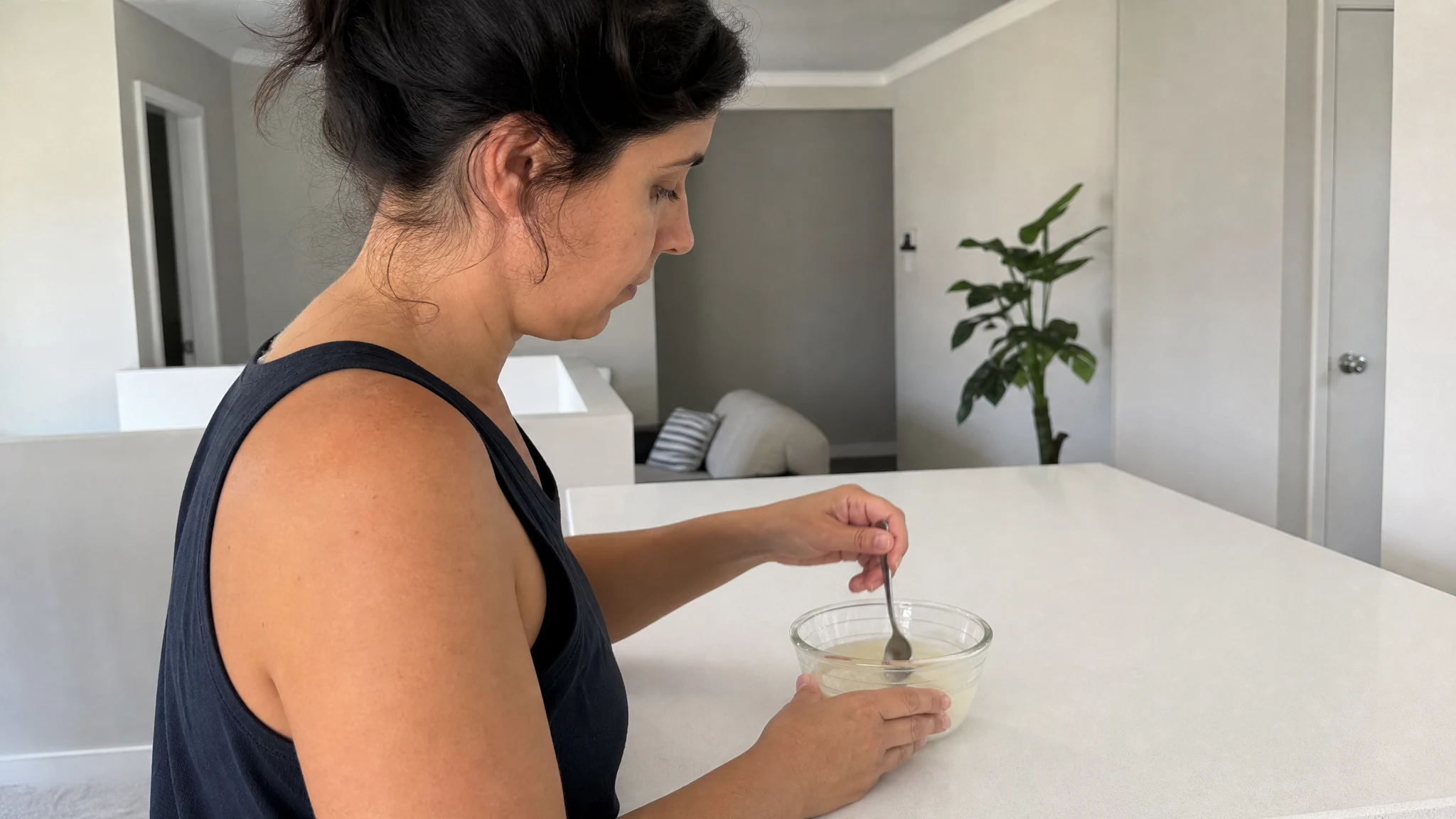
Frankincense Sugar Scrub: A Simple Dry Recipe
Sugar, carrier oil and a measured amount of frankincense: a body scrub formula by weight, with a 1% ceiling, a patch test and a dry-jar routine.
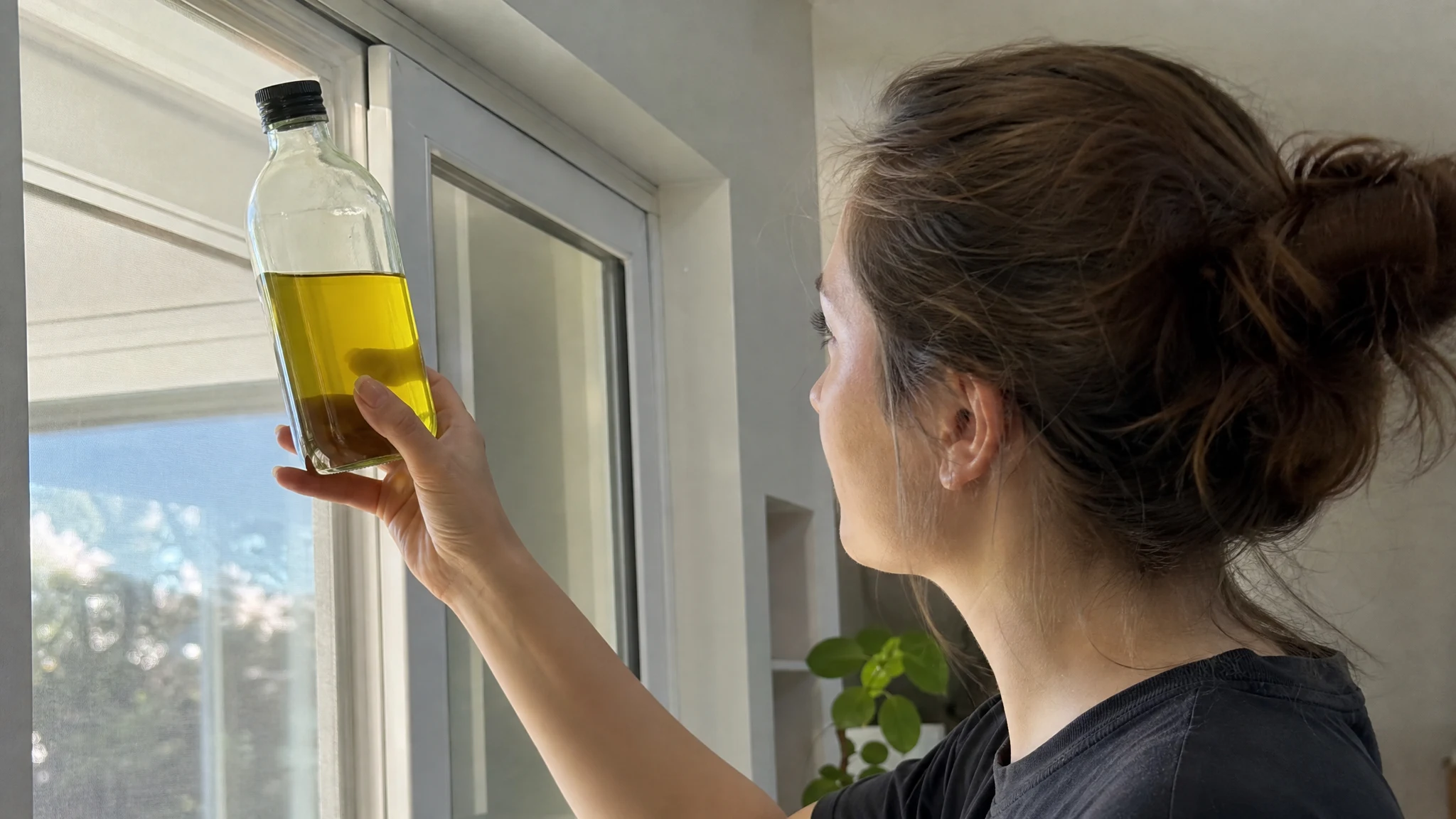
Frankincense Oil Quality: Four Checks Before You Buy
Smell and a Latin name only go so far. Four checks on species, grading claims, paperwork and written answers tell you what is really in the bottle.
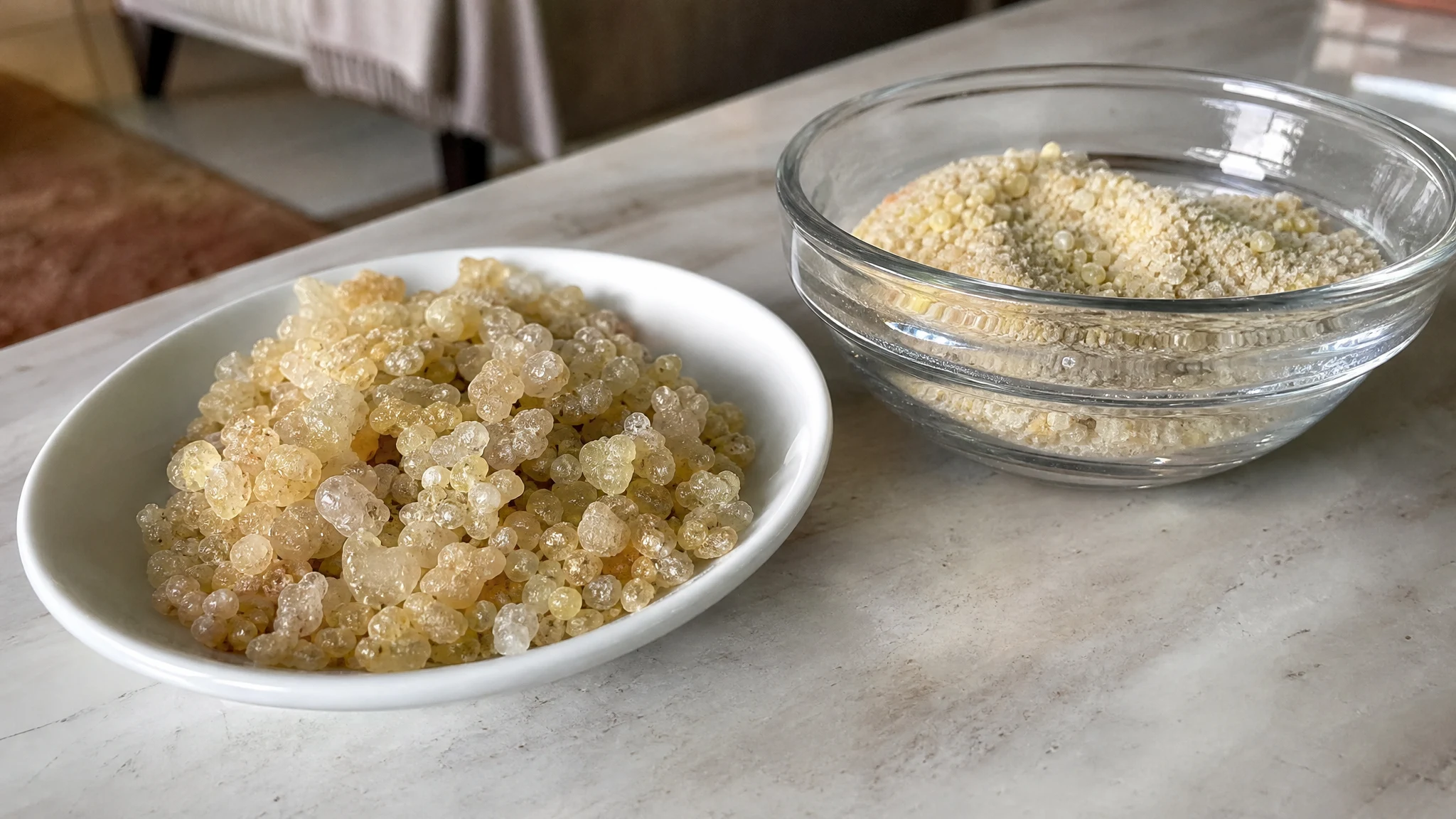
Frankincense Oil vs CO2 Extract: What's the Difference?
A CO2 extract can be an aromatic oil, a nearly scentless incensole fraction or an odorless resin. Here is how each differs from steam-distilled oil.
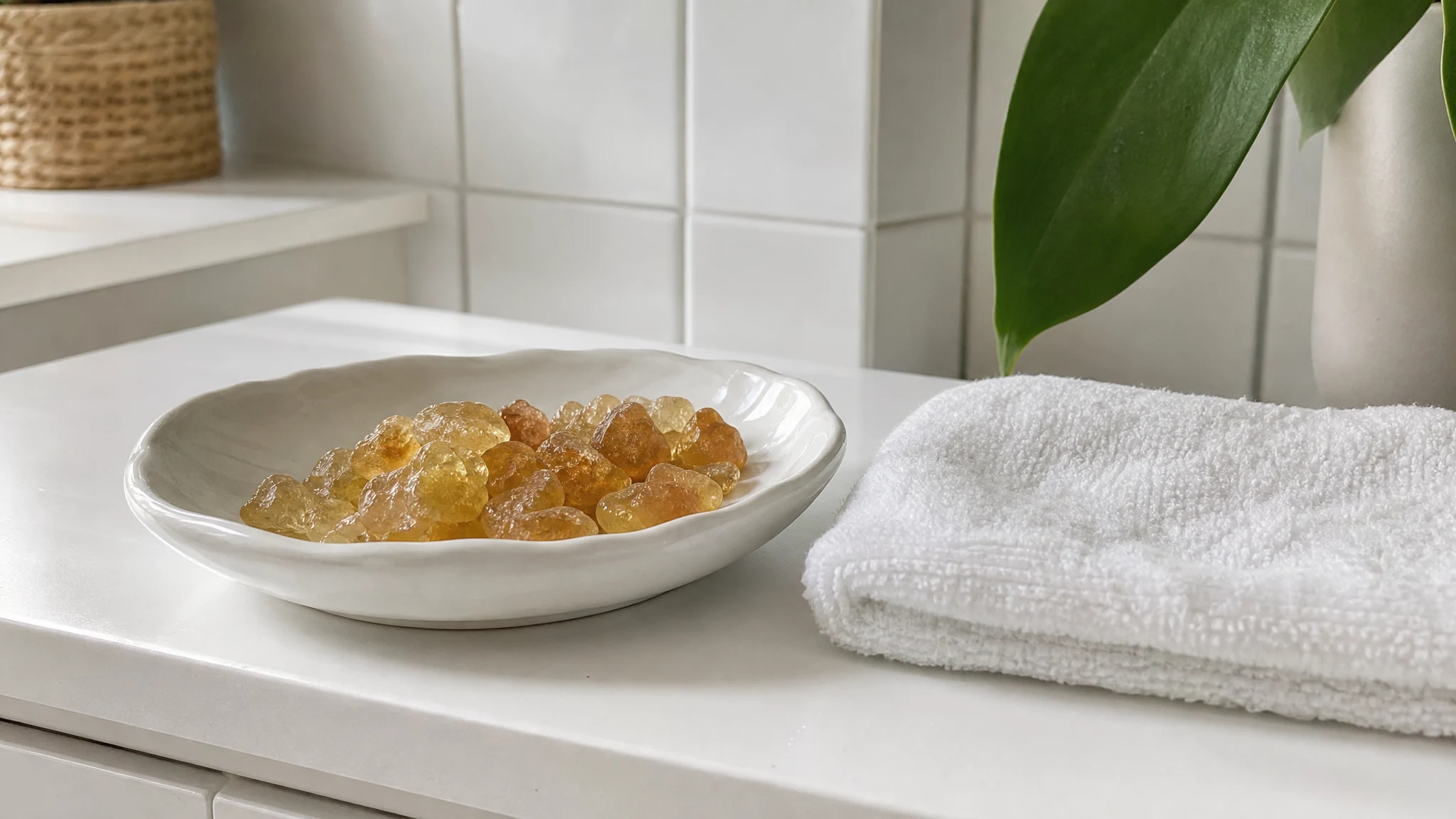
Frankincense Oil and Dark Circles: Why Eyes Are Off Limits
Dilution tables stop short of the eyelid, and dark circles have many causes. Why we keep frankincense oil clear of the eyes and what to try instead.
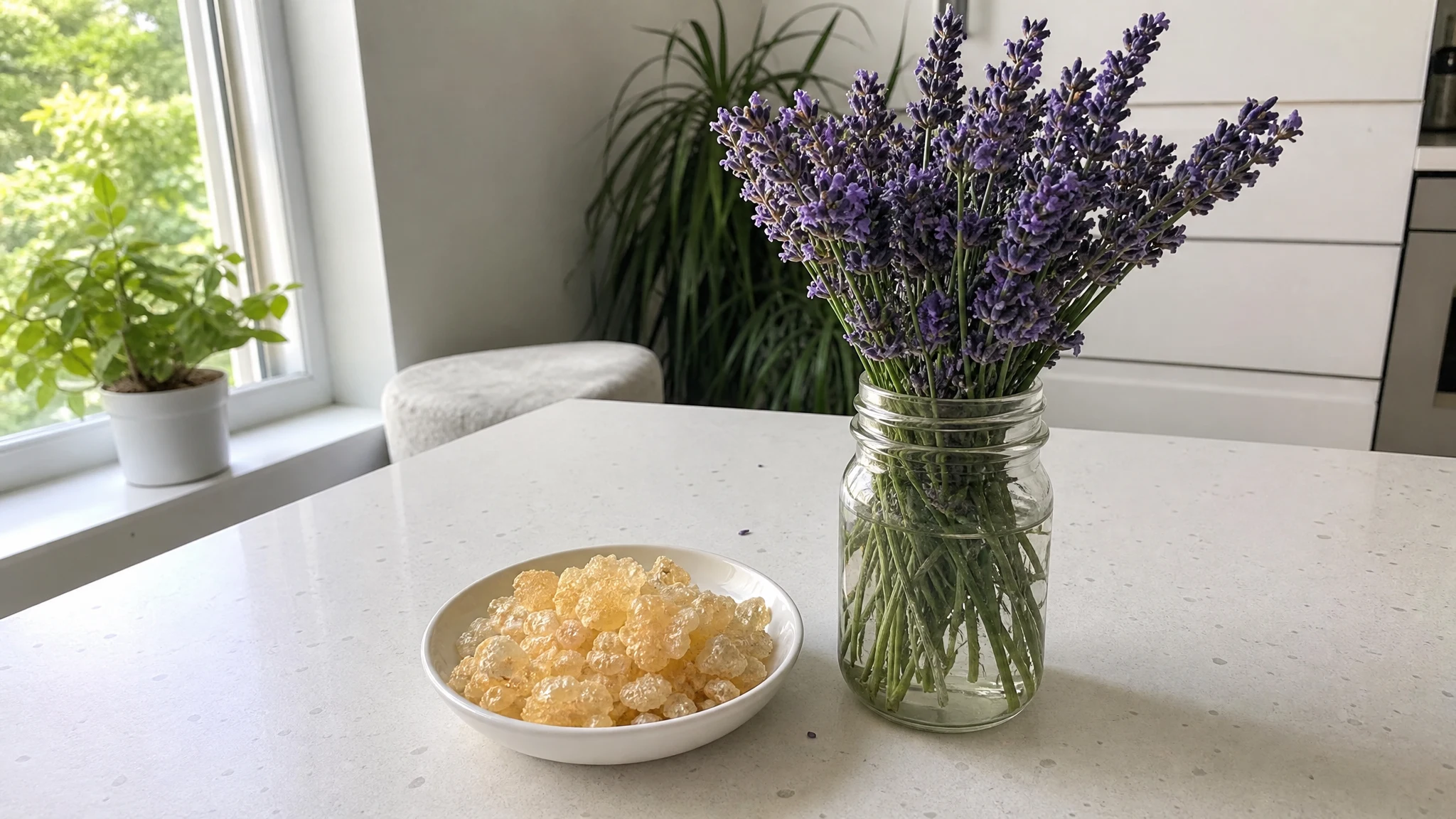
Lavender vs Frankincense Oil: What Does Research Say?
Lavender has the trials and frankincense has the reputation. We go through what the research actually shows and how to choose a bedtime scent by nose.
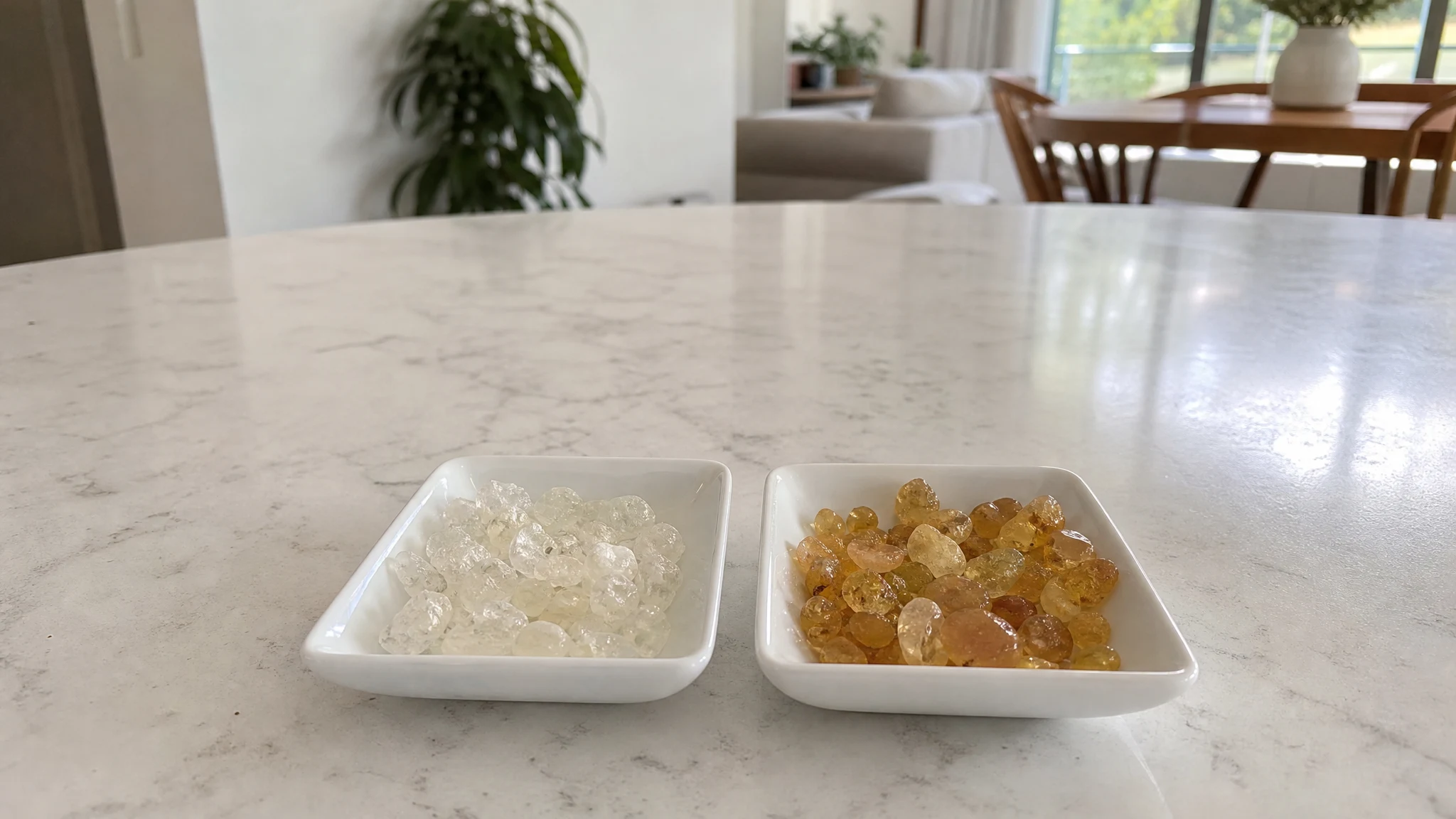
Copaiba vs Frankincense Oil: Peppery or Piney?
Copaiba leans on spicy beta-caryophyllene, frankincense on bright alpha-pinene. We compare the chemistry and what it means for scent and choosing a bottle.
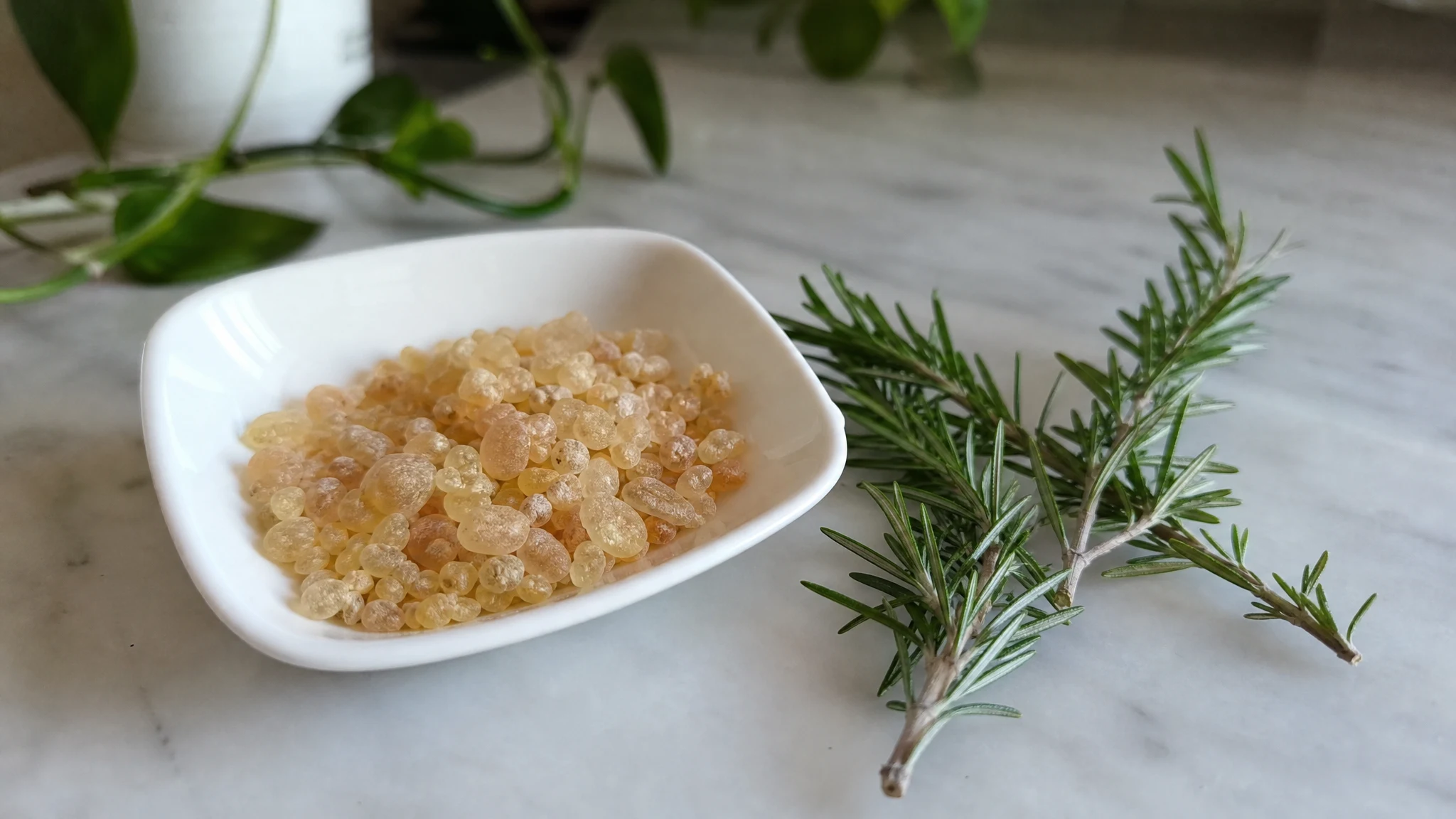
Frankincense vs Rosemary Oil: Why Chemotypes Matter
Both oils lean on alpha-pinene, yet each one shifts by species or chemotype. See why that matters when you choose a bottle and how to dilute either.
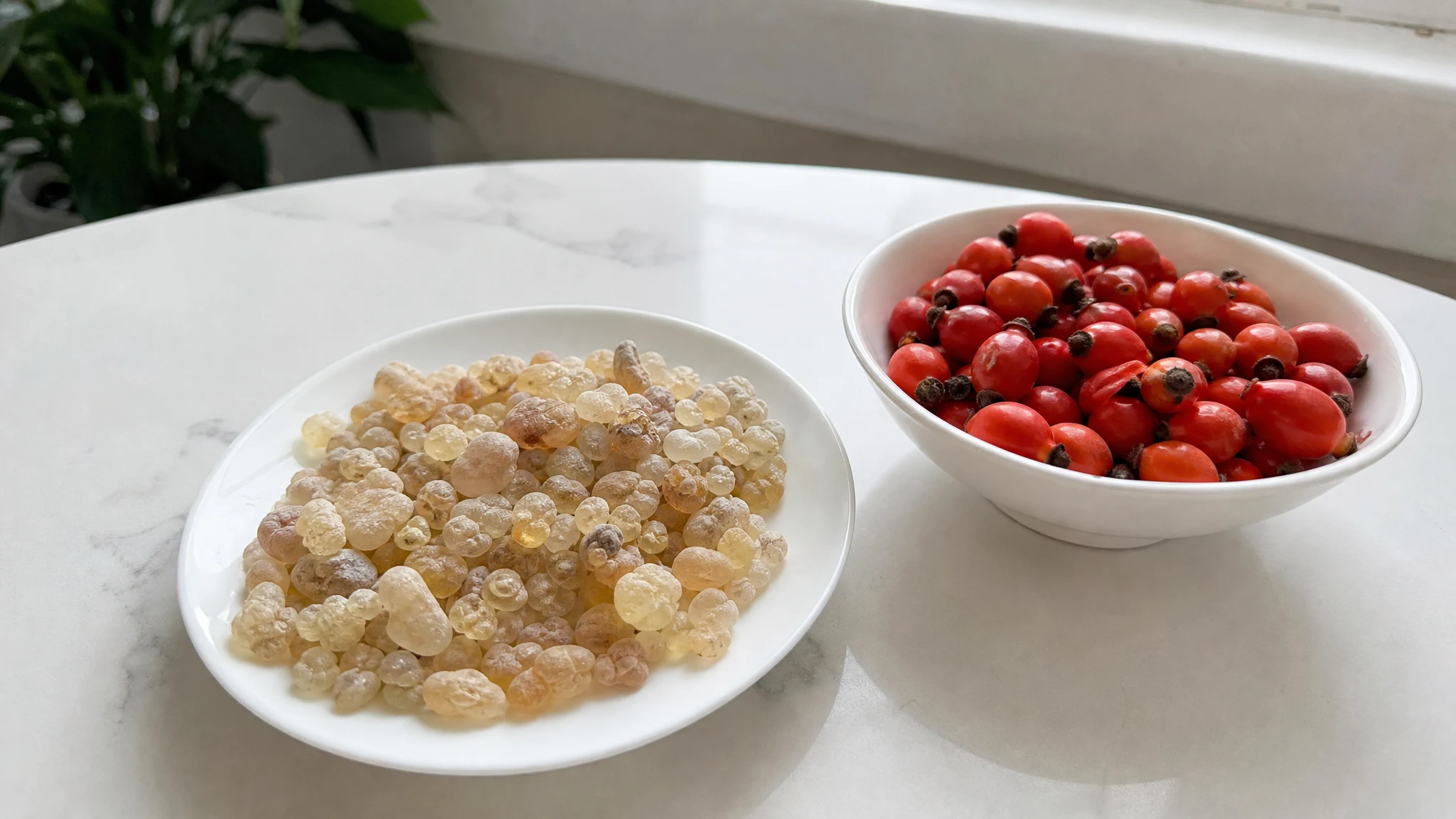
Frankincense and Rosehip Oil: How to Pair Them
Rosehip is a carrier and frankincense an aromatic, so they pair rather than compete. See how much to add, how to keep it fresh and how to patch test.
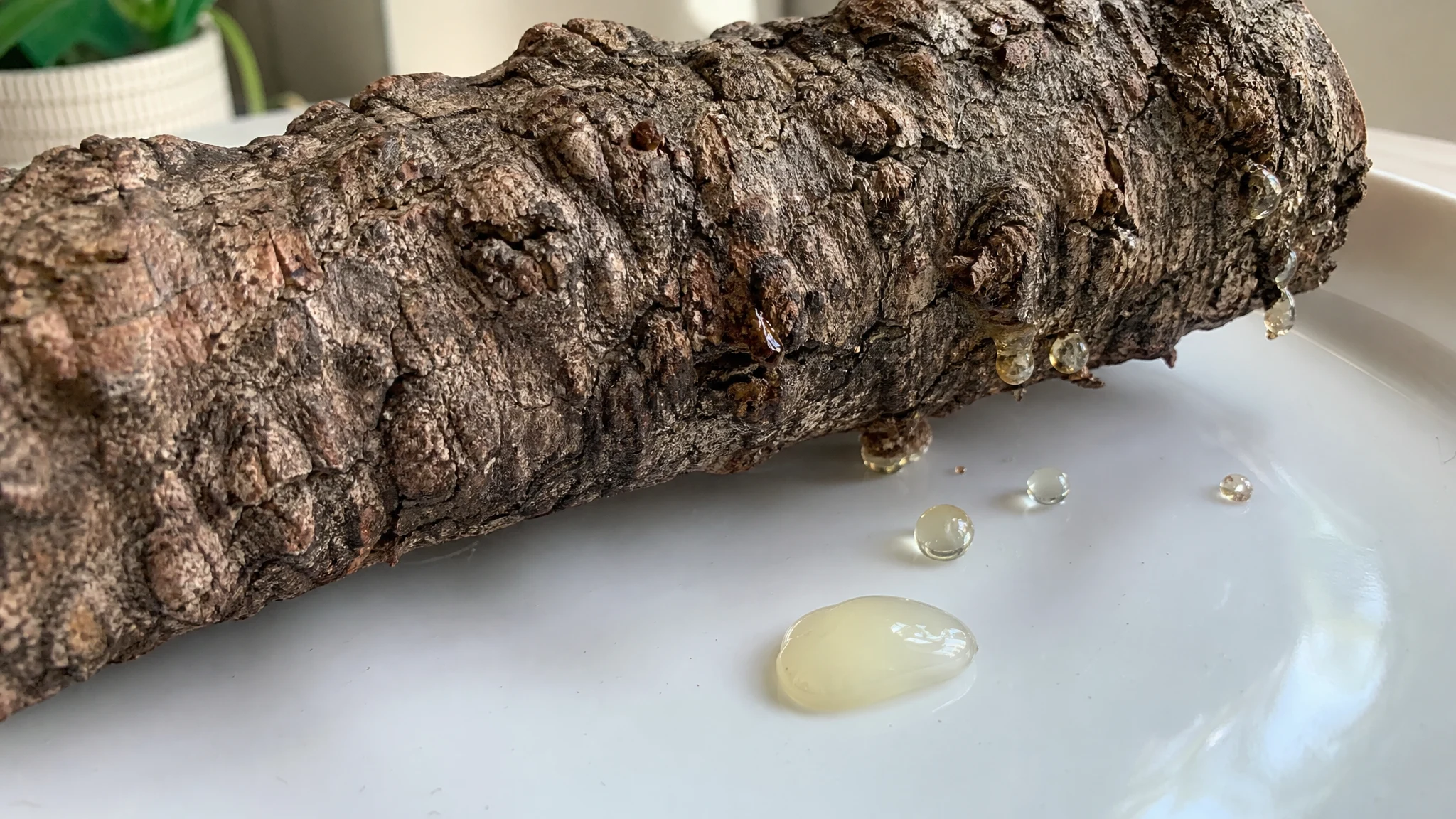
Frankincense Oil Chemistry: What Distillation Keeps
Only a small, fragrant slice of frankincense resin travels in steam. What distillation brings over, what stays behind, and why time changes the oil.
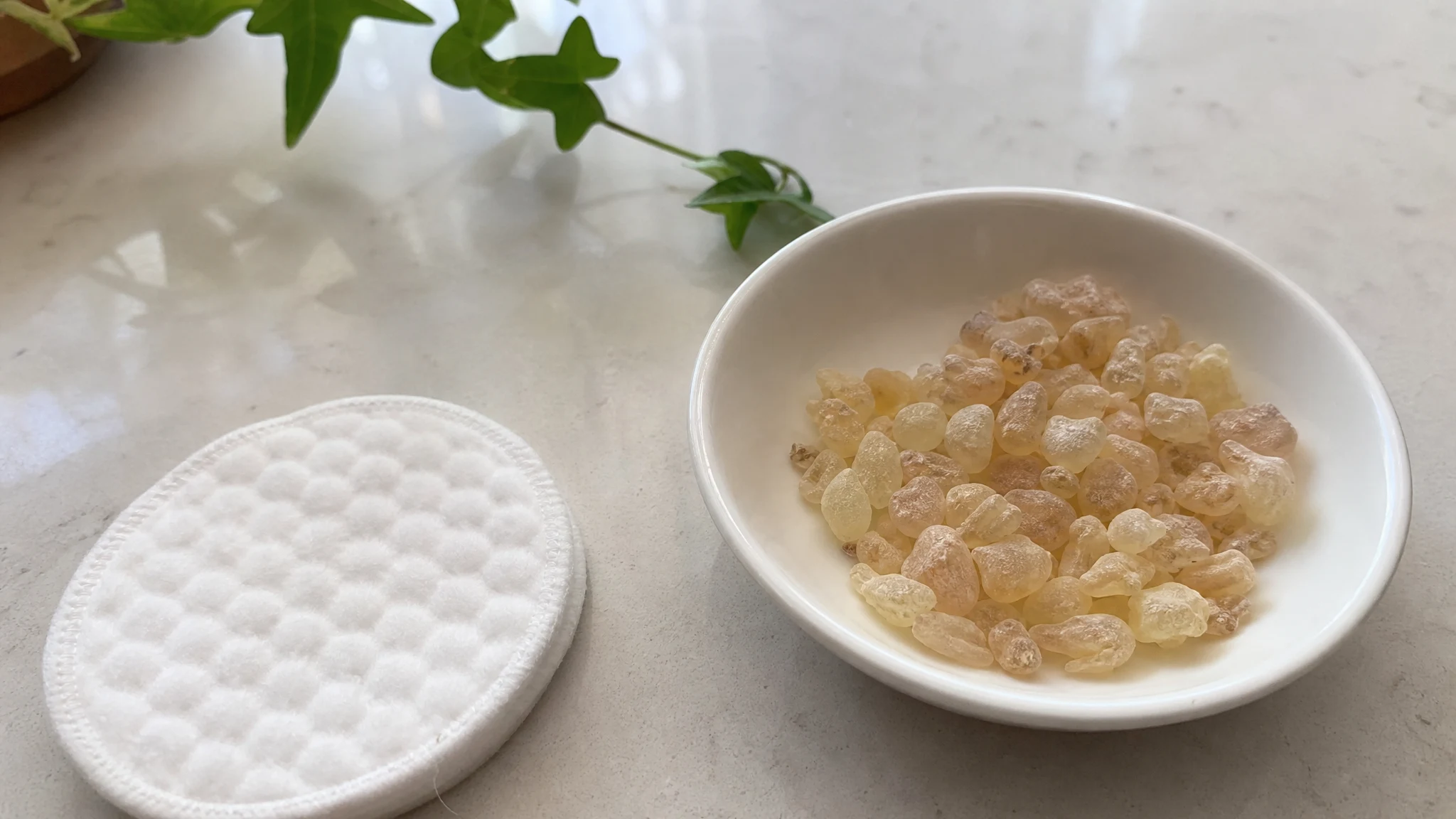
Frankincense Oil in a Skin Routine: Where It Fits
Good skin routines run on dermatology basics. Frankincense oil is the scent you add on top, diluted and patch tested. Here is how to fit it in.
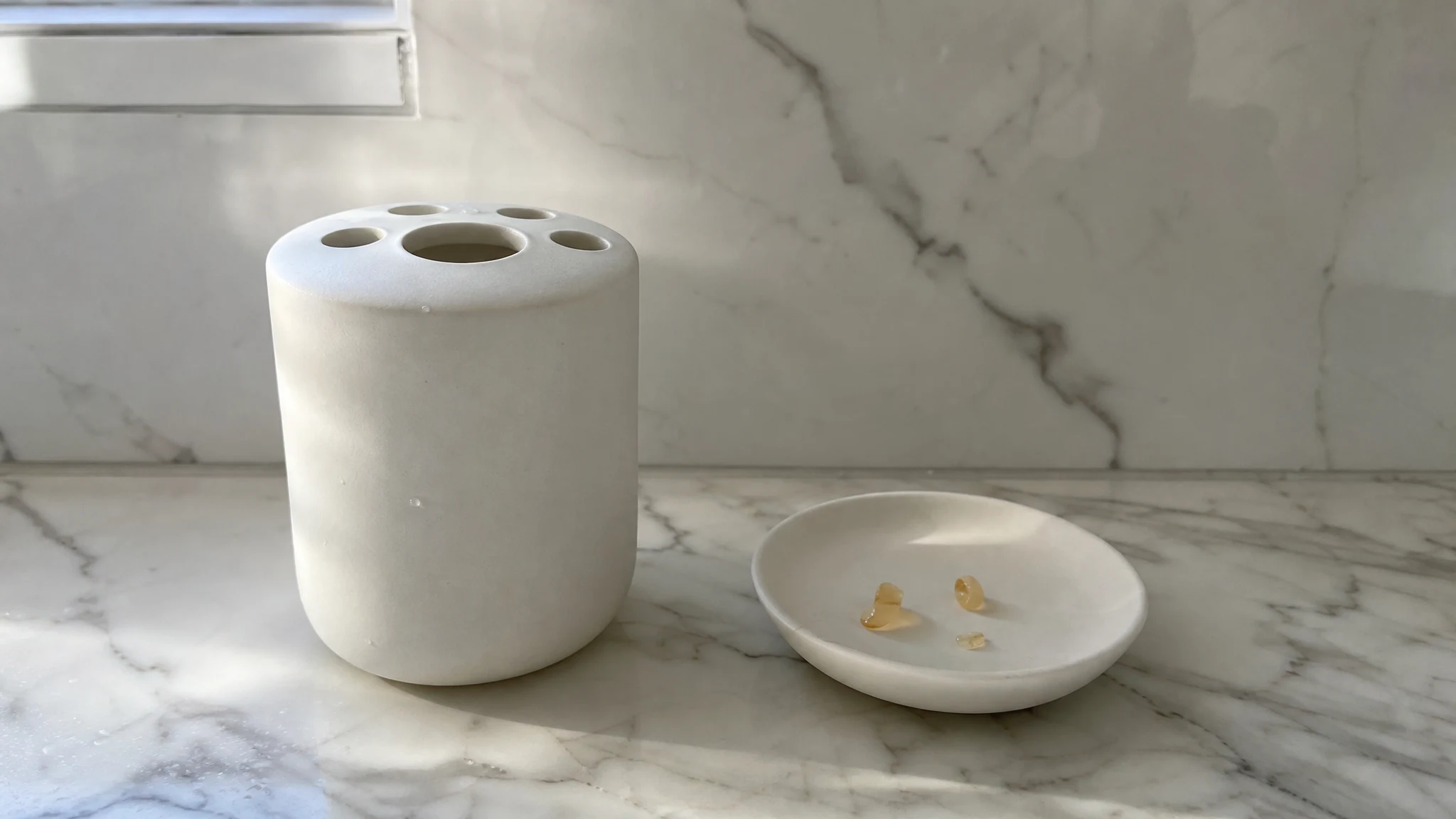
Frankincense Oil and Oral Care: Why We Skip Mouth Use
Frankincense draws lab interest for oral bacteria, but the work used extracts and culture dishes. Why we keep our oil out of the mouth, and what to do.
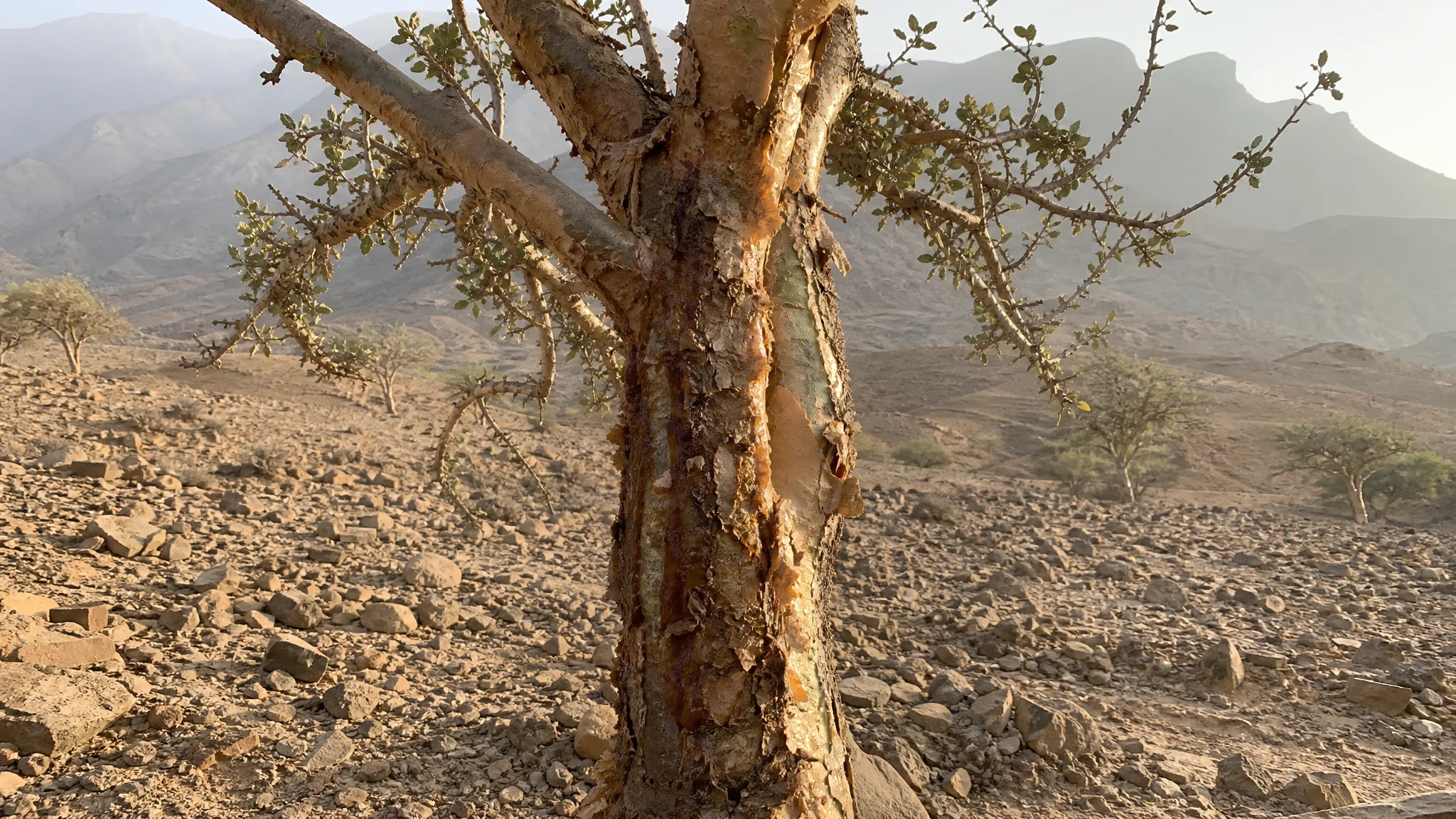
Is Frankincense Endangered? What the Research Says
The headline collapse involves papyrifera, while sacra in Oman looks steadier. A species by species look at the trees behind frankincense oil.
