Frankincense vs Rosemary Oil: Why Chemotypes Matter
Frankincense and rosemary come from very different places, a resinous desert tree and a Mediterranean herb, yet chemists keep finding the same molecule near the top of both: alpha-pinene, the fresh, piney note you know from a conifer forest. That shared thread is why the two get compared. The more interesting story is how much each oil moves around from bottle to bottle.

Frankincense Essential Oil
Six single-origin frankincense varieties, steam-distilled and GC/MS verified.
From $12.99 $10.40 with code BLACKFRIDAY
Rosemary chemotypes across six distillation countries
When a research team distilled rosemary from Australia, Alabama, South Africa, Kenya, Nepal and Yemen and analysed the results (Satyal and colleagues, 2017), the oils were dominated by alpha-pinene (13.5% to 37.7%), 1,8-cineole (16.1% to 29.3%) and verbenone (0.8% to 16.9%). Add 72 compositions from earlier papers and the authors found at least five distinct chemotypes. A rosemary oil that is cineole-forward and one that leans on verbenone are noticeably different things, even under the same name. If you ever buy rosemary, the chemotype and a report are worth asking for. We sell no rosemary oil, so that shopping happens elsewhere.
Do Boswellia sacra and carterii oils differ?
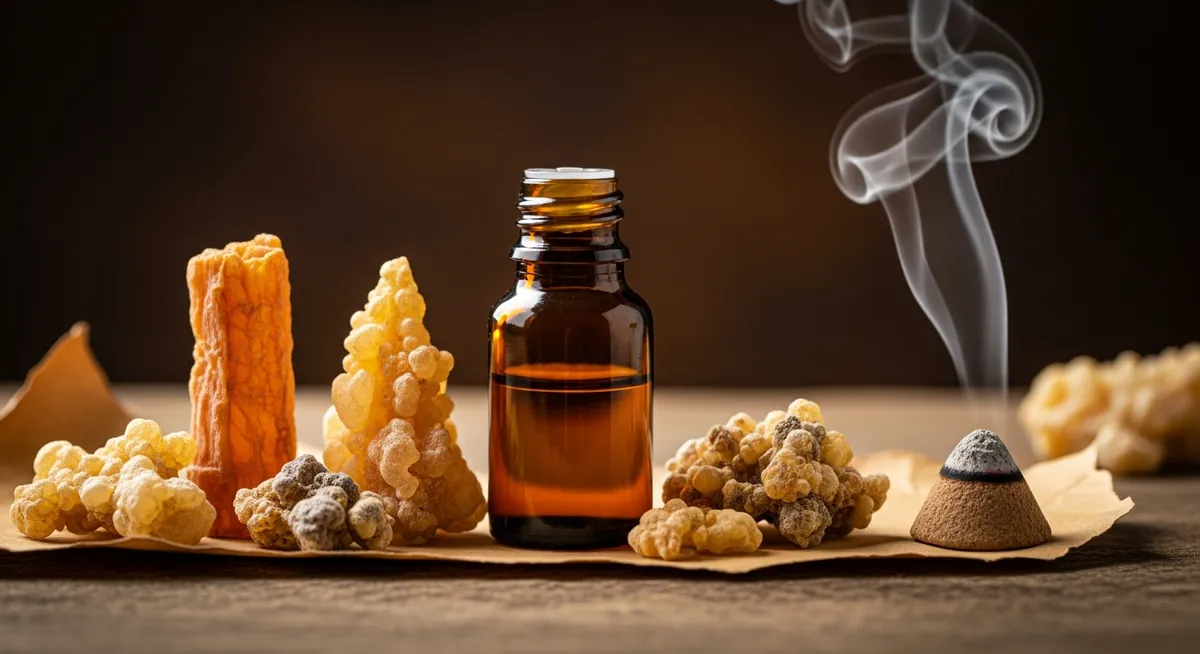
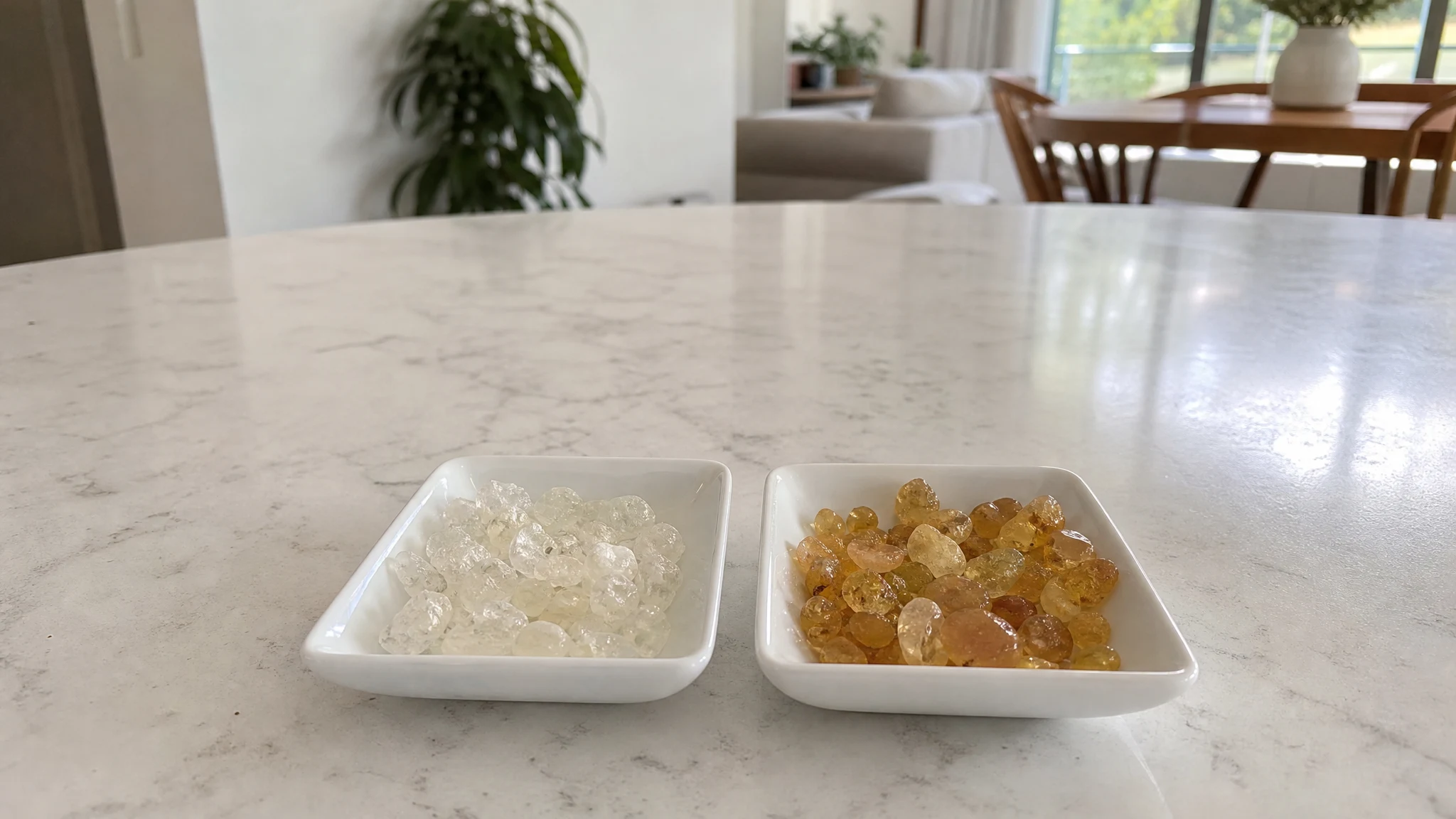
Frankincense plays its own variation. A comparison of oils from Oman and Yemen (Boswellia sacra) with oils from Somalia (Boswellia carterii) by Woolley and colleagues found alpha-pinene averaging 68.2% in the first group and 37.3% in the second, with limonene and beta-phellandrene together at 6.2% against 14.4%. Those are literature figures for the oils in that study, not specifications of ours, but they show why we sell six single-species oils separately instead of one generic "frankincense." Our serrata is warm and slightly woody with subtle citrus and pine top notes, sacra is deep, balsamic and honeyed, and frereana is bright and lemon-pine. Our varieties overview compares them.
Variation is not a flaw, it is part of the appeal. Two pots of rosemary from different gardens never smell quite the same, and the same is true of two frankincense trees from different hills. Once you accept that, a bottle stops being a fixed thing and becomes a particular one worth getting to know.
Authenticity is a real conversation in this trade, too. An analysis of 21 commercial oils sold as Boswellia carteri (Ojha and colleagues, 2022) found synthetic limonene in six, synthetic octyl acetate in three and castor oil in three, and used chiral analysis as a fingerprint for authentication. That is one sample set, not a verdict on any seller, but it is the reason we point buyers toward lot-specific reports. The one Certificate of Analysis we publish is for a serrata batch and lists density, refractive index and optical rotation. If you need GC/MS or species confirmation for a variety, ask us in writing through our contact page, and read our guide to reading a GC/MS report so you know what you are looking at.
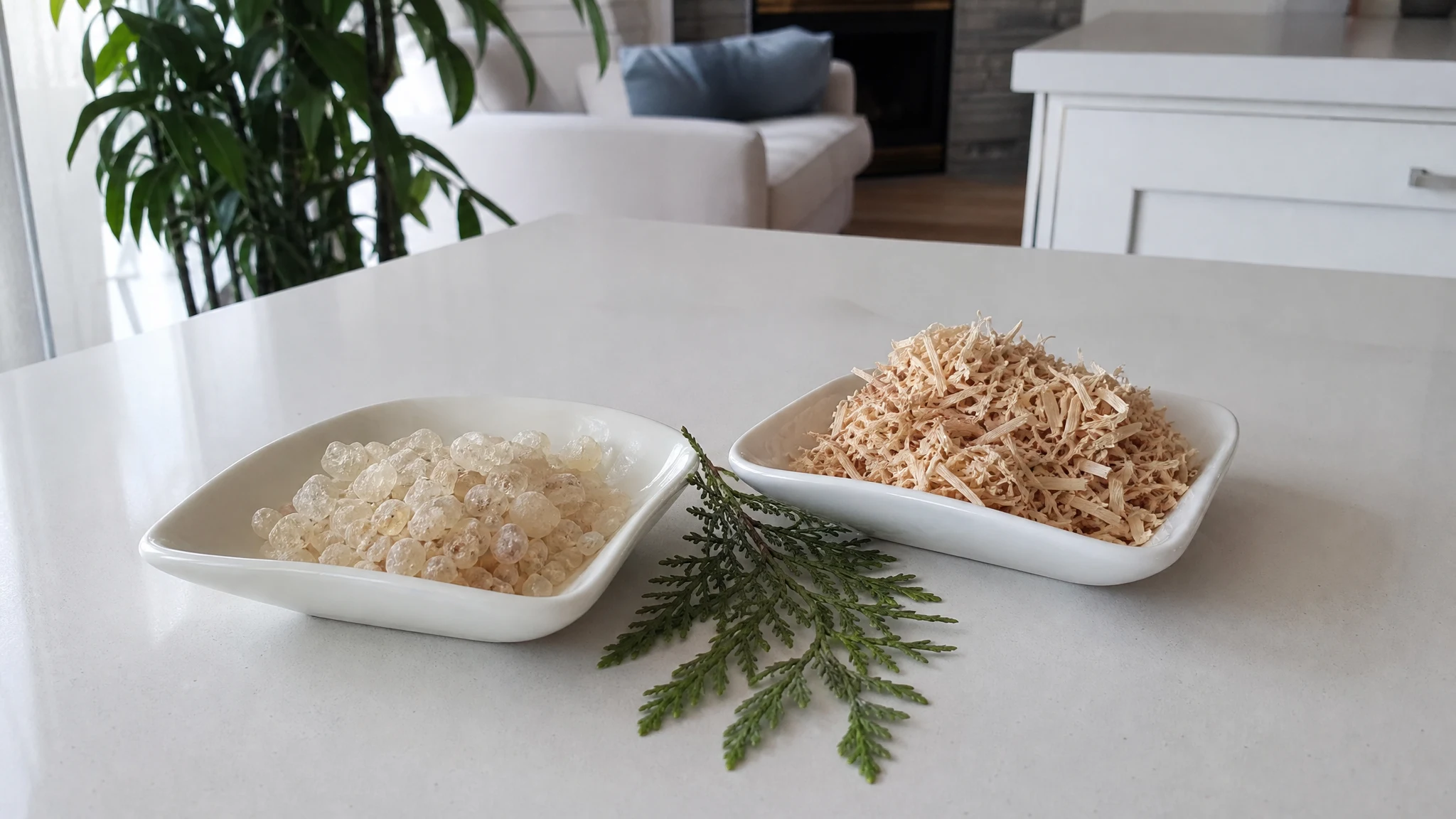
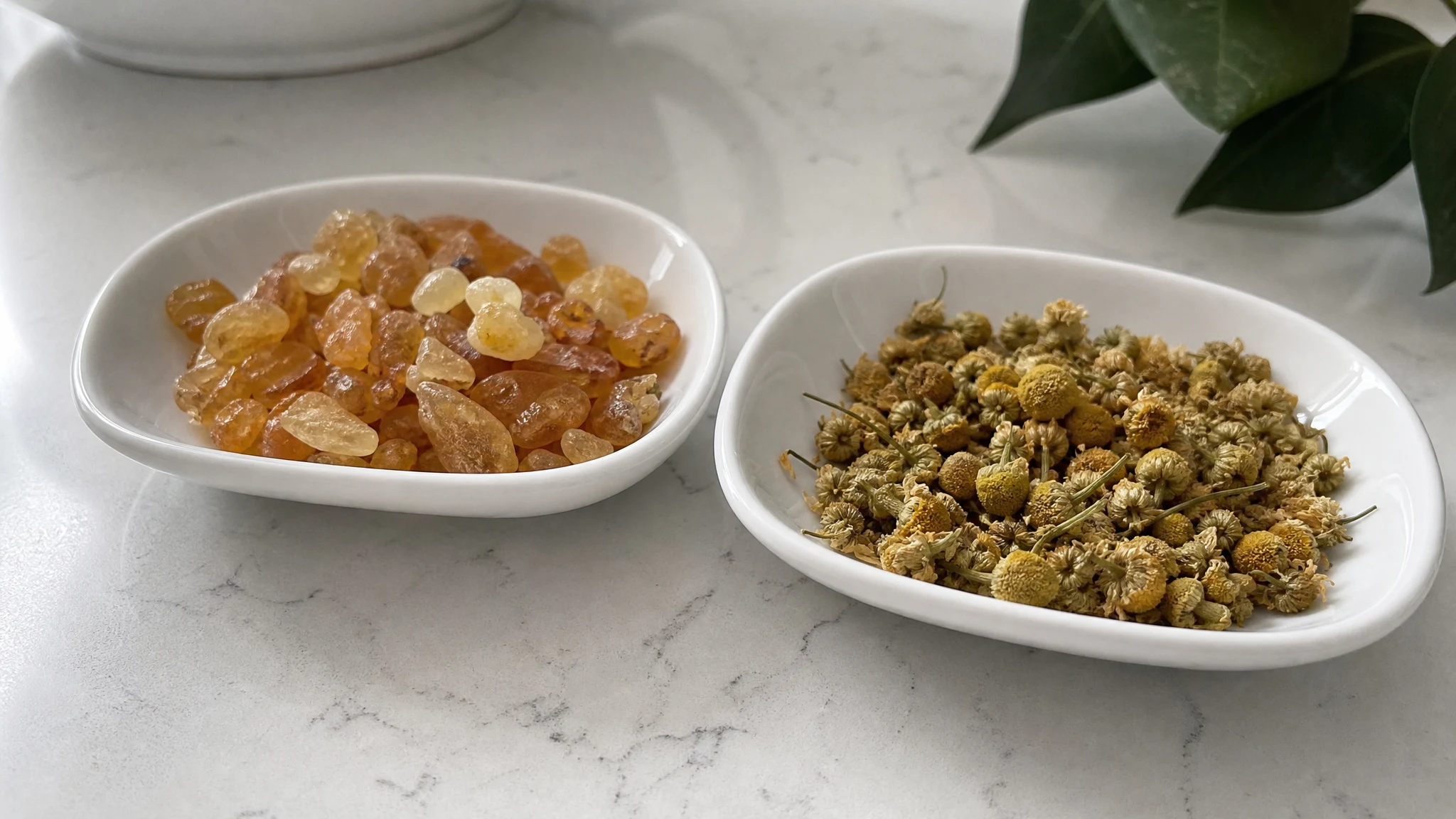
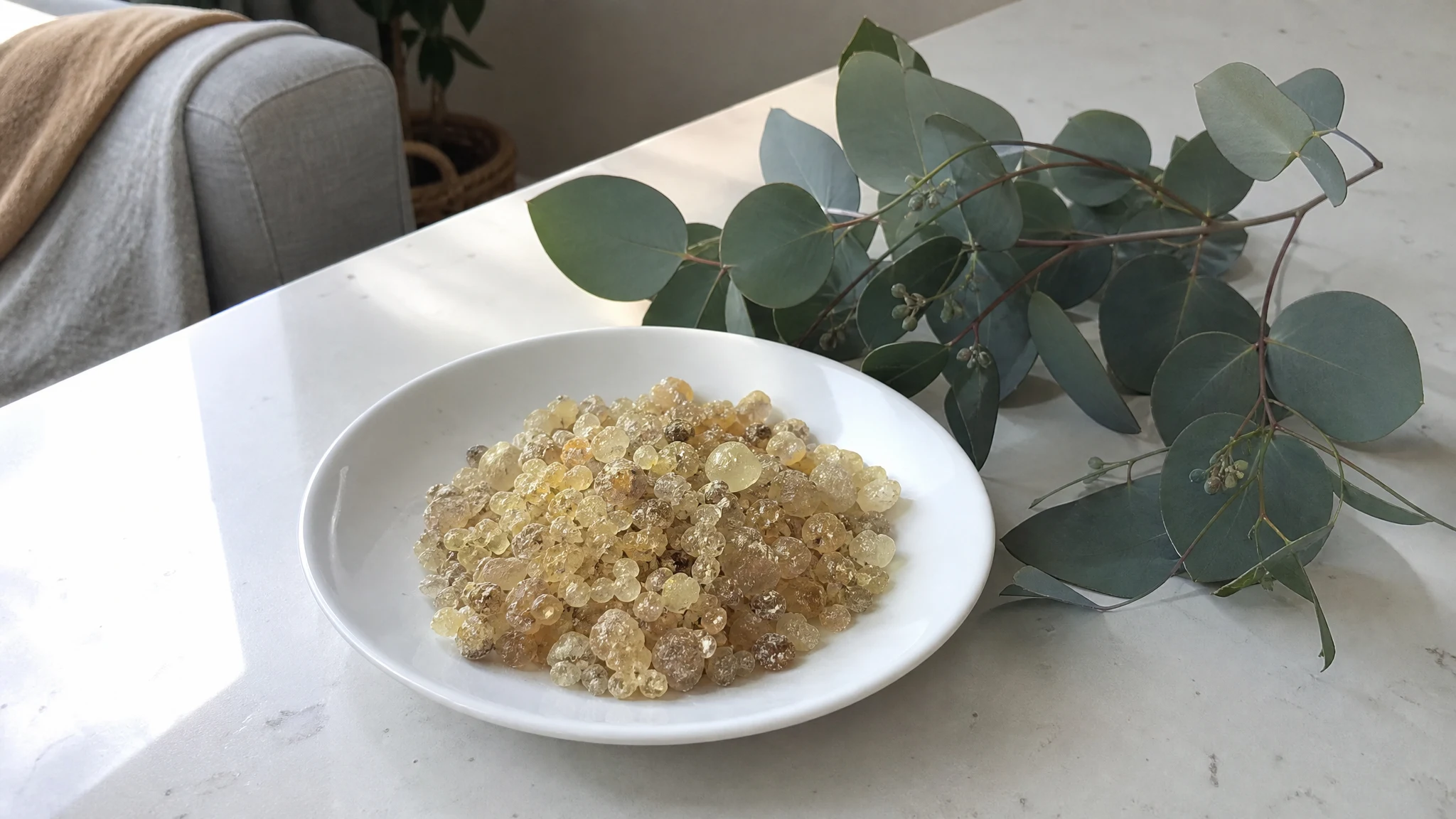
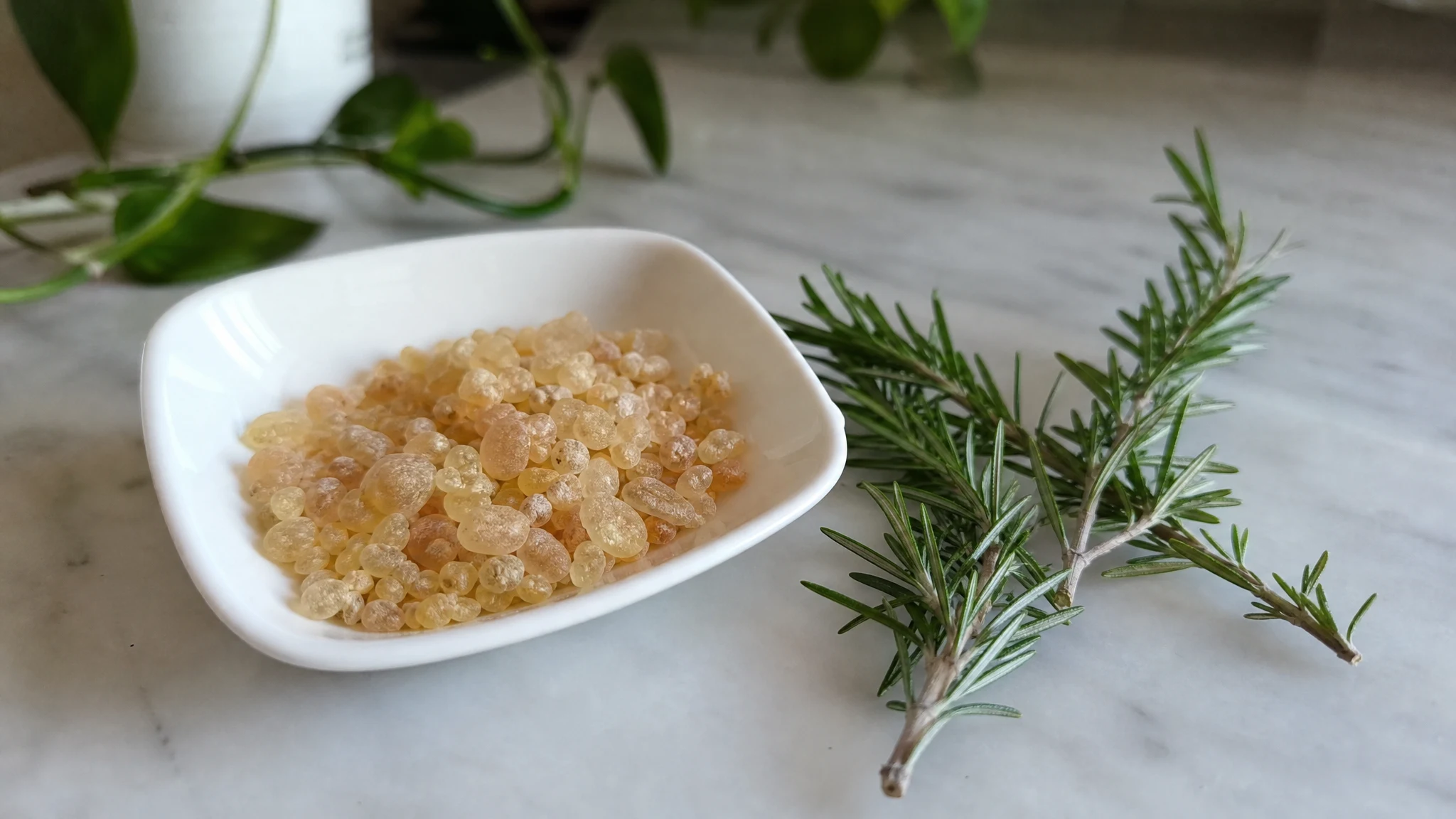
Herbaceous rosemary beside resinous frankincense
Open them one after the other and the family resemblance is easy to miss. Rosemary is green and herbaceous, sharp enough to wake up your nose. Frankincense is rounder and slower. If the piney edge of a conifer forest is what you love, our frereana is the one to reach for, bright and lemon-pine, and our serrata carries subtle citrus and pine top notes over a warm, slightly woody base. Smell, and then decide what you want in the room.
Frankincense oil and hair: no claims here
People often arrive at this comparison from a hair question. We make no hair claims for any of our oils, and an essential oil is not a substitute for finding out why hair is changing. The American Academy of Dermatology recommends a board-certified dermatologist for an accurate diagnosis, which can involve a scalp and nail exam, a pull test and sometimes a blood test or biopsy. That conversation comes first.
Which botanical names should you check on plant oils?
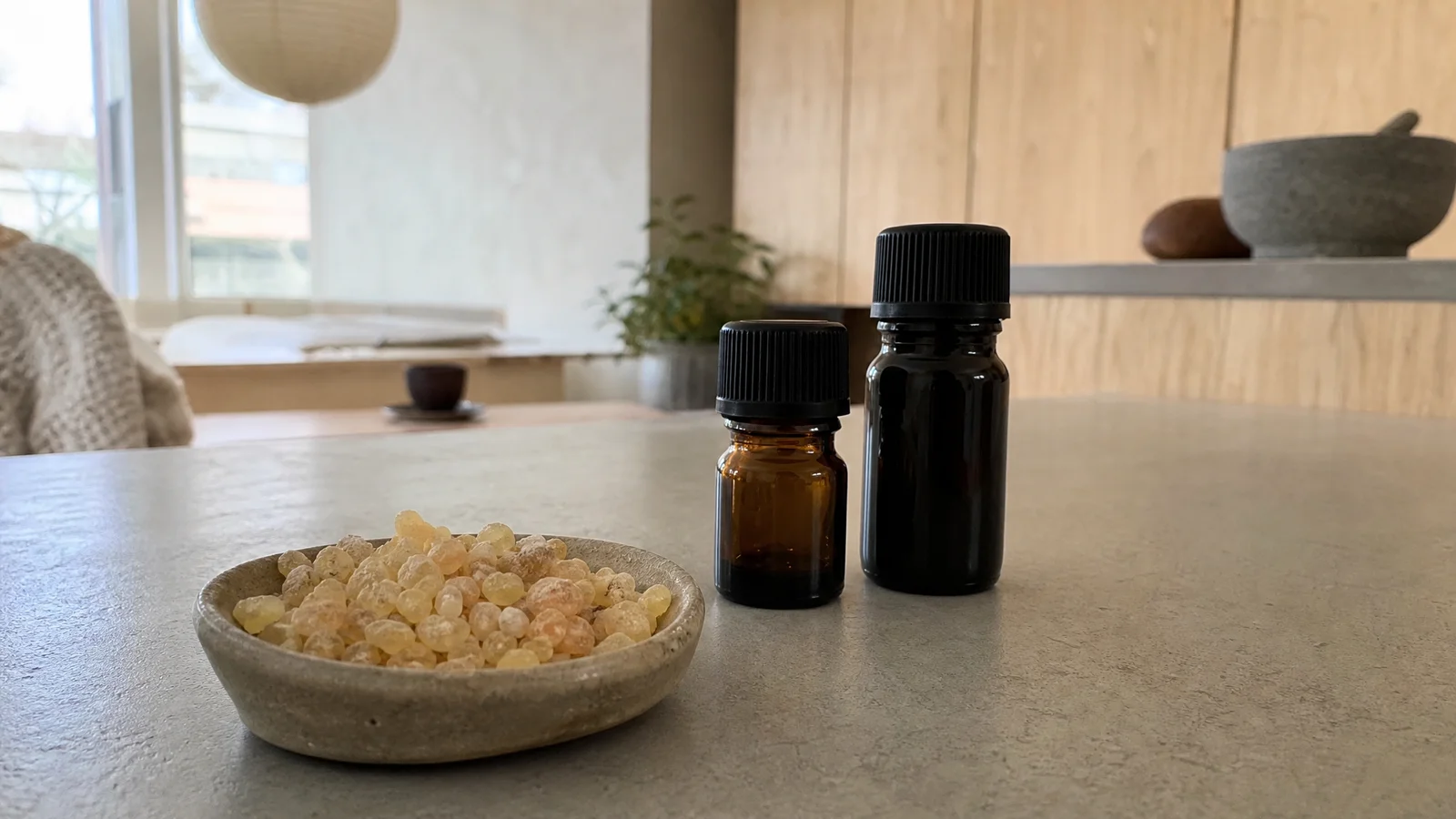
A few small habits help whatever you are buying. Look for the botanical name on the label, not just the common one; our bottles are amber glass with a black cap and a black label that shows the Latin name, and we would want any oil you buy to do the same. Notice whether a seller answers a specific question plainly. And if an oil comes in several types, as rosemary does, ask which one you are getting before you order.
Dilution bands for rosemary and frankincense oils
Both belong diluted. The Tisserand Institute's general bands are 0.2 to 1% for sensitive skin, 0.5 to 1.2% for facial products and 1 to 3% for body oils, and it advises against undiluted use. Our dilution guide shows the maths, and our carrier oil guide covers what to dilute into. Patch test first, keep oils away from eyes and mucous membranes, and ask a healthcare provider before use if you are pregnant, nursing or on medication.
When you first try a diluted oil on skin, do it gently: put a small amount of the diluted blend on your inner forearm, leave it alone, and check it the next day. If anything looks or feels wrong, wash it off and stop. It takes a minute and saves a lot of regret.
Keeping bottles apart
If you own more than one oil, keep them in a way that makes mix-ups impossible: caps on, labels facing out, and no two bottles with similar-looking labels side by side. A moment of confusion with a strong oil is easy to avoid.
Two pinene-rich oils, two very different personalities: rosemary herbaceous and sharp, frankincense resinous and rounded. If the pine note is what you love, the variety you choose will shape how it feels.
Frankincense Essential Oil
Serrata, carterii, sacra, frereana, neglecta and rivae: steam-distilled, GC/MS verified, in sizes from 0.5 oz to bulk.
From $12.99 $10.40 with code BLACKFRIDAY
Sources & Further Reading
- Chemotypic Characterization and Biological Activity of Rosmarinus officinalis (Satyal et al., 2017)
- Chemical differentiation of Boswellia sacra and Boswellia carterii essential oils by gas chromatography and chiral gas chromatography-mass spectrometry (Woolley et al., 2012, PubMed)
- Comparison of Volatile Constituents Present in Commercial and Lab-Distilled Frankincense (Boswellia carteri) Essential Oils for Authentication (Ojha et al., 2022)
- Hair loss: Diagnosis and treatment (American Academy of Dermatology)
- Dilution for essential oils (Tisserand Institute)