Argan Oil and Frankincense Oil: Can You Combine Them?
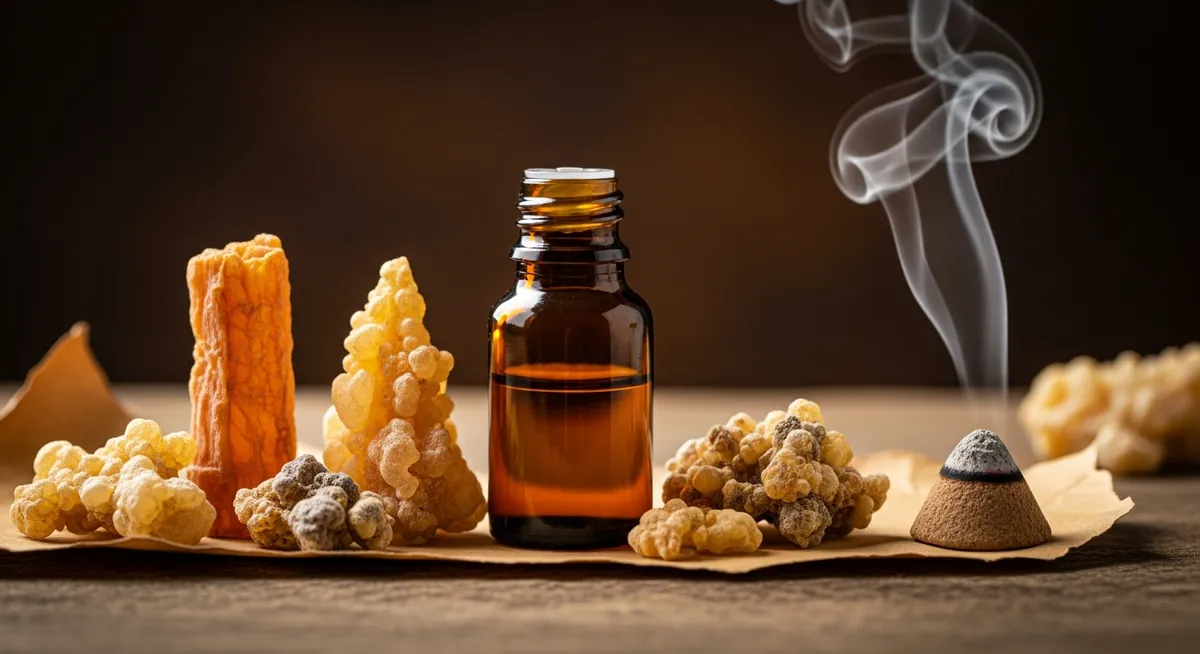
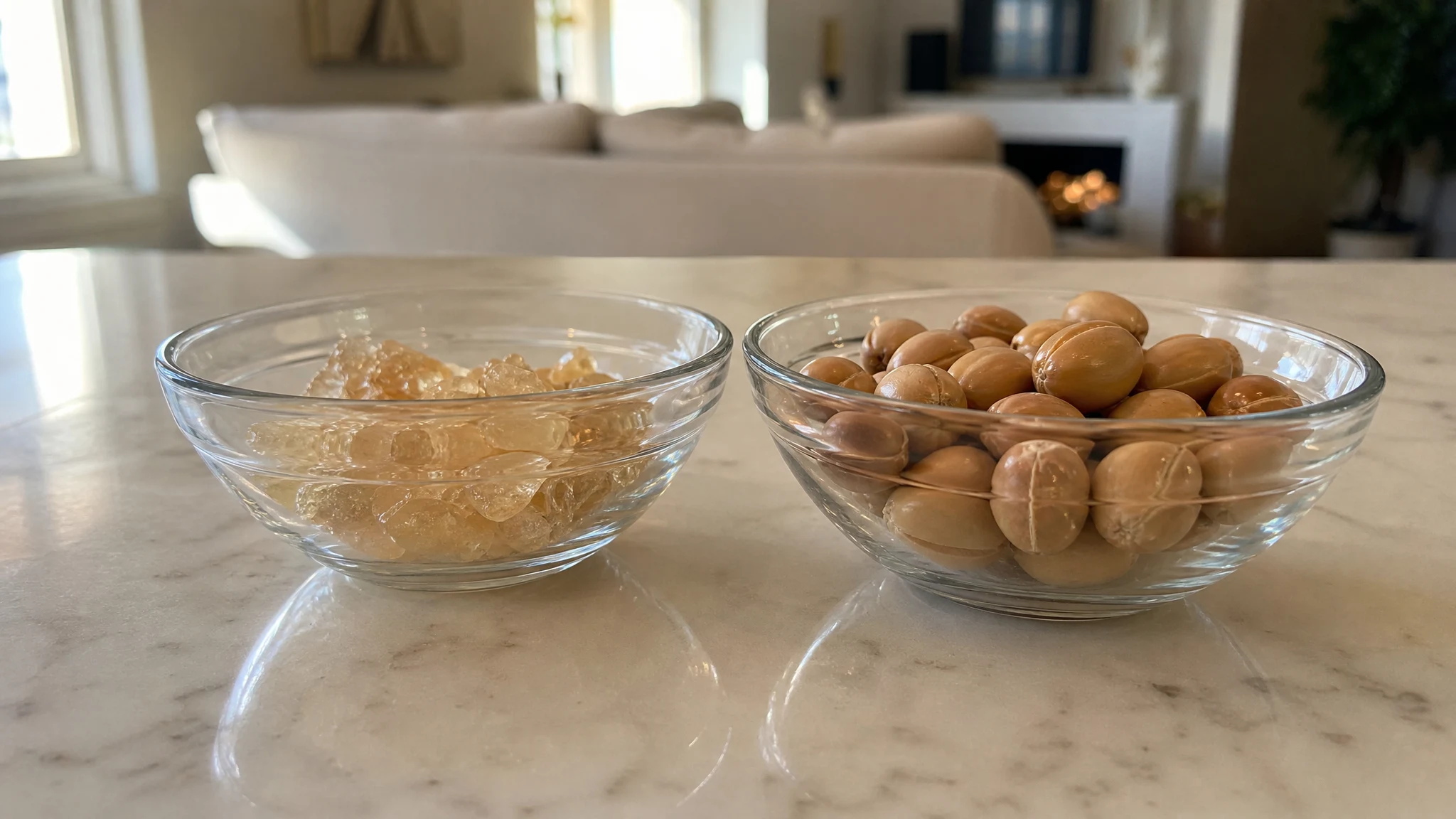
Argan oil and frankincense oil are not rivals for the same job, and asking which is better for your face skips over what each one is. Argan is a fixed oil pressed from kernels and can be used on its own. Frankincense is a steam-distilled essential oil, a volatile aromatic meant to go on skin only in a small percentage inside something else. Very often, that something else is a carrier like argan. So the more useful question is whether you want the frankincense scent in your argan, and how much.

Frankincense Essential Oil
Six single-origin frankincense varieties, steam-distilled and GC/MS verified.
From $12.99 $10.40 with code BLACKFRIDAY
Argan oil fatty acid profile and skin use
Argan oil comes from the kernels of Argania spinosa. A 2022 review of clinical studies on vegetable oils in skincare gives its fatty acid profile as about 45% oleic acid and 35% linoleic acid, with roughly 20% saturated fat. The human evidence is thin. The argan trial it describes involved 60 postmenopausal women over 60 days, using argan oil on the forearm nightly, with some also taking it by mouth, and reported less water loss through the skin and more water content in its outer layer. That is a small hydration result on forearm skin, not a face study.
The review also reminds us that carrier oils are not interchangeable. In inflamed skin, oils high in oleic acid and low in linoleic acid may disturb the skin barrier more. Argan has both, with a bit more oleic than linoleic, so it sits between olive oil (mostly oleic) and sunflower oil (mostly linoleic) in that respect. If your skin is reactive or eczema-prone, a dermatologist is the right person to choose what goes on your face, not a comparison page.
What frankincense oil adds to an argan blend
Scent. Our serrata is warm and slightly woody with citrus and pine top notes, and our frereana is bright and lemon-pine. The skin studies that circulate online mostly involve creams containing boswellic acids, which are heavy resin compounds that the Tisserand Institute says have not been reliably reported in normally distilled frankincense oil. So results from those creams tell you nothing about an essential oil, and we make no skin-effect claim for ours. The FDA's aromatherapy page explains why that matters: it says intended use is judged from labelling and advertising, and that a plant origin does not exempt a product from drug rules.
Argan and frankincense blend percentages for the face
This is formulation arithmetic from published ranges, not a blend we have made. The Tisserand Institute lists 0.5% to 1.2% for facial cosmetics and 0.2% to 1% where skin is sensitive or impaired. Its beginner's guide says to keep essential oils on skin to about 1 or 2% at most, to patch test a new oil, diluted, and to watch for irritation.
- Work by weight. In 30 g of argan oil, 0.5% is 0.15 g of frankincense oil and 1% is 0.30 g.
- Drops, if you must. Using our serrata Certificate of Analysis density (0.838 g/ml) and the rough convention of 20 drops per ml, that is about 3.6 and 7.2 drops. We have no density for the other five oils, so weigh those.
- Start low. For the face, begin at the bottom of the range, and use the 0.2% to 1% band if your skin reacts easily.
- Keep it water-free. Argan plus frankincense contains no water, so it needs no preservative. Do not stir it into a water-based lotion unless a cosmetic chemist has formulated the preservation.
- Patch test and avoid the eyes. Try the finished blend on a small area before the face.
We do not sell argan oil or any carrier. A carrier supplier or cosmetic ingredient shop is the place to find it, and it is worth asking for the pressing date. Our carrier oil guide goes deeper on choosing.
Argan's nutty scent beside frankincense
Carrier oils have a scent of their own, and argan can read nutty or toasty depending on how it was made. When you add frankincense, let the mixture sit for a day and then open it and sniff. You may find the argan shifts your first impression of the frankincense, or that the resin note comes through more clearly after a rest.
Keep the finished blend in a small, dark bottle, label it with the date and the percentage, and cap it tightly. If the scent seems to disappear, resist adding more oil; the dilution range exists for a reason, and a faint, pleasant aroma is a perfectly good result.
Do natural oils still cause reactions?
Both oils are often sold on the word natural, and neither is exempt from bothering a particular person. The FDA notes that many plants contain materials that are toxic, irritating or likely to cause allergic reactions, and that it has no regulatory definition of natural or organic for cosmetics. The practical rule is the same for both: introduce one thing at a time. Patch test argan on its own, then the blend, and if something reacts you will know which to drop.
Is argan alone enough for a facial oil?
If you simply want a plain facial oil, argan alone is a reasonable thing to try, and frankincense would add scent, not a documented skin benefit. If you like the smell of frankincense and your skin passes a patch test, it can go in at the ranges above. If your skin is inflamed, broken or reactive, skip both and ask a dermatologist. For method, our face application steps pick up from here, and our skin routine article looks at the broader evidence.
Think of argan as the base and frankincense as the accent, and you will rarely go wrong.
Frankincense Essential Oil
Serrata, carterii, sacra, frereana, neglecta and rivae: steam-distilled, GC/MS verified, in sizes from 0.5 oz to bulk.
From $12.99 $10.40 with code BLACKFRIDAY
Sources & Further Reading
- Vegetable Butters and Oils as Therapeutically and Cosmetically Active Ingredients for Dermal Use: A Review of Clinical Studies (Front Pharmacol, 2022)
- Does Frankincense oil contain boswellic acid? (Tisserand Institute)
- Dilution for essential oils (Tisserand Institute)
- A Beginner's Guide to Essential Oils Part 2: How to Use Essential Oils - Tisserand Institute
- Aromatherapy (FDA)