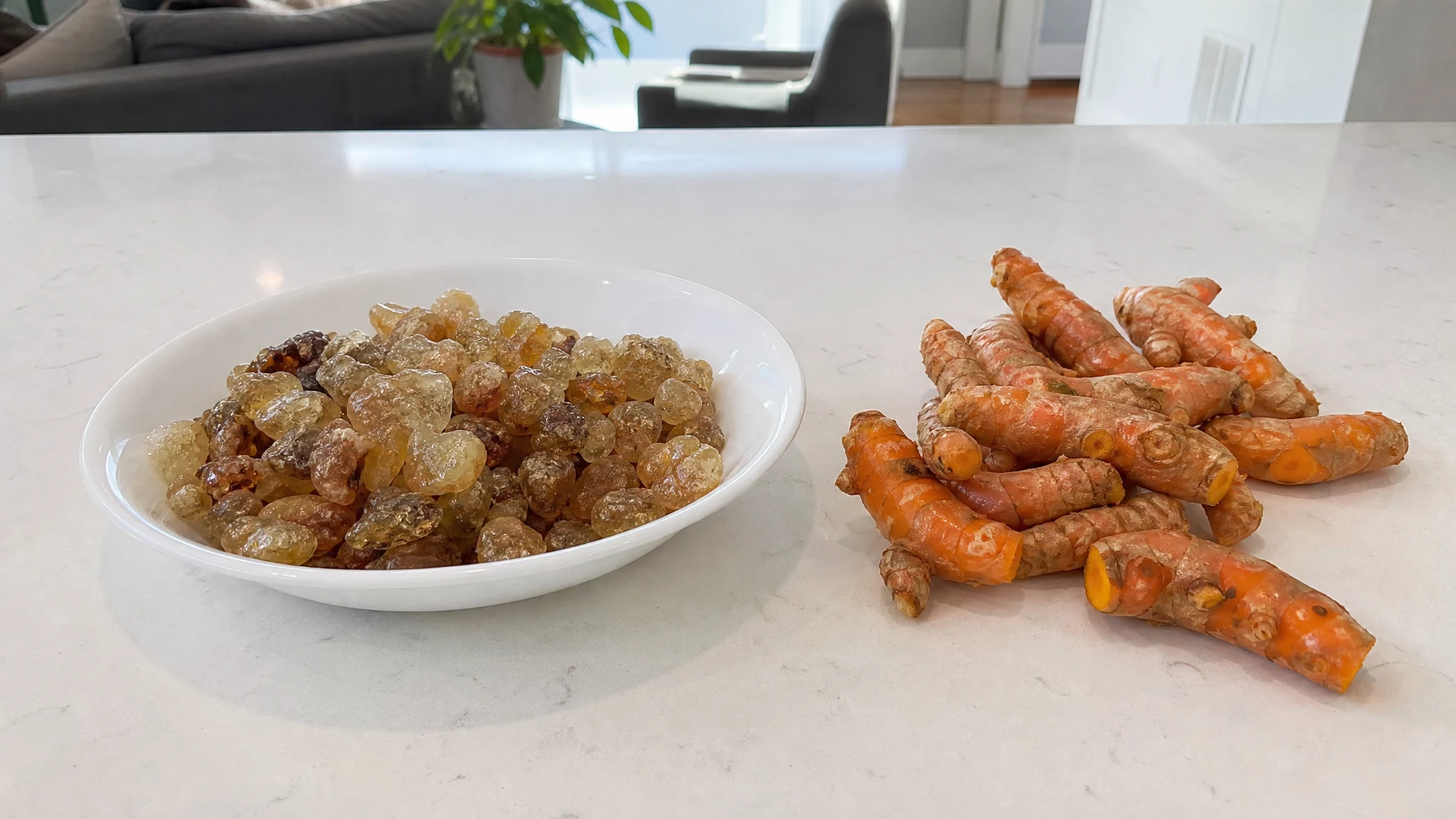
Frankincense vs Turmeric: What the Studies Tested
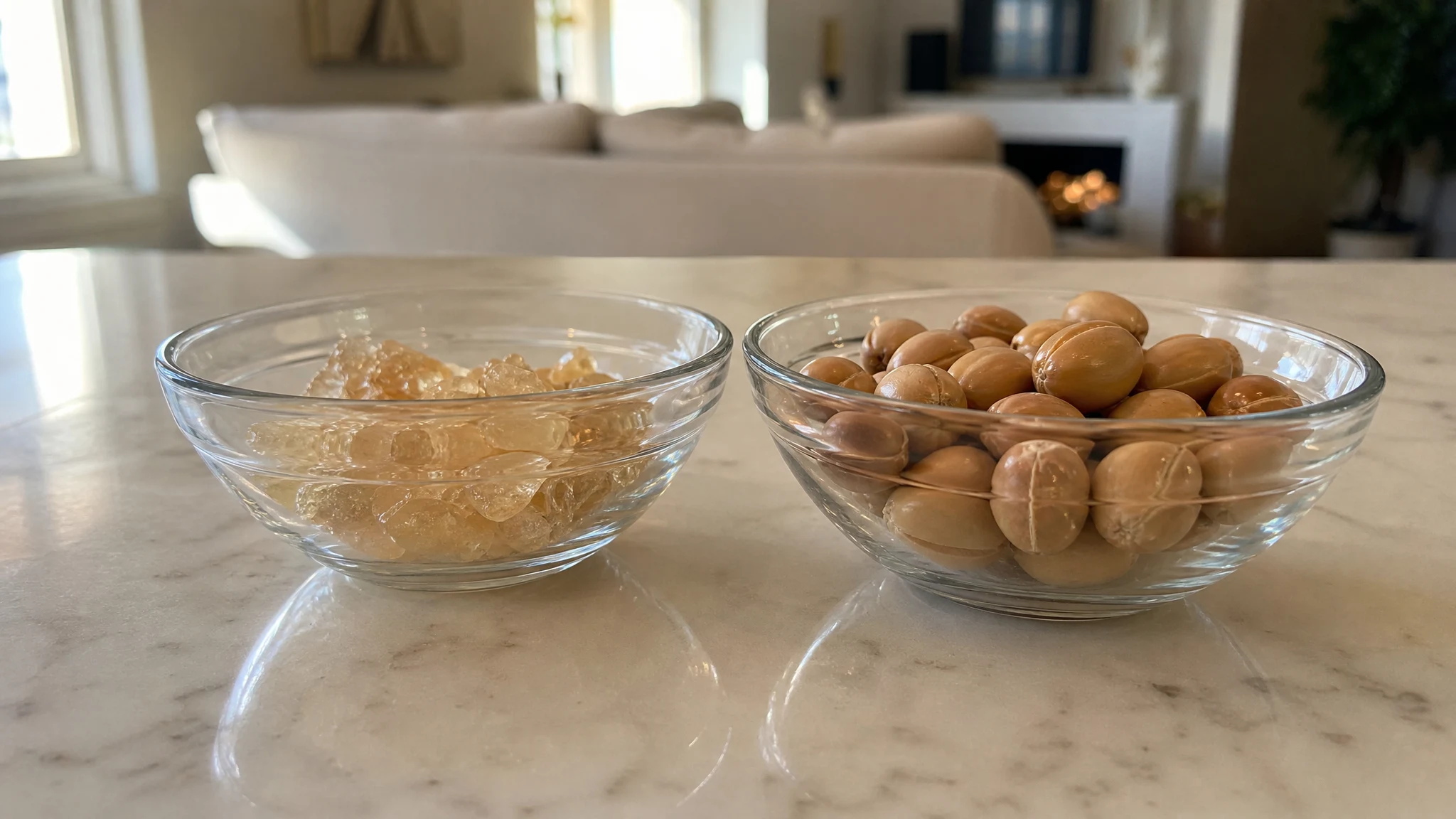
Turmeric and frankincense turn up together in a lot of articles about joints and aches, usually as rivals. Spend a few minutes with the research and a more interesting picture appears: both have been studied mostly as swallowed extracts, and neither of those extracts is the thing we sell. Our frankincense is a steam-distilled essential oil, made to be smelled.

Frankincense Essential Oil
Six single-origin frankincense varieties, steam-distilled and GC/MS verified.
From $12.99 $10.40 with code BLACKFRIDAY
Oral curcumin trials for joint arthritis
The turmeric research is largely about oral curcumin products. A 2016 meta-analysis of randomized trials of turmeric extracts and curcumin in joint arthritis (Daily, Yang and Park) leaned supportive, while its authors were careful to say the number of trials and their size were not enough for definitive conclusions. The U.S. National Center for Complementary and Integrative Health describes the initial evidence for oral curcumin in knee osteoarthritis as positive but in need of higher-quality studies, and says oral curcumin products vary in how much curcumin they hold and may contain other ingredients such as piperine from black pepper. It also warns that highly bioavailable curcumin products may harm the liver in some people, and lists fatigue, nausea, poor appetite, dark urine and jaundice as signs to stop and call a provider.
Oral boswellia studies in osteoarthritis
The same agency says several studies suggest oral boswellia may ease osteoarthritis-related discomfort, again with larger and better studies still needed, and that topical use or aromatherapy may be safe but has not been shown to be an effective treatment for conditions such as arthritis. The trials behind those statements used resin extracts. The reason is chemistry: boswellic acids are non-volatile, and the Tisserand Institute says there is no reliable report of them in frankincense oil made by normal distillation. So the evidence people quote for Boswellia is evidence for capsules of resin extract. Our post on boswellic acids unpacks the resin-versus-oil gap, and our resin versus oil guide covers what each product is.
Knee osteoarthritis review comparing curcuminoids with boswellia
A 2018 systematic review (Bannuru and colleagues) pooled 11 randomized trials with 1,009 people with knee osteoarthritis. It found that both curcuminoid and boswellia formulations did better than placebo for pain and function, that curcuminoids were not significantly different from NSAIDs on efficacy with fewer gastrointestinal side effects, and that no trial had compared boswellia with approved NSAIDs. The authors judged study quality low overall, with most trials under 100 participants.
The key phrase is "versus placebo." Each ingredient was measured against an inert capsule, not against the other, so the research cannot say which would come out ahead. We have found no trial that pits one directly against the other.
Why do turmeric and boswellia names tangle?
Turmeric, curcumin and curcuminoids; boswellia, boswellic acids and frankincense. Each phrase points at something a little different, and articles slide between them without warning. When you read, try swapping every name for what it means in that sentence: spice, extract, capsule, resin or oil. If the sentence stops making sense, you have found the gap.
How should a trial headline be read?
Three questions travel well. Which product was tested, exactly? A result for one standardized extract does not transfer to another bottle, let alone to an oil. Against what was it compared? Better than placebo is a different statement from better than a medicine. And how big were the studies? Small trials can point in a direction without settling anything. Asking these makes health headlines about any natural product easier to read.
Turmeric the golden spice versus a scented bottle
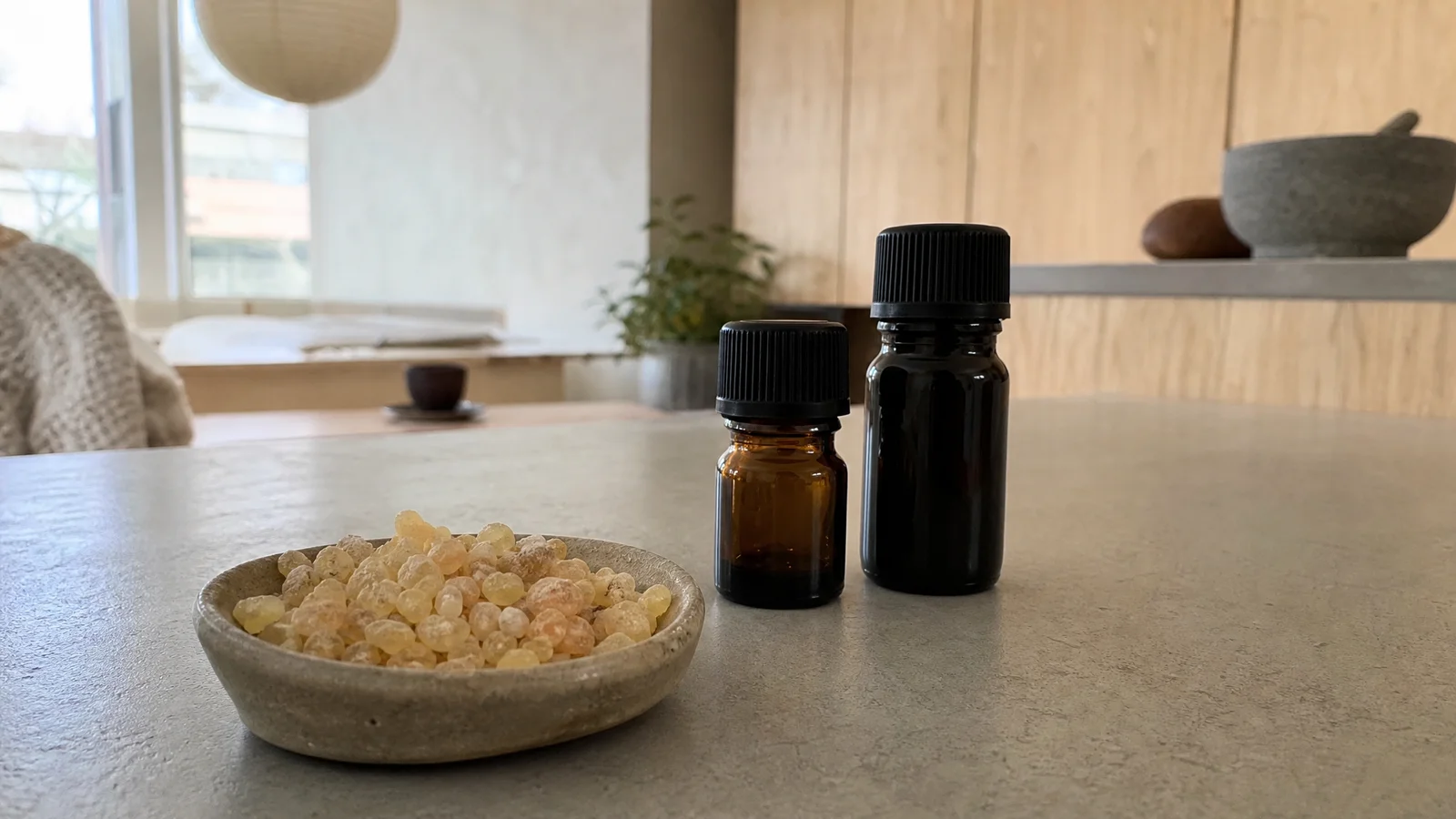
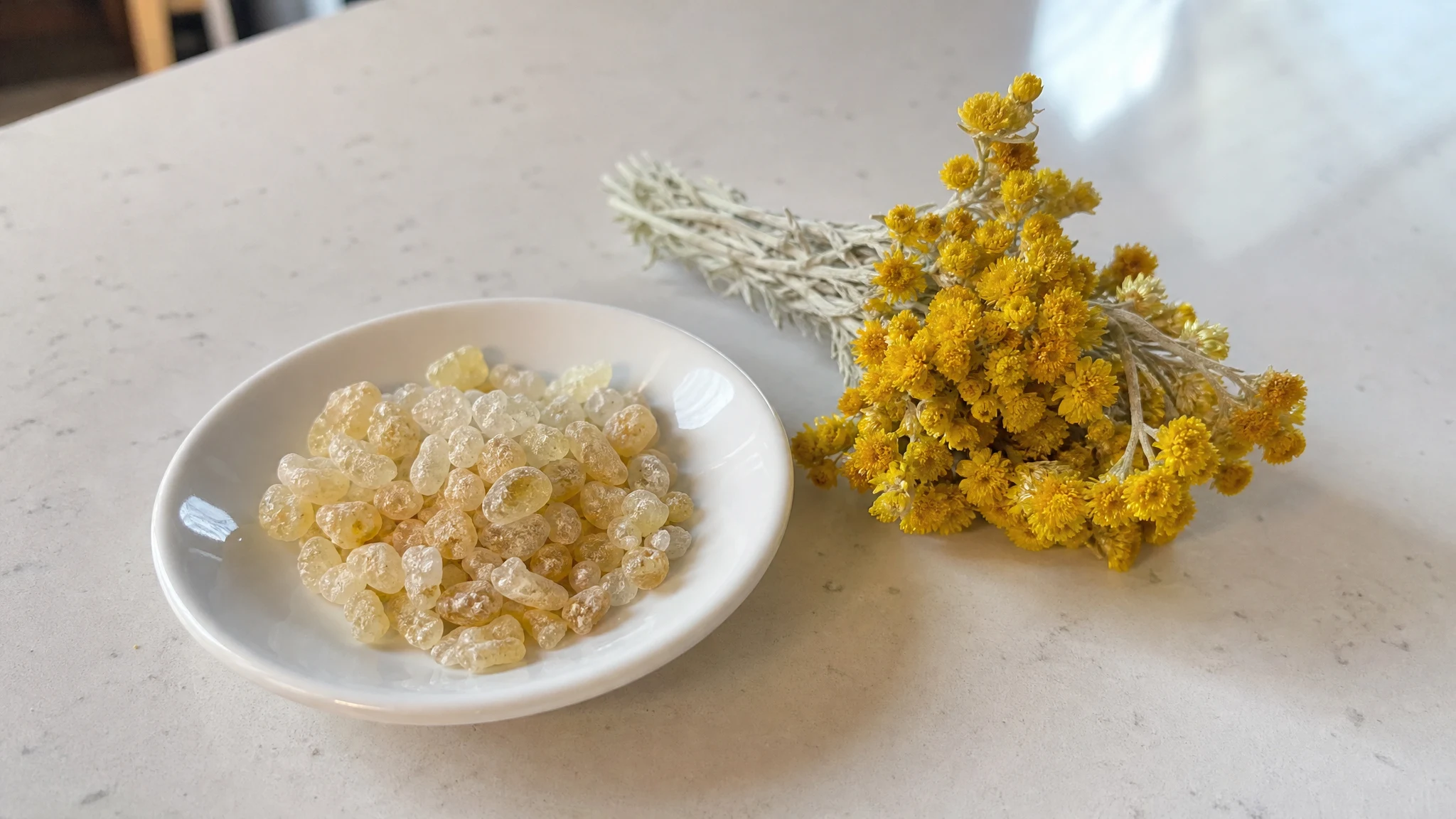
Most of us know turmeric as a golden spice that stains fingers and chopping boards. Frankincense we know as a pale, resinous liquid in a small amber bottle that is opened in short bursts. They live in different cupboards for good reason, and the headlines that put them together are really about capsules, not about either of those things.
It is a fair instinct to want one clear answer, and we understand why people go looking for a winner. The more useful habit is to slow down a little and ask what was actually in the capsule, because that is where most of these stories change shape.
Where does frankincense oil belong in the cupboard?
We sell six single-species frankincense essential oils for aroma, with no turmeric, capsules or resin. Serrata is warm and slightly woody with subtle citrus and pine top notes, sacra is deep, balsamic and honeyed, and frereana is bright and lemon-pine. We make no claim that any of them does anything for pain, and nobody should swallow an essential oil to imitate a capsule dose. If joint pain or arthritis is the real question, a physician, rheumatologist or pharmacist who knows your medicines is the right conversation, and our medications post gathers what we could source on interactions. Our pain evidence post and our CBD comparison read the same studies and reach the same limits.
What we would rather you took from this
We love frankincense for the way it smells and the way it fills a room. That is the whole of what we sell it for. If this page leaves you more careful about reading a claim, asking what exactly was tested and against what, it has done its job.
For skin use, the usual cautions apply: dilute, patch test and keep oils away from eyes. As our disclaimer says, ask your healthcare provider first if you are pregnant, nursing, taking medications or have a medical condition. The aroma, at least, needs no trial to enjoy.
Frankincense Essential Oil
Serrata, carterii, sacra, frereana, neglecta and rivae: steam-distilled, GC/MS verified, in sizes from 0.5 oz to bulk.
From $12.99 $10.40 with code BLACKFRIDAY
Sources & Further Reading
- Efficacy of Turmeric Extracts and Curcumin for Alleviating the Symptoms of Joint Arthritis: A Systematic Review and Meta-Analysis of Randomized Clinical Trials (Daily, Yang and Park, 2016, PubMed)
- Efficacy of curcumin and Boswellia for knee osteoarthritis: Systematic review and meta-analysis (Bannuru et al., 2018, PubMed)
- Turmeric: Usefulness and Safety (NCCIH)
- Boswellia: Usefulness and Safety (NCCIH)
- Does Frankincense oil contain boswellic acid? (Tisserand Institute)