Tea Tree vs Frankincense Oil: Spec Sheet or Species?
Side by side on a shelf, tea tree and frankincense look like two bottles of the same sort of thing. They are not, and the difference is a handy lesson in how to shop for any essential oil. Tea tree is one plant with an international standard behind it. Frankincense is a whole family of trees, and what is in the bottle depends on which one and how it was distilled.

Frankincense Essential Oil
Six single-origin frankincense varieties, steam-distilled and GC/MS verified.
From $12.99 $10.40 with code BLACKFRIDAY
Tea tree oil ISO 4730 terpinen-4-ol standard
A well-known review of tea tree oil (Carson, Hammer and Riley, 2006) explains that the ISO 4730 standard asks for at least 30% terpinen-4-ol and no more than 15% 1,8-cineole. Those two numbers give a buyer something concrete to hold a seller to: a report either fits or it does not. That is a real convenience, and it comes from tea tree being a single species harvested for a single, well-defined oil.
Does frankincense oil have a single standard number?
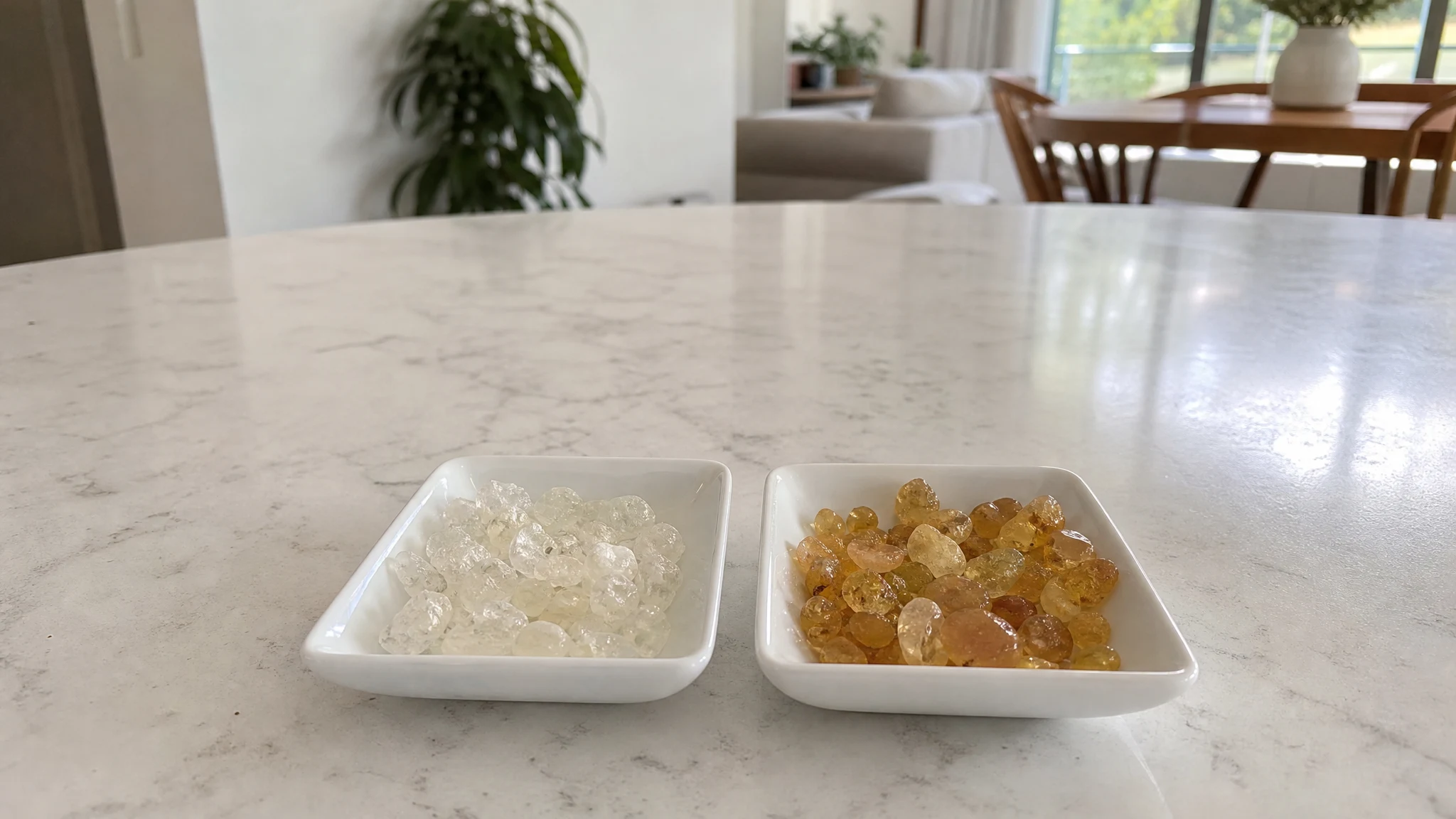
There is no single equivalent number for frankincense. We sell six steam-distilled, single-species oils: serrata, carterii, sacra, frereana, neglecta and rivae. Each smells different. Our serrata is warm and slightly woody with subtle citrus and pine top notes, our sacra is deep, balsamic and honeyed, and our frereana is bright, fresh and lemon-pine. With frankincense, the first question is not "does it hit a percentage" but "which species is this, and can that be shown for this lot?"
Published work shows why. An analysis of 21 commercial oils sold online as Boswellia carteri (Ojha and colleagues, 2022) found synthetic limonene in six samples, synthetic octyl acetate in three and castor oil in three, and used chiral analysis as a fingerprint for authentication. It is a single sample set, not a judgement on any one seller. The one Certificate of Analysis we publish is for a serrata batch and lists density, refractive index and optical rotation, not compounds. If you need GC/MS or species confirmation, ask us in writing through our contact page for the report for the exact variety and lot. Our guide to reading a GC/MS report will help you interpret it.
Why does oil freshness matter for tea tree?
Tea tree has an extra lesson for everyone who keeps essential oils. The Carson review says allergic reactions to tea tree oil appear to be caused mainly by oxidation products that occur in aged or improperly stored oil, and recommends a dark, cool, dry place and a container with little air. The Tisserand Institute suggests keeping it refrigerated and using it within one to two years of purchase, and notes that a p-cymene level of about 6% or more on a report suggests oxidation, against roughly 2 to 4% in fresh oil.
Those figures are for tea tree. We do not state a shelf life for frankincense, but the habits translate sensibly: tight cap, dark glass, cool spot, and not leaving a bottle open to the air. Our storage post covers the general advice.
Smelling tea tree against frankincense species
Put the science aside for a moment and just smell them. Tea tree is sharp and clean, with a medicinal edge you will recognise at once. Frankincense is warmer and more resinous, and which one you are smelling depends on the species. Our sacra is deep, balsamic and honeyed, while our serrata leans warm and woody. If you want something brisk, tea tree will do it; if you want a scent to linger in, frankincense is the more comfortable companion.
Is tea tree research comparable to frankincense research?
Tea tree has a substantial literature, much of it laboratory work, and none of it is a head-to-head against frankincense. Frankincense research mostly concerns resin extracts rich in boswellic acids, which are non-volatile; the Tisserand Institute says there is no reliable report of them in frankincense oil made by normal distillation. So a headline about one does not transfer to the other, and neither tells you what a bottle of oil will do for you. We sell ours for aroma, and our posts on acne and eczema and psoriasis explain why skin conditions belong with a dermatologist.
Dating essential oil bottles and storing them together
It sounds fussy, but a little order helps. Write the date you opened each bottle on its label, keep them together in one cool, dark spot away from windowsills and radiators, and put the caps back on as you go. When bottles live in one place, you notice which one you have not touched in a year and which smells different from before.
Diluting tea tree or frankincense before use
Both belong diluted. The Tisserand Institute's general bands are 0.2 to 1% for sensitive skin, 0.5 to 1.2% for facial products and 1 to 3% for body oils, and it advises against undiluted use. Our dilution guide shows the arithmetic. Patch test first, keep both out of eyes and mucous membranes, never swallow either, and keep oils out of reach of children. Ask a healthcare provider before use if you are pregnant, nursing or on medication, and ask a veterinarian about pets, since our pets post shows how little can be promised.
If you are new to both, a small bottle is the friendliest way to begin. It is easier to finish while it is fresh, and it lets you find out what you actually like before you commit to more. You can always come back for another.
If you want a bottle with a spec sheet to check against, tea tree is your oil; if you want something warm and resinous with a character that changes by species, that is frankincense. Different bottles, both good company on a shelf.
Frankincense Essential Oil
Serrata, carterii, sacra, frereana, neglecta and rivae: steam-distilled, GC/MS verified, in sizes from 0.5 oz to bulk.
From $12.99 $10.40 with code BLACKFRIDAY
Sources & Further Reading
- Melaleuca alternifolia (Tea Tree) oil: a review of antimicrobial and other medicinal properties (Carson, Hammer and Riley, 2006)
- Tea Tree Oxidation and Safety (Tisserand Institute)
- Comparison of Volatile Constituents Present in Commercial and Lab-Distilled Frankincense (Boswellia carteri) Essential Oils for Authentication (Ojha et al., 2022)
- Does Frankincense oil contain boswellic acid? (Tisserand Institute)
- Dilution for essential oils (Tisserand Institute)