How to Store Frankincense Oil So It Stays Fresh
A bottle of frankincense oil on a bathroom shelf next to a sunny window is quietly ageing faster than the same bottle in a bedroom drawer. Essential oils react with the world around them, and three things drive most of that: oxygen, light and heat. The good news is that keeping all three in check takes about a minute of thought and no special equipment.

Frankincense Essential Oil
Six single-origin frankincense varieties, steam-distilled and GC/MS verified.
From $12.99 $10.40 with code BLACKFRIDAY
Frankincense oil storage advice: cool, dark, sealed
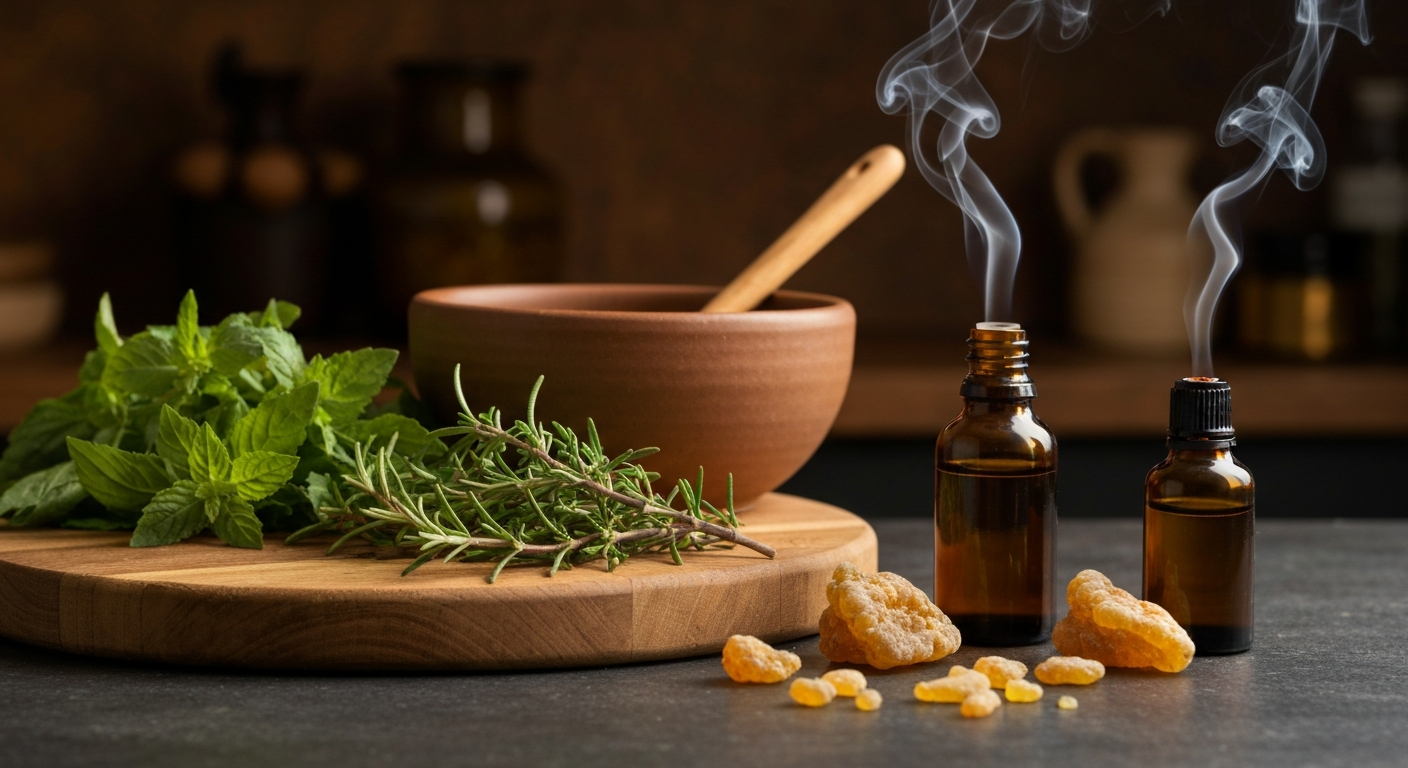
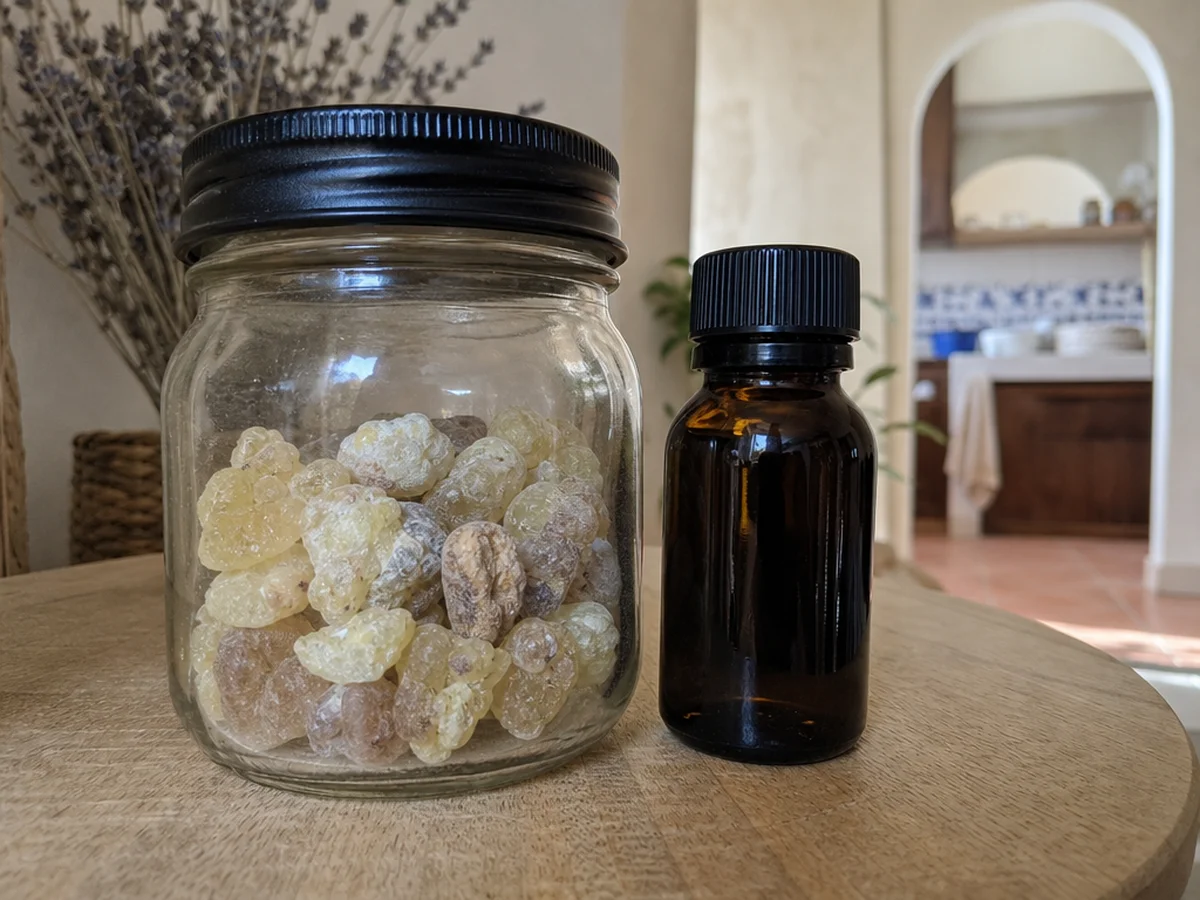
The Tisserand Institute's advice is short: "Store essential oils in a cool, dark place in a well-sealed container." It adds that plastic should not be used for essential oils or blends and that glass, preferably dark glass, is the better choice. That matches how we bottle: our oils go into amber glass with a black cap, which keeps most light out before the bottle ever reaches your shelf.
The reasoning behind it is simple chemistry. Many of the aromatic molecules in an essential oil are terpenes, and terpenes combine with oxygen in the air over time. The oil does not turn into something else overnight, but its smell can drift, and the changed molecules behave differently on skin.
Why does oxidised oil matter on skin?
Dermatology research gives a clear picture of that skin angle, though none of it was done on frankincense. A review of a century of work on turpentine allergy concluded that oxidation products of monoterpenes are a common cause of contact allergy in the population. In a patch-test study of 1,511 dermatitis patients at six European centres, 1.3% reacted to oxidised linalool and about 0.5% to oxidised caryophyllene, while the unoxidised compounds were not themselves allergenic. The authors concluded that terpene oxidation contributes greatly to fragrance allergy. Those patients were already attending dermatology clinics, so the figures are not a risk estimate for everyone.
Why mention it for frankincense? Reasoning from the chemistry, not from a study of our oils: frankincense oils are rich in monoterpenes. In a laboratory analysis of Omani Boswellia sacra oils, alpha-pinene made up roughly 71% to 80% of the early fractions. A monoterpene-rich oil is exactly the type that has plenty to react with, which is a good reason to keep it sealed and cool. This is a general observation about those lab samples and about oxidation, not a statement about the composition of any bottle we sell.
Closing the cap and minding headspace
- Close the cap straight away. Air is the first thing to keep out, and every opening lets some in.
- Mind the headspace. A bottle that is nearly empty is mostly air. Moving the remainder into a smaller clean glass bottle that it nearly fills cuts the oxygen it sits with. For scale, a 1 oz bottle holds about 29.6 ml, so 5 ml of oil in it has a lot of room for air. This is reasoning from how oxidation works, not a measured gain in shelf life.
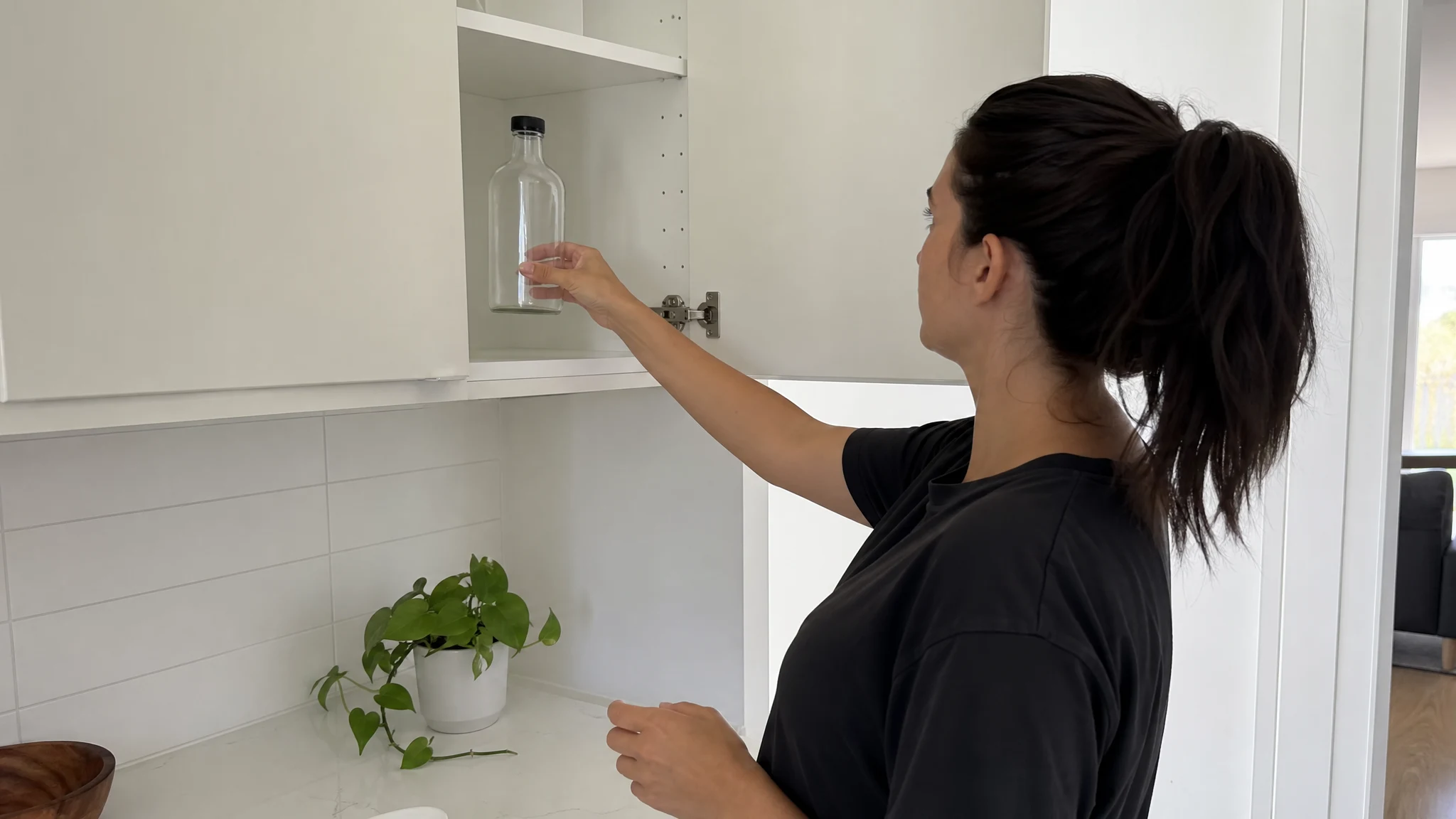
- Pick a spot that stays steady. A cupboard away from stoves, radiators, windowsills and parked cars beats a countertop.
- Write the date you opened it on the label. It is a useful memory aid, since you will otherwise forget how long a bottle has been in use.
- Trust your nose. If an oil smells sharper or flatter than it did when you opened it, keep it for diffusing at most, and leave it off your skin.
It is worth looking at how you actually use the bottle. If it lives on your desk because you smell it every day, that is a perfectly good reason to keep it handy, but a cooler spot at night is kinder to the oil. Move it back each evening and it soon becomes second nature.
Best house spots for frankincense oil bottles
A bedroom drawer, a pantry shelf away from the stove, or a closed cupboard in a room that stays steady are all better than a bathroom or a kitchen counter. Bathrooms swing between hot and cool, and kitchens are warm for hours at a time. If you want your bottles to be easy to reach, keep them together in a small box so they travel as one.
How long does frankincense oil last?
You will see a range of years quoted for frankincense oil, and the sources disagree, so we would rather not add another number to the pile. What we can say is that storage matters more than the calendar. A small bottle that is capped promptly and kept cool and dark will stay pleasant longer than a large one that lives next to the stove.
That is also a purchasing tip. If you reach for a bottle only now and then, a size you will finish in reasonable time means fewer openings. Our species overview can help you pick which of the six to start with, and the dilution guide covers how to use whatever you choose on skin.
Small handling habits
Wipe the neck of the bottle with a clean tissue before you put the cap back on, so nothing sticky builds up in the threads. Set the cap down on a clean surface while you work, and put the bottle back where it lives as soon as you are done.
Child-safe storage for essential oil bottles
The Tisserand Institute recommends keeping essential oils where young children cannot reach them and never letting children handle the bottles. A high shelf helps, a closed cupboard or lockable box is better. If you share a home with animals, read our pets article as well, since storage and diffusing habits both matter there.
A little care here pays you back every time you open the bottle and the scent is still warm, resinous and just as you remember it.
Frankincense Essential Oil
Serrata, carterii, sacra, frereana, neglecta and rivae: steam-distilled, GC/MS verified, in sizes from 0.5 oz to bulk.
From $12.99 $10.40 with code BLACKFRIDAY
Sources & Further Reading
- Tisserand Institute. A Beginner's Guide to Essential Oils Part 2: How to Use Essential Oils.
- Tisserand Institute. How to Use Essential Oils Safely.
- Karlberg AT, Lepoittevin JP, 2021. One hundred years of allergic contact dermatitis due to oxidized terpenes: What we can learn from old research on turpentine allergy. Contact Dermatitis.
- Matura M et al., 2005. Selected oxidized fragrance terpenes are common contact allergens. Contact Dermatitis.
- Di Stefano V et al., 2020. In Vitro Antimicrobial Activity of Frankincense Oils from Boswellia sacra Grown in Different Locations of the Dhofar Region (Oman). Antibiotics.