Carterii Frankincense Facial Oil: A Simple Recipe
A good facial oil is a simple thing: a stable carrier, a whisper of scent, and nothing else to fuss over. With carterii, our warm, woody, slightly citrusy frankincense, it makes a small bottle that feels like a quiet evening ritual. This version keeps the strength low and the ingredient list short, which is where facial oils tend to do their best work.

Frankincense Essential Oil
Six single-origin frankincense varieties, steam-distilled and GC/MS verified.
From $12.99 $10.40 with code BLACKFRIDAY
Boswellia carterii from Somalia's Cal Madow mountains
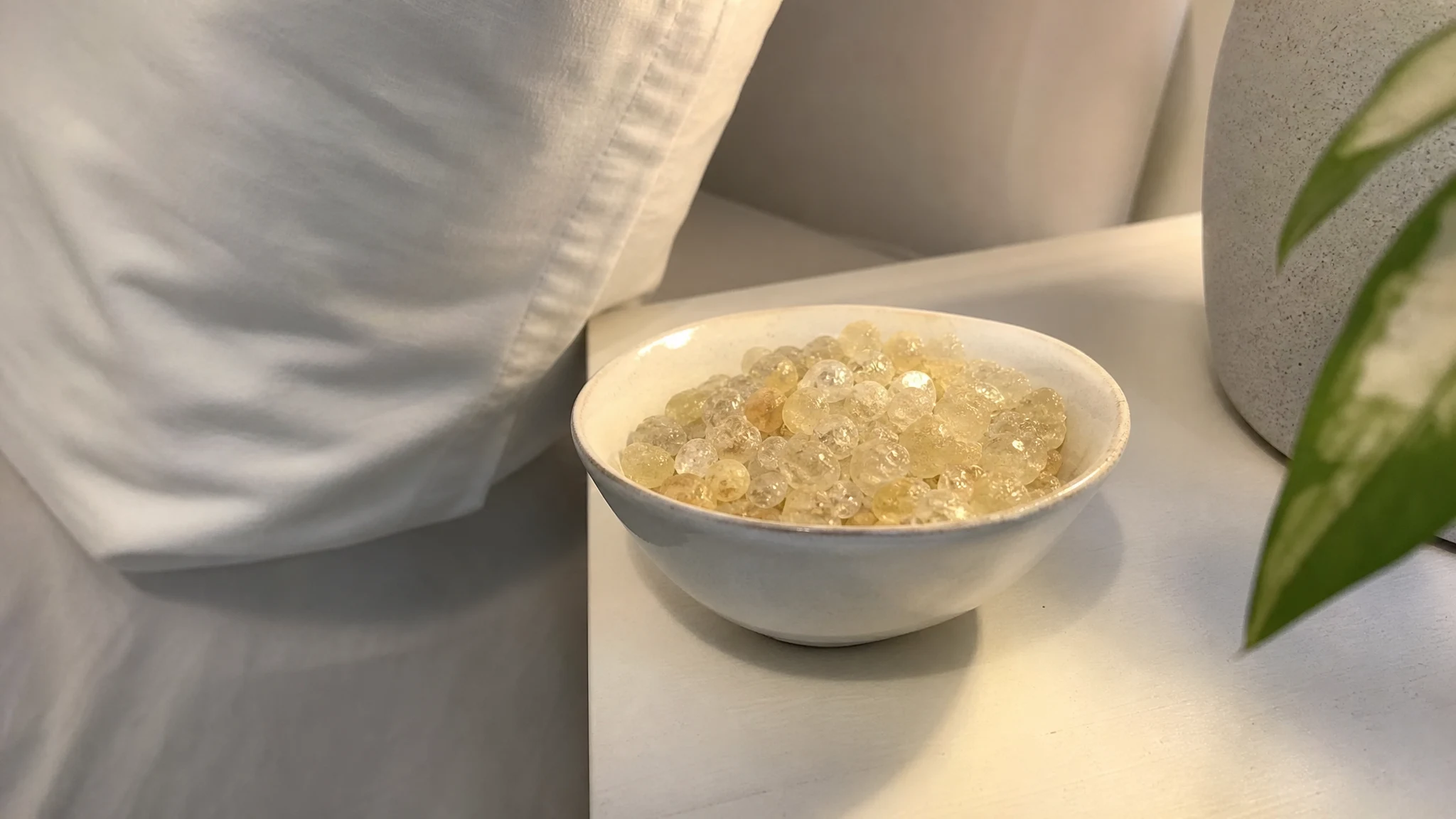
We list our Boswellia carterii as coming from the Cal Madow mountains in Somalia, sold as Royal Hojari, with a warm, woody aroma, a touch of citrus and a classic resinous depth. It is the frankincense most people recognize, which makes it a friendly choice for something you will smell up close, every night. Our species overview compares it with the other five if you want something brighter or deeper.
We sell steam-distilled essential oil, so the aroma is the volatile side of the resin. The boswellic acids that come up in so many frankincense discussions sit mostly in resin extracts, not in distilled oil, as Tisserand explains in Does Frankincense oil contain boswellic acid? Think of this as a scented facial oil. If you would like details on the lot you are buying, write to us through the contact page.
Why keep carterii facial oil dilution low?
Face skin asks for a lighter hand. Tisserand's dilution guidance gives 0.5 to 1.2 percent for facial cosmetics and 0.2 to 1 percent for sensitive or reactive skin, and notes that even dilutions can be drying. We suggest starting at 0.5 percent and going to 1 percent at most, after a patch test. That is our reasoning from the ranges, not a figure the page gives for any particular oil.
Which carrier oil suits a facial blend?
At 0.5 percent, the other 99.5 percent is carrier, so the base decides how the oil feels. In a small study of 19 adults, sunflower seed oil preserved the skin barrier on the forearm and improved hydration, while olive oil weakened it and caused mild redness (Danby and colleagues). For a face oil used nightly, sunflower or jojoba is therefore our pick over olive.
We like jojoba for a bottle that sits on a shelf. In heating tests, crude jojoba took 51 to 220 days to reach a small weight gain from oxidation, while other common oils such as almond, argan and sunflower took roughly 1 to 29 days (Tsuchimoto, Sakai and Fukui). That is a lab test, not a shelf-life promise, but it helps explain why jojoba holds up. Our carrier oil guide covers more options, and you will find carriers at a grocery, a health-food store or a cosmetic supplier.
Jojoba and carterii oil formula at 30 g
| Ingredient | 30 g at 0.5 percent | 30 g at 1 percent |
|---|---|---|
| Jojoba oil | 29.85 g | 29.7 g |
| Carterii essential oil | 0.15 g | 0.30 g |
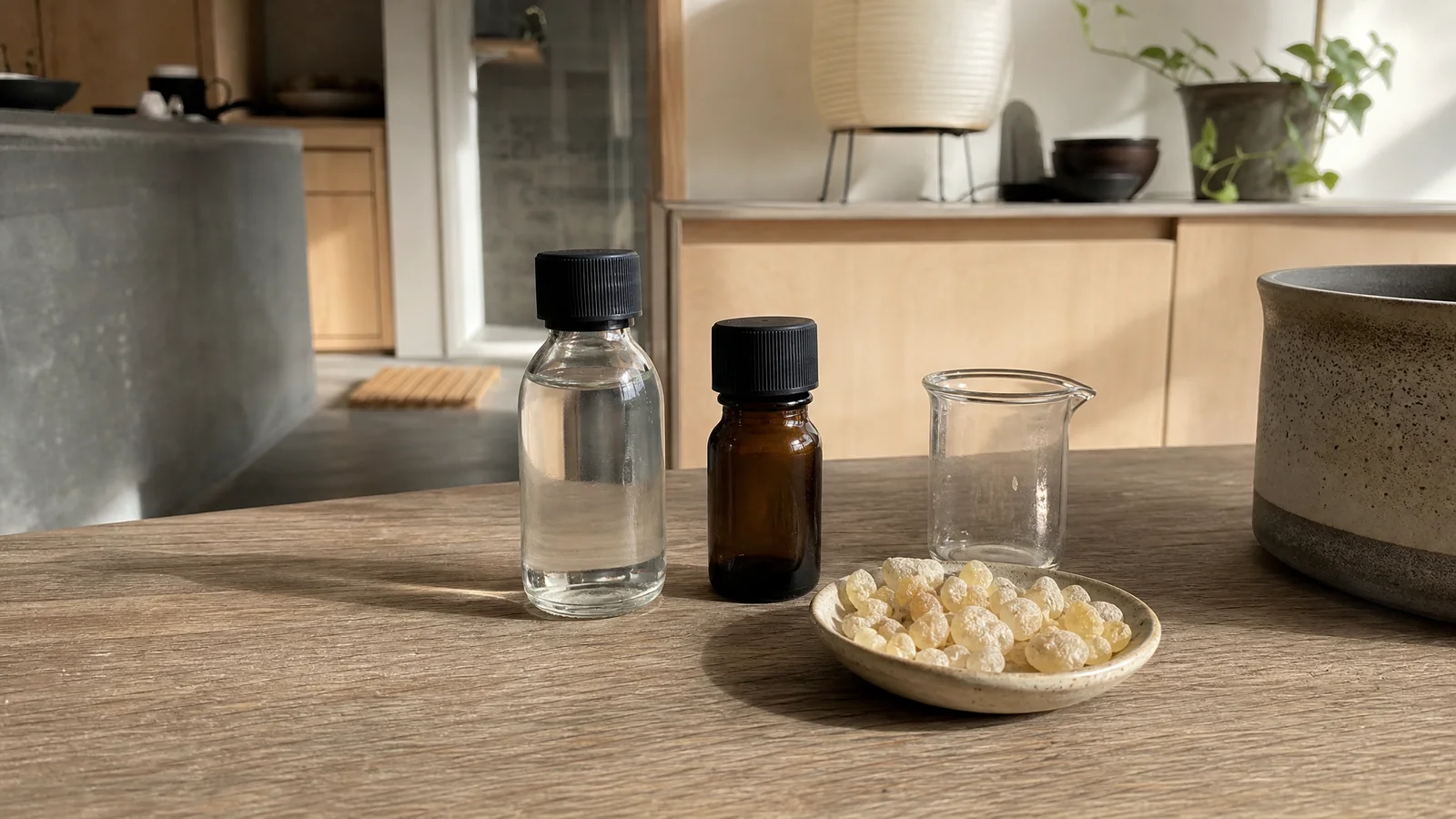
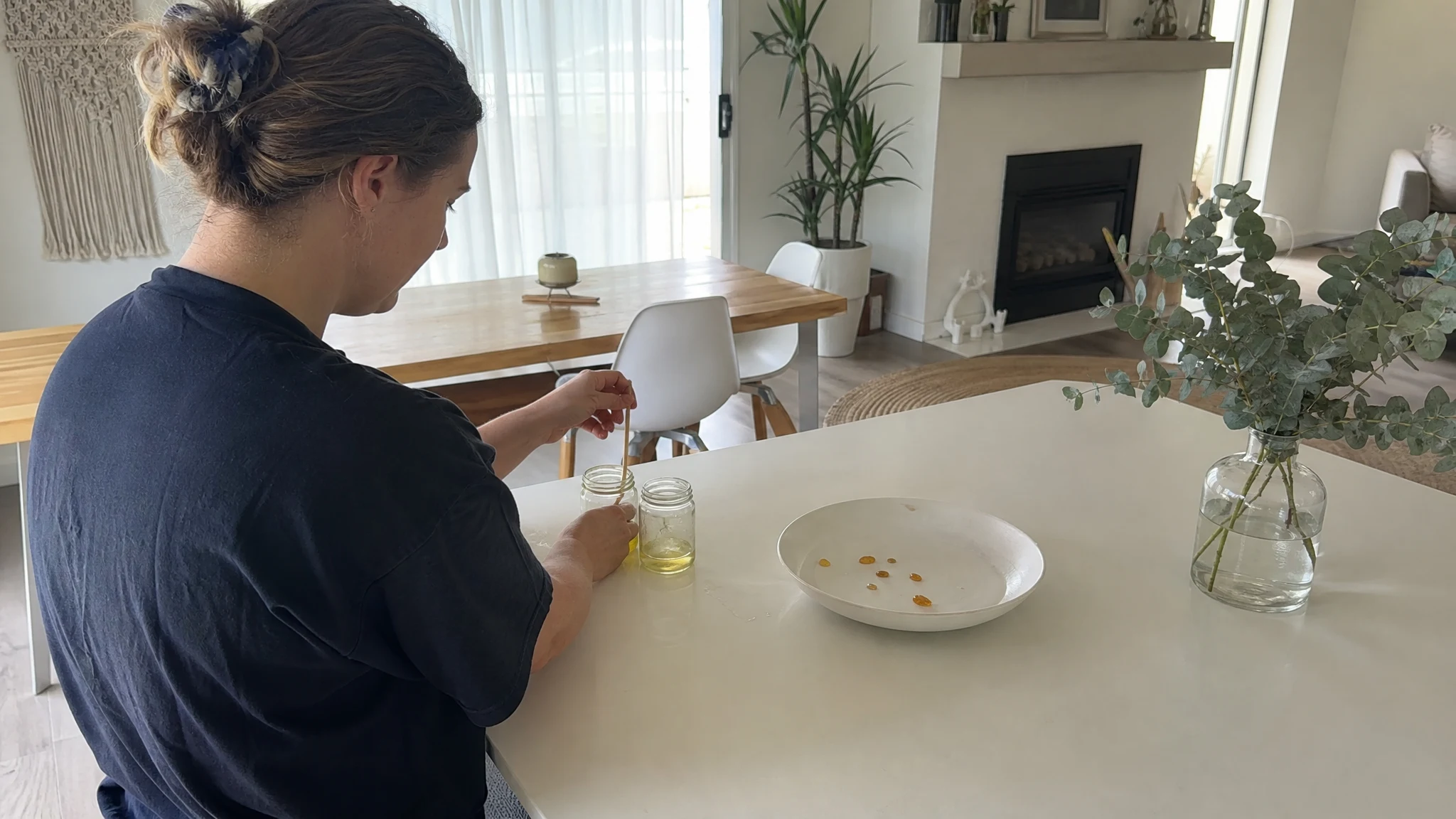
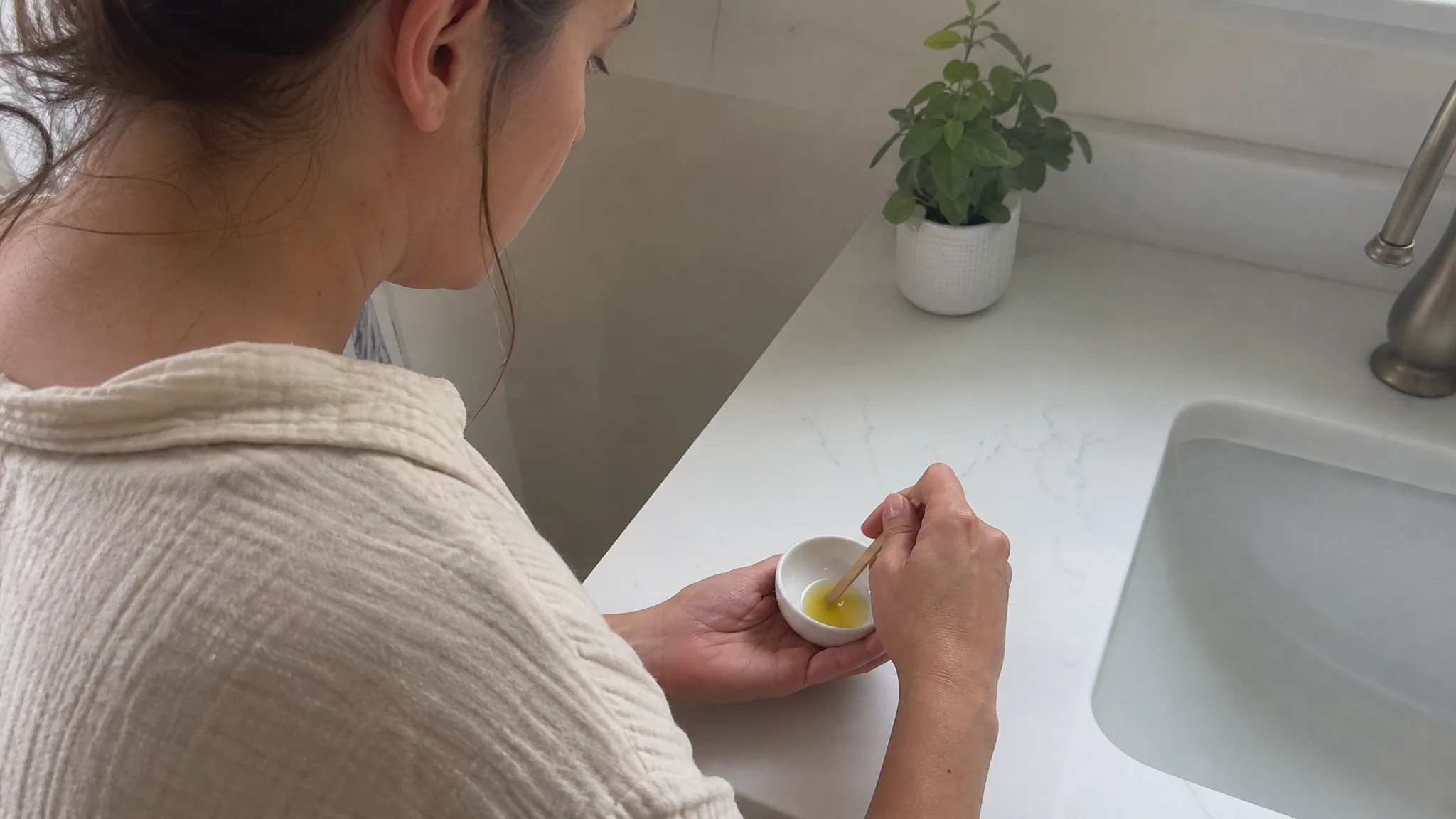
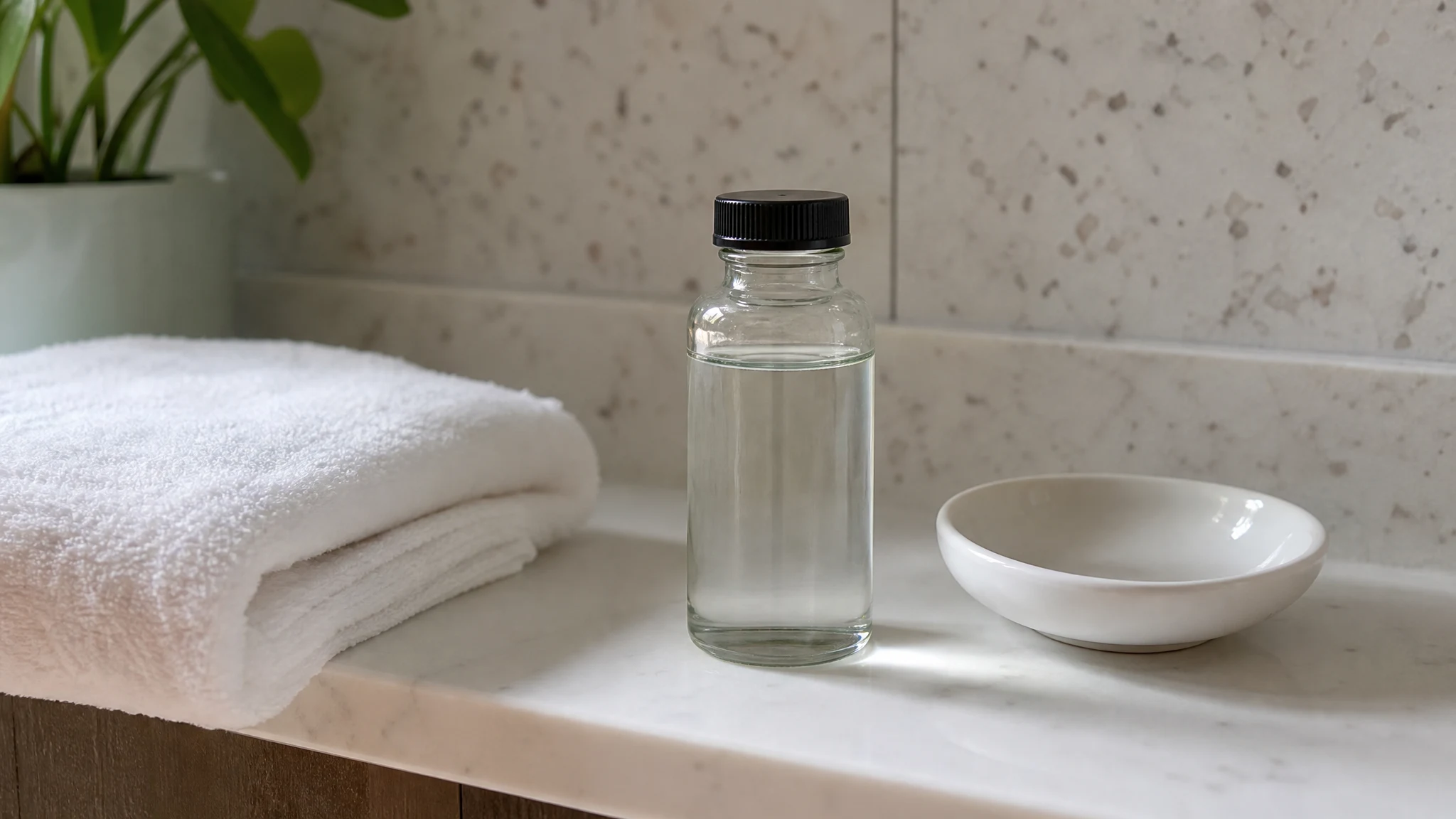
It is a single carrier and a single oil, deliberately plain. Weigh the essential oil on a scale that reads to 0.01 g. Drop counts are rough: at a convention of 20 drops per millilitre, 0.15 g is about three to four drops, and Tisserand notes drop conversions are always approximate. Put the jojoba in a clean dark glass bottle, add the oil, cap, roll the bottle between your palms, and label it with the date and strength. Make 30 g at a time so it stays fresh.
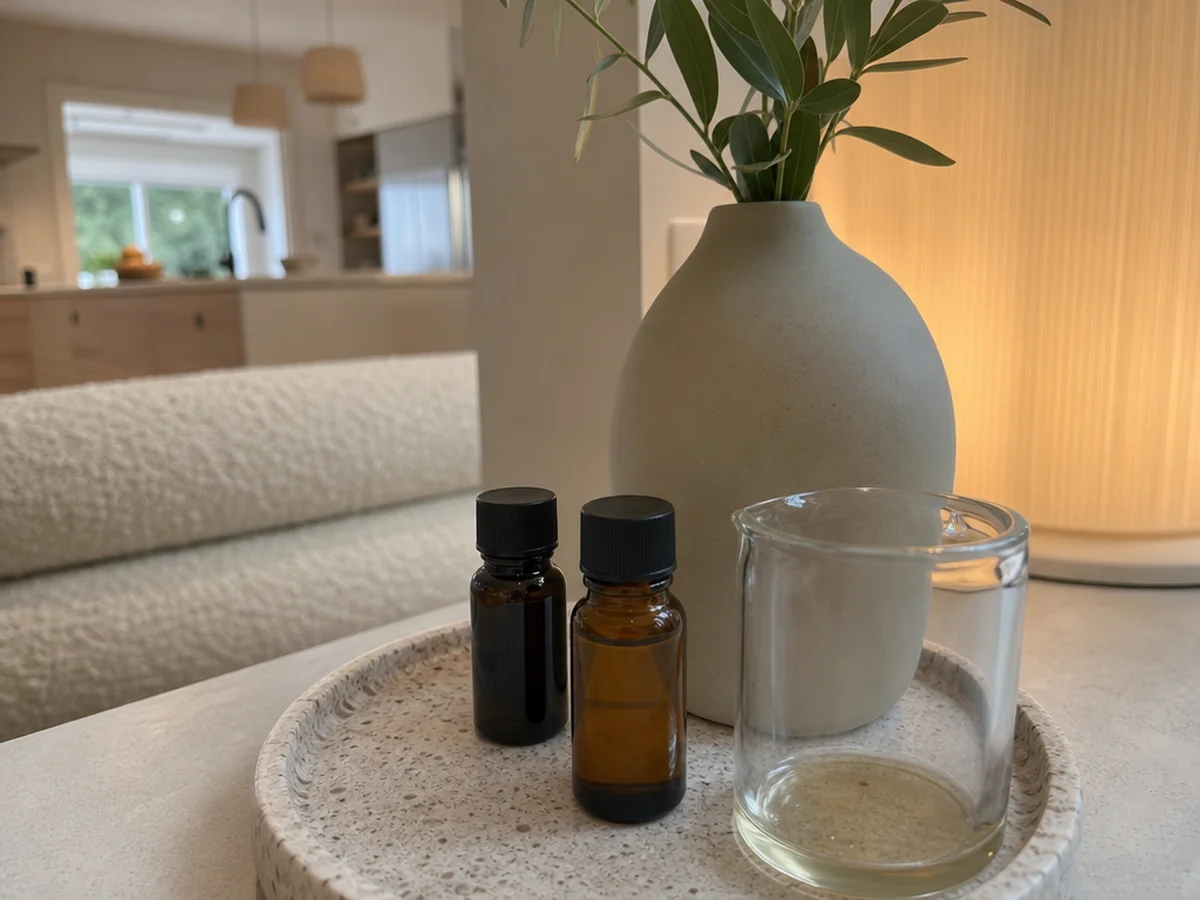
Pressing facial oil in during the evening
A facial oil is best used in the unhurried part of the day. Put a few drops in your palm, rub your hands together to warm them, and press the oil gently over clean skin rather than rubbing hard. Take a moment to breathe in while your hands are near your face; at 0.5 percent the scent is subtle, and this is when you will notice it most.
Smell the finished oil in its bottle, too. You should find a soft, warm woodiness with a little citrus, not a loud perfume. If it smells strong, the mix has too much essential oil in it, and a fresh batch at a lower strength is the fix. Small batches also mean you finish the bottle while it still smells the way you intended.
Patch testing a diluted carterii frankincense facial oil
- Patch test first. Test the diluted oil on a small patch and watch for redness over 24 hours. Tisserand reminds us that anyone can be allergic to any essential oil (A Beginner’s Guide to Essential Oils Part 2).
- Ease in. We would use it every second evening at first, our own precaution, to see how skin responds.
- Stop if it stings, burns or reddens.
- Consider a fragrance-free product if you have rosacea, eczema, psoriasis or a history of fragrance reactions, and ask a dermatologist. The American Academy of Dermatology recommends fragrance-free products for dry, sensitive skin (Dermatologists’ top tips for relieving dry skin). Our eczema post has more.
- Keep it away from eyes and children, and do not swallow it. If you are pregnant or breastfeeding, ask a midwife or physician first.
Freshness is part of comfort, too. Heat, light and oxygen age essential oils, so store the bottle in a cool, dark place and replace it if the smell changes. Our storage guide has the details.
If you give a bottle as a gift, call it what it is, a scented facial oil. The FDA judges products by how they are described (Aromatherapy), and a simple, honest label is also the nicest kind. Our facial application guide walks through technique.
It is a small, calm, good-smelling thing to make, and it asks very little of you.
Frankincense Essential Oil
Serrata, carterii, sacra, frereana, neglecta and rivae: steam-distilled, GC/MS verified, in sizes from 0.5 oz to bulk.
From $12.99 $10.40 with code BLACKFRIDAY
Sources & Further Reading
- Does Frankincense oil contain boswellic acid?, Tisserand Institute
- Dilution for essential oils, Tisserand Institute
- Effect of olive and sunflower seed oil on the adult skin barrier: implications for neonatal skin care., Pediatric Dermatology, 2013
- Oxidative Stability and Antioxidant Activity of Crude Jojoba Oil, BPB Reports, 2022
- A Beginner’s Guide to Essential Oils Part 2: How to Use Essential Oils, Tisserand Institute
- Dermatologists’ top tips for relieving dry skin, American Academy of Dermatology
- Aromatherapy, US FDA