Whipped Frankincense Body Butter, No Water Needed
There is a reason this post is about body butter rather than lotion. A lotion is oil and water, and anything with water in it needs a preservative system to stay safe. A whipped butter has no water, so it needs none, and it is also just a joy to make: rich, soft and scented with serrata, our warm, slightly woody oil with subtle citrus and pine top notes.

Frankincense Essential Oil
Six single-origin frankincense varieties, steam-distilled and GC/MS verified.
From $12.99 $10.40 with code BLACKFRIDAY
Why water-free frankincense butter resists contamination
The FDA's page on Microbiological Safety and Cosmetics lists how cosmetics become contaminated: raw materials or water, poor manufacturing conditions, an ineffective preservation system, packaging, storage and everyday use. It adds that microorganisms can grow faster in warm or damp storage and that preservatives can break down. A home-made lotion in a jar on a bathroom shelf touches several of those at once. Leave out the water and you leave out most of the concern. We sell essential oil only, so we have no preservative to offer, and a water-free recipe is the one we recommend.
A word on dry skin, too. The American Academy of Dermatology says ointments and creams add more moisture than lotions and suggests fragrance-free products for dry, sensitive skin (Dermatologists’ top tips for relieving dry skin). So make this butter because you love the scent, and if your skin is very dry or reactive, a fragrance-free product is the better pick.
Shea butter plus a light liquid oil
A whipped butter needs one solid fat and one liquid oil. Shea butter gives the body, and a light liquid oil keeps it spreadable. Sunflower seed oil is a good liquid: in a small study of 19 adults, it preserved the skin barrier on the forearm and improved hydration, while olive oil weakened it and caused mild redness (Danby and colleagues). That study used six drops twice daily for several weeks, so it is a reason to prefer sunflower for a body product you will use daily, not a ban on olive. Buy shea and sunflower oil from a grocery, soap-making or cosmetic supplier and check the dates.
Frankincense body butter formula for a 100 g batch
These proportions are our arithmetic and a starting point to adjust by feel:
| Ingredient | 100 g batch |
|---|---|
| Shea butter | 59 g |
| Sunflower seed oil | 40 g |
| Serrata essential oil | 1 g (1 percent) |
Why 1 percent? Tisserand's dilution guidance gives 1 to 3 percent for body oils and lotions and 0.5 to 1.2 percent for the face, and notes that even dilutions can be drying. The low end of the body range is a comfortable place to begin for something you will wear every day. A higher percentage gives more exposure, not a better butter, so resist adding more if it smells subtle at first.
Weigh the oil if you can, since drop conversions are always approximate. For the serrata batch our Certificate of Analysis covers, 1 ml weighs about 0.838 g, so 1 g is about 1.2 ml. At a rough convention of 20 drops per millilitre that is around 24 drops, and for a 60 g jar, 0.6 g, about 14 drops.
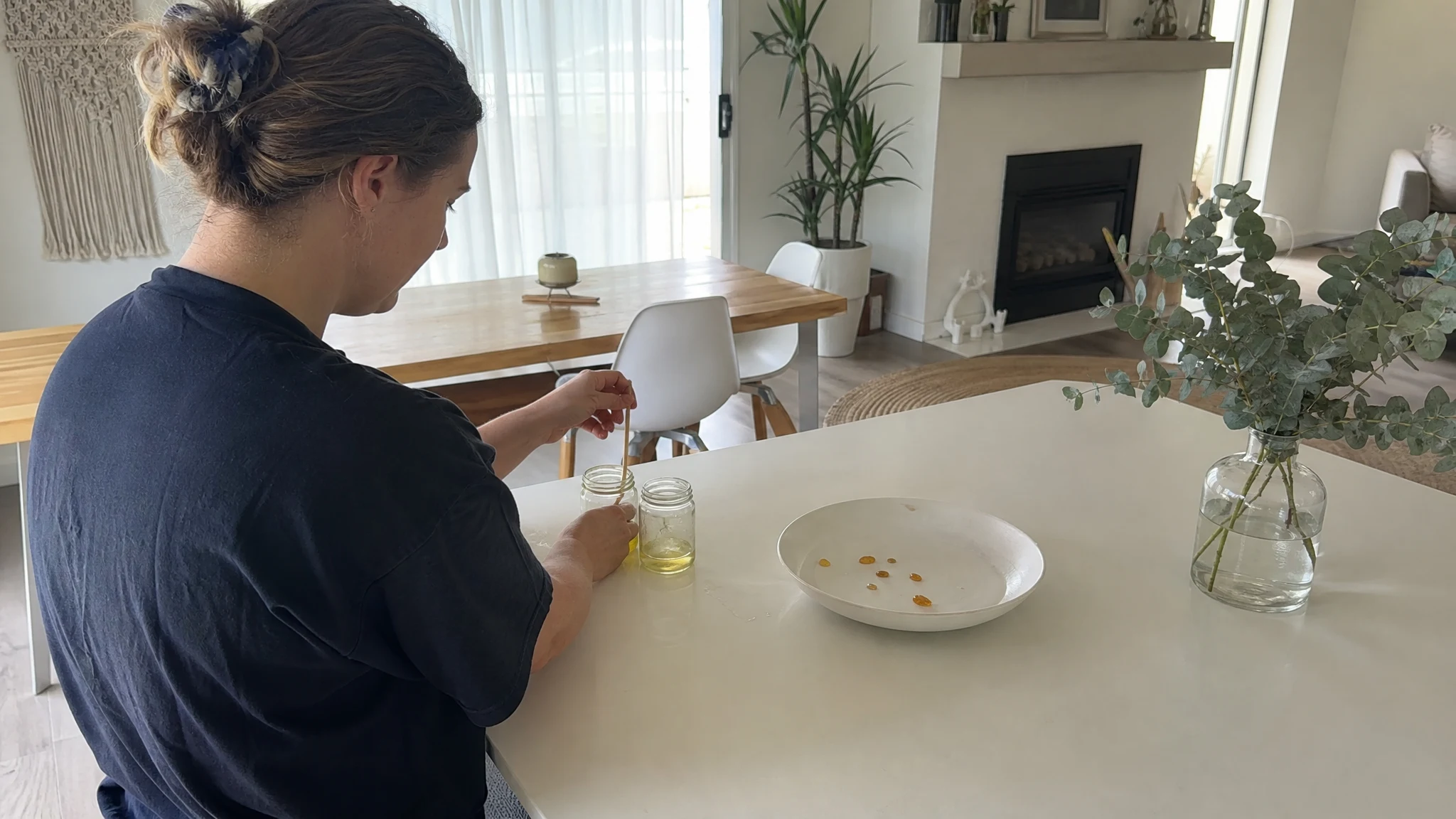
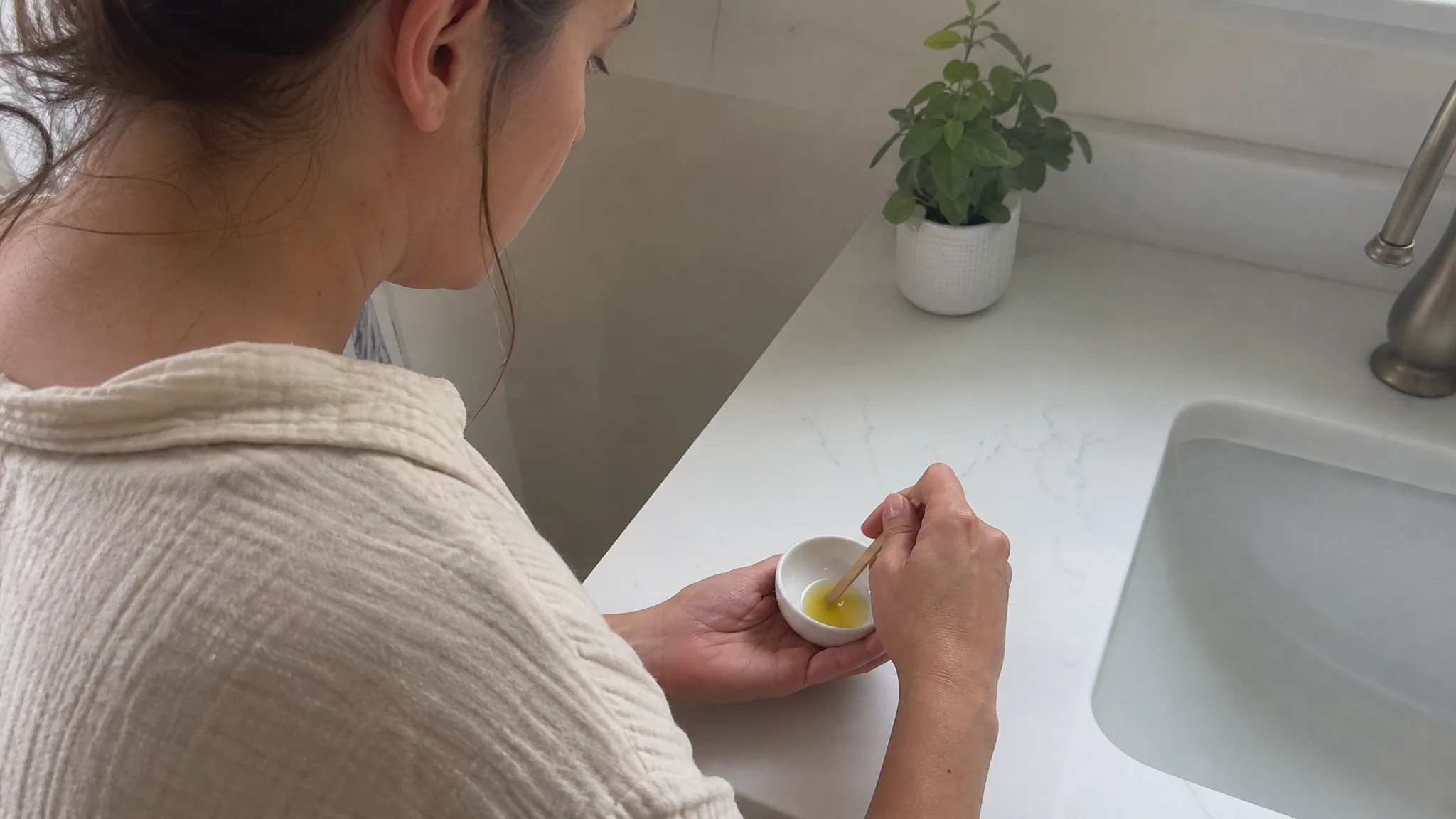
- Gently melt the shea butter and sunflower oil together in a heatproof bowl over hot water, just until liquid. Keep water out of the bowl.
- Chill until it is a soft paste, firm at the edges and a little cloudy in the middle. The fridge works well.
- Whisk for several minutes until it lightens and holds peaks, adding the essential oil in the last minute so heat does not linger on it. Tisserand notes that heat, light and oxygen speed degradation (A Beginner’s Guide to Essential Oils Part 2).
- Spoon into clean, dry jars and label with the date and percentage.
Use a clean spatula to take butter from the jar. The FDA suggests washing hands before use, especially if you dip fingers in, and even a water-free butter benefits from that habit.
Is water-free butter richer than lotion?
Because there is no water, the butter feels richer, closer to an ointment than a lotion. The AAD suggests applying moisturizer while skin is still damp after a shower and reapplying through the day, and a thin layer on damp skin goes much further than a thick one on dry skin. We keep this butter for the body, since 1 percent is a body figure. Make 30 to 60 g at a time, keep it cool and out of sunlight, and replace it when the smell turns sharp or flat.
Whisking whipped shea into soft peaks
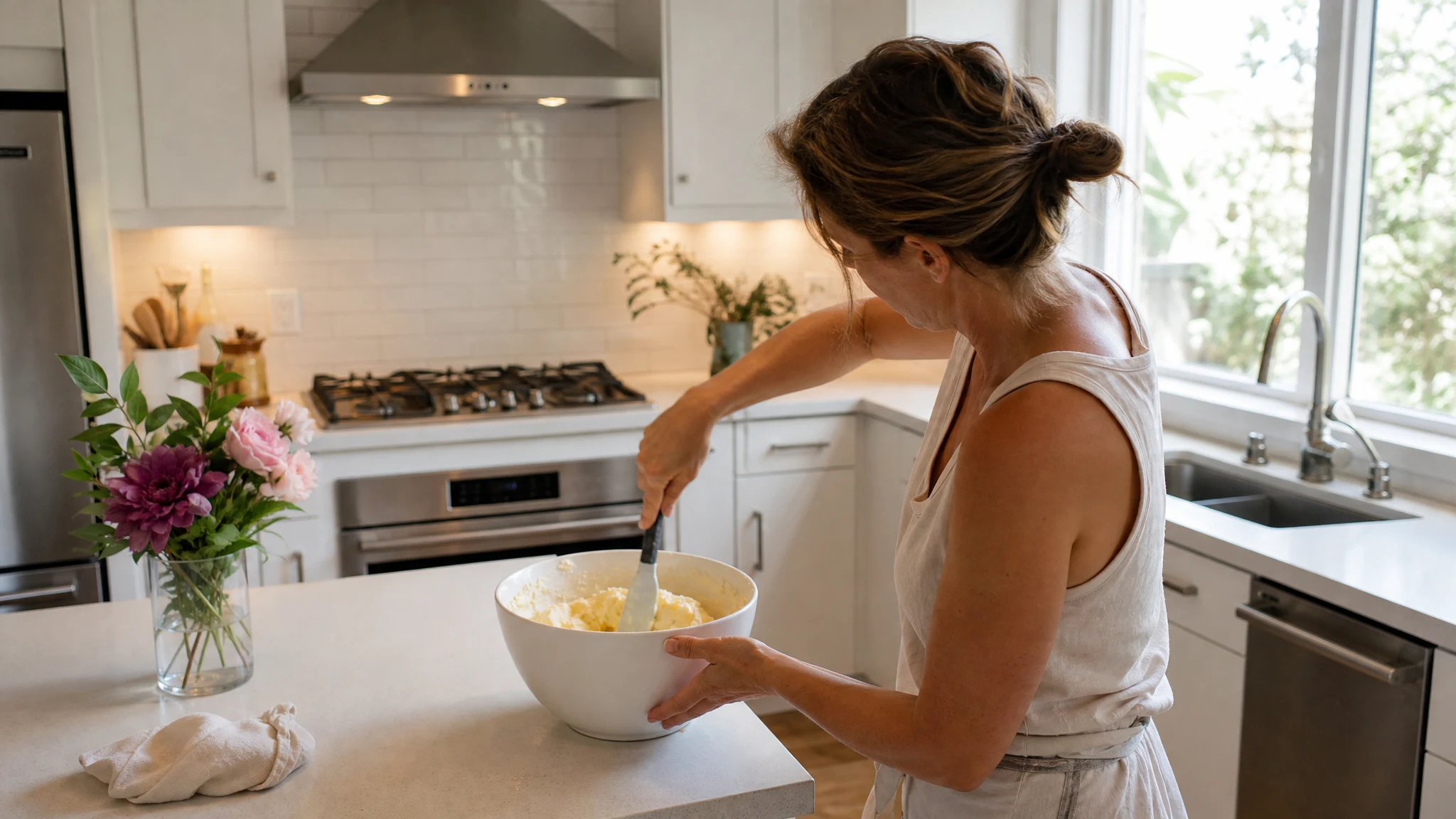
The whisking is the best part. Watch the paste change from glossy and heavy to pale and airy, and notice how it holds a little peak when you lift the whisk. Give yourself a bowl large enough for a bit of splashing, and use a hand mixer if your arm tires. When it looks like soft frosting, stop and spoon it into jars.
Those first spoonfuls into the jar are lovely. You will notice the scent of serrata, warm and slightly woody, rising gently from the surface, and it is worth a pause before you screw on the lid.
Who should check with a dermatologist first?
- Anyone with eczema, psoriasis or very dry, cracked skin should talk to a dermatologist first. Our eczema post has the background.
- Anyone who has reacted to scented products. Anyone can be allergic to any essential oil, so patch test on the inner forearm first.
- People who are pregnant or breastfeeding, and babies, should ask a midwife, physician or pediatrician.
Keep the jar away from children and eyes. For scrubs, salves and carriers, see our sugar scrub, the salve post and the carrier oil guide.
A whipped butter is moisturizing because shea and sunflower oil are, and it carries a lovely, gentle frankincense scent. That is a very good thing for a jar to be.
Frankincense Essential Oil
Serrata, carterii, sacra, frereana, neglecta and rivae: steam-distilled, GC/MS verified, in sizes from 0.5 oz to bulk.
From $12.99 $10.40 with code BLACKFRIDAY
Sources & Further Reading
- Microbiological Safety and Cosmetics, US FDA
- Dermatologists’ top tips for relieving dry skin, American Academy of Dermatology
- Effect of olive and sunflower seed oil on the adult skin barrier: implications for neonatal skin care., Pediatric Dermatology, 2013
- Dilution for essential oils, Tisserand Institute
- A Beginner’s Guide to Essential Oils Part 2: How to Use Essential Oils, Tisserand Institute