Frankincense and Myrrh Salve: A Simple Dry Skin Base
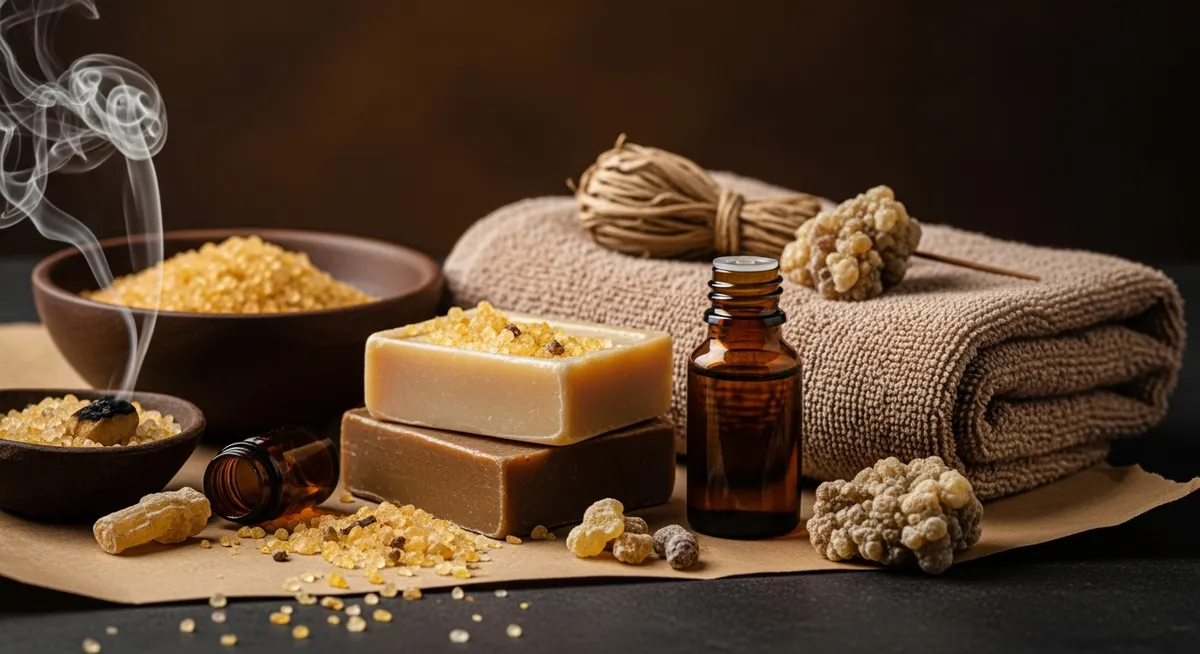
Frankincense and myrrh have been paired for as long as people have burned resin, so a salve that carries both has an obvious romance. Here is the practical secret of any salve, though: the base does the work. A wax, a butter and a carrier oil form a protective layer that moisturizes dry skin, and the essential oils are the scent on top. This post gives a formula with the arithmetic shown, and says plainly when to leave the scent out.

Frankincense Essential Oil
Six single-origin frankincense varieties, steam-distilled and GC/MS verified.
From $12.99 $10.40 with code BLACKFRIDAY
Dry skin care and the salve base
The American Academy of Dermatology notes that dry skin can flake, itch, crack and even bleed, and that creams and ointments add more moisture than thin lotions. It points to ingredients such as jojoba oil, shea butter, lanolin and petrolatum, and advises reapplying several times a day, especially while skin is still damp after washing. That is a description of a salve. Beeswax, shea butter and a carrier oil are exactly the sort of occlusive base it describes, and the more of the formula that is base, the better.
The same page recommends products labelled fragrance-free for dry skin. So treat the aroma as a pleasure for skin that is dry but intact, like winter hands and rough elbows, and leave it out entirely if skin is cracked, bleeding or weeping. The Tisserand Institute places impaired skin in its lowest band, 0.2 to 1%, and open skin is impaired skin. A rash, scaly patches or cracks that keep returning belong with a dermatologist, who can check for conditions such as eczema.
Why keep frankincense and myrrh scent modest?
Allergic reactions to essential oils are delayed: DermNet says they generally appear 24 to 72 hours after exposure, advises against applying oils undiluted, and notes the allergen may be an oxidised component of the oil. Oxidation is worth a thought with a terpene-rich oil like frankincense. A review of a century of research on turpentine allergy (Karlberg and Lepoittevin, 2021) describes monoterpene hydroperoxides, formed when terpenes oxidise in air, as a common cause of contact allergy in the population. Reasoning from that, a fresh, tightly capped bottle is the better ingredient for a salve than an old one left open. Our storage post covers handling.
Salve formula with beeswax to oil ratios
This is a formulation worked out from the sources here and a hobbyist's ratios, so adjust it to your own ingredients. Homestead and Chill gives beeswax to oil by volume as 1:3 for a firm balm, 1:4 for a standard salve and 1:5 for a soft one, and a weight ratio of 1:8 for a standard salve, so the weights below are a starting point. For 100 g of finished salve, weigh in grams:
- Beeswax: 18 g
- Shea butter: 20 g
- Carrier oil (jojoba, sweet almond or olive): 61.5 g
- Essential oils, total: 0.5 g, which is 0.5% by weight
The weights add to 100 g, and the wax sits at about 1 part to 4.5 of butter and oil, between the standard and soft ratios. For a 30 g tin, multiply everything by 0.3. The 0.5% figure is our suggestion, chosen to sit inside the Tisserand Institute's 0.2 to 1% band with room to spare, and it is not a rate we publish for our oil.
The scale problem is real: 0.15 g in a 30 g tin, split between two oils, is more precision than most kitchen scales offer, so make the full 100 g batch. If you count drops instead, use the rough convention of about 20 per millilitre. The serrata batch on our published Certificate of Analysis has a relative density of 0.838, so 0.25 g is about 0.3 ml, or about 6 drops. Densities for our other varieties and for myrrh are not something we can give you, so treat "about 6 drops of each" as a starting estimate and weigh when you can. We sell no beeswax, shea, carrier oil or myrrh, so those come from a craft supplier or pharmacy. Our carrier oil guide helps you choose.
Water rule when melting beeswax salve
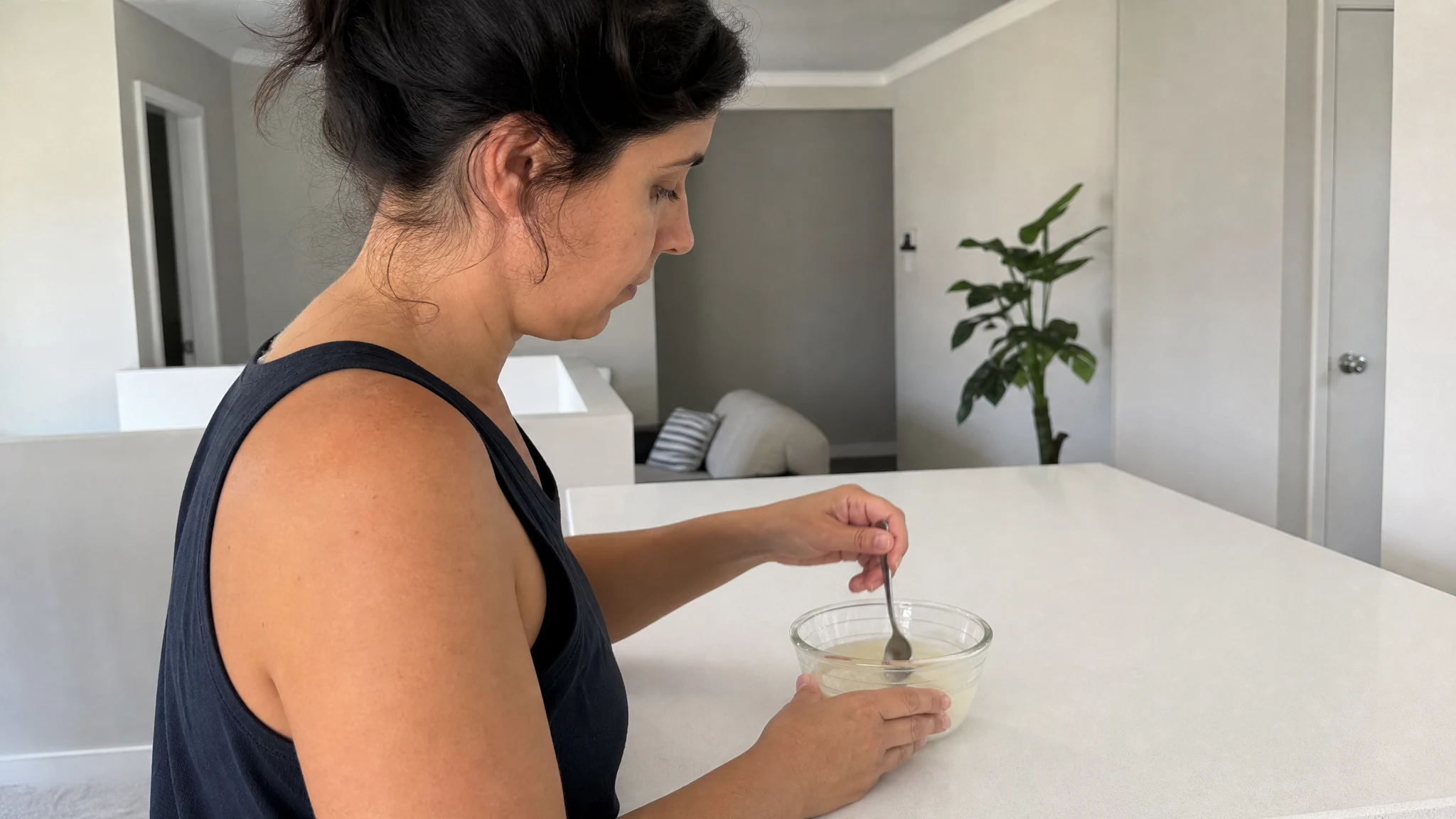
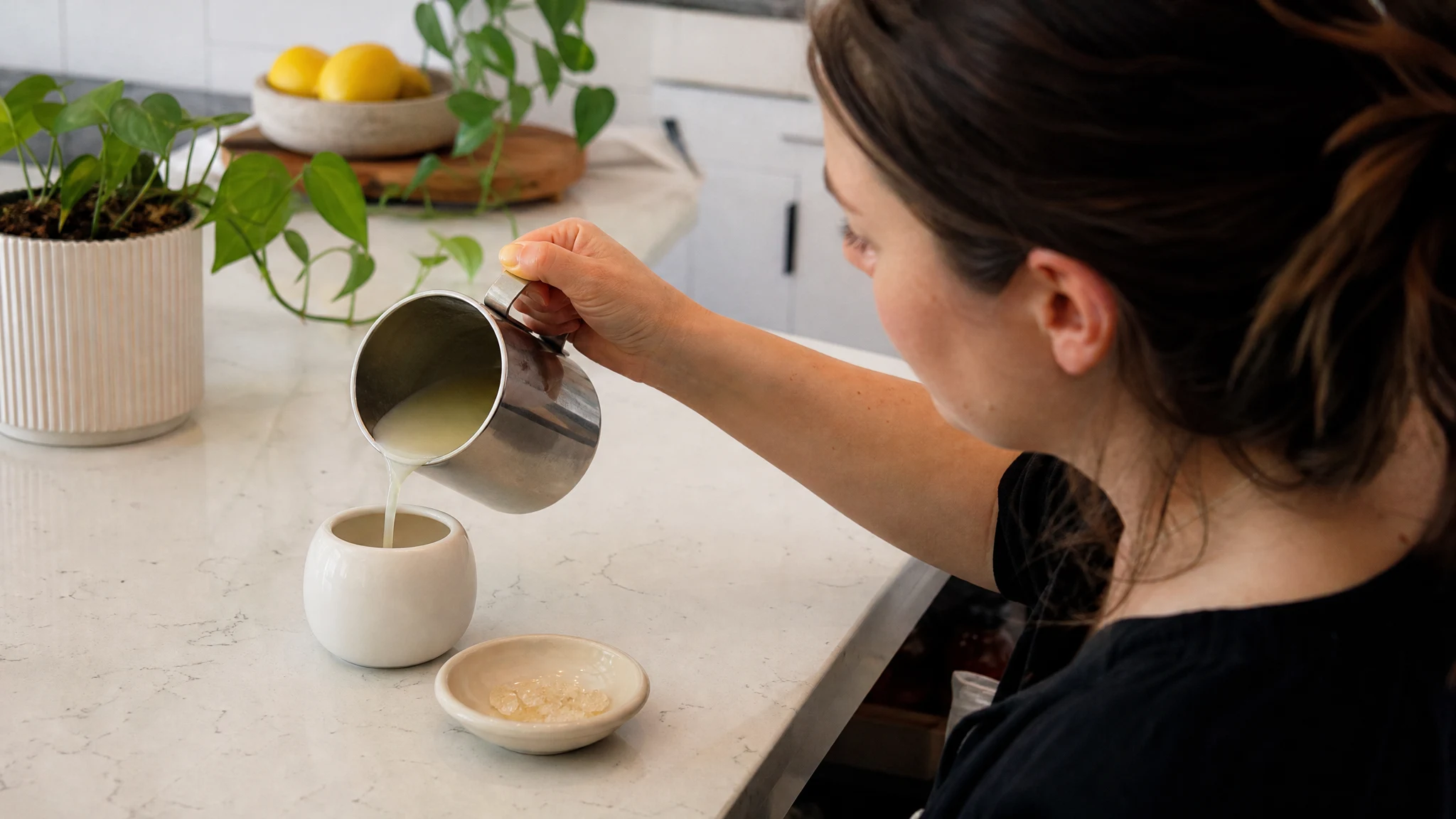
Melt the beeswax, shea and carrier oil together in a heatproof jar set in a pan of water. Homestead and Chill advises keeping water in the bottom pan, since condensation can spoil a salve. Take the jar off the heat, let it cool until warm rather than hot, then stir in the essential oils, because heat makes them evaporate quickly. Pour into clean, dry tins and let them set undisturbed. Because the formula contains no water it needs no preservative; add aloe juice or a hydrosol and that changes, which is a question for a cosmetic chemist. The same hobbyist estimates unpreserved salves keep for around a year, which is one person's estimate, so keep tins cool and dark and use the salve promptly.
Which frankincense oils pair well with myrrh?
Because the total scent is only 0.5%, each oil in a pair is a whisper. We describe serrata as warm and slightly woody with citrus and pine on top, and sacra as deep, balsamic and honeyed. Before you mix, hold the two opened bottles under your nose together, then separately, to see whether they sit well side by side.
We sell frankincense only, so the myrrh is yours to find elsewhere. When you do, smell it too: a salve is a small, personal thing, and the combination you enjoy is the right one.
Patch testing the finished salve for delayed reactions
Because reactions are delayed, test a small amount of the finished salve on the inner forearm and watch for a few days before wider use. As our disclaimer says, ask your healthcare provider first if you are pregnant, nursing, taking medications or have a medical condition, and keep oils away from eyes and mucous membranes. Our post on eczema and psoriasis explains why persistent skin problems need professional eyes.
A good salve is mostly butter, wax and patience, with a hint of resinous warmth for pleasure. Start gently, and let the scent be the finishing touch.
Frankincense Essential Oil
Serrata, carterii, sacra, frereana, neglecta and rivae: steam-distilled, GC/MS verified, in sizes from 0.5 oz to bulk.
From $12.99 $10.40 with code BLACKFRIDAY
Sources & Further Reading
- Dermatologists' top tips for relieving dry skin (American Academy of Dermatology)
- Dilution for essential oils (Tisserand Institute)
- Allergic contact dermatitis to essential oils (DermNet)
- One hundred years of allergic contact dermatitis due to oxidized terpenes: What we can learn from old research on turpentine allergy (Karlberg and Lepoittevin, 2021, PubMed)
- How to Make Salve or Balms 101: Simple Flexible Recipe ~ Homestead and Chill