Making Frankincense Incense Cones: Wood Does the Burning
Light a frankincense cone and most of what is burning is not frankincense at all. That is the quiet secret of incense making: the resin supplies the perfume, while wood powder and a bark binder do the burning. Once you see that split, a cone that sputters out starts to make sense, and so does the way to fix it.

Frankincense Essential Oil
Six single-origin frankincense varieties, steam-distilled and GC/MS verified.
From $12.99 $10.40 with code BLACKFRIDAY
Why incense cones are mostly wood fuel
A cone has to keep glowing on its own after you light the tip, which takes enough combustible material and a binder to hold the powder together. David Oller, writing for the Japanese incense house Baieido, describes makko (the bark of Machilus thunbergii, also called tabu no ki) as doing both jobs: it is a water-soluble binder and a burning agent. His guidance is to use at least 10% makko, and more depending on the other ingredients. He adds that an incense made of sandalwood alone may need only about 10%.
Then comes the detail that surprises people who expect frankincense to be the star. Resins like frankincense are harder to burn, he explains, and must be used in much lower percentages than burning agents such as sandalwood or makko. Otherwise the incense will not burn properly and may be too smoky or keep going out. So when a batch keeps dying, the answer is rarely more frankincense. It is more wood or more binder.
Is frankincense essential oil suitable for incense dough?
We sell frankincense essential oil, not resin, sandalwood or makko, and we would keep the oil out of the dough. Steam-distilled oil is a light, volatile liquid (it is why you can smell a bottle from across the room), so a dough that dries for a week or more gives much of it time to drift away, while the extra liquid is one more thing for the binder to absorb. That is our reasoning rather than a tested result, and Oller's page does not discuss essential oils, so we give no percentage for a cone.
If what you love is the smell of the oil itself, a diffuser is the better match. Our diffuser guide covers the options, and resin versus essential oil explains why the two behave so differently around heat.
Starting formula for resin and wood cones
This one is worked out from Oller's rules, with percentages by weight. The 5 g of resin is our own suggestion for "much lower than the wood", not a published figure, so begin with a 20 g test batch before committing a larger one. Powders and resin come from an incense or herb supplier.
| Ingredient | Per 100 g dry mix | Job |
|---|---|---|
| Sandalwood powder | 85 g | Base aroma and a fuel that burns readily on its own |
| Makko powder | 10 g | Binder and burning agent, the stated minimum |
| Frankincense resin, finely ground | 5 g | The perfume, kept low because resin burns poorly |
If a test cone goes out, raise the makko first, then trim the resin. Treat 10% makko as a floor, not a target.
Grinding, kneading and drying incense cones
- Grind and sift everything to a very fine powder. Oller says fine powder is what lets the mix blend, knead and dry properly, and he warns that overheated electric grinders can strip aroma from sandalwood, so work in short bursts or use a mortar and pestle.
- Weigh the dry powders together rather than measuring by spoon, and mix until the colour is even.
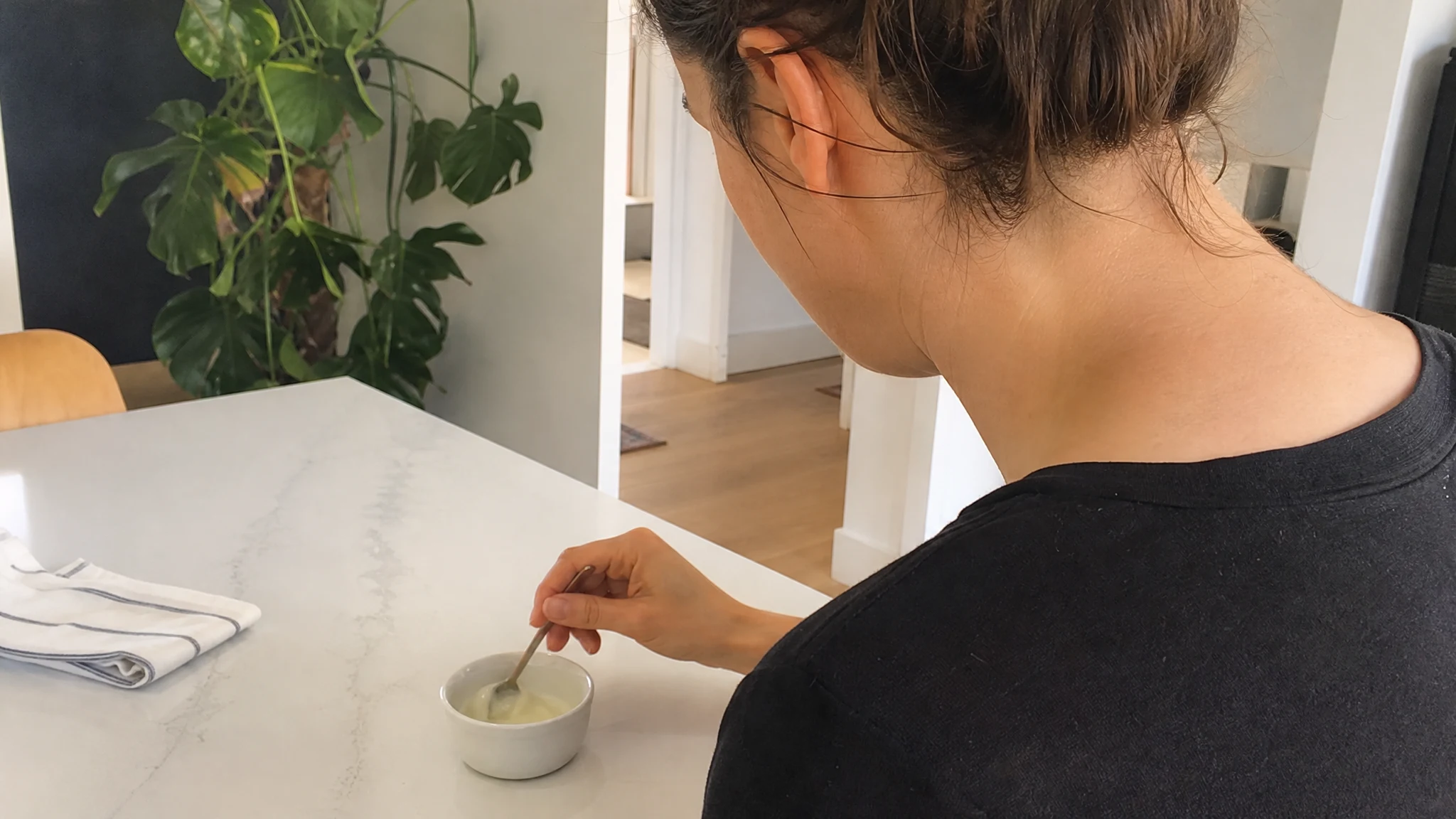
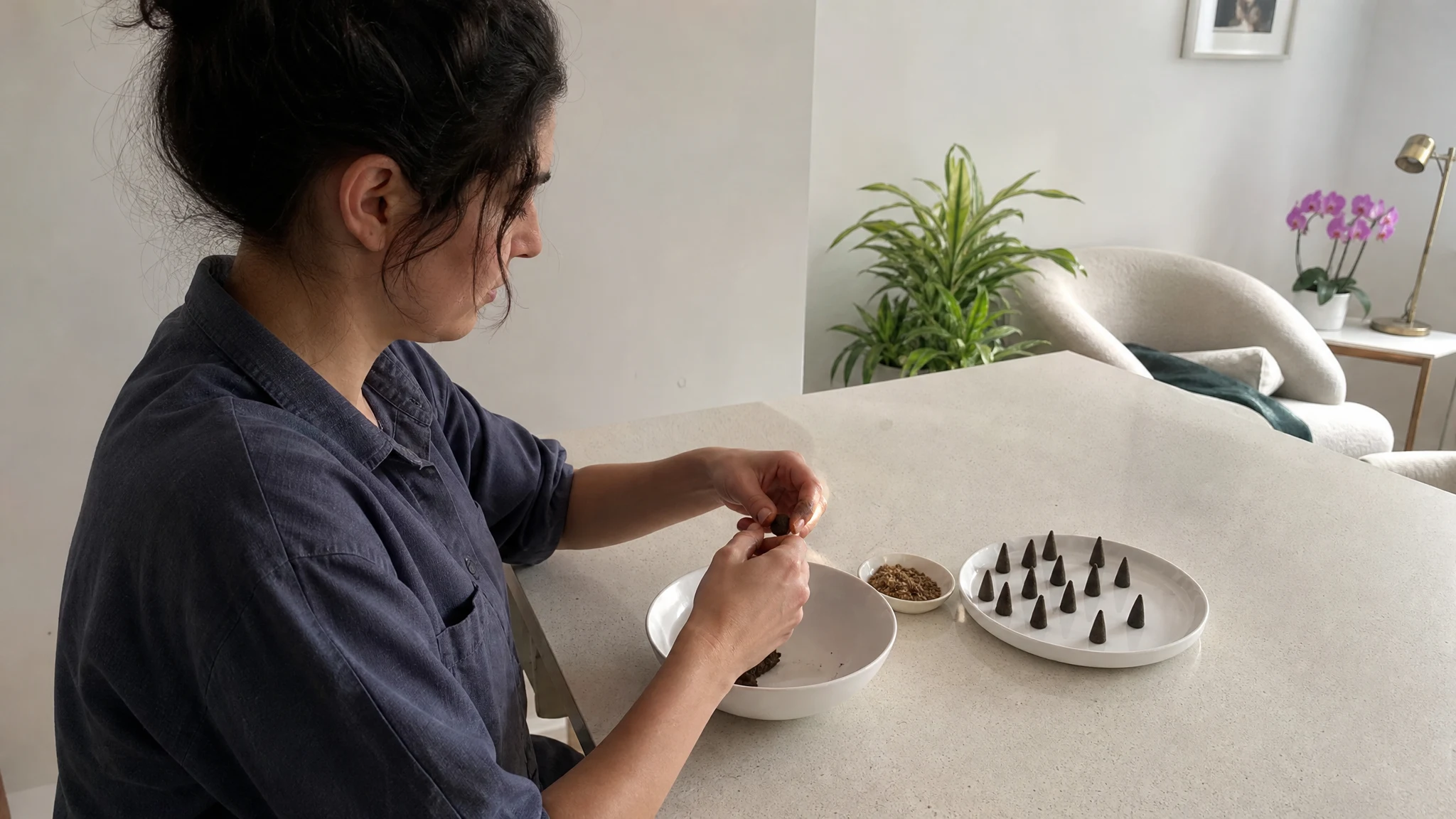
- Add warm water a little at a time and knead until the dough holds together like clay.
- Press into small cones with a base wide enough to stand, then dry them slowly in a shaded, airy spot. Oller gives about a week in summer and ten days in winter for sticks. Cones are thicker, so plan on at least that long.
You may see saltpeter in modern recipes. Oller calls it a late commercial addition rather than a tradition, and makko needs neither saltpeter nor charcoal. One more of his observations is worth remembering: many incense materials have almost no aroma until they are heated, so judge a cone only while it burns.
What does burning incense put in the air?
Incense is a pleasure with a footprint, and it helps to know its size. A 2022 review of incense smoke (Yadav and colleagues) cites measurements across 23 incense types in which fine particle emissions ran from 5 to 56 mg for every gram burned, and notes that people with COPD have been advised to avoid rooms where incense is burned.
The best-known long-term study followed 61,320 Singapore Chinese adults aged 45 to 74 through 2005. Long-term incense use was associated with a higher risk of squamous cell carcinoma of the respiratory tract, with a relative risk of 1.8 among long-term users. Those were habitual, long-term users, and one cone on a quiet evening is a different exposure, but it is a good reason to keep the habit light.
Our suggestion is to burn cones occasionally and briefly, in a room with a window open, never unattended, and away from small children and pets. If anyone in the home has asthma or COPD, skip burning altogether and ask their physician first.
Holders, sand and lighting a cone safely
Put the cone on a fireproof holder, with a little sand or ash in the dish if you have it. Hold the flame to the tip for a few seconds, then blow it out so the tip glows and a thin line of smoke rises. Judge the scent while it burns, and give it a few minutes to settle before deciding whether you like it.
Where to read more on frankincense resin and sandalwood
For other ways to enjoy the resin, our burning guide covers traditional methods, frankincense versus sandalwood compares the two aromas, and the meditation post offers a smokeless way to sit with the scent.
Start with one small batch, let it dry all the way through, and light it somewhere airy. A cone that burns evenly to the last ember is worth the wait.
Frankincense Essential Oil
Serrata, carterii, sacra, frereana, neglecta and rivae: steam-distilled, GC/MS verified, in sizes from 0.5 oz to bulk.
From $12.99 $10.40 with code BLACKFRIDAY
Sources & Further Reading
- Oller D. Making Incense By David Oller. Baieido.
- Yadav VK et al., 2022. Health and Environmental Risks of Incense Smoke: Mechanistic Insights and Cumulative Evidence. J Inflamm Res.
- Friborg JT et al., 2008. Incense use and respiratory tract carcinomas: a prospective cohort study. Cancer.