Frankincense Beard Oil Recipe: Light and Green
Most beard oil recipes online go heavy on the essential oil, and a beard sits on facial skin, which is where lighter is better. This one takes the opposite route: a fresh, green-resinous frankincense scent at a gentle strength, in a carrier blend that feels good and keeps well. It is quiet by design, the kind of scent someone notices only when they lean in.

Frankincense Essential Oil
Six single-origin frankincense varieties, steam-distilled and GC/MS verified.
From $12.99 $10.40 with code BLACKFRIDAY
Rivae frankincense as the beard oil scent
Of our six oils, rivae is the one we would choose for a beard. We list it as coming from the Ogaden region of Ethiopia and the Somali borderlands, and its aroma is fresh, herbaceous and lightly sweet, with green-resinous and faintly balsamic undertones. Up close, on a face, a lighter, greener frankincense tends to feel more comfortable than a heavy, honeyed one. If you prefer something deeper, sacra is the opposite character, and our species overview will help you decide.
We sell steam-distilled essential oil only, so you will bring your own carriers, ideally from a grocery, a health-food shop or a soap-making supplier. If you would like lot-specific details on rivae before ordering, write to us through the contact page.
What dilution suits frankincense beard oil?
Beard oil lands on the hair and, in practice, on the skin beneath. Tisserand's dilution guidance gives 0.5 to 1.2 percent for facial cosmetics, 1 to 3 percent for body oils, and 0.2 to 1 percent for sensitive or reactive skin. It does not mention beards, so treating beard oil as a facial product is our reasoning from where it ends up. It also notes that even dilutions can be drying, another reason to keep the dose modest. Our suggestion is 0.5 to 1 percent.
If the skin under your beard is itchy, flaky or red, or has reacted to scented products before, plain carrier oil is the better choice, and a dermatologist is the right person to ask about what is going on.
Jojoba and a second carrier for beard oil
At 1 percent, the other 99 percent is carrier, so it decides how the oil feels and how long it lasts. We like pairing two:
- Jojoba is a liquid wax and an unusually stable one. In heating tests, crude jojoba took 51 to 220 days to reach a small weight gain from oxidation, while almond, argan, sunflower and other oils took roughly 1 to 29 days (Tsuchimoto, Sakai and Fukui). That is a lab test on oils, not on beard oil, but it explains why jojoba suits a bottle that lives on a bathroom shelf.
- Sunflower seed oil is a lighter, friendly partner. In a small study of 19 adults, it kept the skin barrier intact on the forearm, while olive oil weakened it and caused mild redness (Danby and colleagues). We would pass on olive oil for anything used on skin every day.
30 g beard oil formula measured by weight
Working by weight is easier and more accurate than counting drops, which Tisserand notes are always approximate. These amounts are our arithmetic for a 30 g bottle:
| Ingredient | 0.5 percent | 1 percent |
|---|---|---|
| Jojoba oil | 14.925 g | 14.85 g |
| Sunflower seed oil | 14.925 g | 14.85 g |
| Rivae essential oil | 0.15 g | 0.30 g |
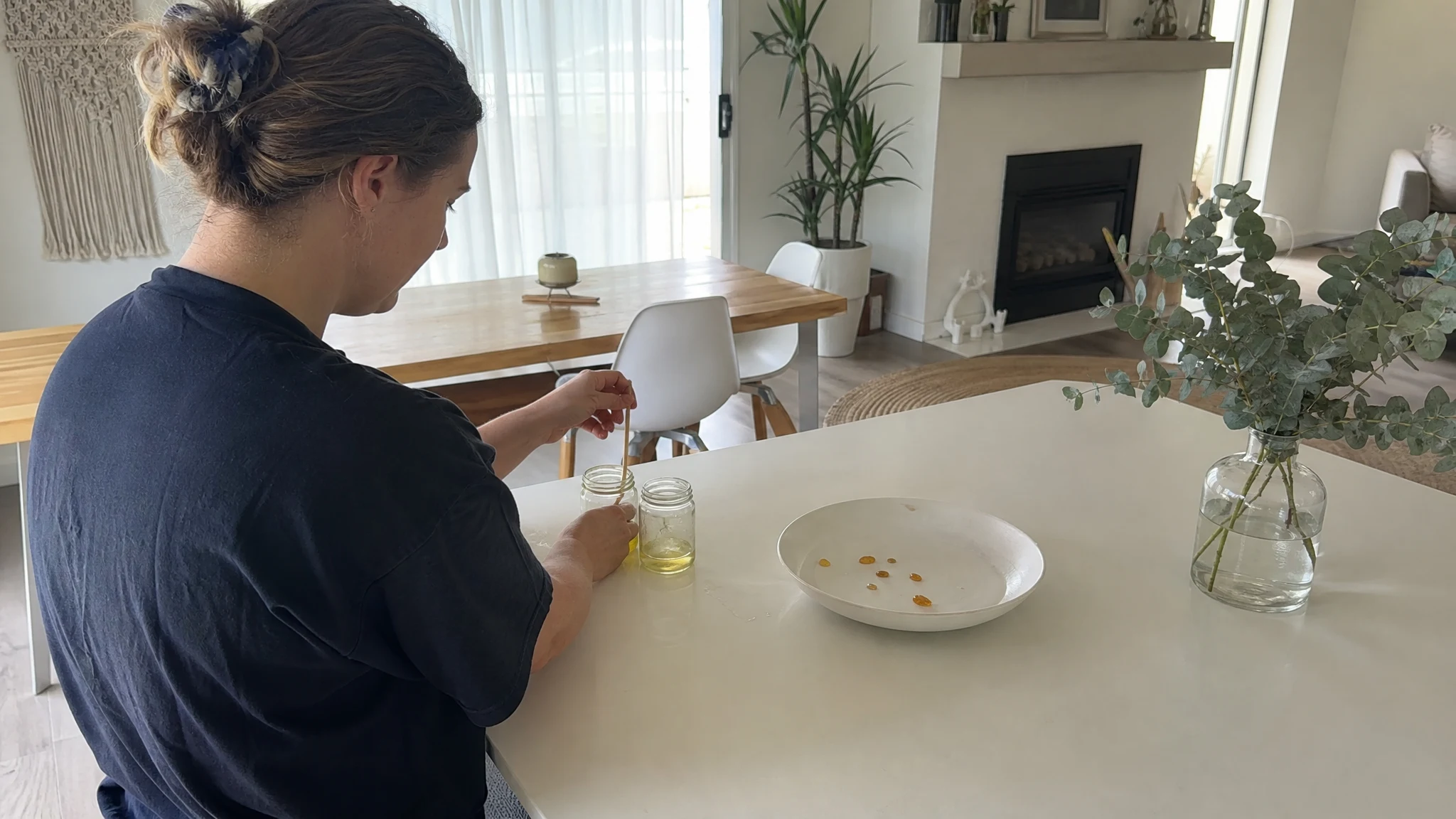
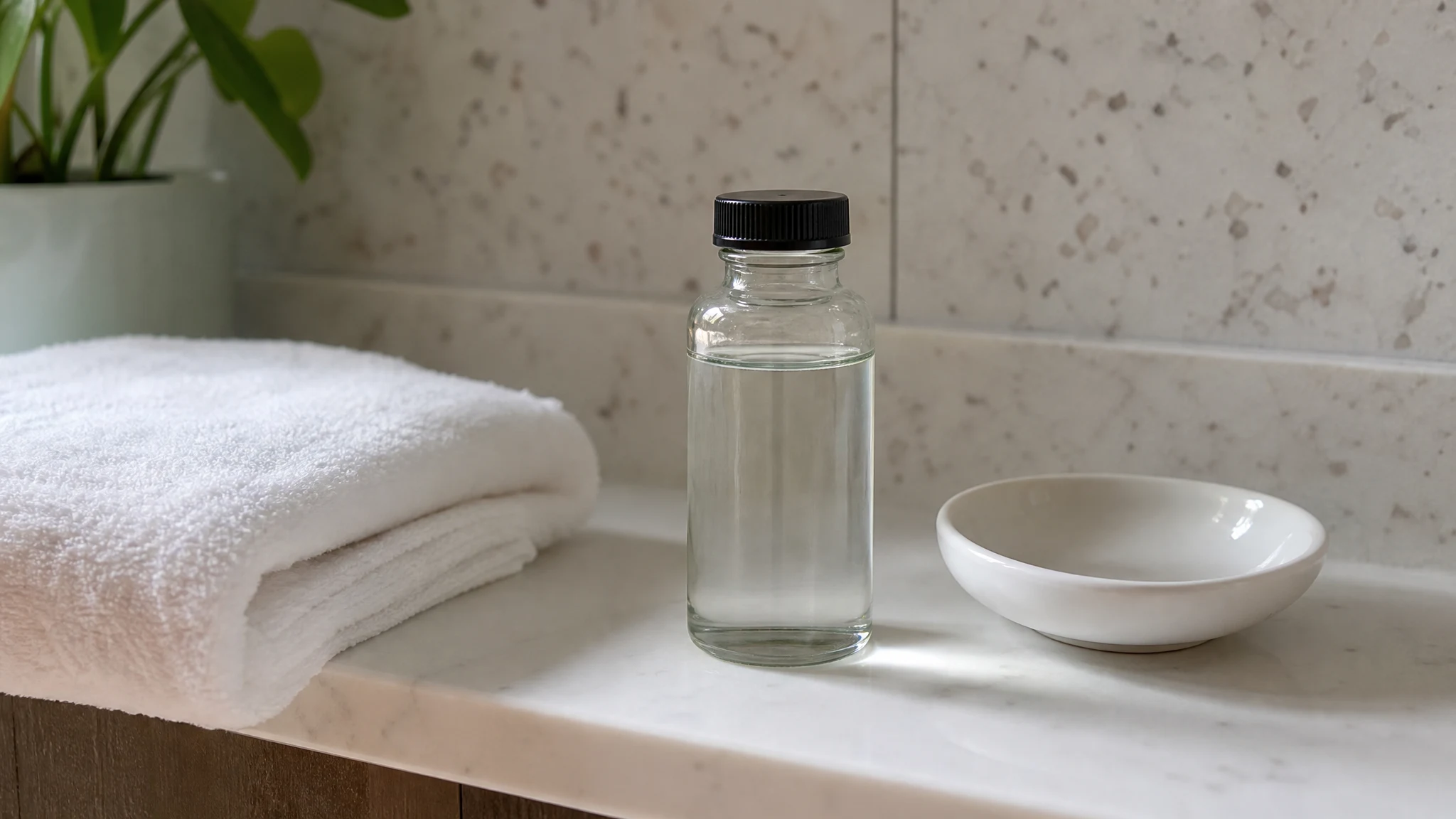
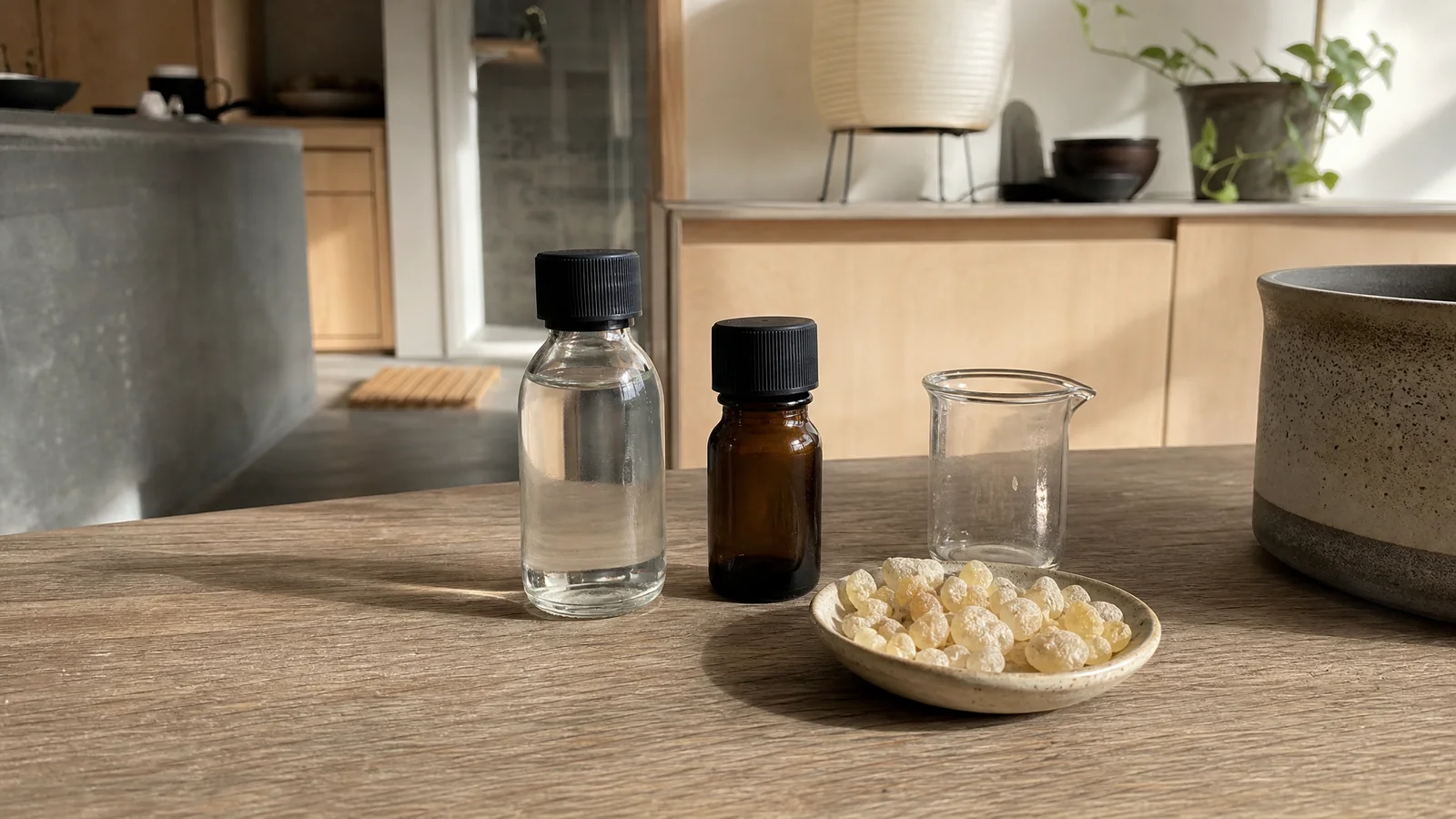
The 50:50 split is a matter of taste, not a standard. A jeweller's scale that reads to 0.01 g handles the essential oil, or you can make a 100 g batch and use 0.5 g or 1 g. If you count drops, 20 per millilitre is a rough convention, which puts 0.3 g at around seven drops. Weigh the carriers into a clean amber or cobalt glass bottle, add the essential oil last, cap, roll between your palms, and label it with the date and strength.
Working beard oil through damp hair
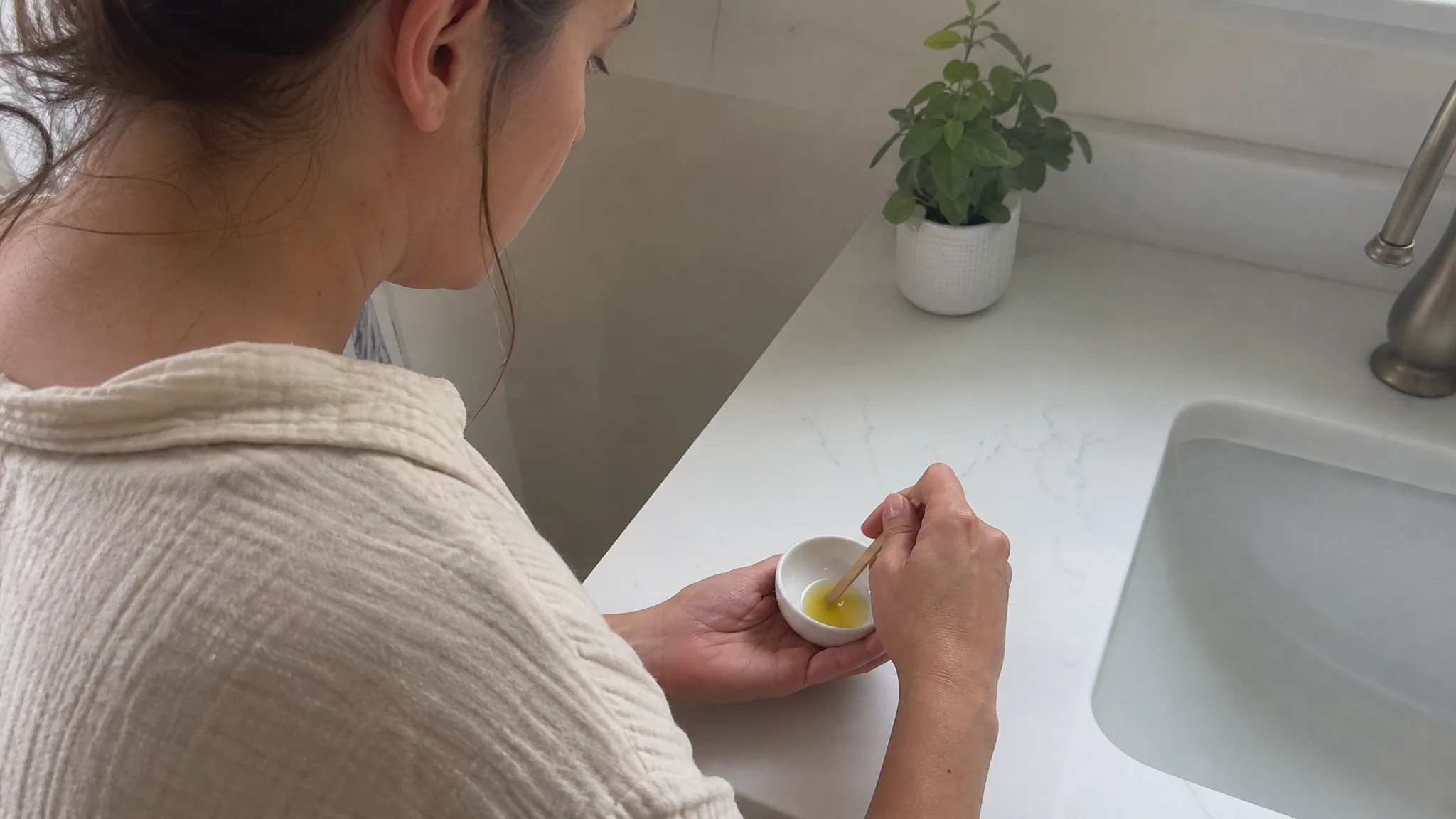
A few drops warmed between the palms go a long way. Work them through the hair, then press the remainder lightly onto the skin beneath. Using it on slightly damp skin after washing stretches it further. Keep your other scented products in mind, because aftershave and moisturizer add to the same patch of skin.
How much frankincense scent suits a beard?
Lighter is better with a beard, because it sits right under your nose all day. Apply it, then step away from the mirror and come back a few minutes later. The scent you notice from a distance is what other people will notice. If you can smell it clearly at arm's length, you have probably used a little more than you need, and you can always add a drop tomorrow.
A small bottle you finish is better than a big one that sits, so make a batch you will use up and enjoy the fresh scent while it lasts.
Patch testing and allergy cautions for beard blends
- Patch test first. Try the diluted oil on a small patch and watch for redness over 24 hours. Tisserand reminds us that anyone can be allergic to any essential oil (A Beginner’s Guide to Essential Oils Part 2).
- Store it well. UV light, heat and oxygen speed up degradation, so keep it in dark glass in a cabinet, away from the shower. Our storage guide has the details.
- Stop if skin objects. Redness, burning or a rash means stop, wash it off and see a dermatologist.
- Keep it away from eyes and children, and do not swallow it.
This is a grooming oil for scent and a pleasant feel, and nothing more. If you are comparing carriers, our carrier oil guide goes deeper, and facial application covers technique. Our safety guide is worth a read before your first batch.
Light, green and quietly woody, it is the sort of oil you wear for yourself, and a gentle strength lets the scent do the talking.
Frankincense Essential Oil
Serrata, carterii, sacra, frereana, neglecta and rivae: steam-distilled, GC/MS verified, in sizes from 0.5 oz to bulk.
From $12.99 $10.40 with code BLACKFRIDAY
Sources & Further Reading
- Dilution for essential oils, Tisserand Institute
- Oxidative Stability and Antioxidant Activity of Crude Jojoba Oil, BPB Reports, 2022
- Effect of olive and sunflower seed oil on the adult skin barrier: implications for neonatal skin care., Pediatric Dermatology, 2013
- A Beginner’s Guide to Essential Oils Part 2: How to Use Essential Oils, Tisserand Institute