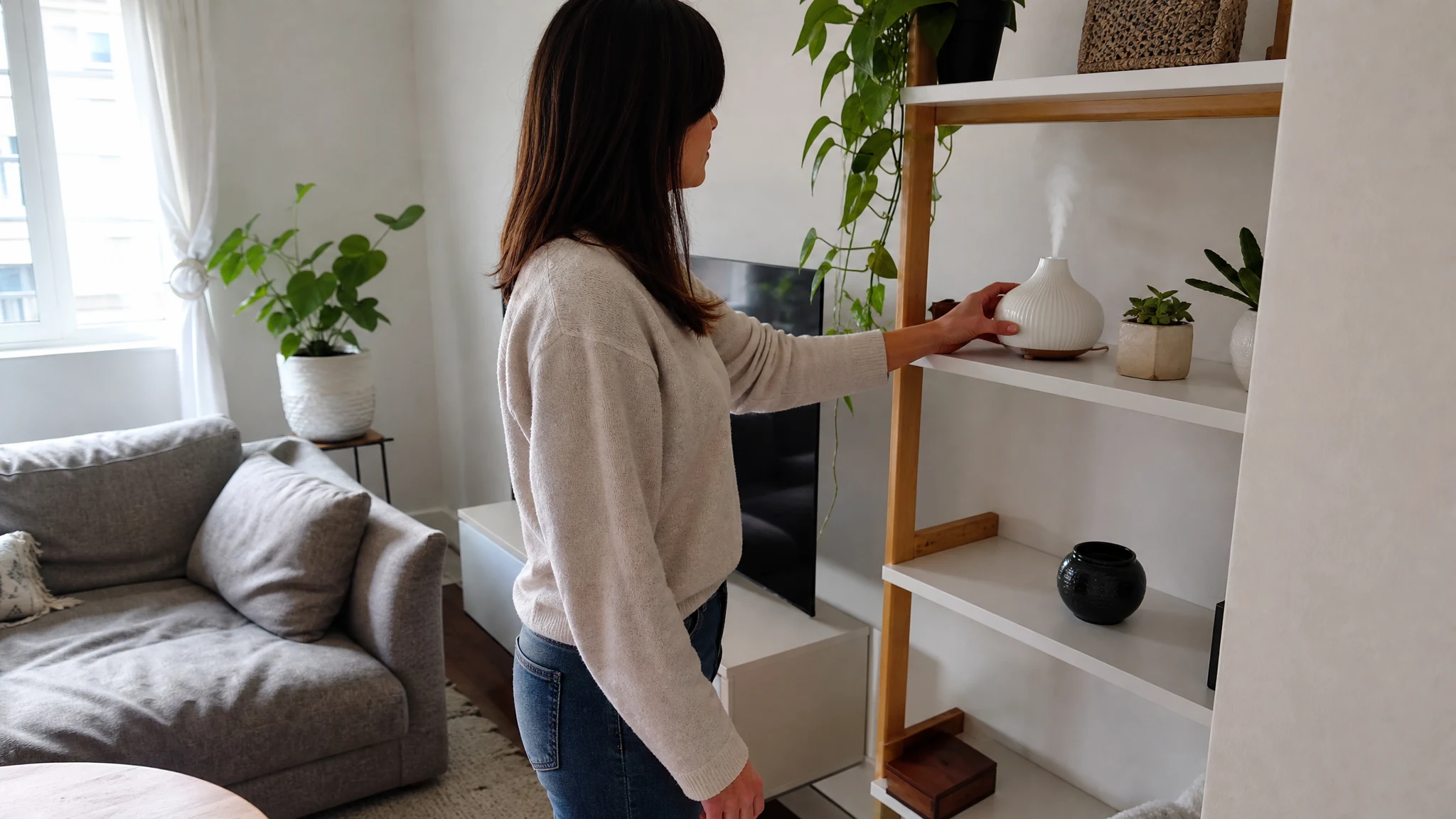
Rivae Frankincense in a Diffuser: Room-Safe Basics
Before you pick a scent, picture the room: who sleeps there, who walks through, and what lives in it. A cat, a bird, a toddler or a person with asthma changes the answer far more than any blend ratio does. That is the honest starting point for any home fragrance, and once the room checks out, a rivae frankincense is a lovely thing to bring into it.

Frankincense Essential Oil
Six single-origin frankincense varieties, steam-distilled and GC/MS verified.
From $12.99 $10.40 with code BLACKFRIDAY
Pets and room checks for diffusing frankincense oil
- Pets. The Merck Veterinary Manual notes that active diffusers, whether nebulizing or ultrasonic, emit microdroplets or particles of oil into the air, that cats are more sensitive because they are deficient in the enzyme glucuronyl transferase, and that birds are at high risk because of their respiratory tract. Its advice is to run diffusers only for short periods, under 30 minutes, to keep pets out of the room while a diffuser is on, and to ventilate afterward. The page is about essential oils in general and does not single out frankincense, so we take it as sound general practice. A veterinarian is the person to ask about your own animal.
- Asthma. The American Academy of Allergy, Asthma and Immunology says no published studies have specifically examined the effects of diffused essential oils on asthma, notes that diffused oils such as lavender, eucalyptus and tea tree were found to release terpenes, toluene and benzene, and recommends caution. If someone in your home has asthma, their physician or allergist should hear about your plans first.
- Young children. The Tisserand Institute says to keep oils where young children cannot reach them and to use child-proof caps.
If any of those apply, the kindest choice may be not to diffuse at all, and there is no shame in that.
Why run a diffuser 30 minutes at a time?
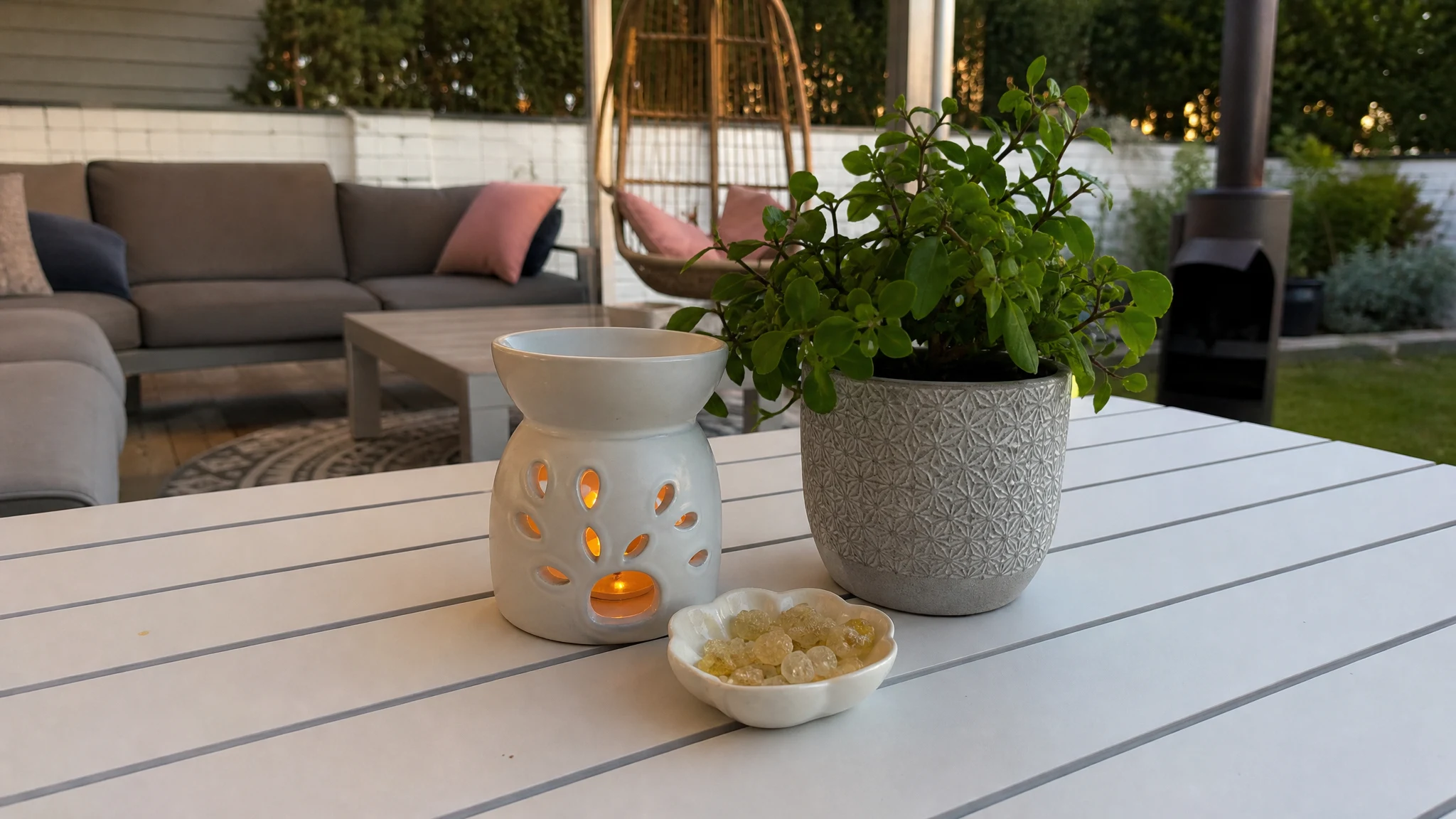
Most of us leave a diffuser running for hours. Tisserand's safety guidance suggests something gentler: ideally 30 to 60 minutes on, then 30 to 60 minutes off, which it describes as safer and more effective than running one all day. Its beginner's guide calls ultrasonic diffusers generally very reliable and low risk, and advises against taking a diffuser to a shared desk, since colleagues may have allergies or sensitivities. The same thought applies to a living room full of guests. Diffuse when the people who live there are home and happy with it, skip it when a visitor with allergies is coming, and open a window afterward.
Boswellia rivae from Ogaden Ethiopia limited harvest
Here is where it gets fun. We list our Boswellia rivae as coming from the Ogaden region of Ethiopia and the Somali borderlands, and it is one of our limited-run oils: production is tiny, and lots sell out each harvest season. We describe the aroma as fresh, herbaceous and lightly sweet, with green-resinous and faintly balsamic undertones. That makes it an interesting alternative to the deeper, honeyed frankincense most people expect, and a good one for a room where you want a brighter, greener note.
For general context only, a 2014 study of resins collected in Ethiopia (Bekana and colleagues in ISRN Analytical Chemistry) reported rivae essential oils with alpha-pinene at 32.5 to 66.2%, p-cymene at 5.7 to 21.1% and limonene at 1.1 to 19.6%. Those are ranges for their samples, not for any bottle of ours, and the width of the ranges shows how much one species can vary with where and how it is collected. If a particular smell matters to you, you can ask us in writing through the contact page about the lot you are considering.
Blending partner scents with rivae step by step
We sell only frankincense oils, so any partner scent comes from somewhere else. Rather than hand you a recipe, here is a method that works whatever you add.
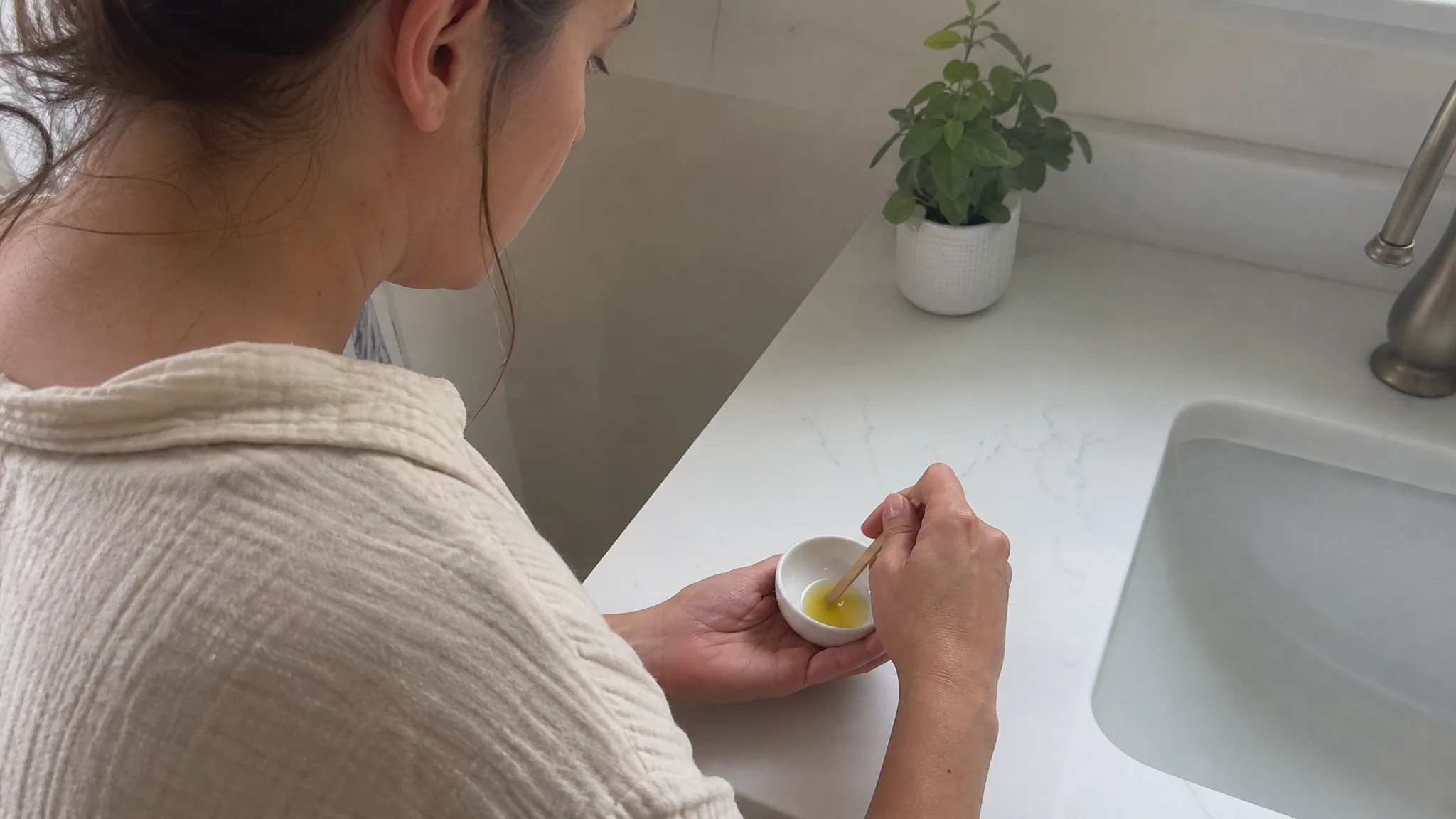
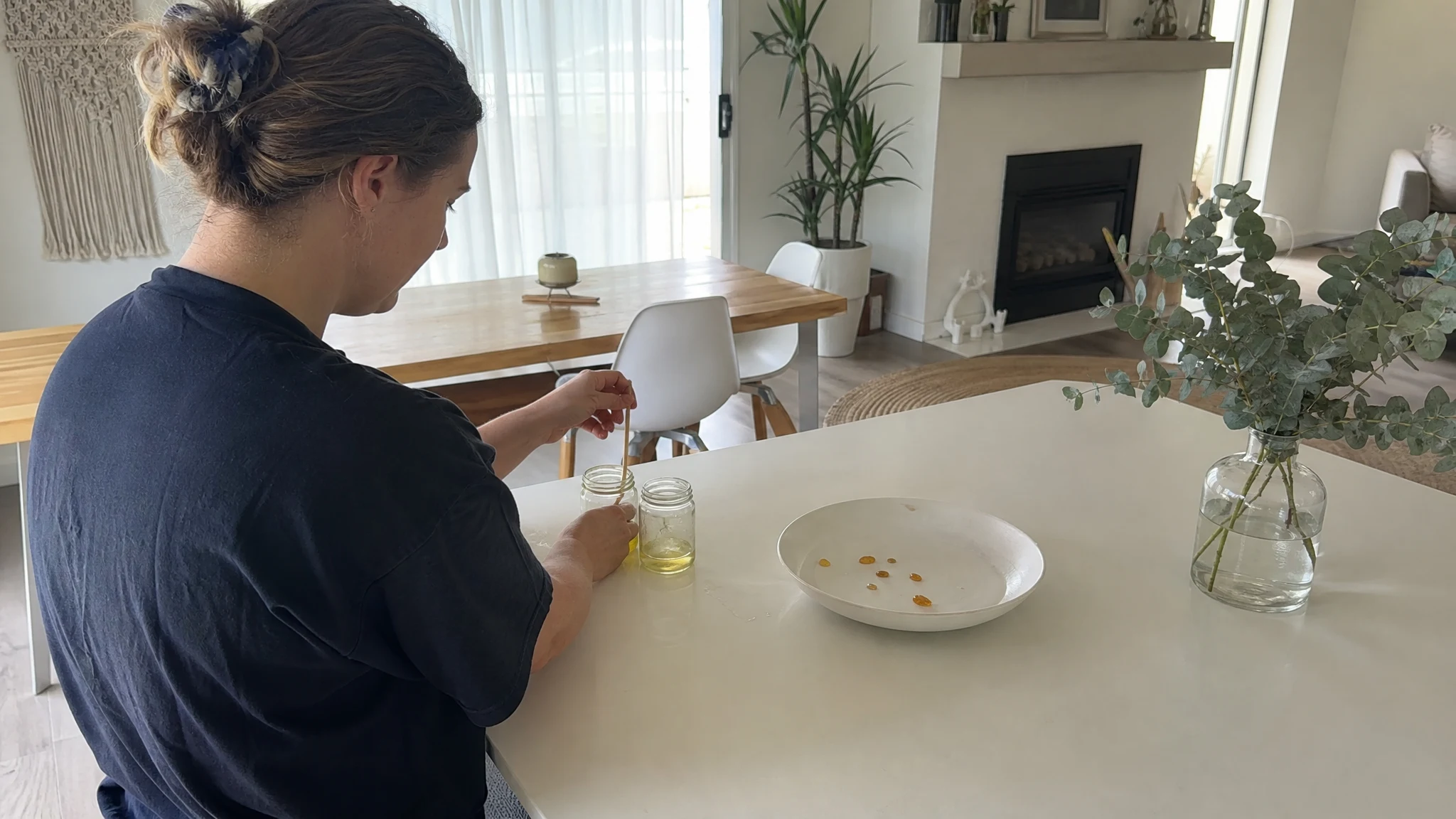
- Start with rivae alone. A reasonable first session is 2 to 3 drops in a small diffuser, and smell how it opens up. That is a suggestion, not a sourced figure, because no source we read gives a drop count per room size. As arithmetic, 3 drops at roughly 20 drops per milliliter is 0.15 ml; drop size varies, so treat it as approximate.
- Add a second oil only after checking its safety. Look at its guidance for pets and children before it goes in the room. Our blending guide lists partners by aroma, and our comparison with sandalwood covers one popular pairing.
- Change one thing at a time. If the room starts to smell off or someone gets a headache, you will know what caused it.
Frankincense oil also will not smell like burning resin. Incense smoke comes from heating the resin, while the oil is steam-distilled, so set your expectations by the aroma description above. If it is smoke you want, our resin article covers it, though we sell oil only. For a different approach to scenting a room, try a spray; see our room spray article.
Rivae frankincense scent: fresh, green, herbaceous
Rivae does not announce itself the way a heavier frankincense does. You will notice a fresh, green, herbaceous opening, a light sweetness behind it, and then a faintly balsamic undertone as the minutes go on. It is a quiet oil, so smell it from across the room and not from a few inches away. If you cannot find it at first, that is fine; it may be exactly the right volume.
When should you switch the diffuser off?
Turn the diffuser off and open a window if anyone coughs, wheezes, gets a headache, or feels dizzy or short of breath, or if a pet shows distress. Call a poison center or a veterinarian for a pet that has been exposed and seems unwell. Keep the bottle sealed and out of children's reach; the storage article covers keeping oils fresh.
A well-chosen scent makes a house feel like yours. Pick the room, then the oil, and let the rivae do what it does best, which is to smell green and bright for a short while and then step back.
Frankincense Essential Oil
Serrata, carterii, sacra, frereana, neglecta and rivae: steam-distilled, GC/MS verified, in sizes from 0.5 oz to bulk.
From $12.99 $10.40 with code BLACKFRIDAY
Sources & Further Reading
- Merck Veterinary Manual. Toxicoses From Essential Oils in Animals.
- AAAAI Ask the Expert (reviewed October 2, 2026). Essential oil diffusers and asthma.
- Tisserand Institute. Safety Guidelines.
- Tisserand Institute. A Beginner's Guide to Essential Oils Part 2: How to Use Essential Oils.
- Bekana D, Kebede T, Assefa M, Kassa H (2014). Comparative Phytochemical Analyses of Resins of Boswellia Species (B. papyrifera (Del.) Hochst., B. neglecta S. Moore, and B. rivae Engl.) from Northwestern, Southern, and Southeastern Ethiopia. ISRN Analytical Chemistry.