Sandalwood vs Frankincense: Reading the Label First
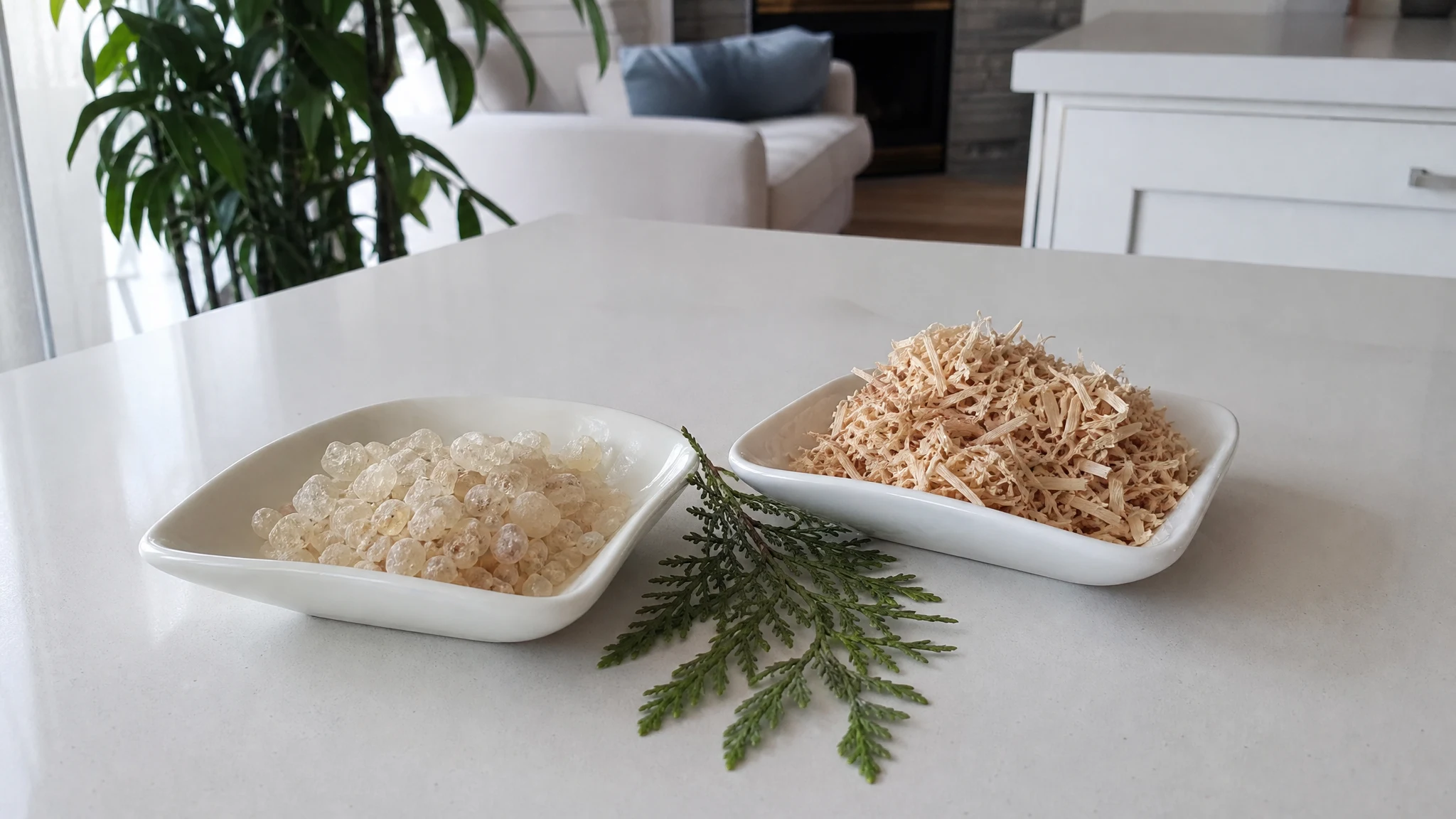
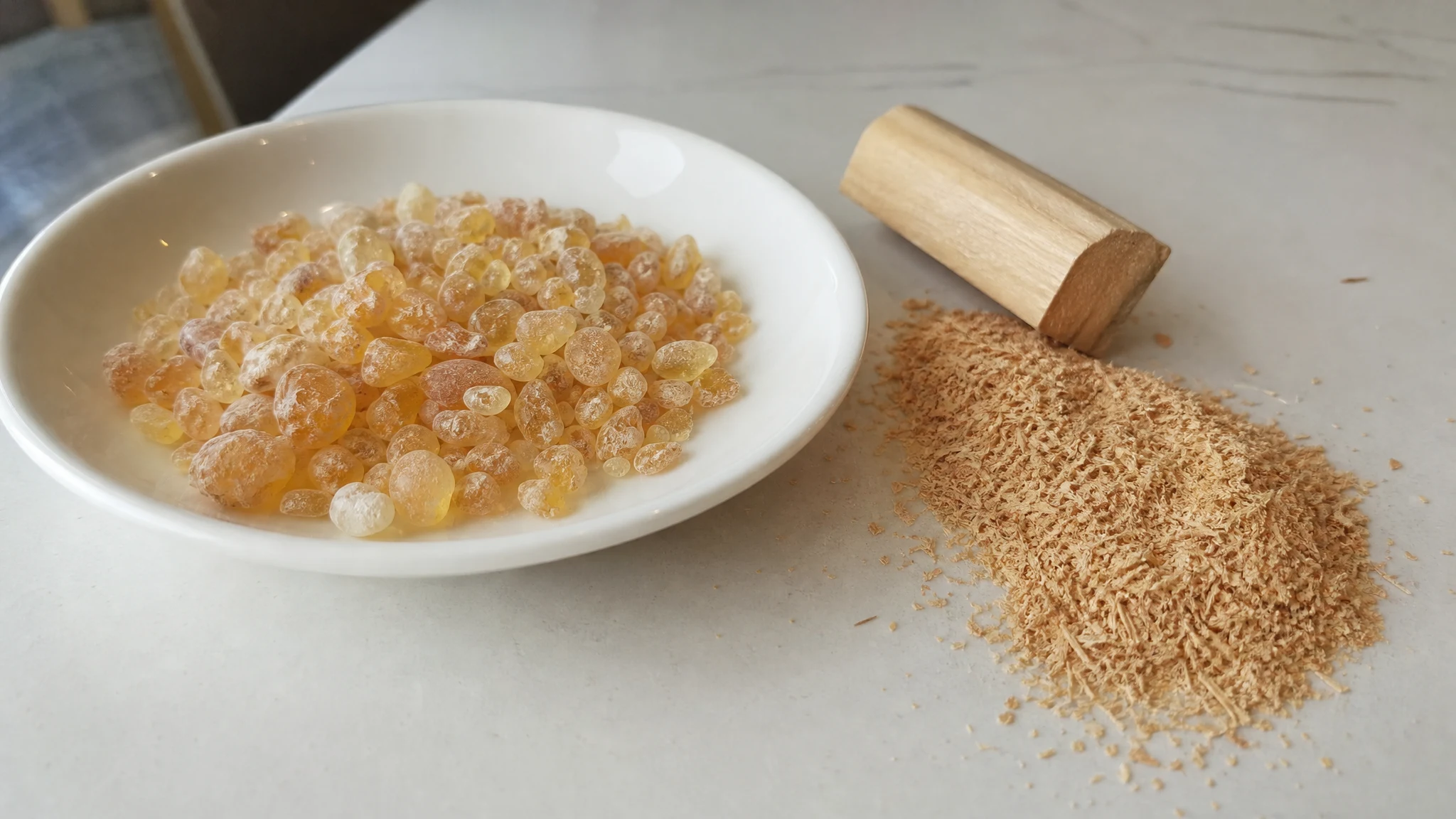
Frankincense and sandalwood keep company in incense boxes and blend notes because both feel woody, resinous and unhurried. But if you are about to buy one of them, the more useful comparison is not scent. It is how much the words on the bottle can tell you. For sandalwood, those words matter a great deal, and frankincense rewards the same habit.

Frankincense Essential Oil
Six single-origin frankincense varieties, steam-distilled and GC/MS verified.
From $12.99 $10.40 with code BLACKFRIDAY
Sandalwood oil naming problems in online listings
A study of products called sandalwood oil (Hartman-Petrycka and Lebiedowska, 2021) went through 50 websites each in Polish, German and English and checked what was on offer against the ISO 3518 standard for the oil. Their yardsticks were practical: does the page give the botanical name Santalum album, and is the price anywhere near what chromatographically tested white sandalwood oil costs? Oils that passed both tests were a negligible share of what is sold online. The authors' conclusion is useful for any shopper: without the botanical name and a sensible price range, the likelihood of buying a reliable product is low.
Notice that their method is a label check, not a lab test, which is exactly why it is a good habit. The Latin name is the first thing to look for on any bottle, because common names stretch to cover several plants.
Frankincense is several trees, not one
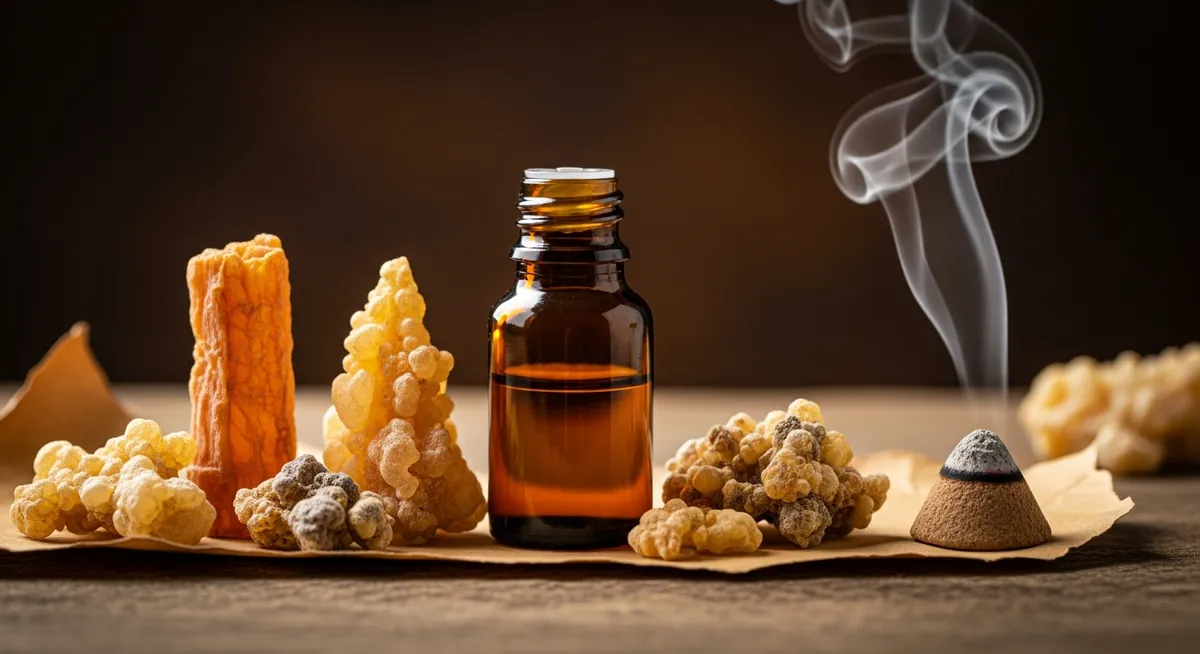
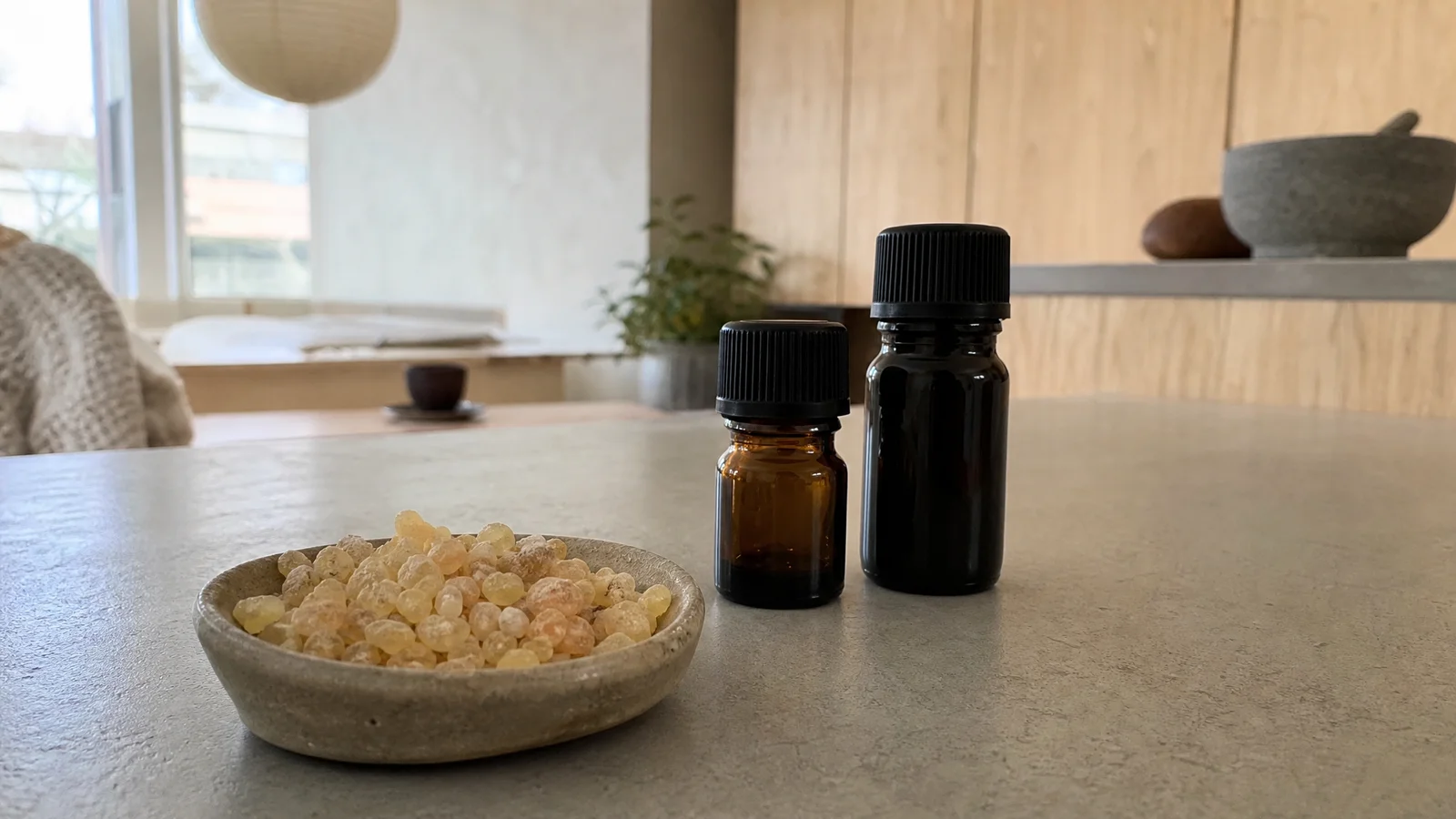
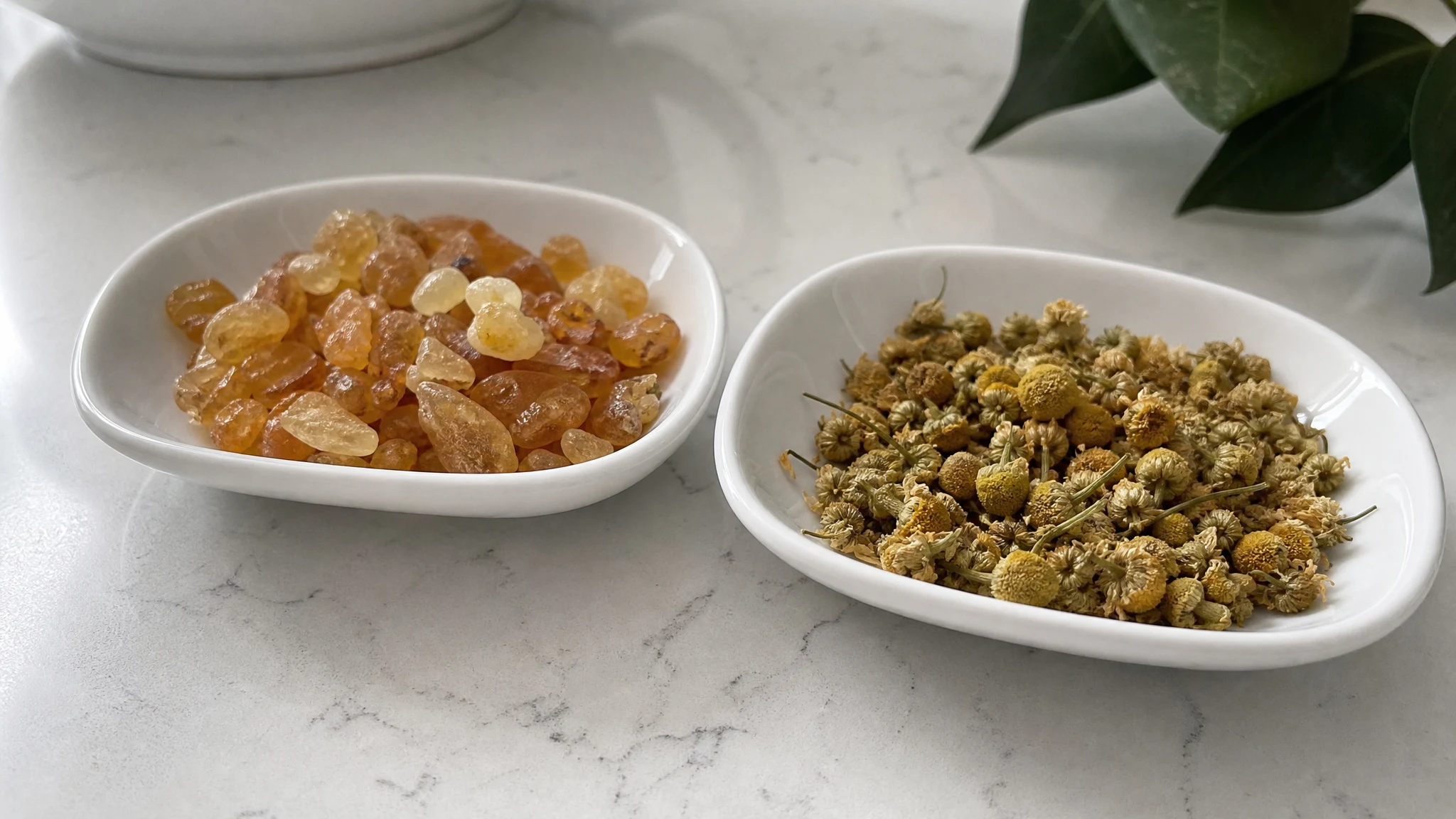
"Frankincense" is not one tree. We sell six single-species oils, each labelled with its Latin name: Boswellia serrata from Rajasthan, India; Boswellia carterii from the Cal Madow mountains of Somalia; Boswellia sacra from Dhofar, Oman; Boswellia frereana from the Maydi region of northern Somalia; Boswellia neglecta from the drylands of Kenya and Ethiopia; and Boswellia rivae from the Ogaden region. Those are the origins we list for each variety, and they are why a bottle labelled "frankincense oil" with no species leaves a lot unsaid. Our varieties overview compares them.
Authenticity matters here too. An analysis of 21 commercial oils sold online as Boswellia carteri (Ojha and colleagues, 2022) found synthetic limonene in six samples, synthetic octyl acetate in three and castor oil in three, and judged the commercial set to need authentication. It is one sample set, not a judgement on any particular seller, but it explains why we encourage buyers to ask for lot-specific documents. The one Certificate of Analysis we publish is for a serrata batch and lists density, refractive index and optical rotation, not compounds. If you need GC/MS or species confirmation for another variety, ask us in writing through our contact page. Our guides to reading a GC/MS report and frankincense quality and grading help you read whatever comes back.
What should an oil label list before buying?
- Look for the Latin name. If a page only says "sandalwood" or "frankincense," you have not been told which plant.
- Be wary of a price that looks too good for a rare material. That is one of the two yardsticks in the study above.
- Ask a plain question, such as which species a bottle is, and see how it is answered. A clear reply is a good sign.
Why does Boswellia sacra vary in character?
Here is a detail that explains a lot about frankincense's range of character. In a study of Omani Boswellia sacra (Di Stefano and colleagues, 2020), resin from three cultivars was distilled into three successive oil samples, graded 1, 2 and 3, and each was analysed separately. Reasoning from that, the early and late parts of a run need not be the same oil, so two bottles of the correct species can smell different, which is part of the pleasure and part of why a report for the specific lot is the honest yardstick.
Describing the aroma range of frankincense oils
We do not sell sandalwood, so we will leave its aroma to its own sellers, and for the same reason we cannot say how it sits beside ours. What we can say is how our frankincense smells: serrata is warm and slightly woody with subtle citrus and pine top notes, sacra is deep, balsamic and honeyed, frereana is bright and lemon-pine. If you like a resinous base note, those two descriptions of sacra and serrata are the ones to start with, and our blending guide shows how to build around them.
A small notebook helps here. Date each entry, name the oil and write down your honest words. A month later you will be surprised how much clearer your preferences have become.
Try a gentle experiment when you can: smell each oil from a strip of paper and give it ten minutes. A woody, resinous base note often shows its real self only after the brighter top notes have drifted off, and this is where sacra and serrata each make their case. Write down a word or two for each so you can compare them later.
Whichever you pick, both are strong aromatics. The Tisserand Institute's general bands are 0.2 to 1% for sensitive skin, 0.5 to 1.2% for the face and 1 to 3% for body oils, and it advises against undiluted use. Patch test first, and ask a healthcare provider before use if you are pregnant, nursing, on medication or managing a condition.
We think the nicest way to shop is slowly. Smell, wait, ask questions, and let a bottle earn a place on your shelf. It is a small pleasure to own an oil you chose for a reason you can explain.
A good bottle starts with a good name on the label. Whether it is sandalwood or frankincense, the Latin name and a willingness to show lot-specific proof are what separate a confident purchase from a hopeful one.
Frankincense Essential Oil
Serrata, carterii, sacra, frereana, neglecta and rivae: steam-distilled, GC/MS verified, in sizes from 0.5 oz to bulk.
From $12.99 $10.40 with code BLACKFRIDAY
Sources & Further Reading
- The Assessment of Quality of Products Called Sandalwood Oil Based on the Information Provided by Manufacturer of the Oil on Polish, German, and English Websites (Hartman-Petrycka and Lebiedowska, 2021)
- Comparison of Volatile Constituents Present in Commercial and Lab-Distilled Frankincense (Boswellia carteri) Essential Oils for Authentication (Ojha et al., 2022)
- In Vitro Antimicrobial Activity of Frankincense Oils from Boswellia sacra Grown in Different Locations of the Dhofar Region (Oman) (Di Stefano et al., 2020)
- Dilution for essential oils (Tisserand Institute)