Frankincense Oil Quality: Four Checks Before You Buy
A bottle of frankincense oil can look and smell convincing and still tell you very little. Amber glass, a Latin name and a pleasant resinous aroma are a good start, but the useful questions sit one layer deeper. Here are the four we would ask of any frankincense oil, ours included.

Frankincense Essential Oil
Six single-origin frankincense varieties, steam-distilled and GC/MS verified.
From $12.99 $10.40 with code BLACKFRIDAY
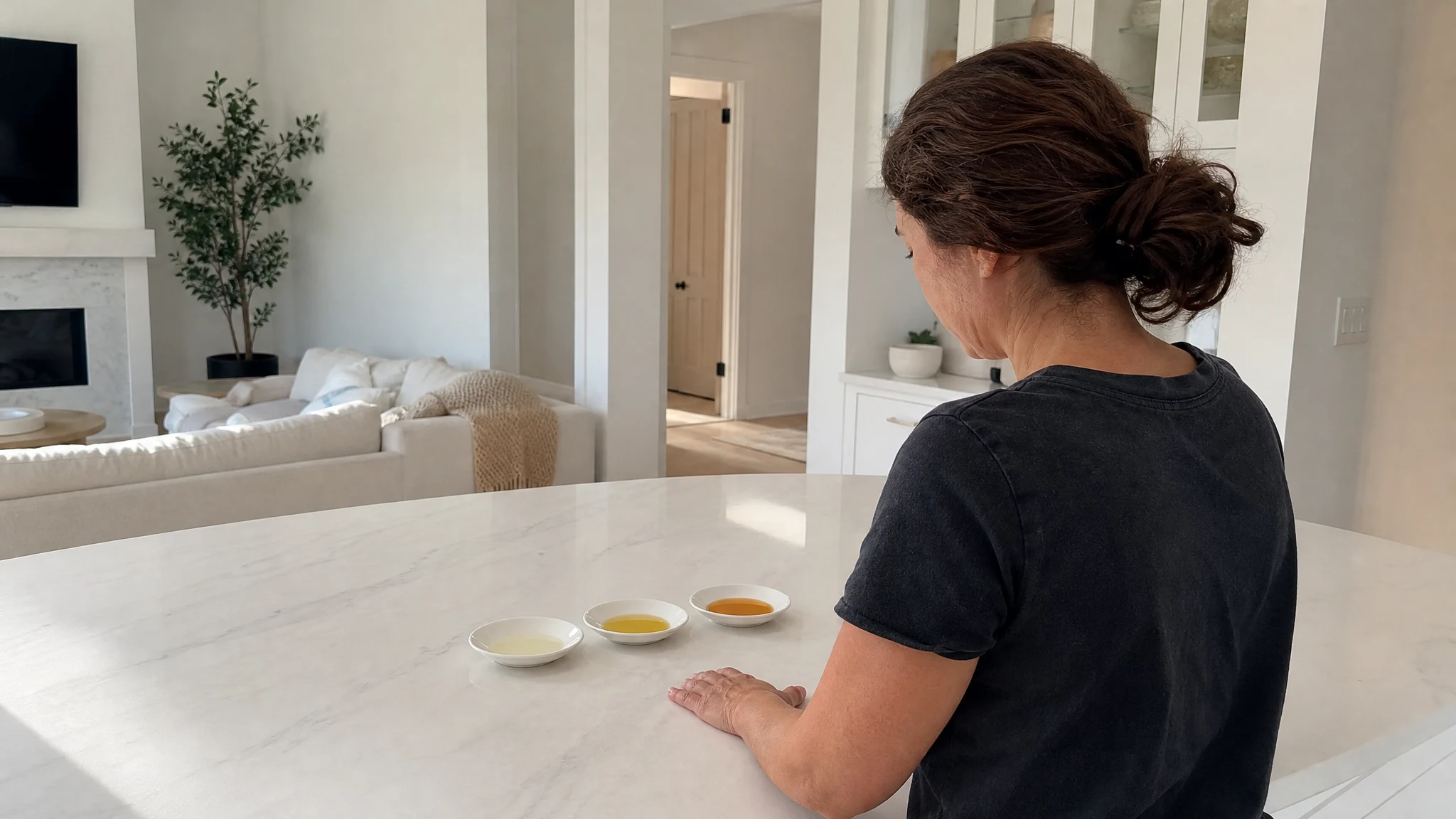
Does Boswellia species change what frankincense oil smells like?
Frankincense is a family of Boswellia trees, and the oils do not all smell or measure alike. In one laboratory comparison, oils from Omani and Yemeni Boswellia sacra averaged 68.2% alpha-pinene, while Somali Boswellia carterii oils averaged 37.3%, and their optical rotations pointed in opposite directions (+30.1 and -13.3 degrees). The authors took that as evidence that the two are separate species, not synonyms.
You do not need the numbers to take the lesson: "frankincense oil" on its own is a loose description. We sell six single-species oils in our shop (serrata, carterii, sacra, frereana, neglecta and rivae), and each has its own aroma, from the warm, woody serrata to the bright, lemon-pine frereana. Our guide to the six species lays out how they differ, and a label that names the species is the minimum we would want to see anywhere.
What do frankincense oil grades actually measure?
Grades show up everywhere, and they are rarely measuring the same thing. Resin traders sort tears by size, colour and clarity, which tells you about the raw material, not the oil. Researchers sometimes collect successive distillate samples and label them grade 1, 2 and 3, which is a convention inside one experiment. "Therapeutic-grade" is a marketing phrase: Robert Tisserand has pointed out that no independent standard exists under that name. We go through it in our article on therapeutic-grade claims. Our advice is to treat any single-word grade as a description until the seller says what it is measured against.
What a Certificate of Analysis lists for serrata
A Certificate of Analysis is only as informative as its contents. The one we offer is for a serrata batch, and it lists appearance (a yellow liquid), relative density at 20 C (0.838), refractive index (1.459) and optical rotation (29.12 degrees). Those are physical constants. They become a fingerprint only when compared with a reference range for the species, and they do not show individual compounds.
That is where gas chromatography/mass spectrometry, GC/MS, comes in. It is the method that lists what is actually in an oil, and a 2022 study shows why people use it. Researchers analysed 21 commercial oils sold online as Boswellia carteri and found synthetic limonene in six, synthetic octyl acetate in three, castor oil in three, and other frankincense species or resin in several more. It was a sample of online products, so it says adulteration exists, not how common it is everywhere, but it is a good reason to look for a compound table when composition matters to you. If you want one for one of our oils, ask us in writing through the contact page, naming the variety and the lot, and read the answer against our guide to reading a GC/MS report.
Boswellic acid claims on an essential oil label
Here is a tell that is easy to spot. Boswellic acids are heavy, non-volatile molecules that stay in the still, and the Tisserand Institute notes there is no reliable report of them in frankincense oil made with normal distillation. They show up in resin extracts, some of which are sold as supplements. If an essential oil page advertises a boswellic acid percentage, it is describing something other than a steam-distilled oil. Our boswellic acid article explains the extract side.
First-sniff test for resinous essential oils
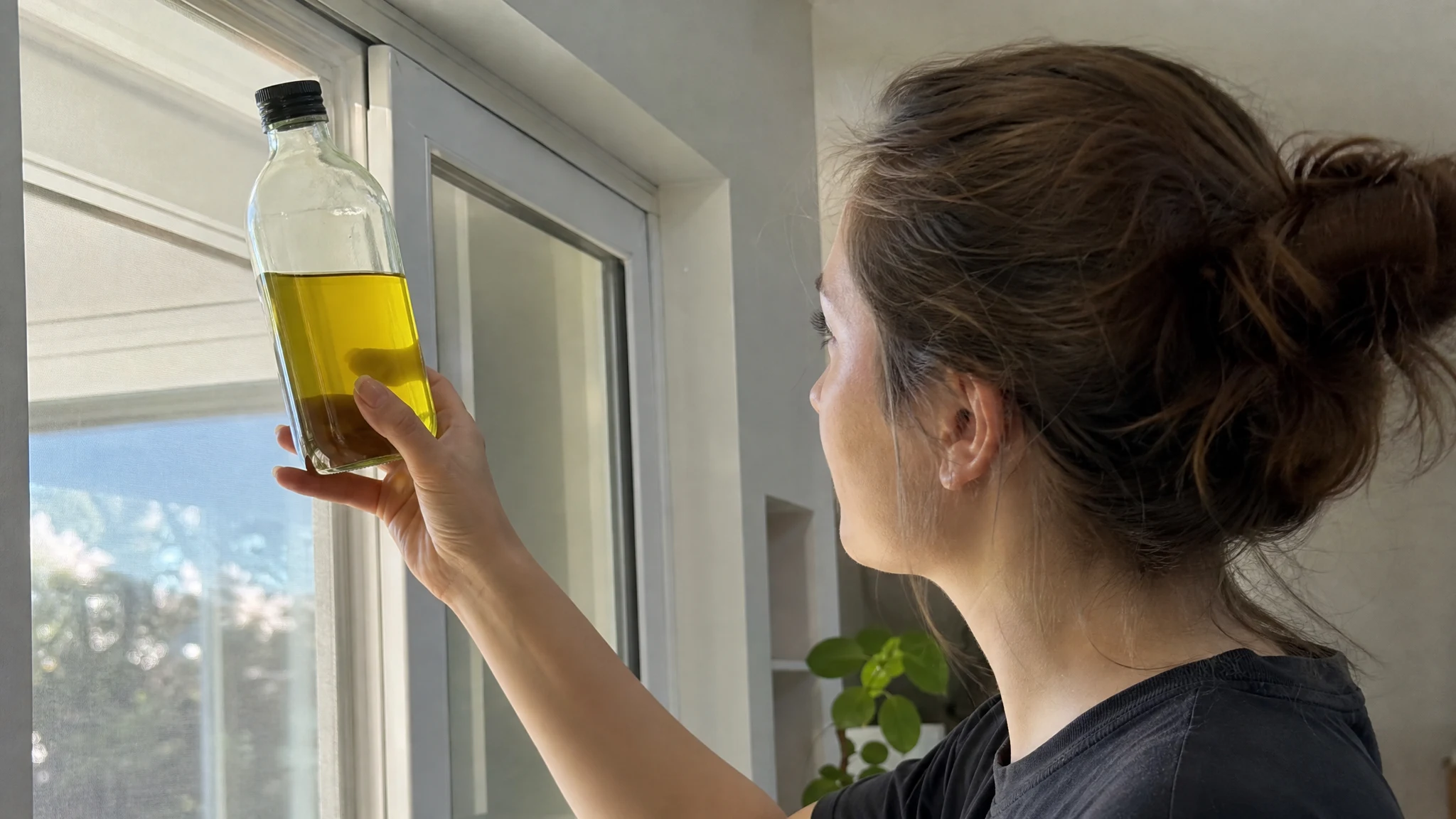
Before the documents, there is the bottle. Open it, take a slow breath from a few centimeters away, and notice what you get. Frankincense oils smell resinous with some mix of citrus, pine or sweetness, depending on the variety. If you were told an oil is warm and woody and you smell something thin and sharp, that is worth a question. Your nose is a sanity check, not a verdict, but it is a pleasant place to begin.
Notice how the scent develops, too. Frankincense usually opens in stages, brighter at first and rounder after a few minutes, so give it time before you decide.
Notebook records for each oil bottle purchased
Once you pick an oil, jot down the variety, the date it arrived and anything the seller told you in writing. A page in a notebook or a folder in your email is enough. If a question comes up later, you will know exactly what you bought and when, and a seller can only help if you can say which oil you mean.
Written seller answers on species, method and lot
The fourth check is the simplest. Ask the seller, in writing, for the species, the extraction method and the report for the exact lot you are buying, and see how specific the answer is. A seller who answers with a document is giving you something to check. A seller who answers with a story is giving you something to enjoy, which is fine, but it is not the same. Our article on spotting fake frankincense oil covers why the kitchen tests people recommend fall short of this.
None of this takes long, and all of it is worth doing for a material as variable as frankincense. A few good questions will tell you more than any amount of sniffing at a bottle. If you are buying larger quantities, see our guide to buying frankincense essential oil in bulk.
Frankincense Essential Oil
Serrata, carterii, sacra, frereana, neglecta and rivae: steam-distilled, GC/MS verified, in sizes from 0.5 oz to bulk.
From $12.99 $10.40 with code BLACKFRIDAY
Sources & Further Reading
- Chemical differentiation of Boswellia sacra and Boswellia carterii essential oils by gas chromatography and chiral gas chromatography-mass spectrometry (J Chromatogr A, 2012)
- Comparison of Volatile Constituents Present in Commercial and Lab-Distilled Frankincense (Boswellia carteri) Essential Oils for Authentication (Plants, 2022)
- In Vitro Antimicrobial Activity of Frankincense Oils from Boswellia sacra Grown in Different Locations of the Dhofar Region (Oman) (Antibiotics, 2020), for the grade 1, 2, 3 fractions
- Does Frankincense oil contain boswellic acid? (Tisserand Institute)
- Therapeutic grade oils - read all about it! - Robert Tisserand (2010)