How to Use Frankincense Oil Safely: Dilution Basics
Three things decide how comfortable a frankincense oil is on your skin: how much you use, how old the bottle is, and whose skin it is. The word "frankincense" on the label matters much less. Our six oils are sold neat, so we always hand the dilution to you, and this guide gives you the numbers and habits that make it easy.

Frankincense Essential Oil
Six single-origin frankincense varieties, steam-distilled and GC/MS verified.
From $12.99 $10.40 with code BLACKFRIDAY
Which dilution percentage suits frankincense oil?
The Tisserand Institute's Dilution for essential oils gives ranges as percent essential oil in the finished product, and calls them guidelines rather than rules:
- Sensitive or impaired skin: 0.2 to 1 percent.
- Facial cosmetics and deodorants: 0.5 to 1.2 percent.
- Body oils and lotions: 1 to 3 percent.
- Bath products: 2 to 4 percent.
The Institute's beginner's guide is more conservative, suggesting a maximum of about 1 or 2 percent to avoid irritation (A Beginner’s Guide to Essential Oils Part 2: How to Use Essential Oils). Our reading is that 1 percent or less is a comfortable place to start for the face, and 1 to 2 percent for a general body oil. We start low because you can always add, and a lower dose gives a scent just as nice. A frankincense-specific maximum is a question for a dedicated safety reference such as Tisserand and Young's Essential Oil Safety, rather than something we can state for you.
From percent to drops
Counting drops is rough, because droppers and room temperature change drop size. A common convention is about 20 drops per millilitre, and one ounce of carrier is about 30 ml. Here is the arithmetic on that basis:
| Strength | In 10 ml of carrier | In 30 ml |
|---|---|---|
| 0.5 percent | about 1 drop | about 3 drops |
| 1 percent | about 2 drops | about 6 drops |
| 2 percent | about 4 drops | about 12 drops |
| 3 percent | about 6 drops | about 18 drops |
For accuracy, weigh instead. The Certificate of Analysis we publish for a serrata batch lists a relative density of 0.838, so 1 ml of that batch weighs about 0.84 g. We do not have densities for our other five oils, so for them a scale is the best guide.
Mixing with clean hands and tidy tools
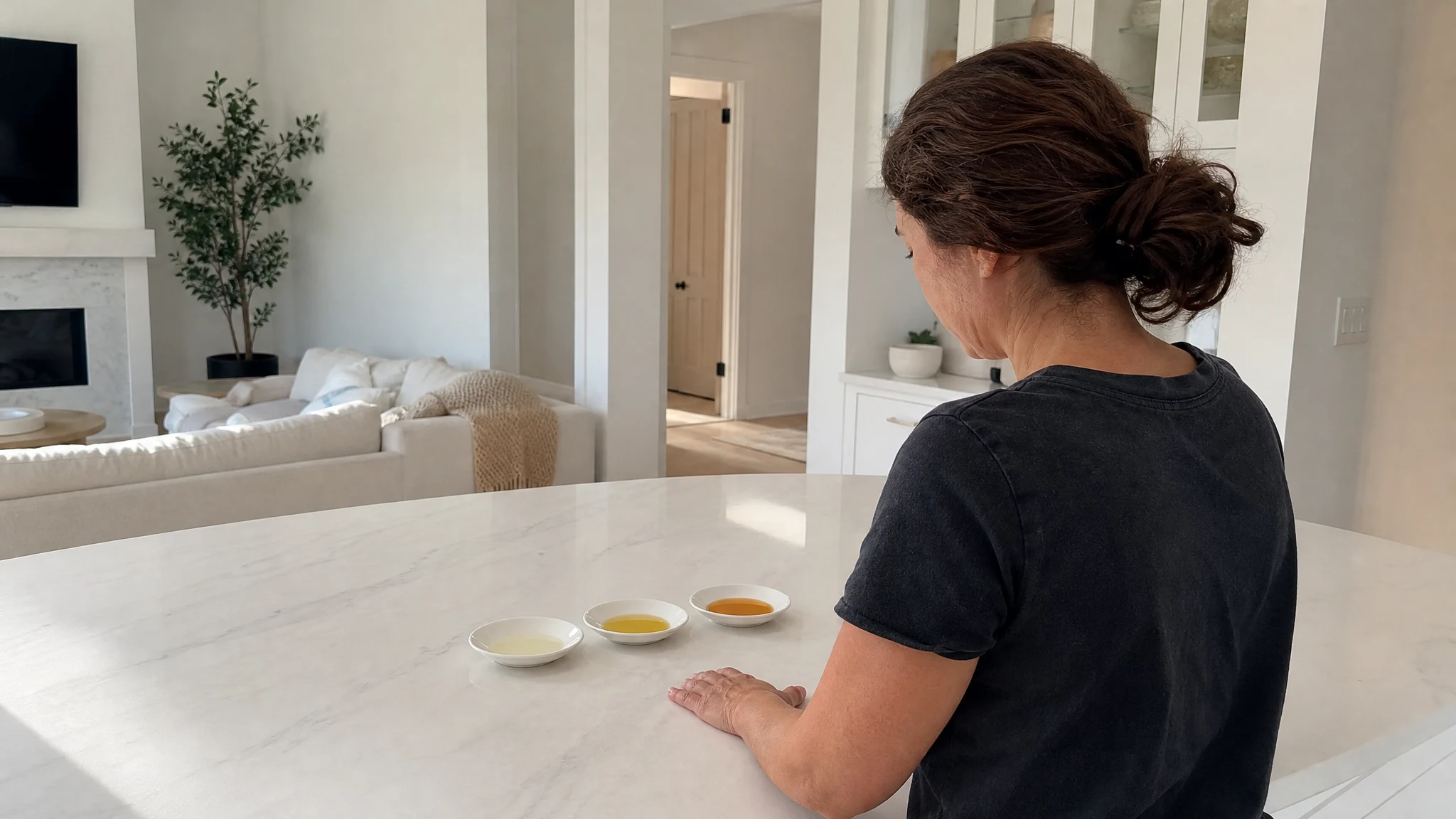
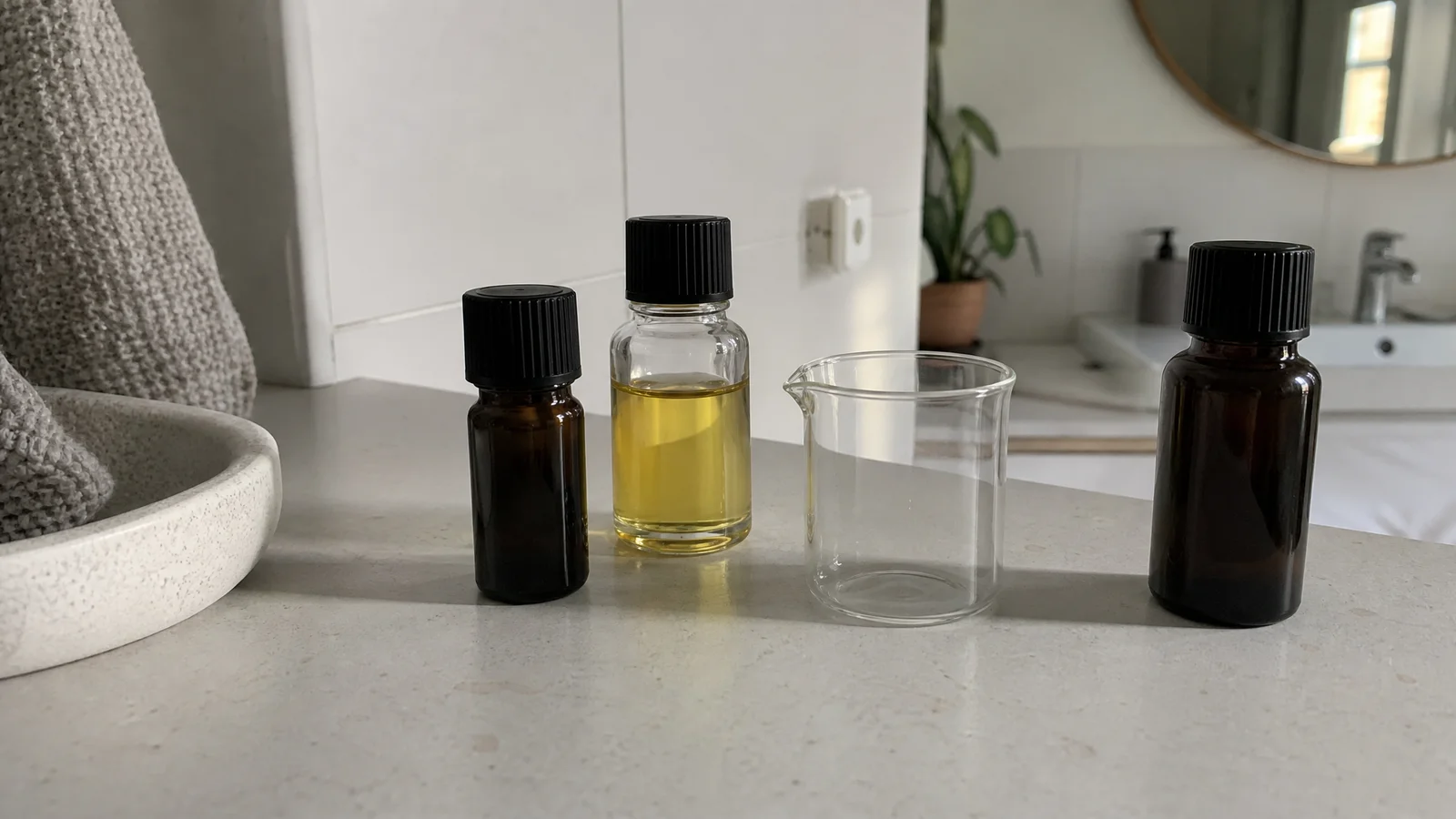
Before you mix anything, wash your hands, wash and dry your jar and wipe down the counter. Use a clean, dry spoon or stirrer, and put the cap back on the essential oil bottle before you start stirring, so a knock does not spill it. Label the finished blend with the date and the strength, because a week later you will not remember. Small, clearly marked batches are easier to keep fresh, and easier to stop using if your skin tells you to.
Patch testing diluted oil for 24 hours
Tisserand's advice is to try a properly diluted oil on a small patch of skin and watch for redness and irritation over 24 hours, and it reminds us that anyone can have an allergy to any essential oil. A patch test is a good check, not a guarantee. If a reaction appears at any point, stop and see a dermatologist rather than push through.
Oxidation and storage of frankincense essential oil
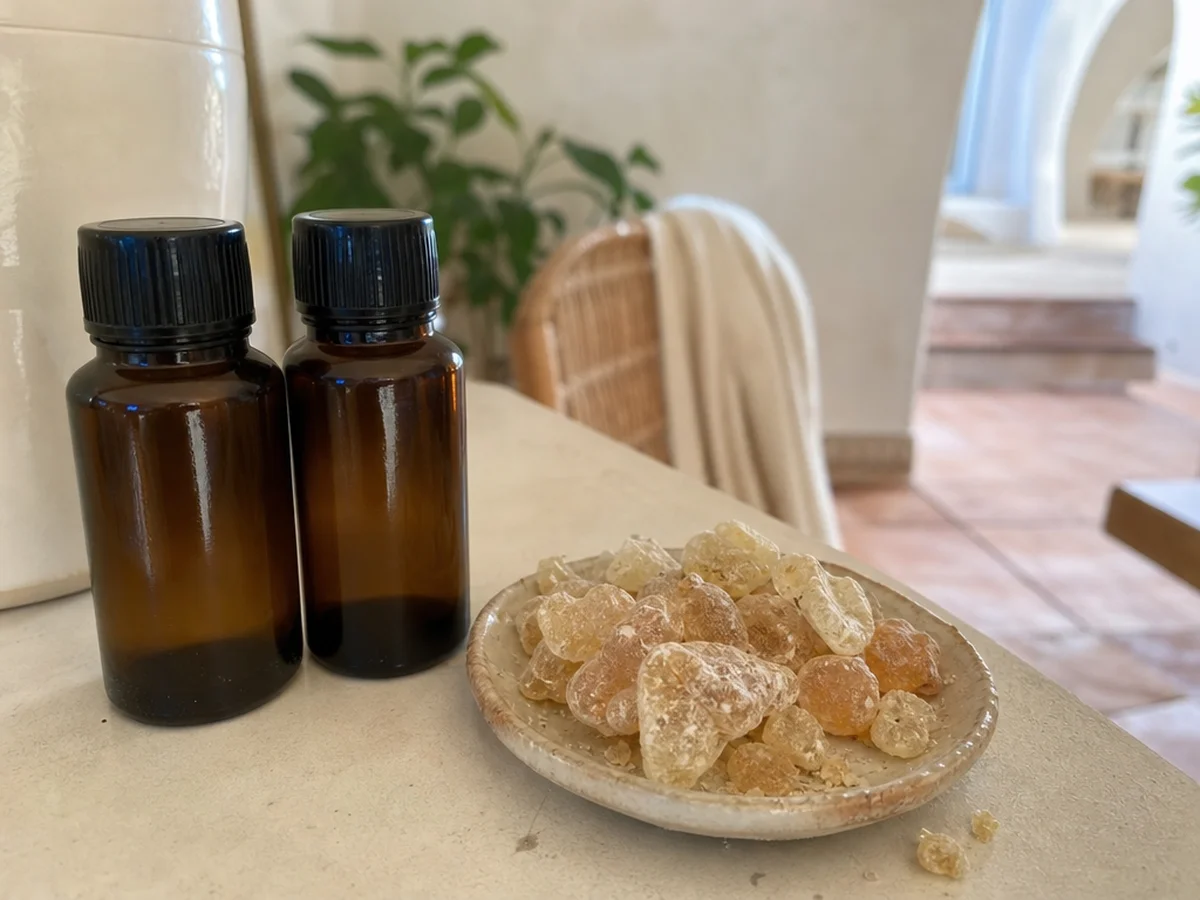
Oxidation is the part buyers rarely think about. Tisserand notes that exposure to UV light, heat or oxygen can accelerate degradation, and recommends glass bottles, preferably dark. In practice, buy a size you will use up, cap it tightly, keep it cool and dark, and retire it if the smell changes. We publish no shelf life for our oils, so your nose is the best guide. Our storage guide goes deeper.
Who needs professional advice before using oils?
- Children. Poison Control notes children's thin skin and immature livers may make them more vulnerable than adults, and advises keeping oils locked up and out of reach (Essential oils: Poisonous when misused). Dilution for young children is a pediatrician question. See frankincense and children.
- Pregnancy and breastfeeding. Ask a midwife or physician first. NCCIH says little is known about frankincense use in pregnancy (Boswellia: Usefulness and Safety). See our pregnancy post.
- Medications and health conditions. A pharmacist or physician is the right person. See the medications FAQ.
- Pets. Cats in particular. See the pets article.
Eye burns, swallowed oil and diffusing precautions
Tisserand says undiluted oil dripped into the eyes will cause a chemical burn and may result in temporary blindness, so wash hands after handling and keep oily fingers away from your face (How to Use Essential Oils Safely). If someone swallows an essential oil, contact your poison center. Our oils are not sold as food or supplements, and the supplement trials people quote used resin extracts, not this oil. For diffusing, the same Tisserand page suggests 30 to 60 minutes on, then 30 to 60 minutes off, with some fresh air. Our diffuser article covers the practical side.
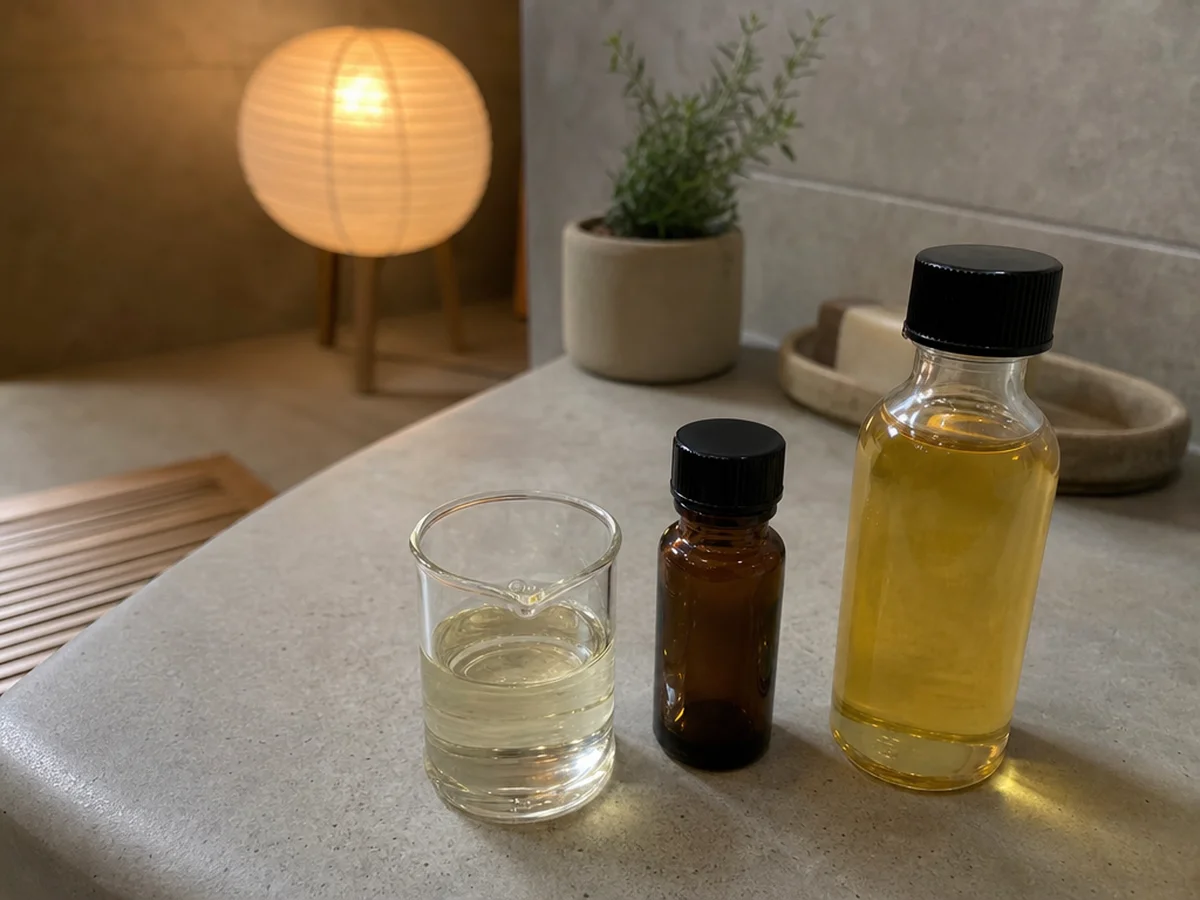
When you open the bottle for the first time, notice the scent before you reach for a dropper. Our serrata is warm and slightly woody with subtle citrus and pine at the top, and our sacra is deep, balsamic and honeyed. A scent you enjoy at low strength is the whole point, so there is never a reason to push the dose.
Why does the FDA judge oils by intended use?
The FDA explains that a product's intended use is judged from its labeling and advertising, and that a plant origin does not stop a product being regulated as a drug. It also notes that many plants contain materials that are irritating or likely to cause allergic reactions (Aromatherapy). That is why we describe our oils by aroma and make no promise about any condition.
Lowest effective strength for face and body
Pick the lowest strength that suits you, around 0.5 to 1 percent for the face and up to 2 percent for the body. Patch test it. Use a fresh bottle and stop if the smell turns. Skip skin use and ask a professional if the user is pregnant, a young child, on regular medication or managing a skin condition, and keep bottles away from pets and eyes. To compare aromas before you choose, our species overview is a good place to start.
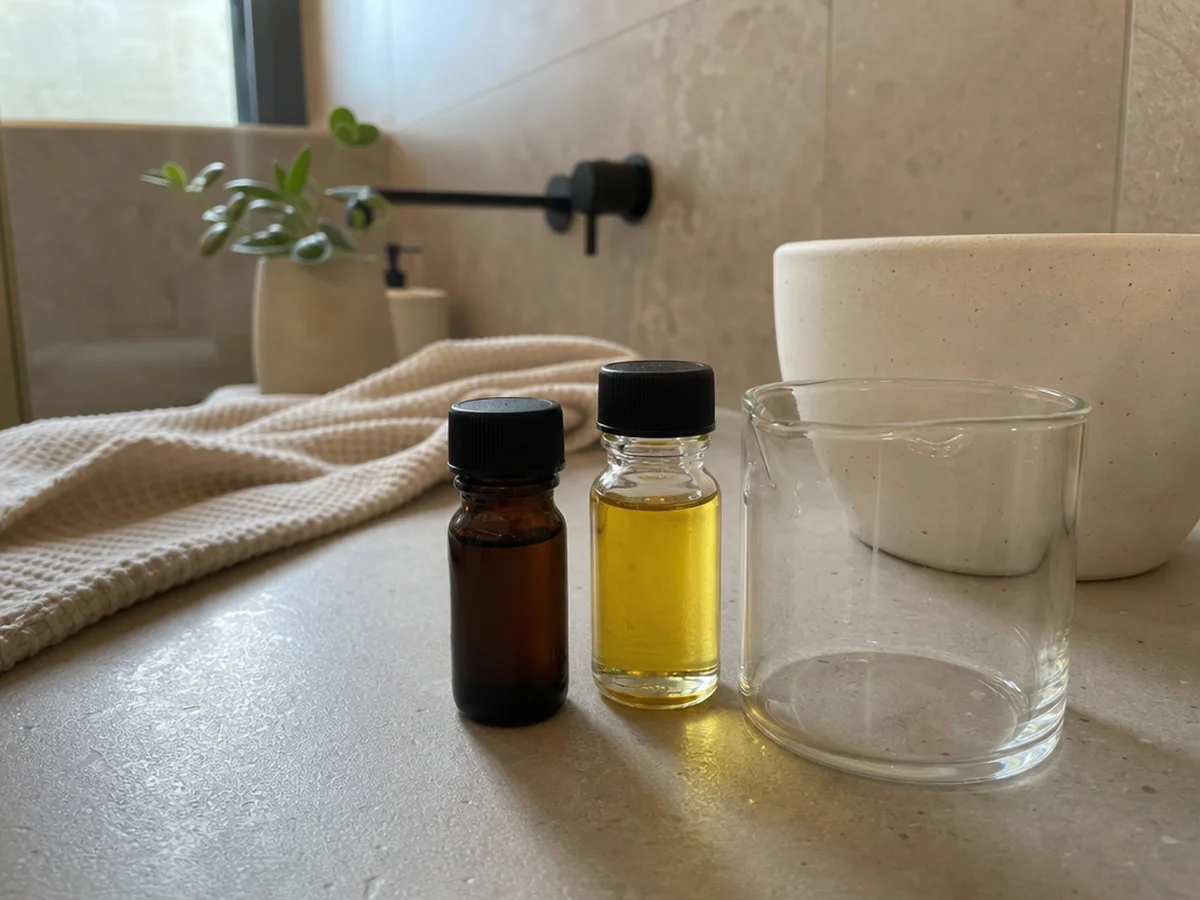
A little care up front is all it takes, and then the oil can simply do what it does best, which is smell wonderful.
Frankincense Essential Oil
Serrata, carterii, sacra, frereana, neglecta and rivae: steam-distilled, GC/MS verified, in sizes from 0.5 oz to bulk.
From $12.99 $10.40 with code BLACKFRIDAY
Sources & Further Reading
- Dilution for essential oils, Tisserand Institute
- A Beginner’s Guide to Essential Oils Part 2: How to Use Essential Oils, Tisserand Institute
- Essential oils: Poisonous when misused, Poison Control
- Boswellia: Usefulness and Safety, NCCIH
- How to Use Essential Oils Safely, Tisserand Institute
- Aromatherapy, US FDA