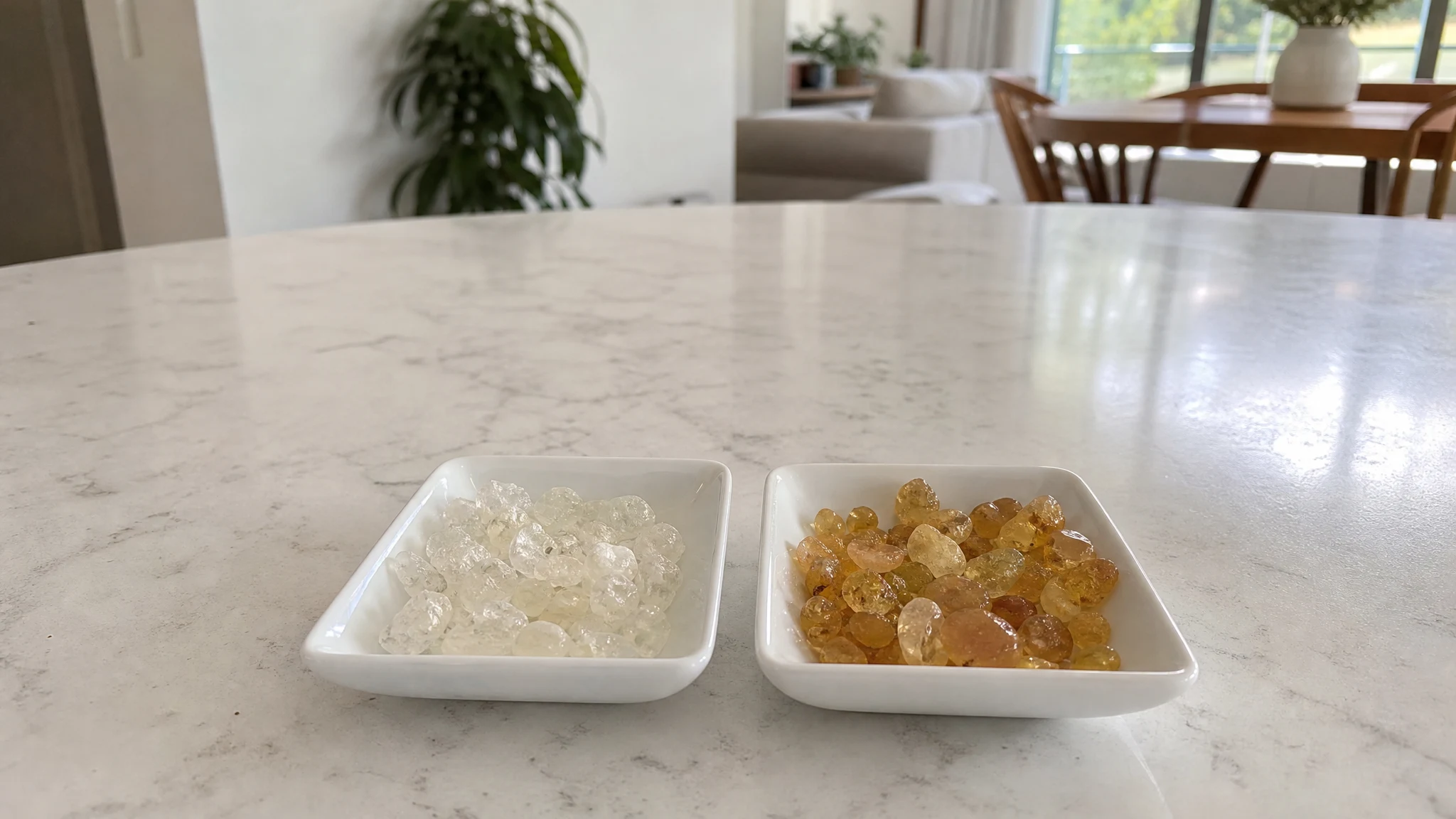
Copaiba vs Frankincense Oil: Peppery or Piney?
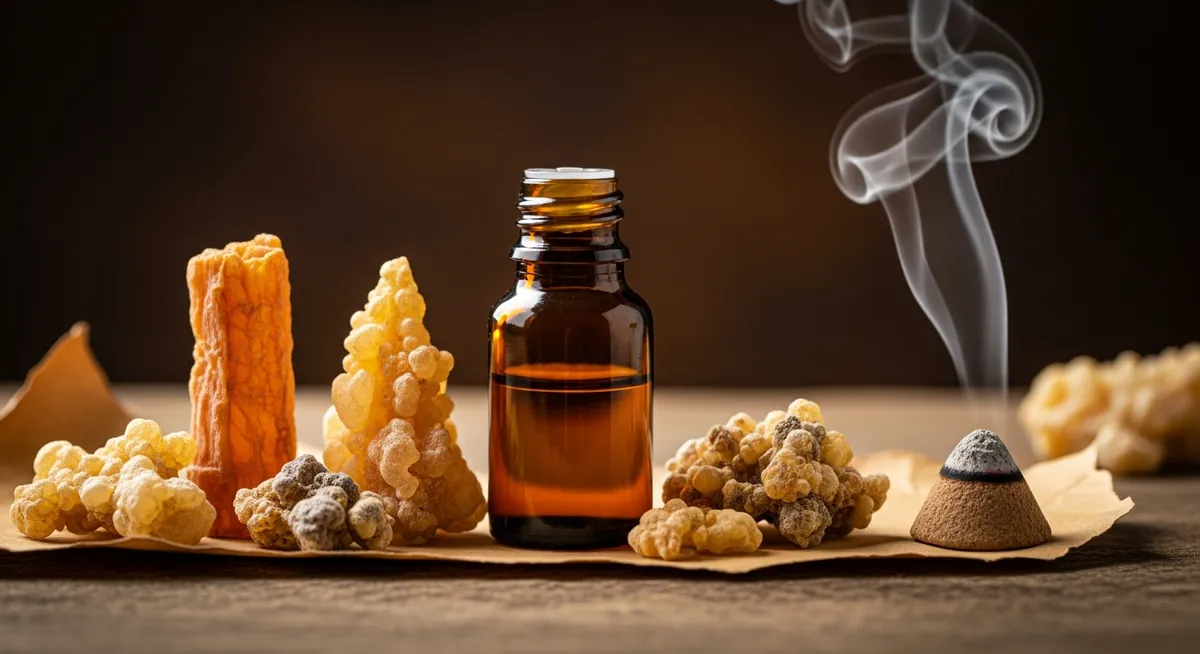
Copaiba oil shares a molecule called beta-caryophyllene with many spice and food plants, and it is the reason copaiba gets so much attention. Frankincense is built around something else entirely, a bright pine-scented molecule called alpha-pinene. Setting the two side by side is a good way to understand why two resin oils can have so little in common.

Frankincense Essential Oil
Six single-origin frankincense varieties, steam-distilled and GC/MS verified.
From $12.99 $10.40 with code BLACKFRIDAY
Copaiba oil's peppery caryophyllene range
Copaiba oil comes from Copaifera trees of the Neotropics. A review of the genus describes distilled copaiba oils as rich in sesquiterpene hydrocarbons and often dominated by beta-caryophyllene, and it notes that the profile shifts with species, season, soil and rainfall. The spread is real. A comparison of three species found beta-caryophyllene at 57.5% in one, 19.7% in another and 40.9% in a third, with different resin acids leading in each. So "copaiba oil" is a label for a range of materials, and it also matters whether a product is the raw oleoresin or a distilled oil.
The molecule's fame rests largely on one 2008 paper. Researchers found that beta-caryophyllene binds to the CB2 receptor, part of the body's cannabinoid system, and in mice a small oral dose reduced a chemically induced paw swelling in normal animals but not in animals lacking that receptor. It is a genuinely interesting result about a molecule found in many spice and food plants. It was not a test of copaiba oil, of oil on skin or in the air, or of people, and we do not read it as a promise about any bottle.
Frankincense oil's lighter pinene-led profile
Steam-distilled frankincense sits at the other end of the chemistry map, built mostly on monoterpenes. In an analysis of commercial oils sold as Boswellia carterii, alpha-pinene was the main component of most samples, at roughly a quarter to nearly half of the oil. That figure is for that sample set and not for our oils; it simply shows where frankincense chemistry lives. Our post on how resin becomes oil goes through the process in more detail.
It also helps to remember that the same sample set turned up plenty of oils that were not what they claimed. Authors of that study found that many of the commercial "carterii" oils had been adulterated or contaminated, which is why we encourage anyone buying from any seller to ask what documentation exists for the exact oil in the bottle. Our guide to reading a GC/MS report shows what to look for.
Do caryophyllene and pinene smell different?
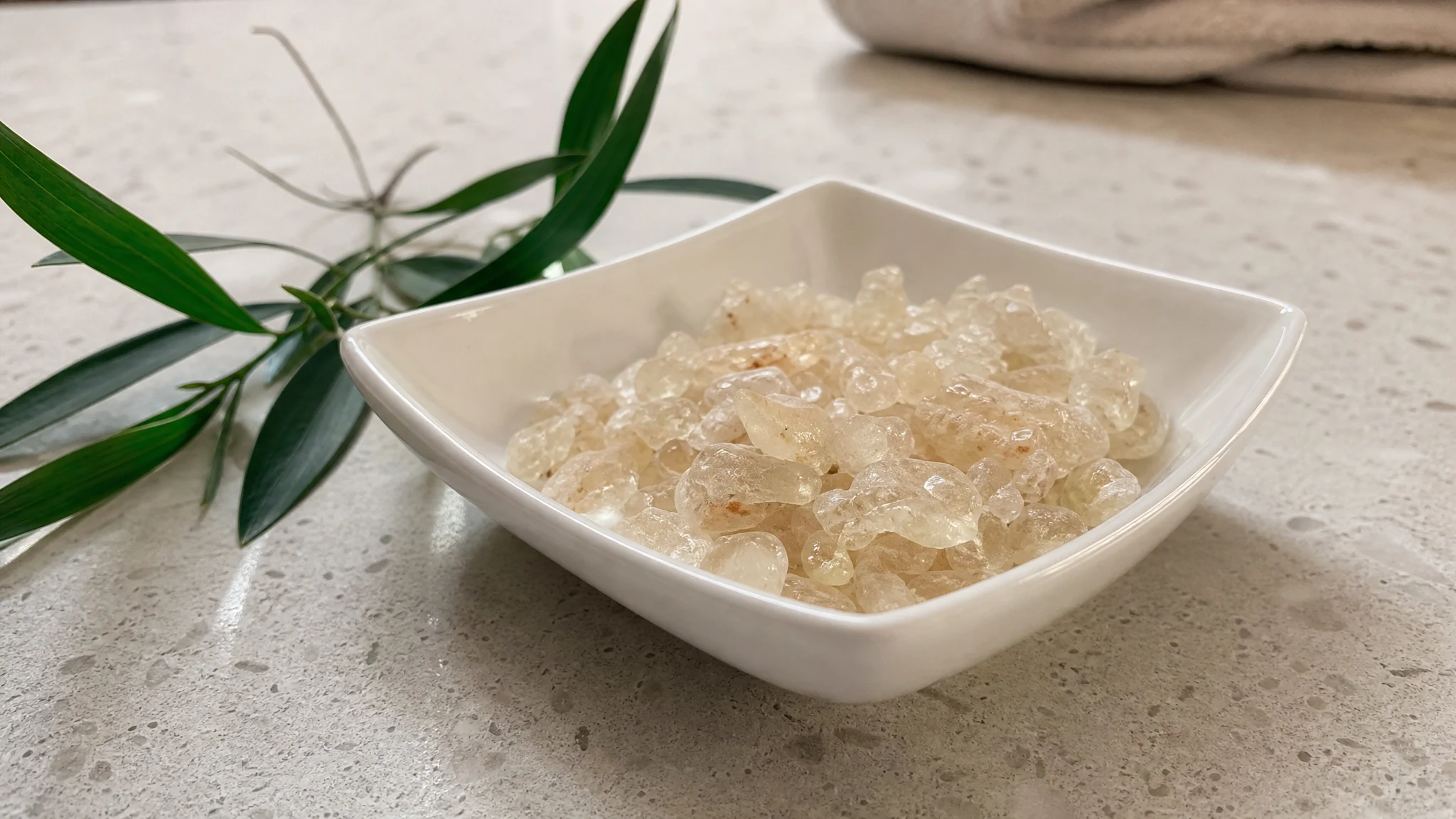
Chemistry like this predicts character. A caryophyllene-led oil sits in the spicy, woody camp, and a pinene-led oil sits in the fresh, resinous one. We describe our serrata as warm and slightly woody with subtle citrus and pine top notes, our frereana as bright, fresh and lemon-pine, and our sacra as deep, balsamic and honeyed. All three lean toward the lighter, resinous side of the shelf, and all six of our frankincense oils are sold as steam-distilled oils, neat, so you dilute them yourself.
On skin, the Tisserand Institute suggests 0.2% to 1% for sensitive skin, 0.5% to 1.2% for facial products and 1% to 3% for body oils, and calls undiluted use neither sensible nor necessary. Swallowing oils is a different matter: poison control advises calling 1-800-222-1222 straight away if a child or anyone swallows an essential oil, and says to keep oils locked away from children and pets. Copaiba has its own cautions that a copaiba supplier should explain, because we do not sell it.
Paper strip test: copaiba versus frankincense
If you ever put the two on paper strips side by side, the contrast should be easy to find. A caryophyllene-led oil tends toward warm, spicy and woody. Frankincense, in the varieties we sell, leans fresher and more resinous, with pine and citrus lifting the top. Smell each from a hand's width away, come back after a few minutes, and notice which one you want to keep smelling.
Do not be surprised if your first reaction changes once the strip has had a little time in the air. Aroma shifts as an oil settles, and the second sniff is often more honest than the first.
Which resin oil should you start with?
A shelf full of resin oils can be tempting, and we understand the pull. Our advice is to begin with one oil you love and get to know it before you add another. Our six frankincense oils give you plenty of range to learn from without wandering far from the one tree family.
Anti-inflammatory claims on copaiba and frankincense pages
Both oils turn up on pages promising anti-inflammatory benefits. We do not make that claim for ours. The National Center for Complementary and Integrative Health says that studies behind boswellia mostly involve oral extracts, not oil, and the FDA classes pain-easing claims for aromatherapy products as drug claims. If joint or muscle discomfort is what is behind your search, a physician is the right first stop. Our pain and inflammation article sets out what the extract trials covered.
If you are shopping for either oil, take your time. Read the label, note the species and keep a record of the date you opened the bottle. It sounds fussy, and it turns out to be the thing that makes comparing oils meaningful months later.
The two oils are best treated as aromas with different personalities, chosen by what you like and what a seller can document. Our species overview is a good place to start if the resinous, piney side is the one that appeals.
Frankincense Essential Oil
Serrata, carterii, sacra, frereana, neglecta and rivae: steam-distilled, GC/MS verified, in sizes from 0.5 oz to bulk.
From $12.99 $10.40 with code BLACKFRIDAY
Sources & Further Reading
- da Trindade R, da Silva JK, Setzer WN. Copaifera of the Neotropics: A Review of the Phytochemistry and Pharmacology. Int J Mol Sci, 2018.
- Veiga Junior VF et al. Chemical composition and anti-inflammatory activity of copaiba oils from Copaifera cearensis Huber ex Ducke, Copaifera reticulata Ducke and Copaifera multijuga Hayne - a comparative study. J Ethnopharmacol, 2007.
- Gertsch J et al. Beta-caryophyllene is a dietary cannabinoid. Proc Natl Acad Sci U S A, 2008.
- Ojha PK et al. Comparison of Volatile Constituents Present in Commercial and Lab-Distilled Frankincense (Boswellia carteri) Essential Oils for Authentication. Plants (Basel), 2022.
- Tisserand Institute. Dilution for essential oils.
- Poison Control. Essential oils: Poisonous when misused.
- NCCIH. Boswellia: Usefulness and Safety.
- FDA. Aromatherapy.