Eucalyptus vs Frankincense Oil: Two Kinds of Fresh
Eucalyptus and frankincense both get called "fresh," and that one word hides two very different oils. Eucalyptus is sharp, camphoraceous and cooling. Frankincense is warm and resinous, with pine and citrus on top. Understanding why they differ, and what a fresh feeling actually is, makes it much easier to choose between them.

Frankincense Essential Oil
Six single-origin frankincense varieties, steam-distilled and GC/MS verified.
From $12.99 $10.40 with code BLACKFRIDAY
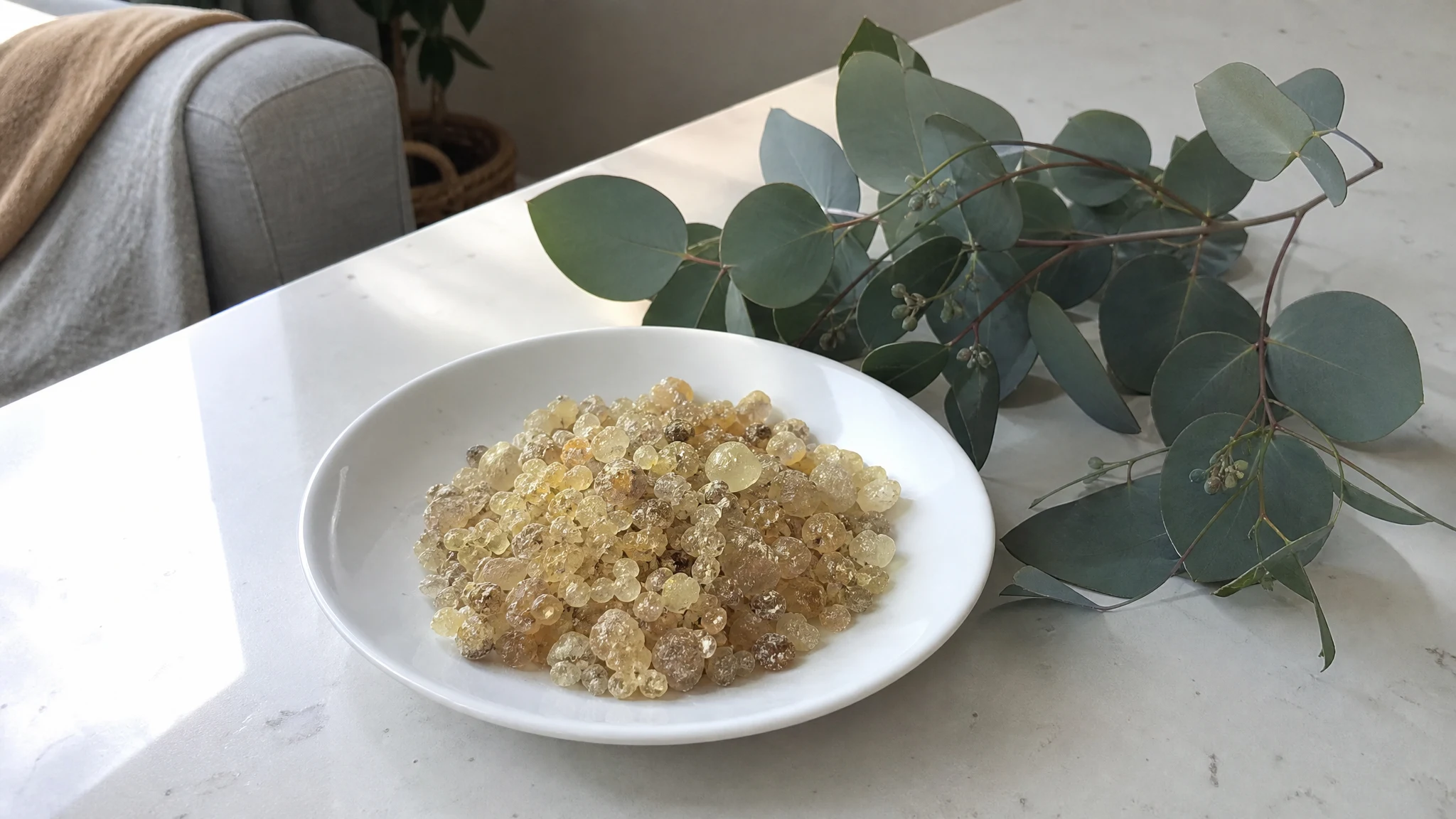
Eucalyptus oil cineole versus frankincense terpene blend
Eucalyptus oil is defined by a single compound. The International Programme on Chemical Safety's monograph says medicinal eucalyptus oil contains not less than 70% cineole, with pinene and other terpenes making up the rest, and describes the smell as camphoraceous. That is why eucalyptus oils from different sources smell so alike.
Frankincense is a mixture that changes with the species. Steam-distilled frankincense is led by monoterpenes, alpha-pinene in particular, and in one analysis of commercial carterii oils alpha-pinene was the main component of most samples. Our six oils each have their own character. We describe our serrata as warm and slightly woody with subtle citrus and pine top notes, and our frereana as bright, fresh and lemon-pine. If you want eucalyptus's lift without its medicinal punch, the frereana is the one to sample first. Our species overview lays out the rest.
Does eucalyptus oil actually improve airflow?
Many people reach for eucalyptus because it makes the air feel clearer. It is worth knowing what researchers have measured. In a randomized experiment, 106 healthy adults inhaled nebulized peppermint, eucalyptus or rosemary oil for 15 minutes, or nothing. None of the oils changed forced vital capacity, peak flow or the ratio between them. What did differ was how much people felt their breathing change, and that tracked what they expected, not what the instruments recorded. The authors concluded that the perceived effect is mediated at least partly by expectation.
That is a tidy lesson in how scent works. The cooling, bright sensation is real and pleasant, but it is a sensation. It is not evidence that an oil alters how air moves in your lungs, and we make no such claim for ours. On the frankincense side, the National Center for Complementary and Integrative Health says the small studies of boswellia for asthma used oral products and that there is not enough rigorous evidence to call it useful. Those studies did not involve distilled oil. Our posts on alpha-pinene and respiratory health go deeper if you want the details.
Sharp eucalyptus scent versus rounder frankincense
Open a bottle of eucalyptus and the scent arrives quickly and sharply, a cool, clean jolt right at the front of the nose. Frankincense is a slower arrival. It tends to settle in rounder and warmer, with pine and citrus at the top and a resinous depth under them. If you hold a paper strip of each at arm's length, you will probably feel the difference within a few breaths.
That changes how you use them. Eucalyptus is the brisk opener for a kitchen or bathroom, and frankincense is the one you leave in a quiet corner of a living room where you want the air to feel unhurried.
Diffuser drops and ventilation for either oil
Whichever you choose, start with a small number of drops and a ventilated room. Place the diffuser away from where people sit, open a window now and then, and notice how the room smells after twenty minutes. If it already feels strong, you used too much. A faint scent is almost always the nicer one.
Accidental swallowing risks with eucalyptus oil
The biggest practical difference is how much is known about swallowing accidents. The IPCS monograph reports that in children, clinically significant symptoms have followed swallowing less than a teaspoon of eucalyptus oil, and that the main risk is aspiration after vomiting. Poison control makes the general point for every essential oil: if anyone swallows one, call 1-800-222-1222, and keep oils locked up, out of sight and reach of children and pets. We apply the same rule to every bottle we sell.
Diffusers deserve a thought too. An allergist writing for the American Academy of Allergy, Asthma and Immunology notes that diffused eucalyptus, lavender and tea tree oils have been shown to release terpenes, and that terpenes have been associated with nighttime breathlessness and airway hyperresponsiveness. The advice is caution for people with asthma. Frankincense is a terpene-rich oil too, so by that reasoning the same caution is sensible. If you have asthma, check with your clinician before diffusing either, and never swap an oil for the plan your clinician gave you. Our diffuser article covers the practical side, and our pet article covers shared rooms.
Which mood suits eucalyptus or frankincense?
If you want something brisk that wakes up a room, eucalyptus is the classic, and you will find it at a pharmacy or a supplier that specializes in it. If you want depth, something warmer and more incense-like, frankincense is what we sell,.
Our own preference, for what it is worth, is to let a scent earn its place in a room slowly. Use a little, leave the room, and come back; a good aroma is one you notice again with pleasure, and a poor choice becomes obvious quickly. That gentle approach works for either oil and tends to save a lot of wasted drops.
Both are fresh, just in different registers, and the better question is which register you are in the mood for.
Frankincense Essential Oil
Serrata, carterii, sacra, frereana, neglecta and rivae: steam-distilled, GC/MS verified, in sizes from 0.5 oz to bulk.
From $12.99 $10.40 with code BLACKFRIDAY
Sources & Further Reading
- IPCS INCHEM. Eucalyptus oil (PIM 031).
- Ojha PK et al. Comparison of Volatile Constituents Present in Commercial and Lab-Distilled Frankincense (Boswellia carteri) Essential Oils for Authentication. Plants (Basel), 2022.
- Köteles F et al. Inhaled peppermint, rosemary and eucalyptus essential oils do not change spirometry in healthy individuals. Physiol Behav, 2018.
- NCCIH. Boswellia: Usefulness and Safety.
- Poison Control. Essential oils: Poisonous when misused.
- AAAAI. Essential oil diffusers and asthma.