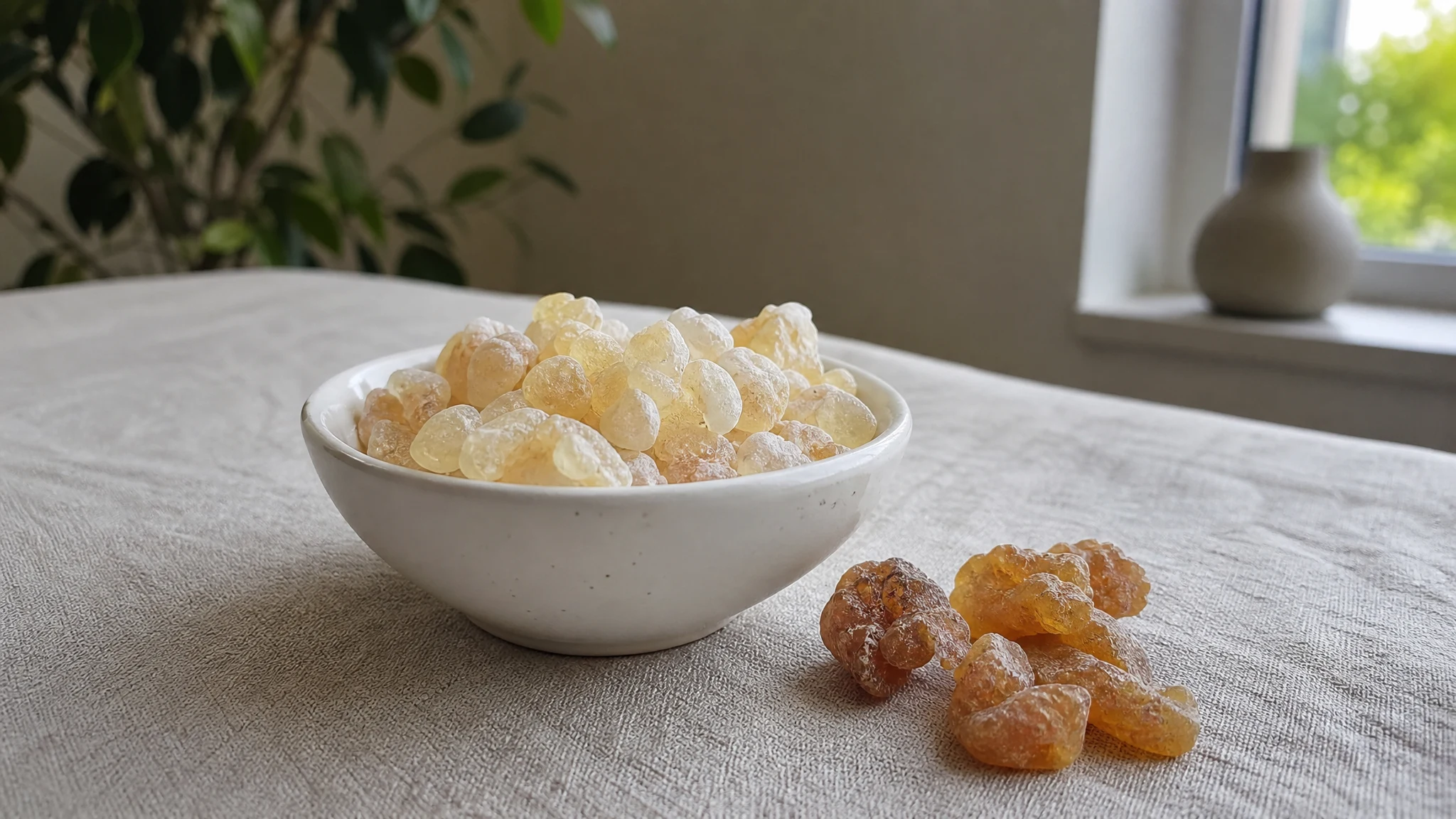
Frankincense Anointing Oil: What Exodus Really Says
Plenty of recipes promise a "biblical anointing oil" with frankincense in it, and the surprise is that the oil in Exodus has none. Frankincense shows up a few verses later, in a separate recipe for incense. That gap is worth knowing about, because it tells you what you are really making when you blend a frankincense oil for a quiet personal ritual: a lovely scented oil of your own, not a restored ancient formula.

Frankincense Essential Oil
Six single-origin frankincense varieties, steam-distilled and GC/MS verified.
From $12.99 $10.40 with code BLACKFRIDAY
Frankincense anointing oil: what Exodus 30 lists
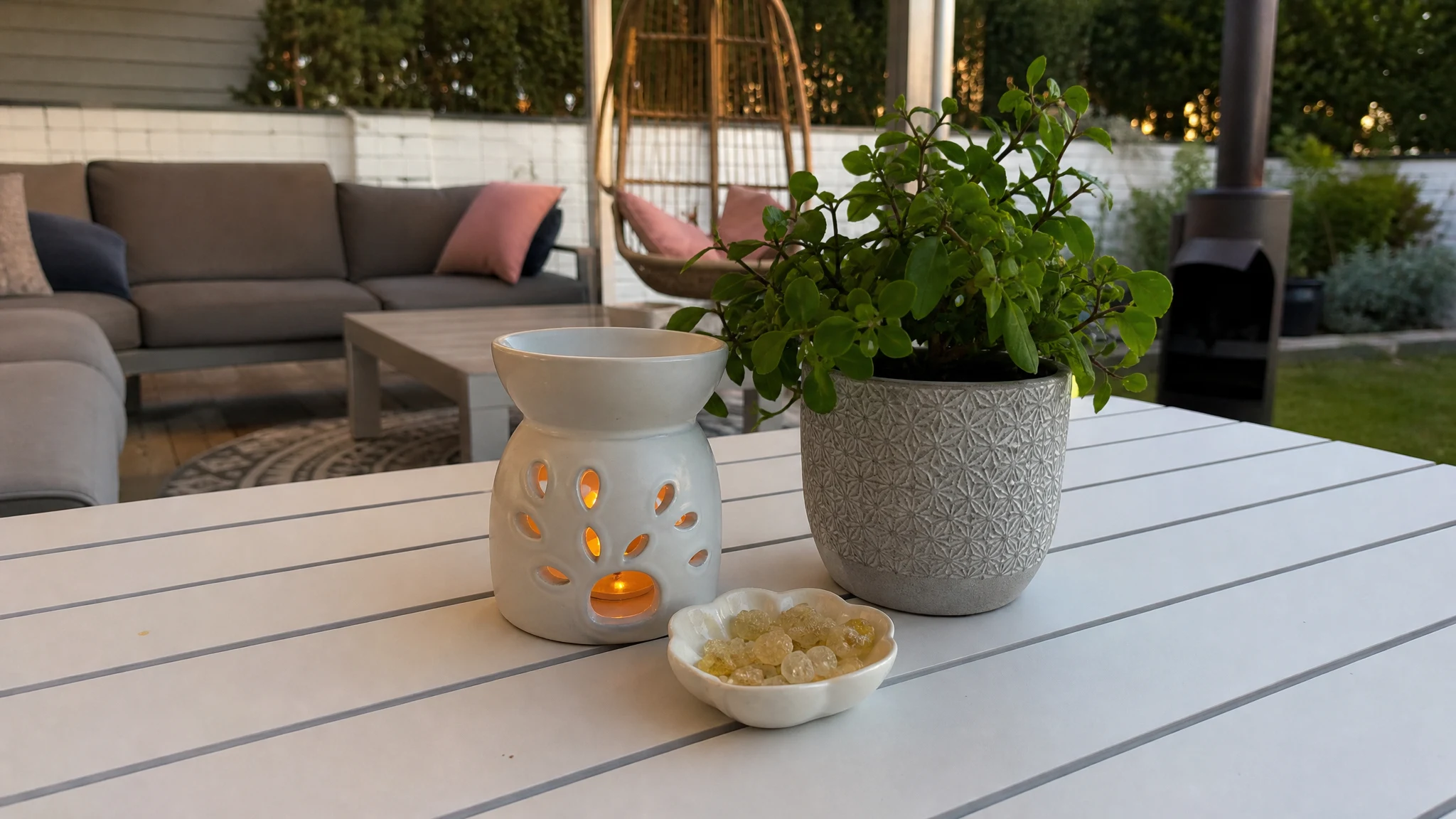
In Exodus 30:22 to 25, the sacred anointing oil is built from liquid myrrh, cinnamon, calamus and cassia in a base of olive oil. The incense comes next, from verse 34, and that is where frankincense appears, ground and burned with other resins. One was for the body and the tent furnishings, the other for the air. Our post on what scripture says about frankincense follows the thread through the other passages.
The same chapter reserves both recipes for sacred use only, so how a modern person honors that is a question for your own tradition and clergy. For our purposes the useful takeaway is simple: a frankincense oil you make at home is a personal scent, and it is best to call it exactly that.
Boswellia sacra for ceremonial scent
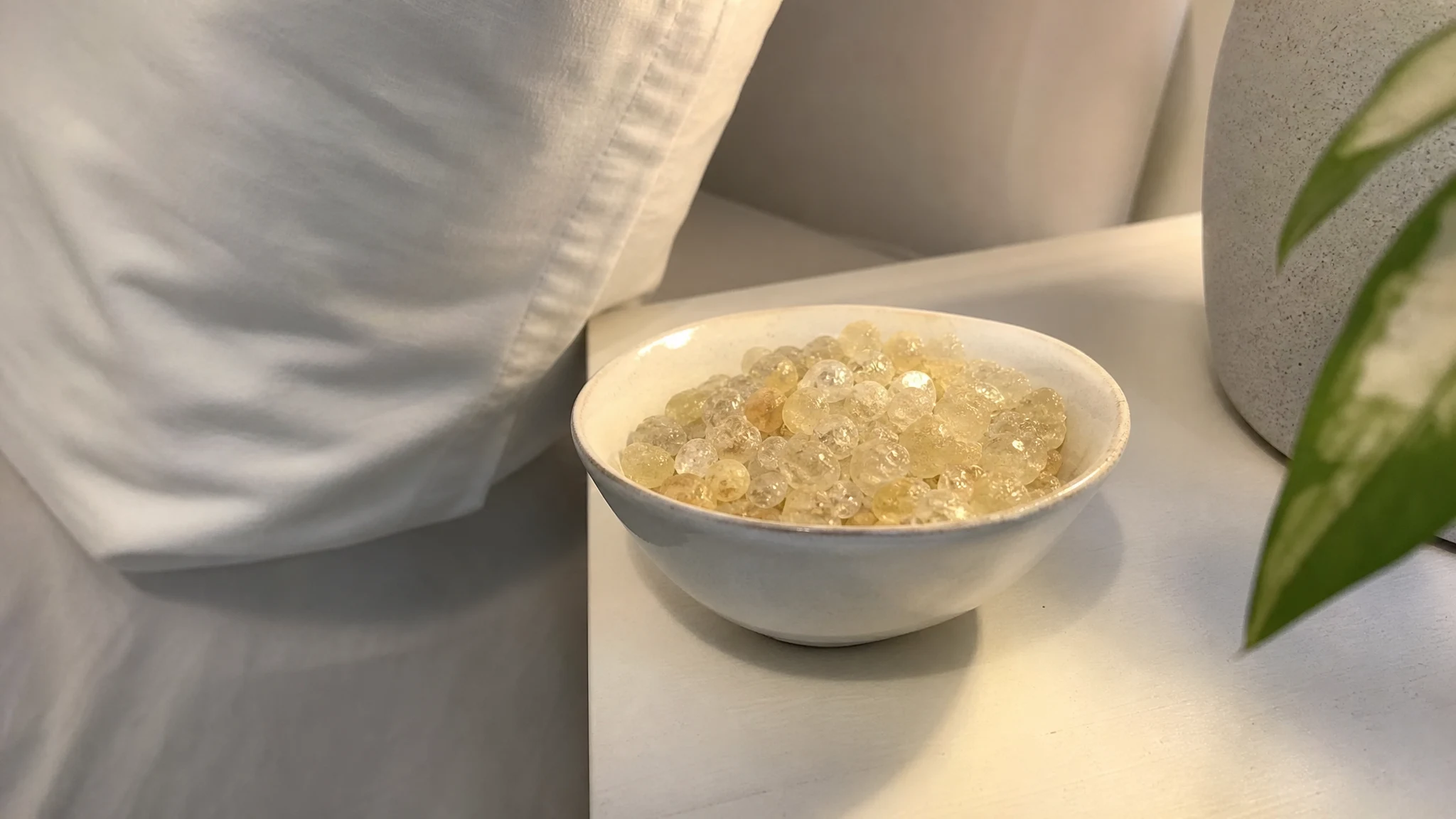
If you are choosing for ceremony, we would start with sacra. We list our Boswellia sacra as coming from Dhofar, Oman, the heartland of the Hojari tradition, and its aroma is deep, balsamic and honeyed. That richness is the whole reason to choose it, and it suits a slow, quiet moment. If you would like something lighter, carterii is warm and woody with a touch of citrus, and frereana is bright and lemon-pine. Our guide to the six species we sell sets them side by side, and the Omani grades article decodes the resin terms you will meet elsewhere.
We sell steam-distilled essential oil, so the aroma is the volatile, bright side of the resin. The weighty compounds people associate with frankincense, the boswellic acids, stay behind in resin extracts, as Tisserand explains in Does Frankincense oil contain boswellic acid? That is no loss for a scented oil, but it is a good reminder to enjoy this one for the fragrance. If you want a lot-specific report before you buy, write to us through the contact page.
Gentle dilution for forehead and hand use
Because this oil goes on the forehead or hands, we treat it like a facial product. Tisserand's dilution page gives 0.5 to 1.2 percent for facial cosmetics and 0.2 to 1 percent for sensitive or reactive skin, and warns that even dilutions can be drying. We suggest 1 percent or less, and the arithmetic is easy when you work by weight:
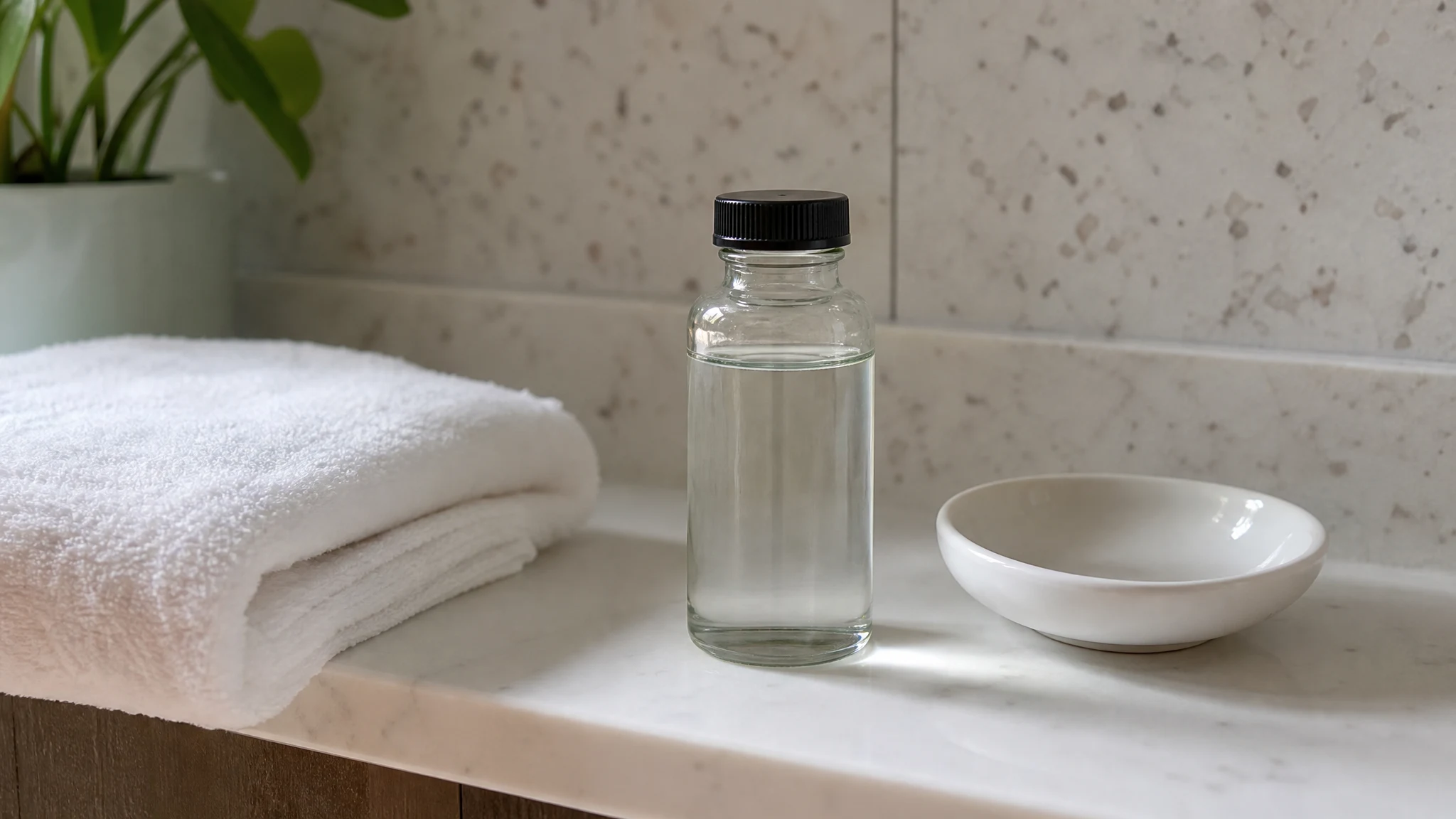
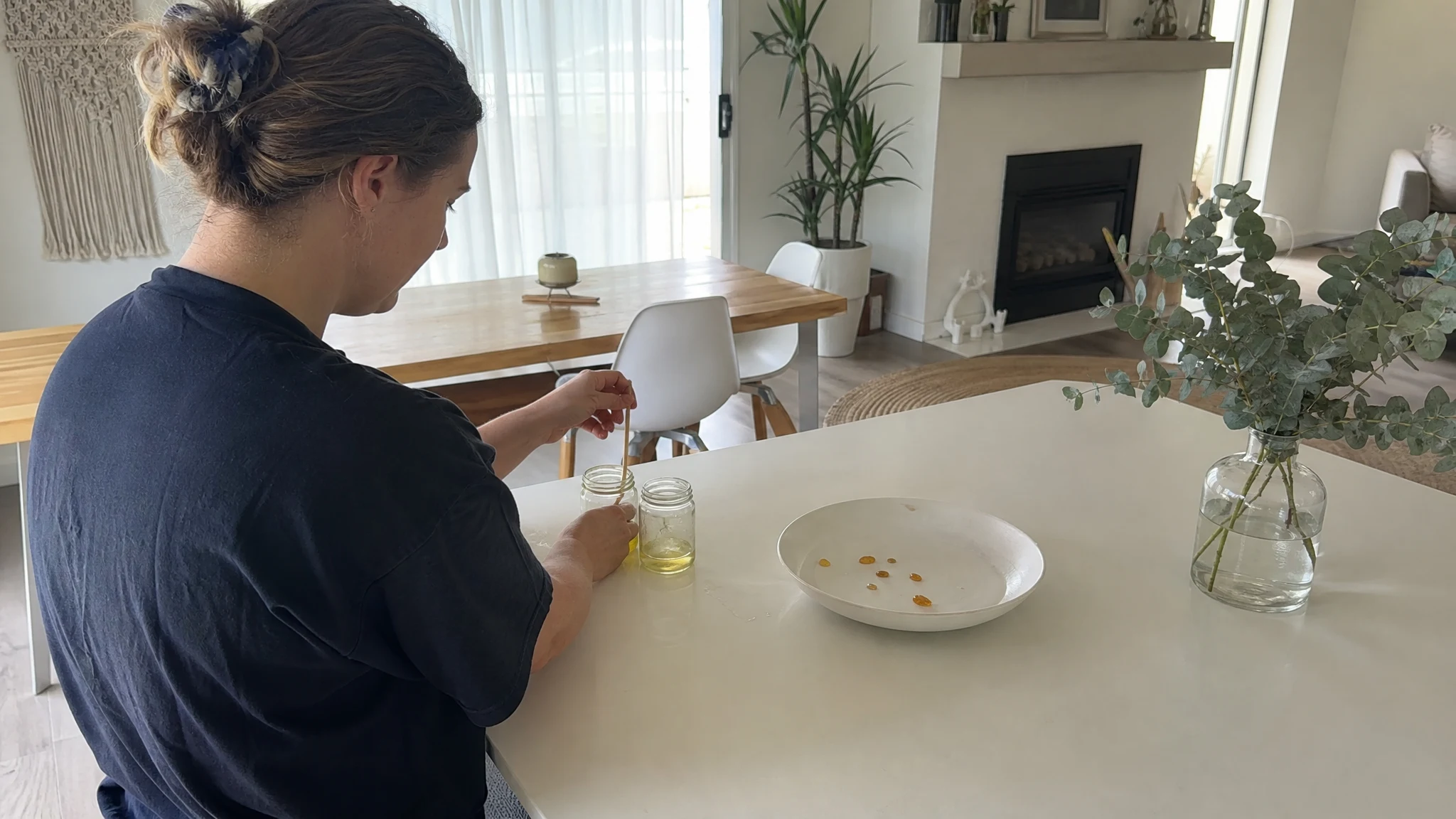
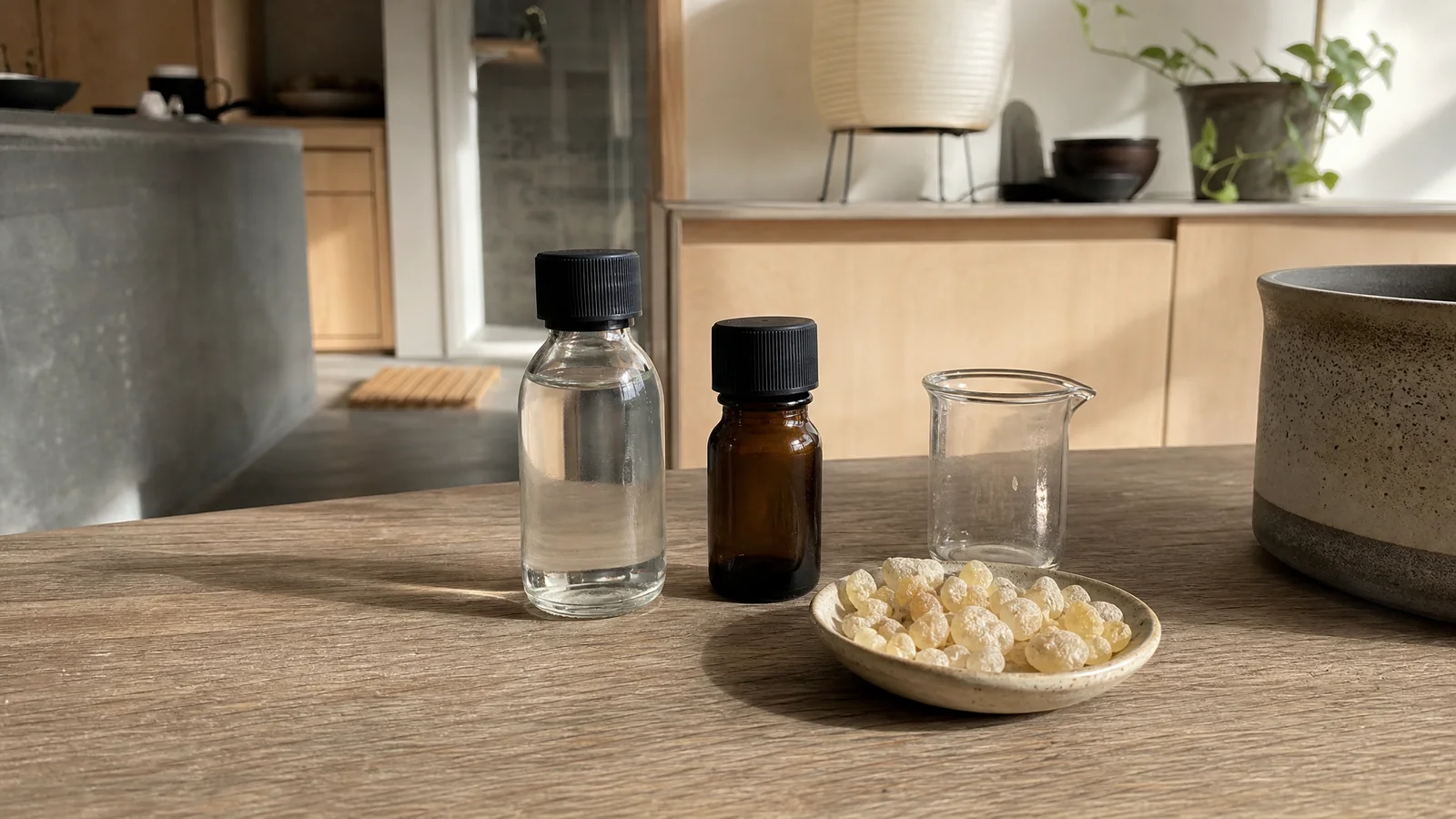
- Weigh 29.7 g of carrier oil into a clean dark glass bottle.
- Add 0.3 g of sacra essential oil, which is 1 percent of a 30 g bottle. For a gentler 0.5 percent, use 0.15 g.
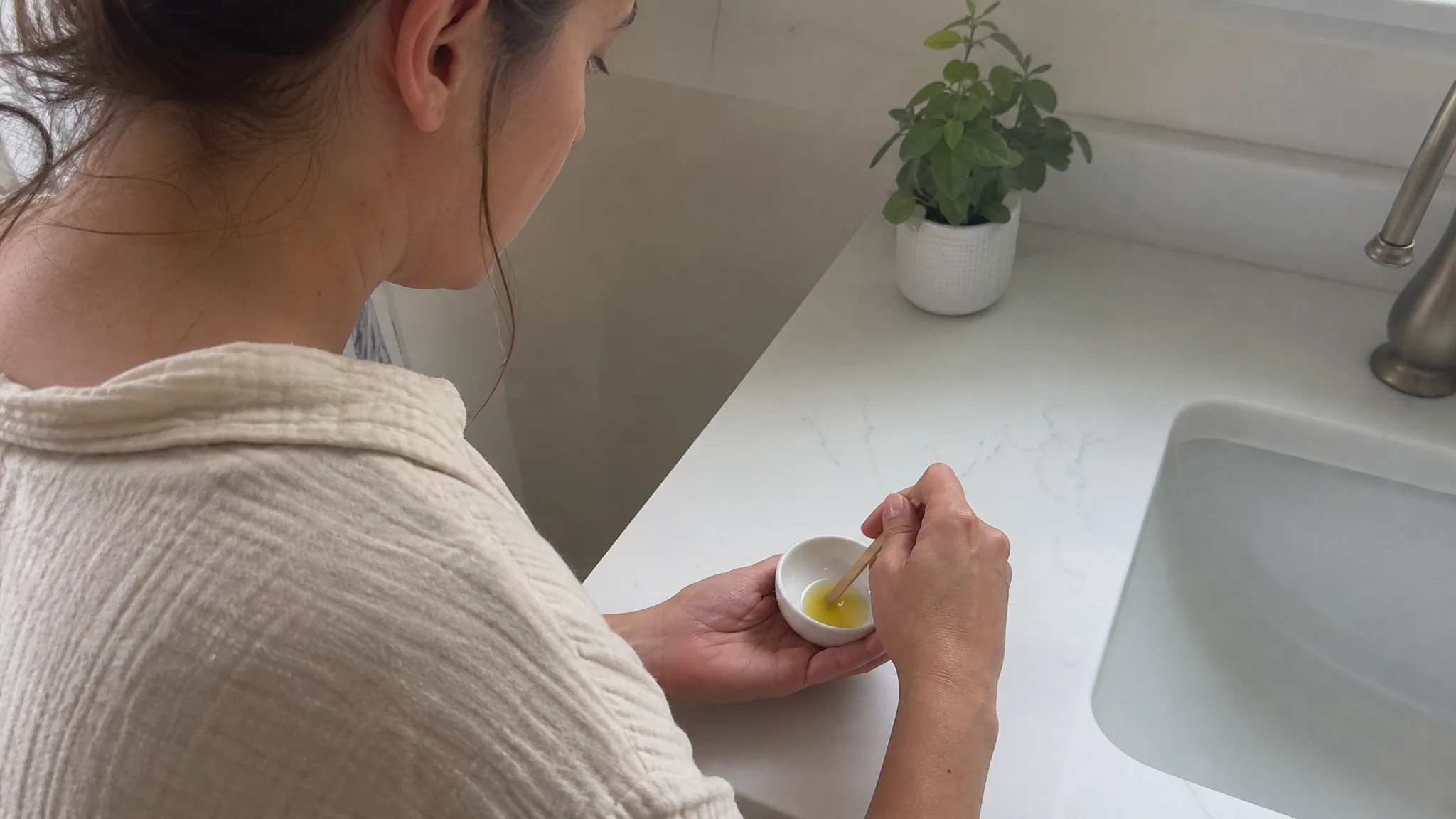
- Cap, roll the bottle between your palms for a minute, and label it with the date and the percentage.
A jeweller's scale that reads to 0.01 g makes this easy. If you prefer drops, 20 per millilitre is a rough convention, which puts 0.3 g at about six to eight drops. Tisserand points out that drop conversions are always approximate, which is why weighing wins.
Is olive oil the right carrier for anointing?
Olive oil is the traditional carrier and the obvious choice for this recipe. It is also worth knowing that in a small 2013 study, adult volunteers who put six drops of olive oil on a forearm twice daily for several weeks showed a weaker skin barrier and mild redness, while sunflower seed oil left the barrier intact (see Danby and colleagues). A dab at a ceremony is a very different thing from that daily dosing, so olive is a reasonable pick for occasional use. For anything you will wear often, sunflower or jojoba is the easier match for skin.
Jojoba also keeps well. In heating tests on oils, crude jojoba lasted 51 to 220 days to reach a small weight gain from oxidation, against roughly 1 to 29 days for almond, argan, sunflower and others (Tsuchimoto, Sakai and Fukui). That makes it a sensible pick for a bottle that will sit on a shelf between occasions. We sell essential oils only, so look for carriers at a food or cosmetic supplier, and see our carrier oil guide.
Smelling the oil first, then the blend
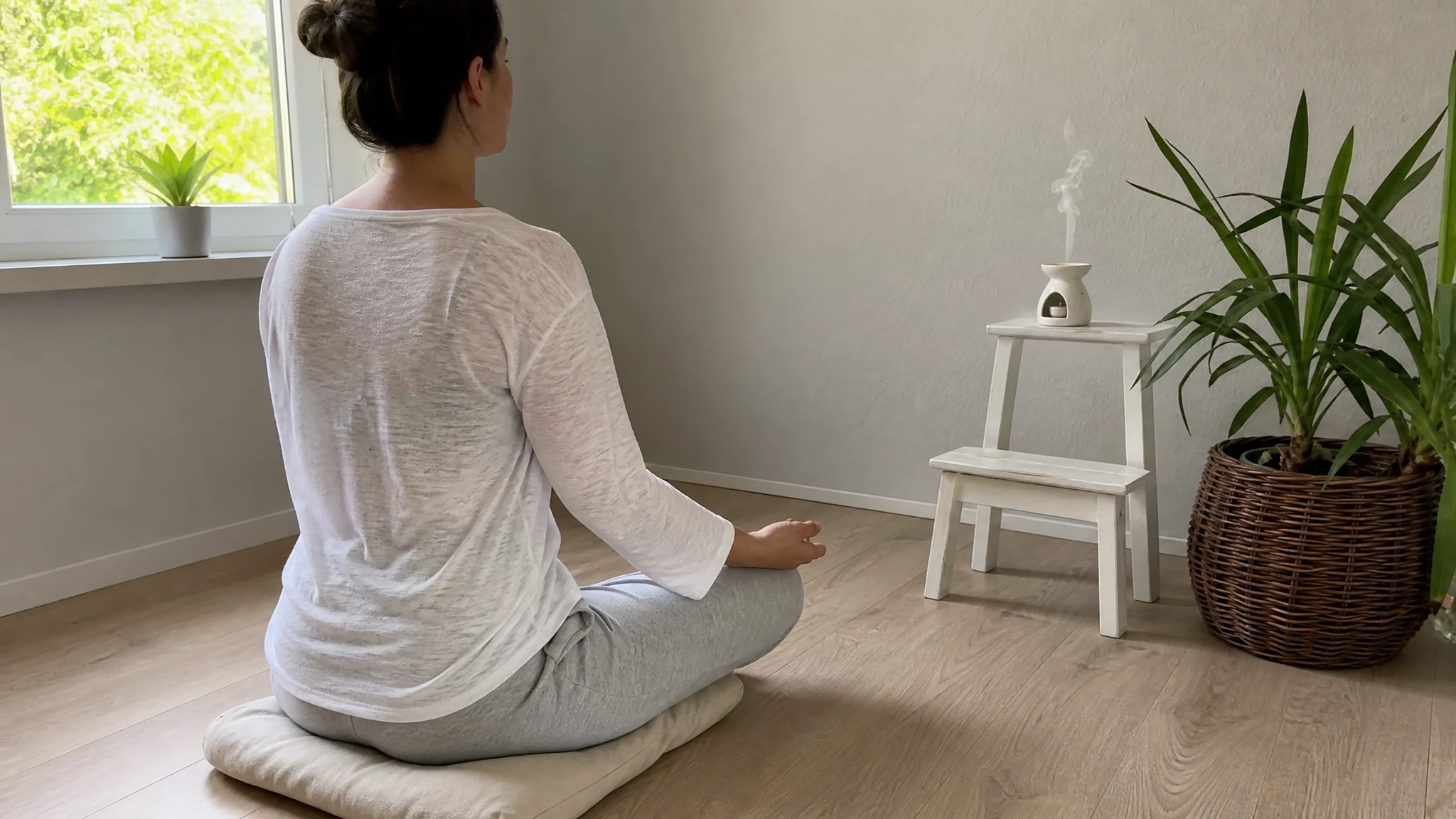
The part we love most is the pause. Smell the oil on its own first, then in the finished blend, and decide what you want the moment to be before you begin. A small ritual, a few quiet breaths and a dab on the back of the hand, needs very little oil. Keep the bottle somewhere you will see it, so the habit stays something you enjoy rather than something you have to remember.
Is a patch test needed for ritual oil?
- Patch test. Try a little of the diluted oil on a small patch of skin and watch for redness over 24 hours. Tisserand reminds us that anyone can be allergic to any essential oil (A Beginner’s Guide to Essential Oils Part 2).
- Keep it fresh. Heat, light and oxygen age oils, so store the bottle cool, dark and capped, as in our storage guide.
- Mind eyes and little hands. Keep it away from eyes and children, and do not swallow it.
- If you share it, label it plainly as a scented oil. The FDA judges a product by how it is described, so a simple honest label is best (see Aromatherapy).
Anyone who is pregnant, has a skin condition, or is treating a child should check with a midwife, physician or dermatologist first. Our oils are external, aromatic products, and a ritual does not change that.
Made this way, a small bottle of sacra in a gentle carrier gives you something genuinely lovely: a warm, honeyed scent for the moments you set aside, with no pretense about where the recipe came from.
Frankincense Essential Oil
Serrata, carterii, sacra, frereana, neglecta and rivae: steam-distilled, GC/MS verified, in sizes from 0.5 oz to bulk.
From $12.99 $10.40 with code BLACKFRIDAY
Sources & Further Reading
- Exodus 30:22-38 NIV - Anointing Oil - Then the LORD said to - Bible Gateway, Bible Gateway
- Dilution for essential oils, Tisserand Institute
- Does Frankincense oil contain boswellic acid?, Tisserand Institute
- Effect of olive and sunflower seed oil on the adult skin barrier: implications for neonatal skin care., Pediatric Dermatology, 2013
- Oxidative Stability and Antioxidant Activity of Crude Jojoba Oil, BPB Reports, 2022
- A Beginner’s Guide to Essential Oils Part 2: How to Use Essential Oils, Tisserand Institute
- Aromatherapy, US FDA