Omani Frankincense: What Hojari, Najdi and Sahli Mean
"Hojari" is one of the most admired words in the frankincense trade, and also one of the most misunderstood. It sounds like a grade, the way "extra virgin" is a grade of olive oil. It is closer to a place name. And the word "grade" turns up in Omani frankincense talk with at least three different meanings, which is how a perfectly honest buyer can end up comparing things that were never comparable.

Frankincense Essential Oil
Six single-origin frankincense varieties, steam-distilled and GC/MS verified.
From $12.99 $10.40 with code BLACKFRIDAY
Omani frankincense resin names: Hojari, Najdi, Sahli
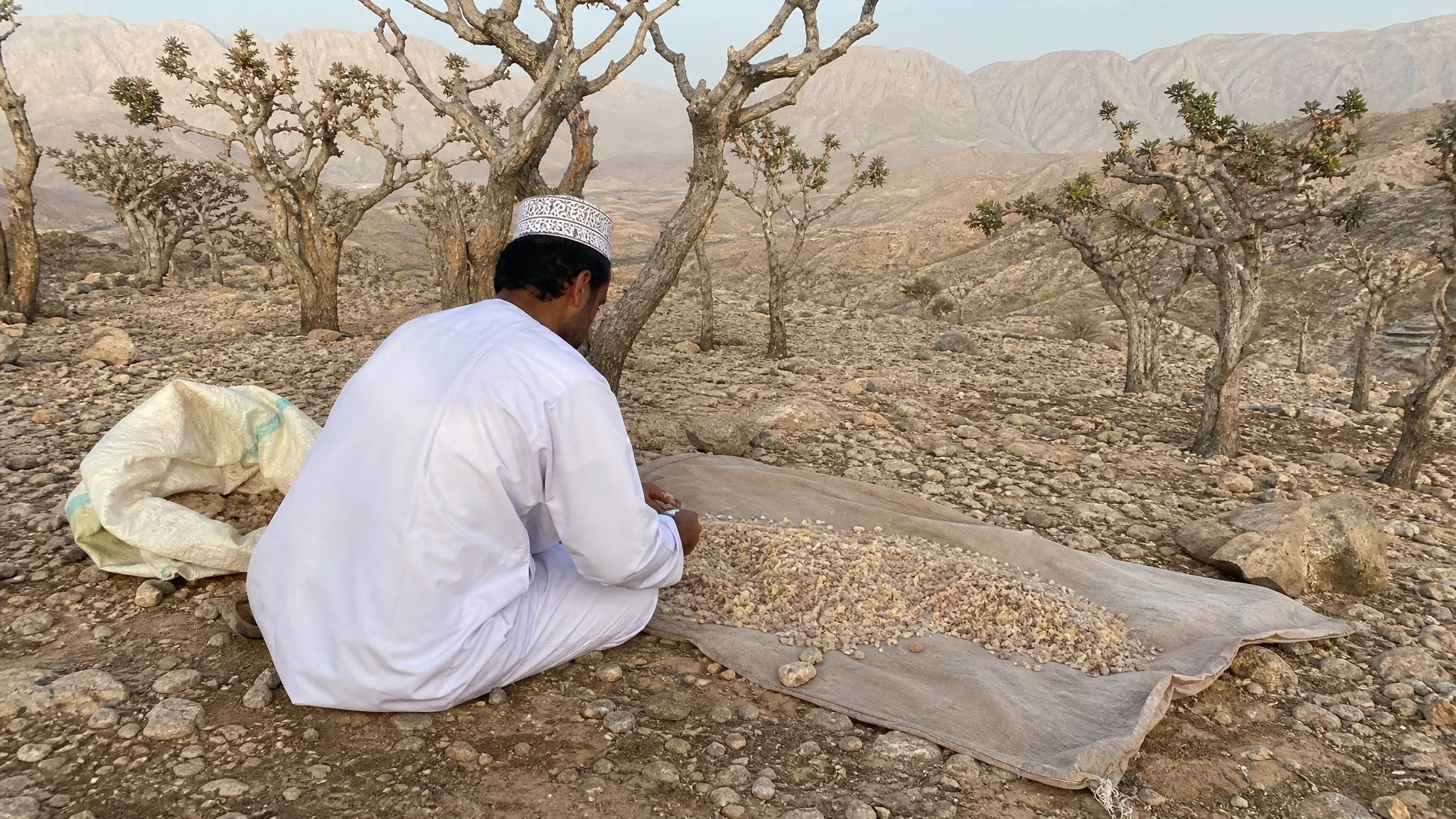
Boswellia sacra is native to the Dhofar region of southern Oman. A 2020 paper in Antibiotics, which distilled oil from the three Omani resin types you will see on the market, lays out the local names plainly. They describe them by where the trees stand:
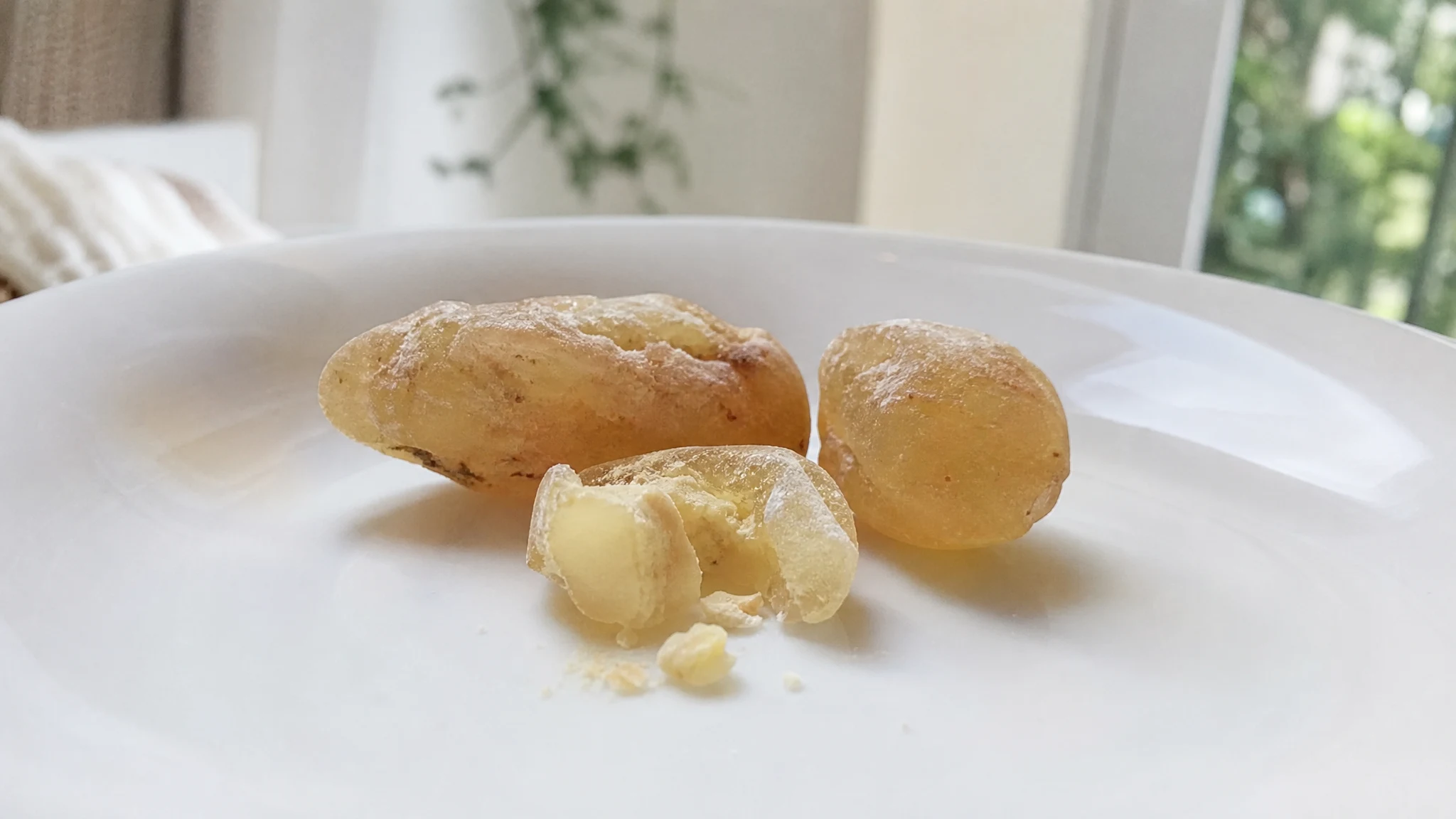
- Houjri (Hojari): from trees in the north of the Samhan mountains. The lightest in colour, with larger clumps, called the first grade resin and the most expensive.
- Najdi: from the plateau behind the Dhofar mountains. Pale yellow.
- Sahli or Shaebi: from the valleys. Darker and the less expensive of the three.
So "first grade" here is a trade ranking of raw resin by colour, clump size and price, tied to geography. It tells you about the tears you might burn on charcoal. It is not a laboratory scale for the oil that comes out of them.
What does grade 1 mean at the still?
In that same study, "Grade 1, 2 and 3" mean something else entirely. The researchers distilled the same batch of ground resin and collected oil after 2 hours (Grade 1), then after 4 hours and 6 hours of continued distillation. So the grades are early, middle and late fractions of one run, and the paper reports that they are chemically different. In all three resin types, alpha-pinene was highest in the first fraction and lower in the later ones, with other compounds taking a larger share as the run went on.
That has a nice implication. The most expensive resin did not give the most oil in the lab, and the price rank of a resin and the character of an oil are separate facts. What shapes the oil in the bottle is partly the resin and partly how long it was distilled and how the fractions were combined. A label that says only "Omani" or "Hojari" does not tell you any of that.
Omani versus Somali: sacra and carterii compared
People often meet sacra and carterii side by side, and the two are worth telling apart. A 2012 study analysed Omani and Yemeni B. sacra oils against Somali B. carterii oils. Averages for alpha-pinene were 68.2% against 37.3%, and optical rotation was +30.1 degrees against -13.3, and the authors concluded the two are distinct species even though major references of the time treated them as synonyms. Whether botanists settle that debate or not, the chemistry in that study is different enough to explain why the two oils smell different. It also showed that plain GC-MS did not separate them; the optical rotation and chiral analysis did. Our three-species comparison goes further.
Sacred Hojari Boswellia sacra from Dhofar
We sell Boswellia sacra as Sacred Hojari, in our premium tier, and we list its origin as Dhofar, Oman. We describe the aroma as deep, balsamic and honeyed, which is why we point people who love a rich, resinous scent toward it for meditation and ritual. As the study above shows, Hojari names a particular resin tradition in Dhofar, so if the exact resin type matters to you, ask us in writing through the contact page. The same goes for a chromatogram for a specific lot; we publish a Certificate of Analysis for a serrata batch only, and none for sacra, so please get any document in hand before relying on it. How to read a GC/MS report will show you what to look for when it arrives.
Old frankincense vocabulary and Hojari heritage
Part of the pleasure of frankincense is how old its vocabulary is. Words like Hojari have been used for generations by people who know the trees, and they carry a sense of place that a plain "grade 1" never could. Our sacra bottle carries "Sacred Hojari from Dhofar, Oman" on its label, and we like the way those words invite a question rather than end one.
When you do open the bottle, expect something deep, balsamic and honeyed. Give it a moment in the air before you decide, since the richest part of the scent arrives last.
How should you read an Omani label?
- Treat Hojari, Najdi and Sahli as origin and trade names for resin, and ask which one a product refers to.
- If a seller says "grade 1" about an oil, find out whether it means the first distillation fraction, a resin class or a marketing tier.
- Check the species and the analysis behind it. A name on a label is a starting point; a chromatogram is what confirms it.
- Decide whether you want resin or oil. If you plan to burn tears, the traditional grading is relevant, and we do not sell resin (see resin versus essential oil). If you want oil, the species and the lot matter more.
For how sacra sits alongside the other five oils we sell, the species overview is the place to start, and the sacra page has the details. Hojari remains a lovely word, and it is even better when you know what it names.
If one idea stays with you, let it be this: a name tells you where to start asking, not where to stop. Enjoy the word, then ask the next question.
Frankincense Essential Oil
Serrata, carterii, sacra, frereana, neglecta and rivae: steam-distilled, GC/MS verified, in sizes from 0.5 oz to bulk.
From $12.99 $10.40 with code BLACKFRIDAY
Sources & Further Reading
- Di Stefano V et al., 2020. In Vitro Antimicrobial Activity of Frankincense Oils from Boswellia sacra Grown in Different Locations of the Dhofar Region (Oman). Antibiotics. PMC7235874
- Woolley CL et al., 2012. Chemical differentiation of Boswellia sacra and Boswellia carterii essential oils by gas chromatography and chiral gas chromatography-mass spectrometry. Journal of Chromatography A. PubMed 22835693