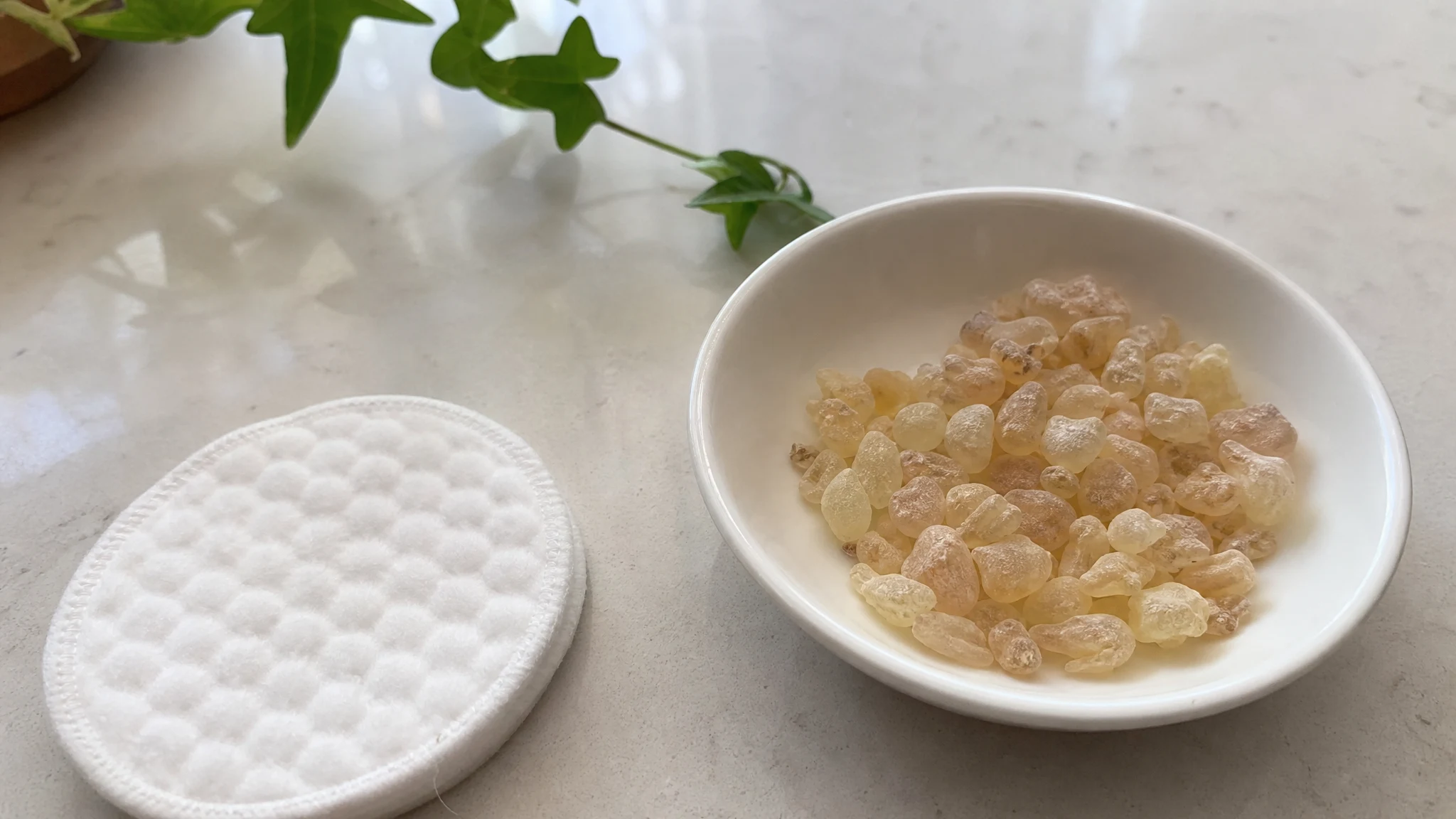
Frankincense Oil in a Skin Routine: Where It Fits
Every good skin routine has a few jobs that do the heavy lifting, and then a few that are just there because you like them. Frankincense essential oil belongs firmly in the second group, and we think that is a lovely place to be. A warm, resinous scent can turn a ten-minute evening routine into something you look forward to. What it cannot do is replace the basics, and it helps to know which is which.

Frankincense Essential Oil
Six single-origin frankincense varieties, steam-distilled and GC/MS verified.
From $12.99 $10.40 with code BLACKFRIDAY
Retinoid and sunscreen basics before any oil
Dermatologists keep their advice remarkably consistent. The American Academy of Dermatology's page on retinoids and retinol says tretinoin, one type of retinoid, improves skin tone and reduces fine lines. It advises starting with the least intense formula, using it every other night at first, and applying it at night because retinoids can make skin more sensitive to sun, with sun protection during the day. It also says retinoids should not be used during pregnancy. A board-certified dermatologist is the person to ask whether one suits your skin.
That is the benchmark. When a product claims to rebuild or transform skin, a fair question is what it was tested on, in whom, and against what. Frankincense does not have a good answer to that question yet, and we would rather say so than hint otherwise.
What has Boswellia skin research covered so far?
A 2026 review in Frontiers in Pharmacology surveyed the dermatology literature on Boswellia. It describes mostly preclinical work, with a focus on boswellic acids from the resin, and says the clinical studies on topical Boswellia products are limited by small samples, short durations and mixed methods. It also points out that species, extraction methods and formulations vary widely between studies, which is exactly why one study rarely speaks for another.
A typical oil-based example is a 2024 study in the Journal of Cosmetic Dermatology on a frankincense volatile oil, described as a by-product of making resin extracts. The authors identified about 40 active molecules by GC-MS, including incensole and incensole acetate, and tested the oil in zebrafish models, where it suppressed melanin synthesis. That is a lab animal and a specific by-product oil. It is interesting chemistry, and it is not a result on a person using a bottle of steam-distilled oil. We do not claim our oils change skin tone, firmness or any other feature of skin.
Fragrant frankincense oil as a diluted finishing touch
Once the basics are in place, a little frankincense can be the finishing touch. Do it the way you would with any fragrance:
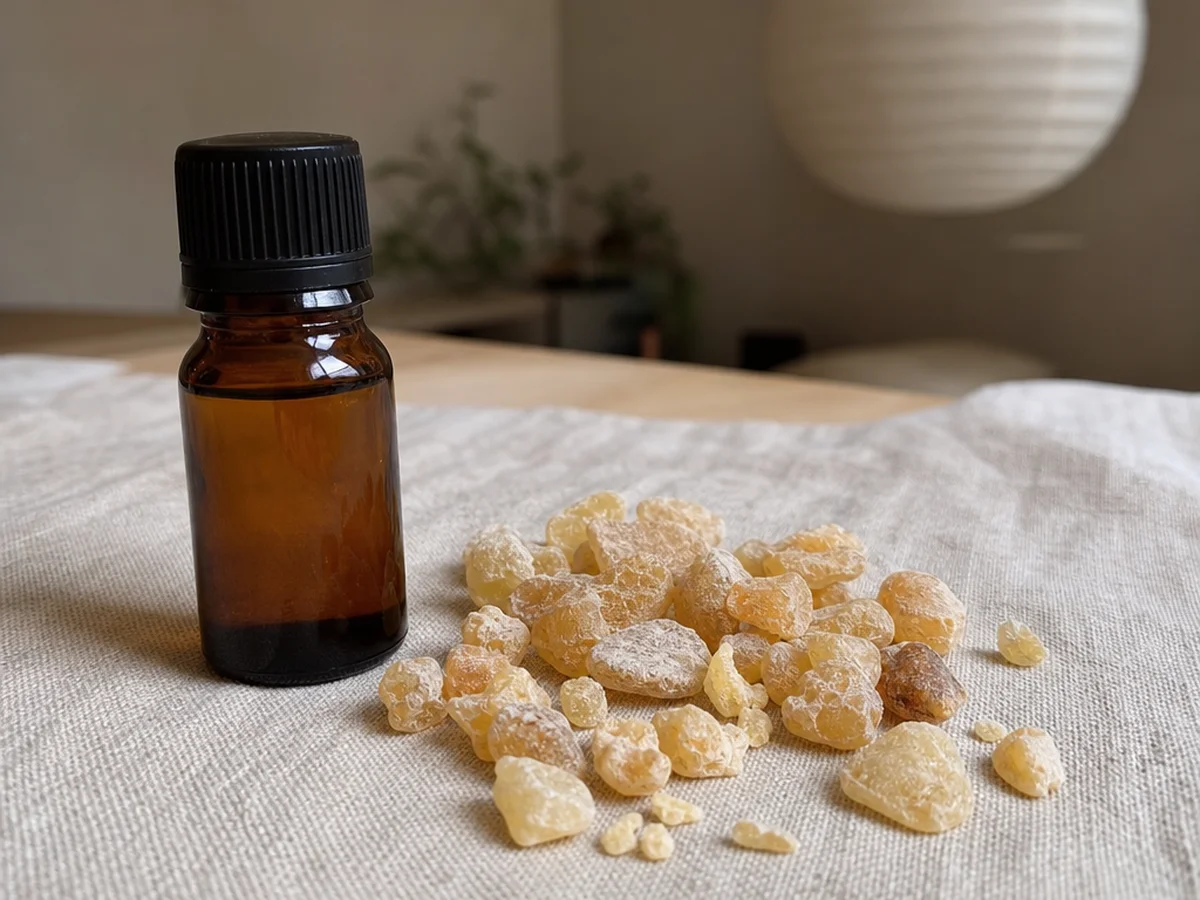
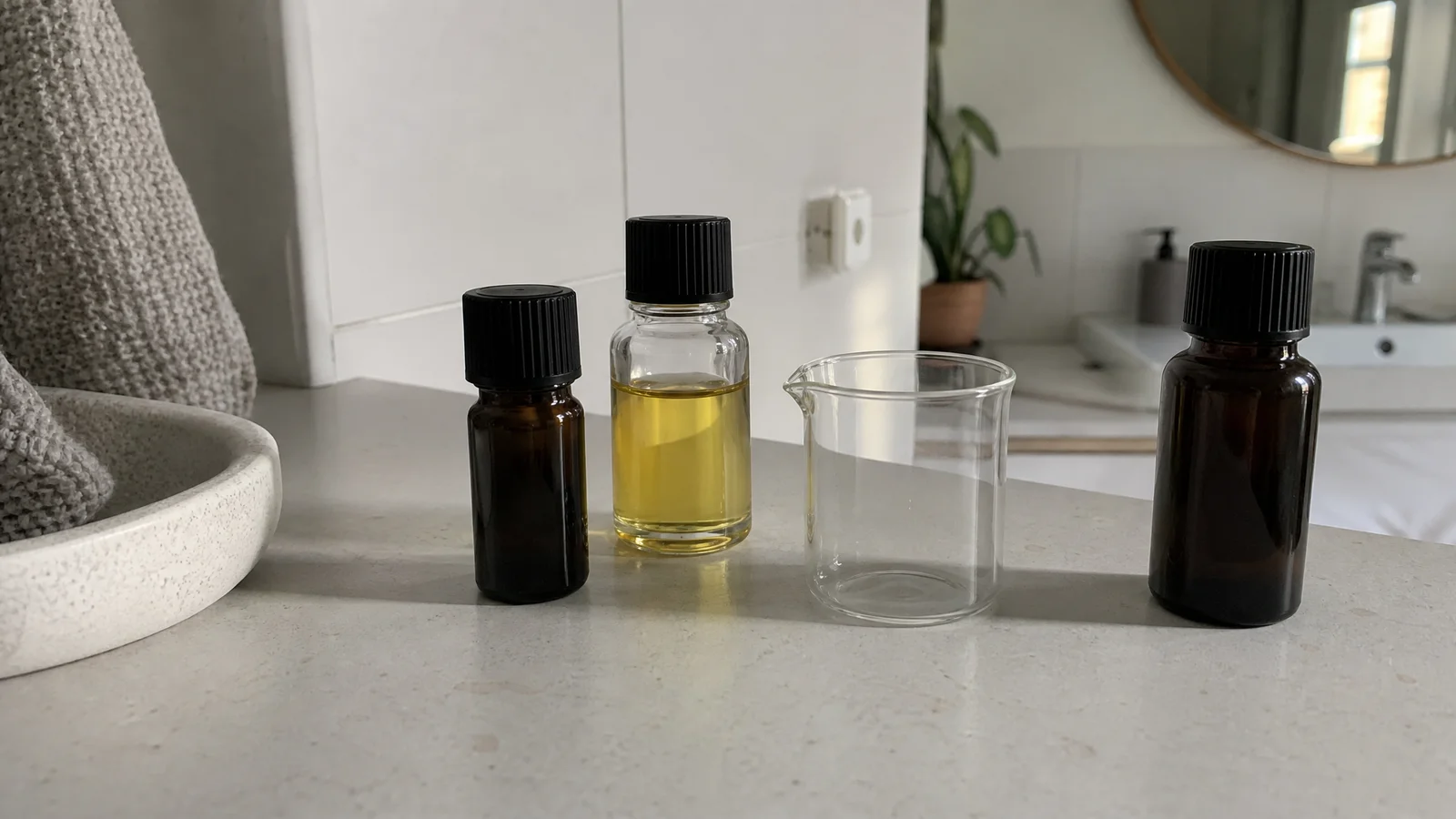
- Dilute generously. The Tisserand Institute lists 0.5 to 1.2% for facial products, 0.2 to 1% for sensitive or impaired skin, and 1 to 3% for body oils and lotions, and says undiluted oils are never appropriate on skin. It also notes reports of reactions to undiluted frankincense oils. We sell our oils neat, so the dilution is yours to calculate. At 0.5%, 30 ml of carrier takes 0.15 ml of oil, roughly 3 drops on the rough convention of 20 drops per milliliter (drop size varies).
- Patch test. Dab a little of the diluted oil on your inner forearm and wait a day before it goes anywhere near your face.
- Add it last. If you are still adjusting to a new active, such as a retinoid, hold the scented oil back. One new thing at a time is the easiest way to know what your skin is reacting to.
- Source a carrier you trust. We do not sell carrier oils, so choose one from a cosmetic supplier; our carrier oil guide covers what to look for.
Skip a scented leave-on oil if your skin is reactive, if you have a condition such as eczema (see our article on eczema and psoriasis), or if you are pregnant and have not checked with your OB/GYN or midwife. Stop at the first burning, stinging or itching.
Storing the bottle and savoring your diluted blend
The part of a routine that lasts is usually the part you enjoy. Keep the bottle where you will see it, away from sunlight and heat, with the cap tight between uses. Give yourself a moment at the end to simply notice the scent of your diluted blend before you apply it: is it warmer than you expected, brighter, more woody? That small pause is most of what a fragrant oil adds.
Our recommendation is to resist stacking it with everything else. Add the scent on a calm evening, not on the night you start a new product, and let it be the easy, pleasant step at the end.
Which frankincense variety suits your skin routine scent?
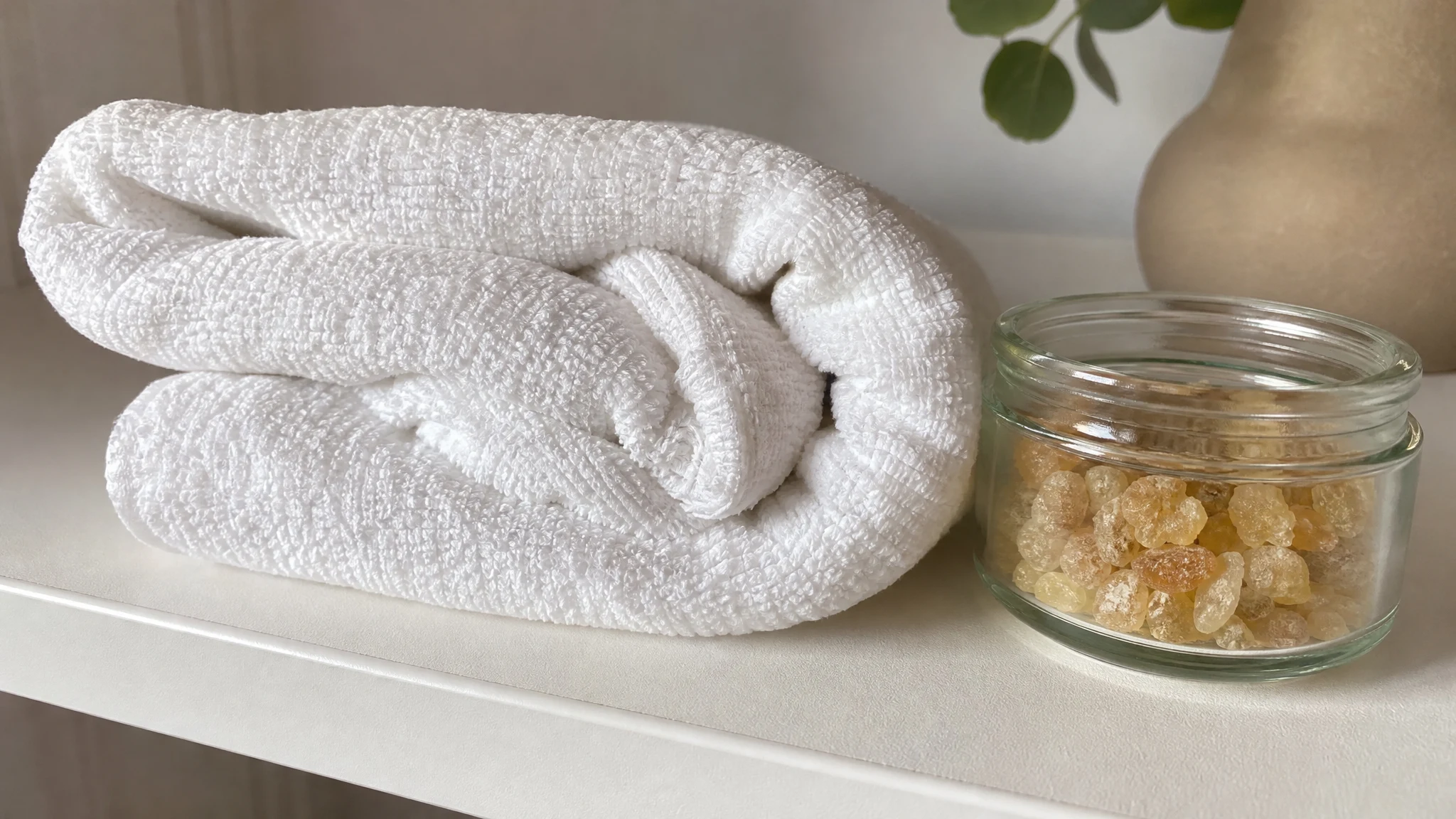
If you are picking a frankincense for the aroma, the choice comes down to the scent you enjoy. We describe our serrata as warm and slightly woody with subtle citrus and pine top notes, our carterii as warm and woody with classic resinous depth, our sacra as deep, balsamic and honeyed, and our frereana as bright, fresh and lemon-pine. Our species overview lines them up side by side, and the face application article shows how to apply a diluted oil.
If you cannot decide between two, smell them one at a time on separate pieces of paper and come back to them after a few minutes. The one you keep reaching for is usually the answer.
The one Certificate of Analysis we publish is for a serrata batch and lists density, refractive index and optical rotation. If composition matters to you, ask us in writing through our contact page for GC-MS information for the variety and lot you have in mind, and get it in writing before you rely on it.
A good routine is a quiet thing: the basics your dermatologist would recommend, patience, and one small pleasure that makes you want to keep going. If that pleasure smells like warm resin, so much the better.
Frankincense Essential Oil
Serrata, carterii, sacra, frereana, neglecta and rivae: steam-distilled, GC/MS verified, in sizes from 0.5 oz to bulk.
From $12.99 $10.40 with code BLACKFRIDAY
Sources & Further Reading
- American Academy of Dermatology. Retinoid or retinol?
- Alturki EA et al. (2026). Therapeutic potential of Boswellia-derived compounds in skin conditions. Frontiers in Pharmacology.
- Yan X et al. (2024). Potent pigmentation inhibitory activity of incensole-enriched frankincense volatile oil-identification, efficacy and mechanism. Journal of Cosmetic Dermatology.
- Tisserand Institute. Dilution for essential oils.