Frankincense Oil vs CO2 Extract: What's the Difference?
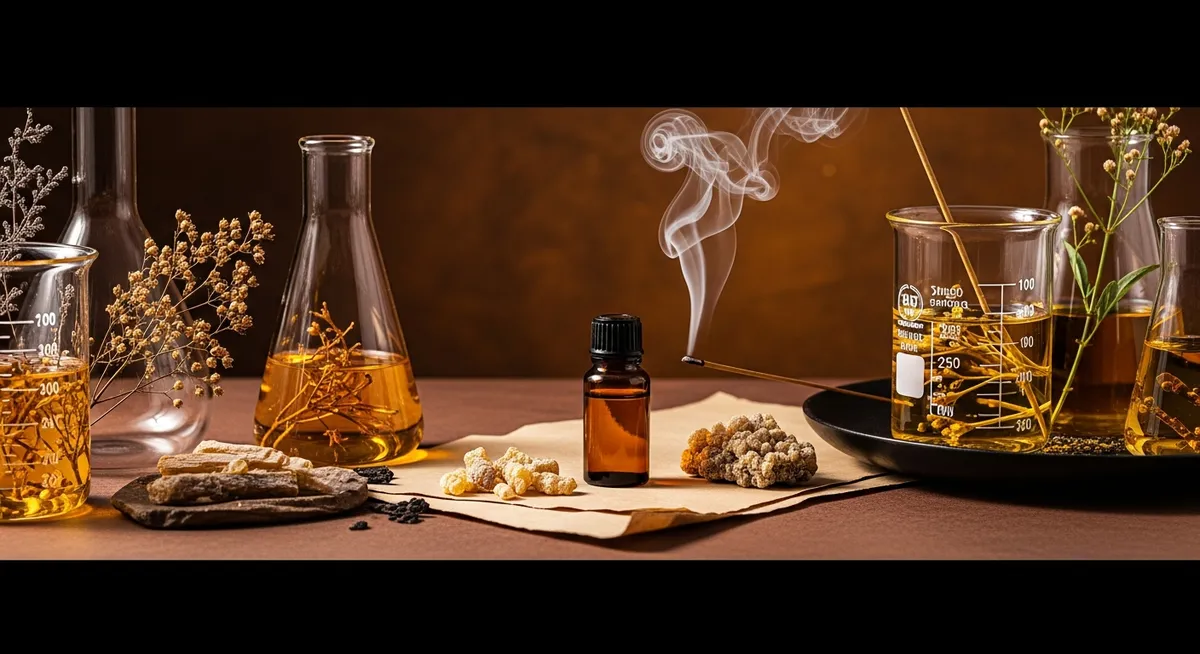
A bottle labeled "frankincense CO2 extract" could hold a bright, aromatic oil, a thick and nearly scentless one, or an odorless amber resin. Same tree, same word on the label, three very different materials. That surprise is the best way into understanding how a CO2 extract differs from the steam-distilled oils we sell.

Frankincense Essential Oil
Six single-origin frankincense varieties, steam-distilled and GC/MS verified.
From $12.99 $10.40 with code BLACKFRIDAY
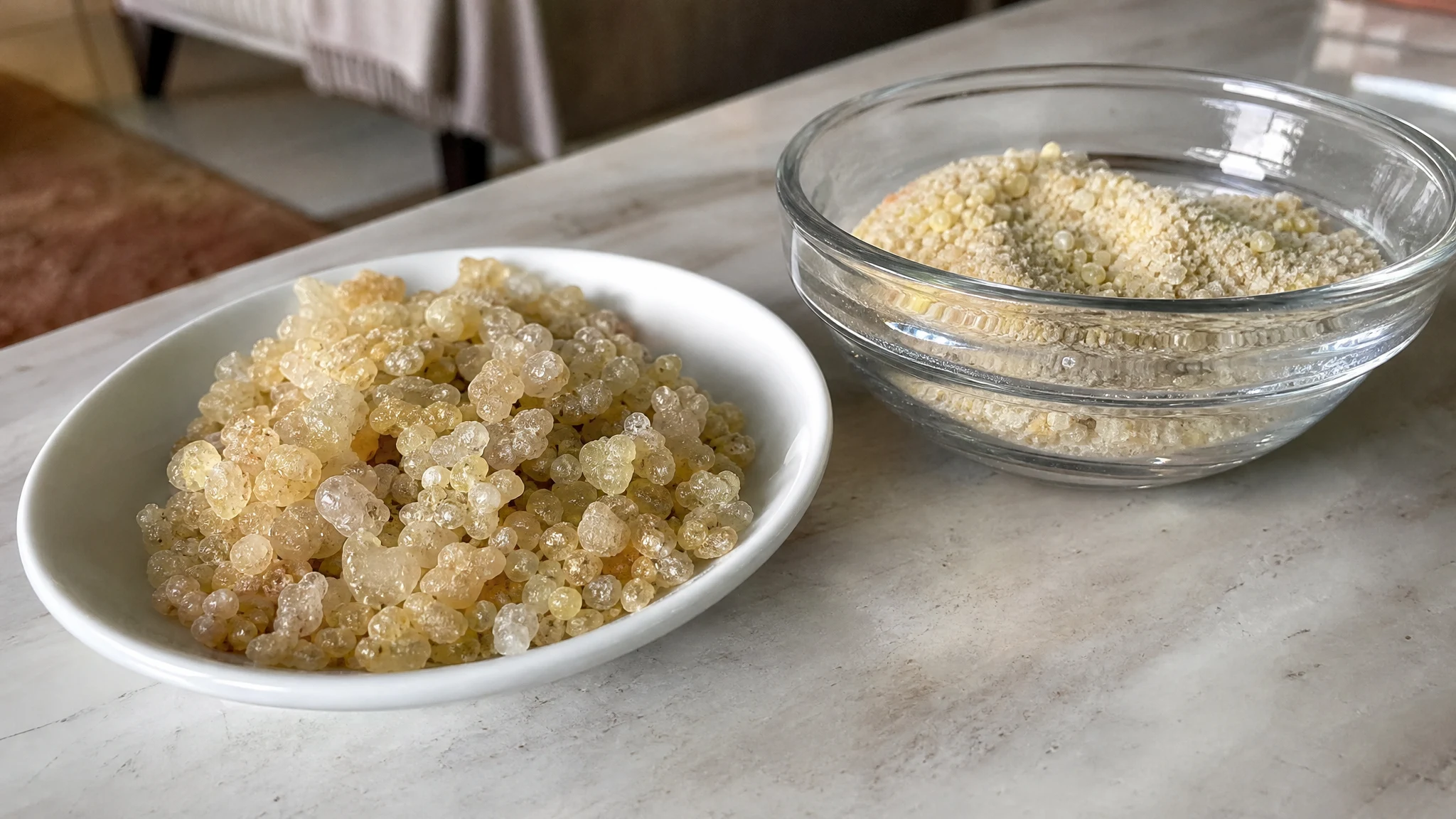
CO2 extract fractions from one frankincense resin
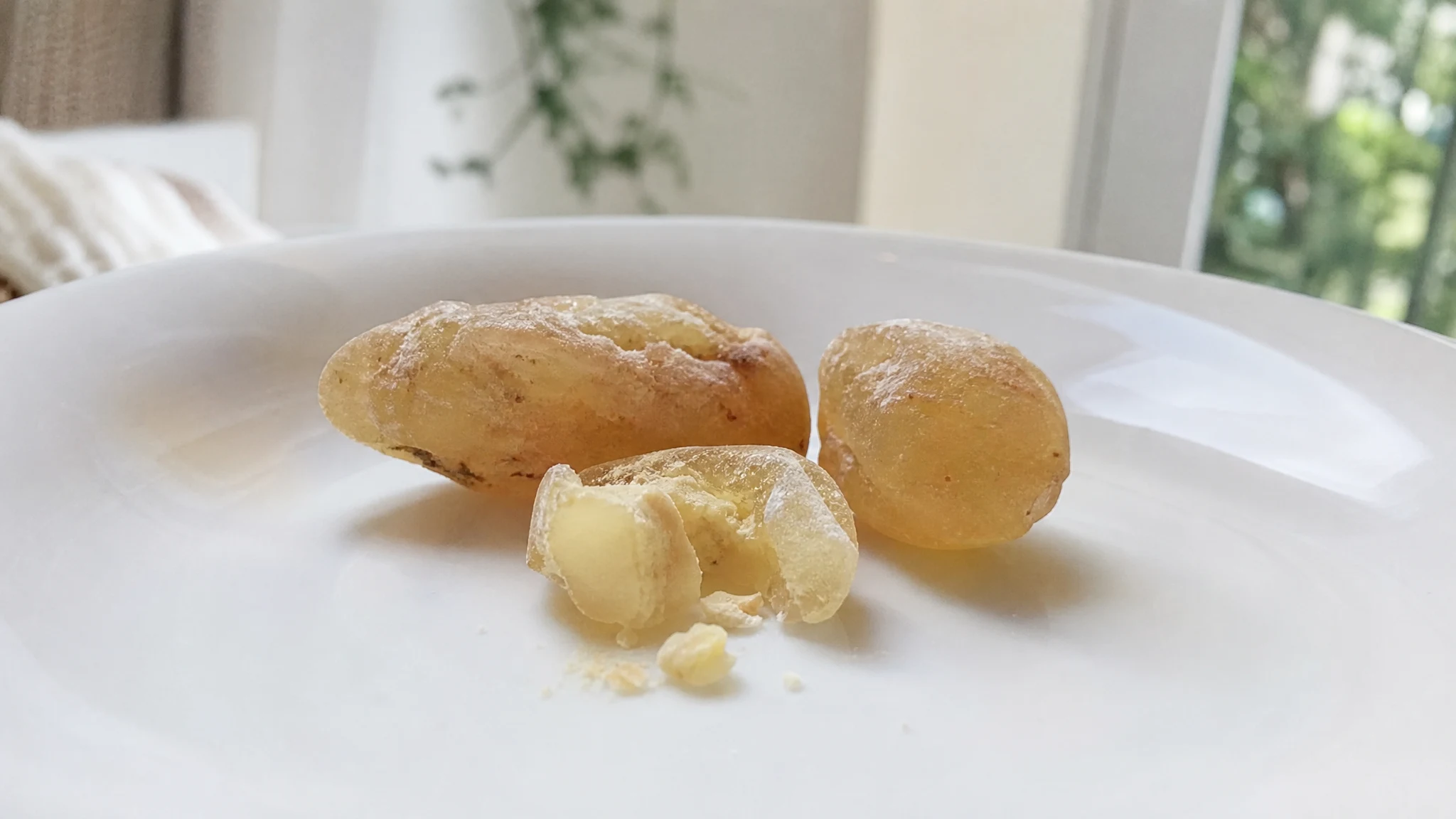
Carbon dioxide acts like a solvent whose strength you can tune with pressure and temperature, so a single batch of resin can be taken apart in stages. US patent 10113136 describes exactly that for frankincense. A first pass with liquid CO2 lifts out the aromatic fraction, mostly mono and sesquiterpene hydrocarbons. The patent's applicant describes it as characteristic of frankincense and richer and longer lasting in aroma than distilled oil, which is their claim rather than something we can confirm. A second, supercritical pass pulls out incensole, a heavier compound, as a clear and very viscous oil that is almost devoid of frankincense aroma. A third pass, with 10% ethanol added, delivers boswellic acids as an odorless, semi-solid amber resin.
The way the patent's example divides 60 g of Boswellia carteri resin shows how lopsided this is: about 4.65% became the aromatic fraction, and 48.45% became the boswellic acid fraction. Only the first of the three is the part of frankincense you would want in a diffuser.
Steam distillation: what frankincense oil collects
Steam distillation takes what is light enough to ride the steam out of the resin. The Tisserand Institute notes that frankincense is commonly distilled for six to seven hours, since no more oil comes over after that and the extra time only degrades the smell. It also says that boswellic acids stay behind in the plant material, and that there is no reliable report of them in frankincense oil made with normal distillation. It adds that boswellic acids are more likely to turn up in a CO2 extract than in an essential oil. Our boswellic acids explainer and our resin versus oil guide cover this in more depth.
What does end up in a distilled oil is mostly monoterpenes. In one analysis of commercial carterii oils, alpha-pinene was the main component of most samples, at roughly a quarter to nearly half of the oil. Heavier molecules such as incensole can also appear, at around 1%, according to Tisserand. The six oils we sell are steam-distilled from the resin, with no solvent extraction, and we do not sell CO2 extracts.
Reasoning from the patent and Tisserand together, the closest relatives are a steam-distilled oil and that first, light CO2 fraction, since both collect the volatile aromatic material first. The incensole and boswellic acid fractions are different substances altogether.
Boswellic acids and NCCIH's oral studies
This is the point where the label matters most. The studies that made boswellia famous used oral extracts, and the National Center for Complementary and Integrative Health says there is not enough evidence to show that topical boswellia works as a treatment. Those extracts are what a supplement maker sells, and a pharmacist or physician is the right person to talk to, especially if you take medicines. If it is aroma you are after, an essential oil is the product, and the question of boswellic acids falls away.
What should a frankincense label state first?
Most of the confusion in this corner of the market comes from labels that say a lot without saying much. Look for the Latin name of the tree first, then for the plain words "essential oil" or "extract," then for how the product is meant to be used. If any of the three is missing, that is your cue to ask before you order.
It also helps to remember that a bottle that smells wonderful and a bottle that is described clearly are not the same thing. Keep a small note of what you bought, the name on the label and the date, so you can compare like with like the next time.
Which fraction suits perfume and room scent?
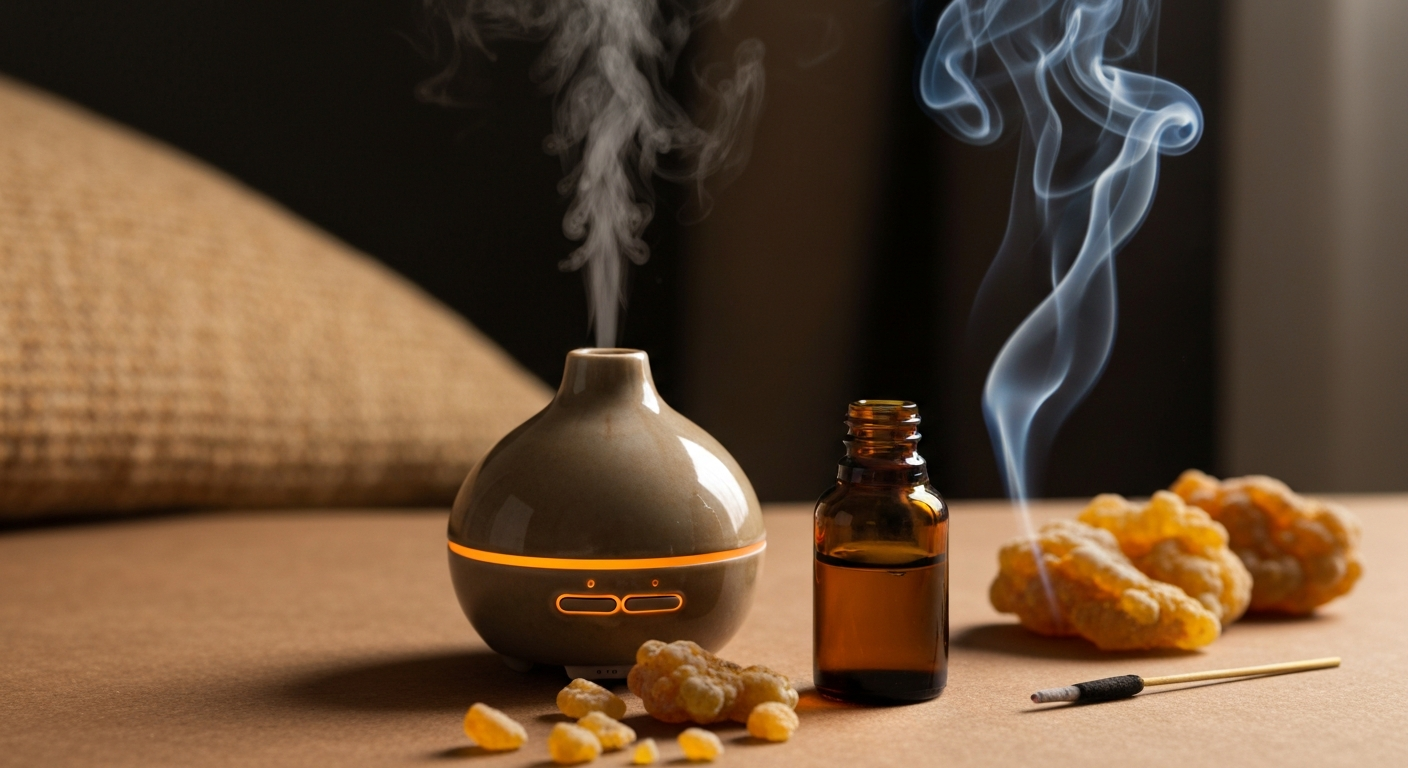
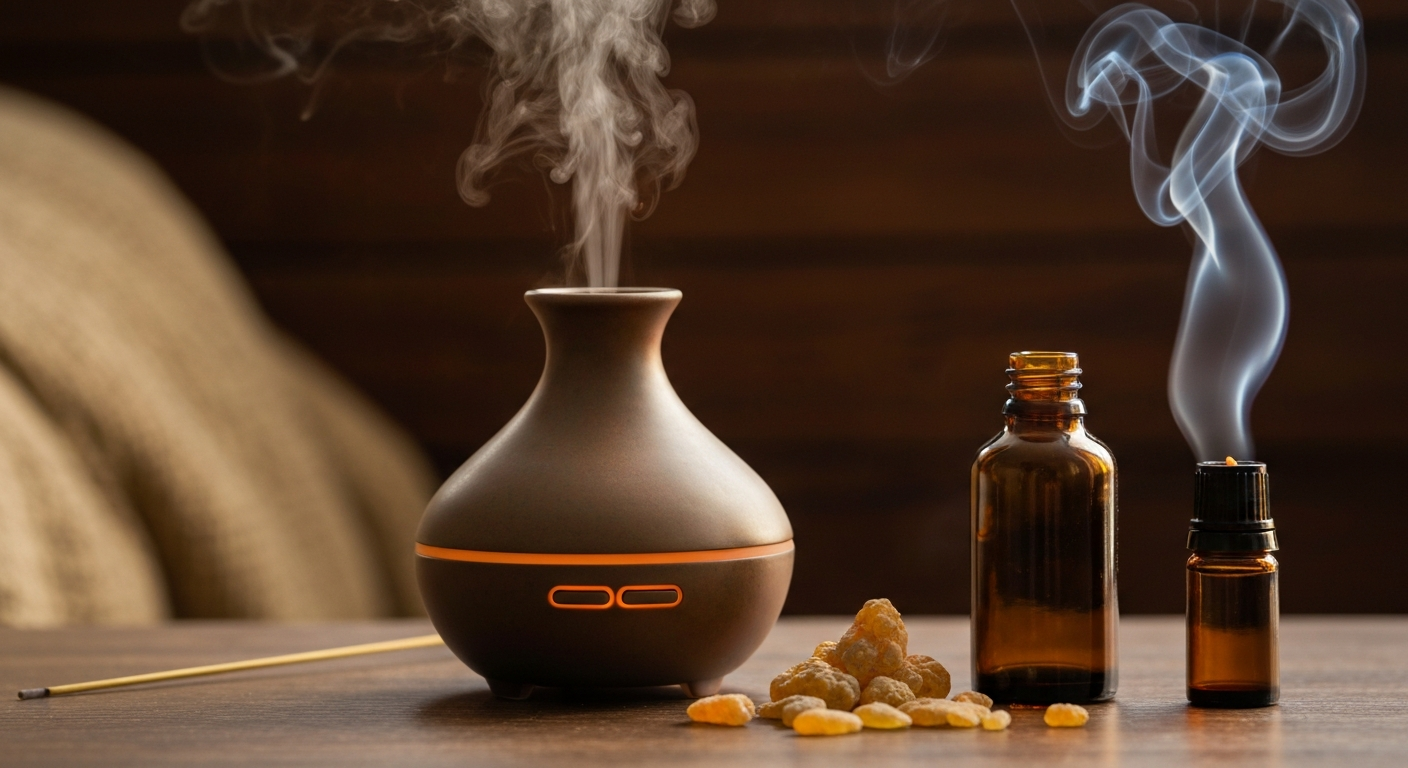
If your goal is a room that smells like warm resin, or a perfume or a cosmetic where the fragrance is the point, a steam-distilled oil is the straightforward tool. It is light, it measures easily by weight or by drop, and you can smell it from the bottle before you do anything with it. An odorless amber extract or a thick, nearly scentless fraction would leave you wondering where the frankincense went.
Species, solvent and purpose: four seller questions
- Which species is it?
- Which fraction or process, and was a co-solvent such as ethanol used?
- What is it meant for: a diffuser, a perfume, a supplement?
- What documentation exists for this exact lot?
We apply the same questions to ourselves. The one certificate of analysis we publish is for a serrata batch and lists density, refractive index and optical rotation. If you need more for a particular variety and lot, ask us in writing through our contact page, and see our guide to reading a GC/MS report for what a useful report looks like.
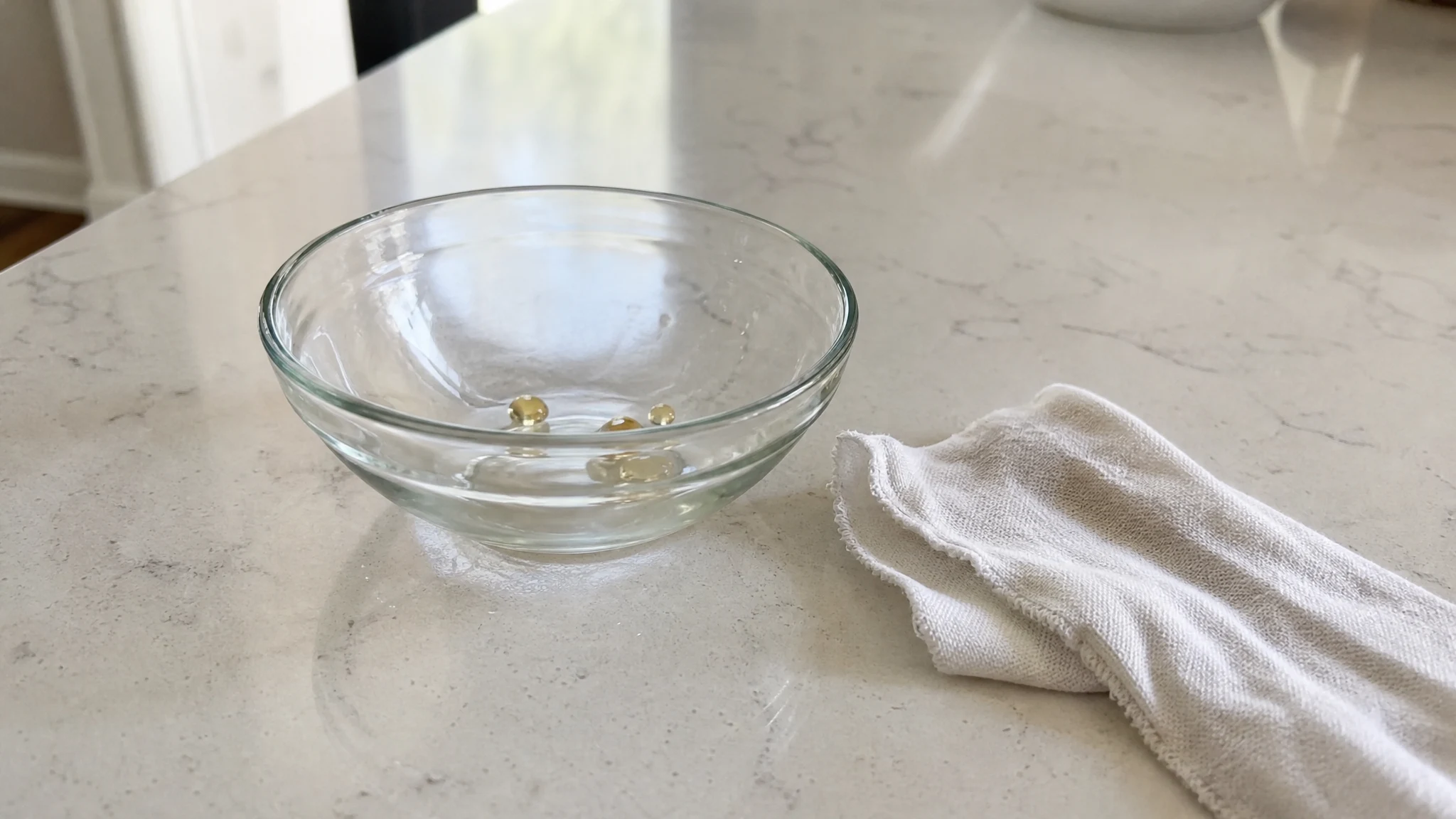
One practical note on dilution. The usual skin guidance, such as the Tisserand ranges of 0.2% to 1% for sensitive skin up to 1% to 3% for body oils, was written for essential oils. A CO2 extract can contain the heavier fractions, so ask the maker for their own guidance rather than borrowing those numbers. Our species overview is a good next stop if you decide an aroma oil is what you want.
Frankincense Essential Oil
Serrata, carterii, sacra, frereana, neglecta and rivae: steam-distilled, GC/MS verified, in sizes from 0.5 oz to bulk.
From $12.99 $10.40 with code BLACKFRIDAY
Sources & Further Reading
- Google Patents. US10113136B2 - Fractionation of frankincense resin using supercritical carbon dioxide.
- Tisserand Institute. Does Frankincense oil contain boswellic acid?
- Ojha PK et al. Comparison of Volatile Constituents Present in Commercial and Lab-Distilled Frankincense (Boswellia carteri) Essential Oils for Authentication. Plants (Basel), 2022.
- NCCIH. Boswellia: Usefulness and Safety.
- Tisserand Institute. Dilution for essential oils.