Is Frankincense Endangered? What the Research Says
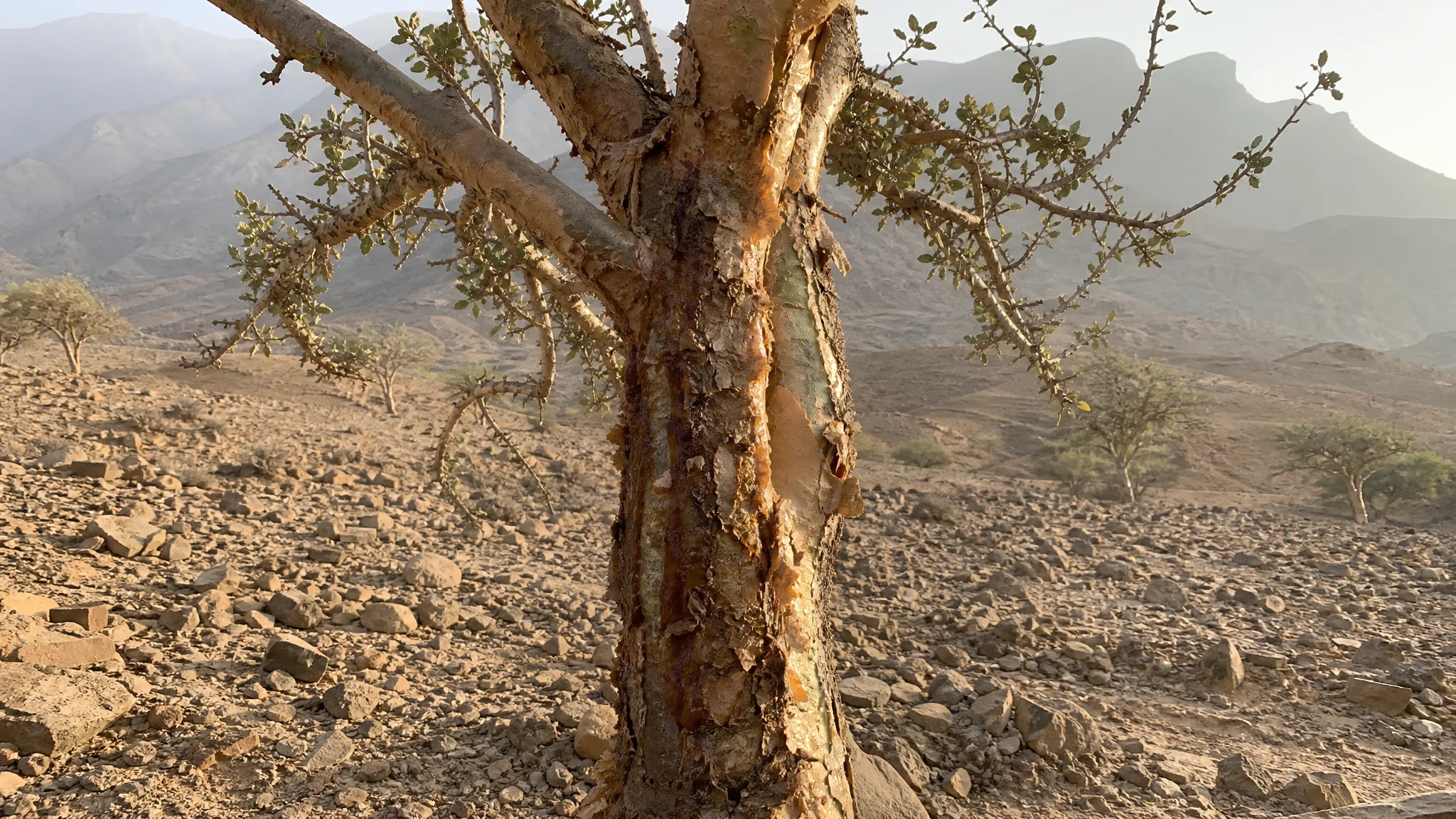
"Frankincense is going extinct" makes a punchy headline, and it is shorter than the truth. The best-documented collapse is in one species. Others show a mix of pressure and stability, and for some there is simply very little published at all. If you care about where your oil begins, the honest picture is more interesting than the slogan.

Frankincense Essential Oil
Six single-origin frankincense varieties, steam-distilled and GC/MS verified.
From $12.99 $10.40 with code BLACKFRIDAY
Bongers' 2019 'Frankincense in peril' findings
Most alarming stories trace back to a 2019 paper in Nature Sustainability by Frans Bongers and colleagues, titled "Frankincense in peril." They studied 23 populations of Boswellia papyrifera, now the main source of frankincense, and found that over 75% lacked small trees and that natural regeneration had been absent for decades. They projected that production could halve within 20 years, and pointed to cattle grazing, frequent fires and over-tapping as the causes. They also named fixes: cattle exclosures, fire-breaks, planting and gentler tapping.
That is a finding about papyrifera in East Africa, a species we do not sell. It shows what grazing, fire and heavy tapping can do to a Boswellia woodland, which is worth knowing, but it does not describe the trees in Oman, Somalia or India.
Is Boswellia sacra in Dhofar recovering?
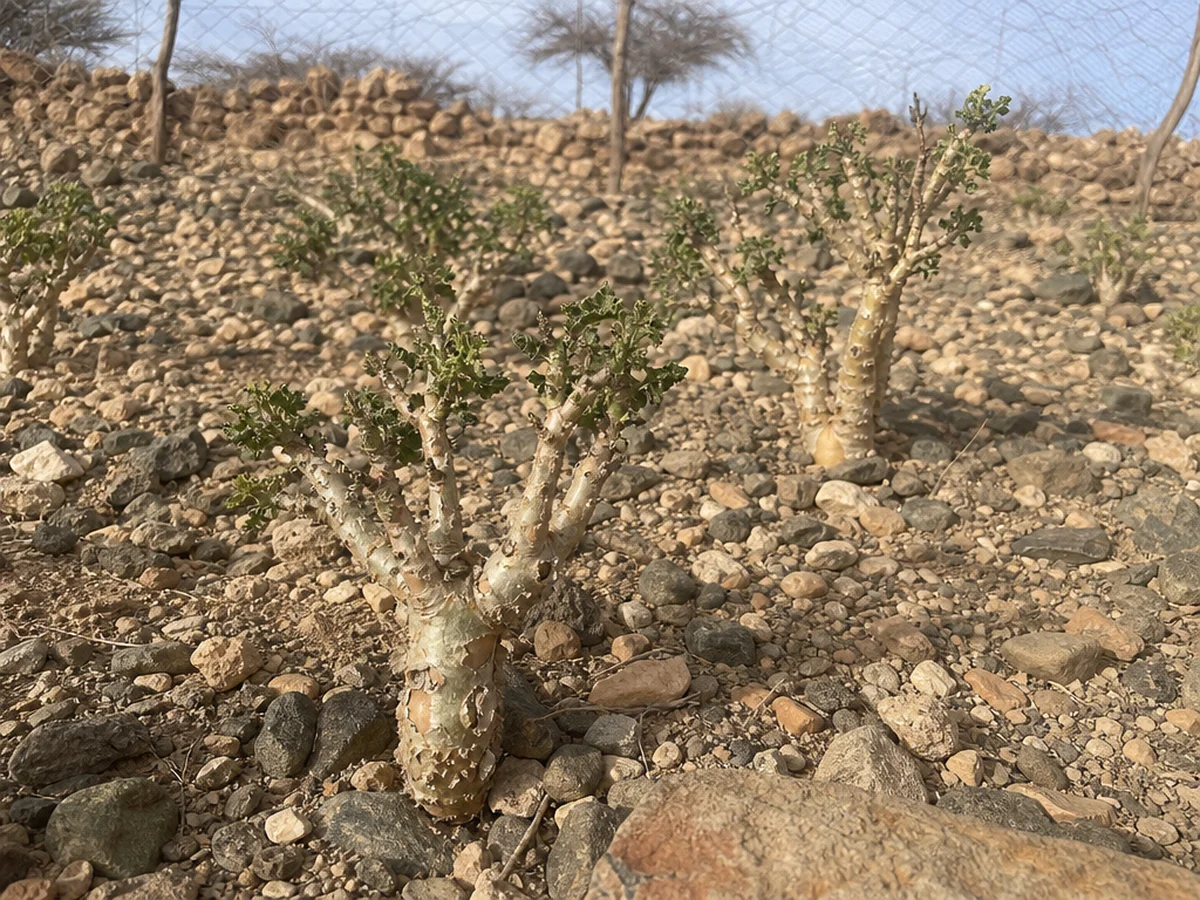
A 2025 survey of Boswellia sacra in the Dhofar mountains of Oman found the tree across at least 3,465 square kilometres, with regeneration in almost every population: 97% of transects included at least 10% small trees or saplings. The authors concluded the data do not currently indicate significant or widespread declines in Oman, as seen in other species. They still listed overgrazing, resin overharvesting, mining and pests as threats, and called for better rangeland management and closer monitoring of resin tapping. In plain terms, the news is better than elsewhere, and the pressure is real in places.
Indian Boswellia serrata under harvest pressure
A 2018 review of Indian frankincense, Boswellia serrata, concluded that market demand, harvesting and management practices have pressured populations into imminent decline. It reported exports of 102.8 metric tonnes in 2015-2016 and 74.56 in 2016-2017, and said demand appears to exceed what can be collected without endangering the species, which opens the door to adulteration and substitution. The authors also noted that collection data are hard to find, so the conclusion rests on limited information. Much of that demand is for extracts, not essential oil.
Somaliland carterii stands in the Sanaag field study
For Somali frankincense, one of the most detailed accounts comes from field work in the Sanaag area of Somaliland, summarised in a Research Outreach feature. It describes overharvested trees at many sites, harvest guidelines that many harvesters do not follow, and a rise in the resin's price that mostly did not reach the people collecting it. It is a rapid assessment of one area, and we read the feature article rather than the full paper, so we offer it as a snapshot. Our Somali frankincense article looks at the trade from the buyer's side.
For frereana, neglecta and rivae, we could not find population or harvest studies to cite, and we would rather say so than stretch a general statement over three different trees. Rarity is not the same as threat, and a scarce species is not automatically endangered, or the reverse.
Can a bottle label prove sustainability?
Resin passes through harvesters, landowners, traders and exporters before it reaches a still, so sustainability cannot be read off a label. The Somaliland team recommends that buyers require traceability and source from suppliers meeting social and environmental standards, and notes that organic certification has not reliably distinguished sustainable harvesting. Their own evidence that traceability is thin is chemical: an oil sold as Boswellia carteri carried the marker of a different tree. That ties directly to adulteration and substitution.
If tapping practices matter to your purchase, ask any seller, us included, in writing what documentation exists for the specific variety. Our contact page is the place to start, and a clear answer is worth having either way.
How much resin goes into one oil bottle?
Oil comes from a lot of resin, because most of the weight stays behind in the still. The exact yield depends on species and method, and we do not give a figure for our own batches, but the direction is clear: a drop of essential oil represents a good deal of tree. Measuring carefully, using the lower end of any dilution range and not buying more than you will use are small habits that respect that.
Honest limits of sourcing claims
It would be easy to write a comforting paragraph about how every bottle is harvested kindly, and it would be wrong to do it without evidence. What we can say is that these trees are worth caring about, that the research is uneven from place to place, and that a reader who knows the gaps is better placed to ask good questions than one who has been reassured.
If you feel a pull toward a particular variety because of the place it comes from, that is a lovely instinct. Let it send you to the research, the way you just have.
Questions to ask frankincense sellers about trees
The most useful thing a buyer can do is ask plain questions and respect plain answers. A seller who says "we do not know" about a tree population is telling you something more useful than a smooth story. We would rather be that kind of seller, and we would rather you ask us in writing than assume.
Making a bottle last
Close the cap firmly after every use, keep the bottle somewhere cool and dark, and measure what you need before you open it. Those small habits mean fewer drops wasted, which is a quiet way of being kind to the trees behind them.
The papers above point the same way: grazing, fire and tapping are the pressures to manage, and buyers who ask where their resin comes from help keep that conversation going.
Frankincense Essential Oil
Serrata, carterii, sacra, frereana, neglecta and rivae: steam-distilled, GC/MS verified, in sizes from 0.5 oz to bulk.
From $12.99 $10.40 with code BLACKFRIDAY
Sources & Further Reading
- Frankincense in peril (Bongers et al., Nature Sustainability, 2019)
- Rapid conservation assessment of Boswellia sacra in Oman reveals complex threat and population patterns (J Arid Environ, 2025)
- Sustainable supply, a foundation for natural product development: The case of Indian frankincense (Boswellia serrata Roxb. ex Colebr.) (J Ethnopharmacol, 2018)
- Save Frankincense: Overharvesting of a precious commodity and approaches to ensure sustainability - Research Outreach