Frankincense Oil Guide: Six Aromas and How They Differ
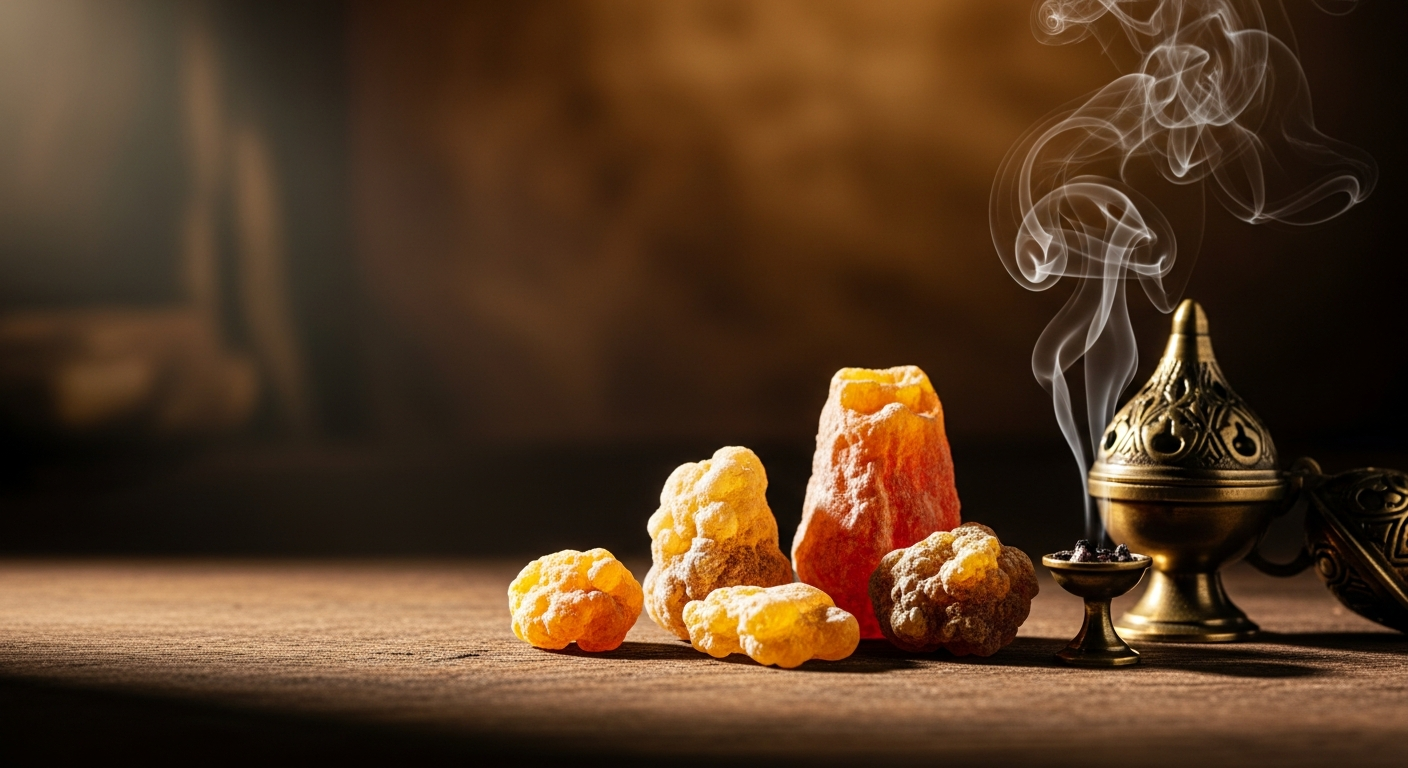
People arrive at "frankincense benefits" looking for a verdict, and the most helpful thing we can offer is a better first question: which frankincense do you mean? The name covers a resin you burn, an extract sold in capsules and a steam-distilled essential oil, and they behave very differently. We sell the last of those, so this guide is about what that oil is, what it is lovely for, and where its story stops.

Frankincense Essential Oil
Six single-origin frankincense varieties, steam-distilled and GC/MS verified.
From $12.99 $10.40 with code BLACKFRIDAY
Boswellia supplements versus resin versus distilled oil
When researchers study "boswellia," they usually mean an oral extract made from the gum resin or bark and sold as a dietary supplement. The National Center for Complementary and Integrative Health is candid about that body of work: there have been several studies, most small and of low quality, and not enough high-quality evidence to say whether boswellia is useful for any health condition. It adds that frankincense may be safe to use topically or for aromatherapy.
The oil is another material. Boswellic acids, the compounds supplements are built around, are heavy molecules that the Tisserand Institute reports are never seen in analyses of frankincense oils, which is why trials of extracts cannot be read as trials of oil. Our boswellic acid explainer goes through it, and resin versus essential oil covers the physical difference. We do not sell resin or supplements, and for a supplement question a physician or pharmacist is the right person.
Why does frankincense oil smell different by species?
Scent is the reason to own frankincense oil, and the six we sell are different from one another. Frankincense is not one smell, and in a 2016 survey of 46 mostly commercial samples, chemists could separate four species by their volatile profiles alone. This is how we describe ours:
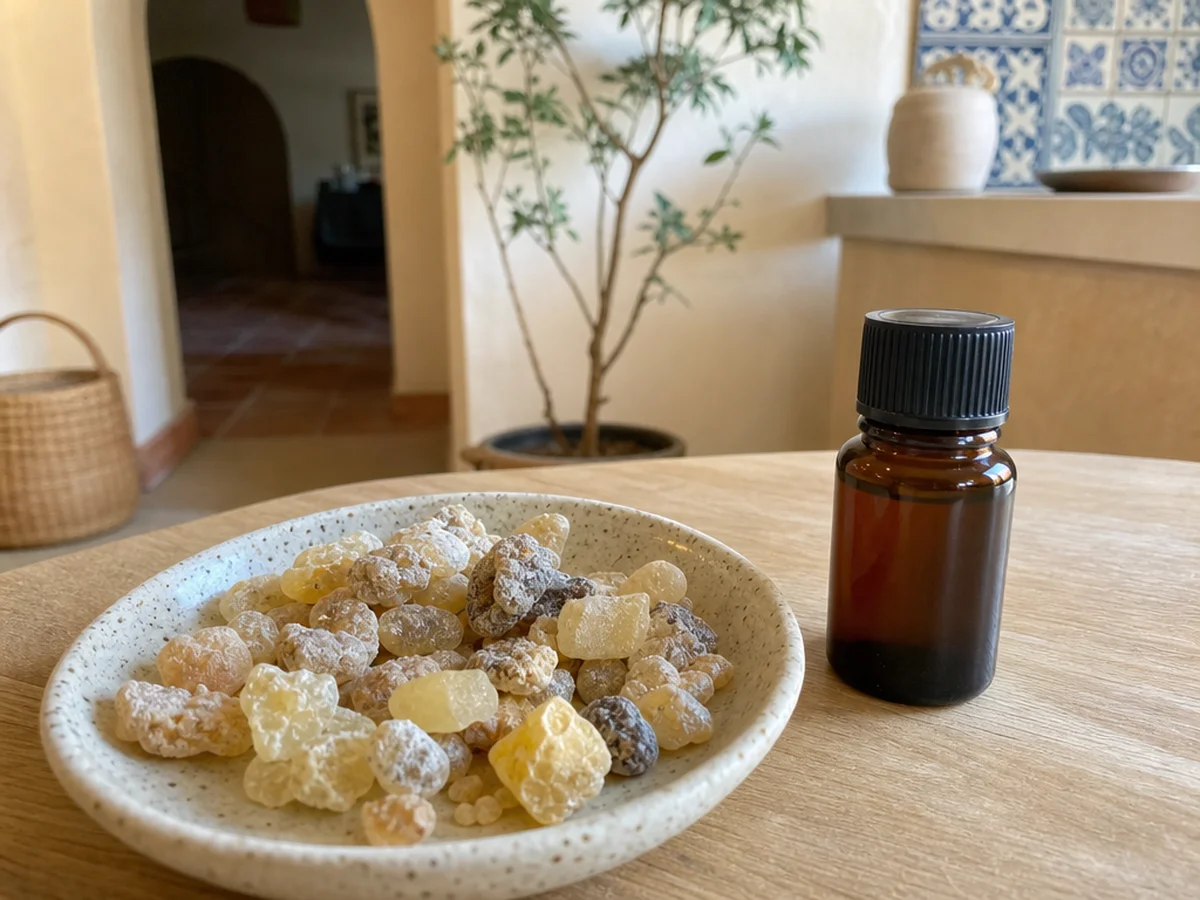
- Serrata: warm and slightly woody, with subtle citrus and pine top notes. Our everyday oil.
- Carterii: warm and woody, a little citrusy, with classic resinous depth.
- Sacra: deep, balsamic and honeyed.
- Frereana: bright, fresh and lemon-pine.
- Neglecta: smoky and slightly fruity over a dry resinous base.
- Rivae: fresh, herbaceous and lightly sweet, with green-resinous undertones.
If you are new, serrata or carterii is the friendly place to begin. If you already love frankincense, sacra, neglecta and frereana show how far the family stretches. The species overview lines them all up.
Picking your first bottle by aroma
If you are standing at the start of all this, here is how we would go about it. Pick the description that makes you curious, not the one that sounds most impressive. Open the bottle when it arrives and take one slow sniff from a few inches away. Our serrata will meet you with something warm and woody and a little lift of citrus and pine. Our sacra goes deeper and sweeter, honeyed and balsamic, and our frereana is the one that feels like opening a window.
Smaller sizes are friendly for a first try. You learn what you like, you finish the bottle while it still smells fresh, and the next purchase is an informed one.
Carrier oils and patch tests for topical use
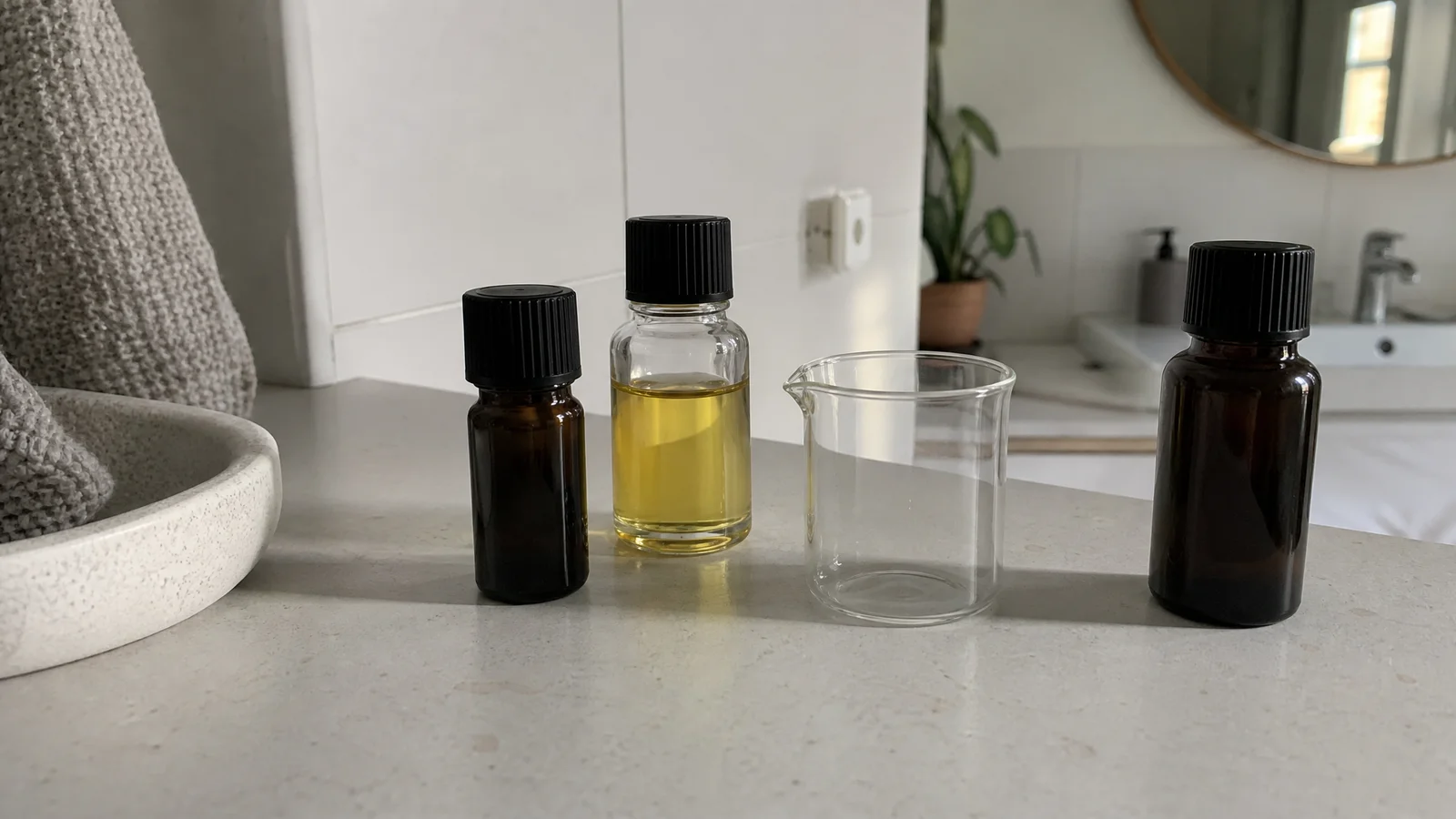
We sell our oils neat, so any dilution is yours to work out, and the sensible route is a carrier oil from a carrier-oil supplier. Our disclaimer asks for a patch test before topical use, keeping oils away from eyes and mucous membranes and out of children's reach, and asking a healthcare provider first if you are pregnant, nursing, taking medication or managing a medical condition. The worked numbers are in the safety guide. For a diffuser, the Tisserand Institute suggests 30 to 60 minutes on and 30 to 60 minutes off with some fresh air in the room. Our oils are for external aroma and cosmetic use; if swallowing an essential oil is on your mind, that is a question for a qualified practitioner.
A little ritual
Some of the nicest uses of frankincense have nothing to do with chemistry. A few drops in a diffuser while you cook a slow Sunday meal. A single sniff of the open bottle before you start a quiet task. A paper strip left by the window so the room smells faintly resinous when you walk in. These are small pleasures, and they are exactly the kind of use we are happy to talk about.
Why frankincense essential oil carries no health claims
The FDA explains that a product's regulatory category depends mainly on intended use, judged from the labeling, website and advertising, and that claims such as easing pain, relaxing muscles or helping you sleep are drug claims. A plant origin does not change that. So you will not find disease or wellness promises from us. The oil's job is aroma, and the question of a medical condition belongs with a clinician.
What did the 2022 carteri oil analysis find?
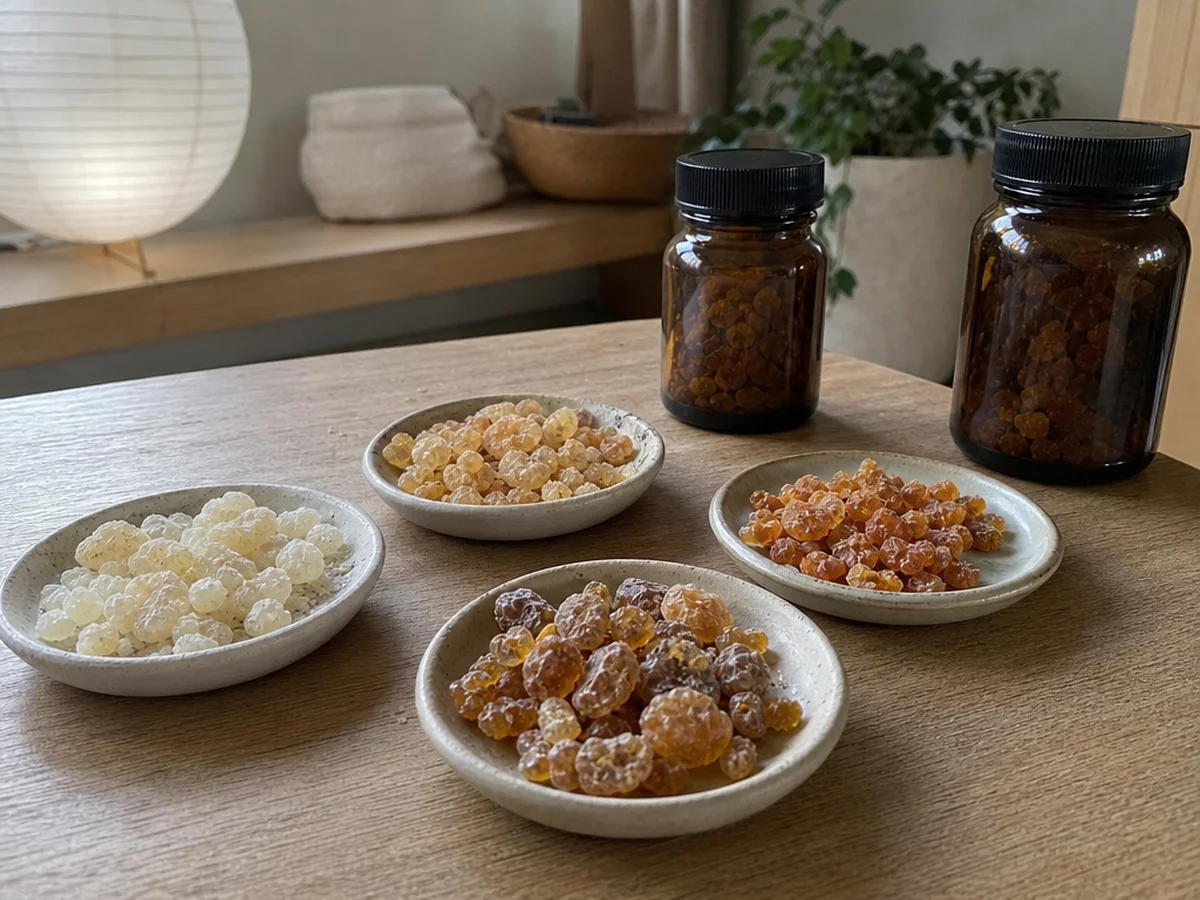
Frankincense is a valued resin, and the market shows it. A 2022 analysis of 21 commercial oils sold as Boswellia carteri found synthetic limonene in six, synthetic octyl acetate in three and castor oil in three, along with oils mixed with resin or with other Boswellia species; the researchers used GC-MS and chiral analysis to detect it. That study did not test our oils, and it is a good reason to ask any seller for paperwork. We publish one Certificate of Analysis, for a serrata batch, listing density, refractive index, optical rotation and a best-by date. For a chromatogram of any variety and lot, ask us in writing via the contact page, and keep the document in hand before relying on it. Our posts on judging a bottle and on what grade labels mean will help.
Frankincense oil is best enjoyed for what it is: a warm, resinous aroma with a long human story and six distinct personalities.
Frankincense Essential Oil
Serrata, carterii, sacra, frereana, neglecta and rivae: steam-distilled, GC/MS verified, in sizes from 0.5 oz to bulk.
From $12.99 $10.40 with code BLACKFRIDAY
Sources & Further Reading
- National Center for Complementary and Integrative Health. Boswellia: Usefulness and Safety. nccih.nih.gov/health/boswellia
- Tisserand Institute. Does Frankincense oil contain boswellic acid? tisserandinstitute.org/frankincense-boswellic-acid
- Niebler J, Buettner A, 2016. Frankincense Revisited, Part I: Comparative Analysis of Volatiles in Commercially Relevant Boswellia Species. Chemistry and Biodiversity. PubMed 27012219
- Ojha PK et al., 2022. Comparison of Volatile Constituents Present in Commercial and Lab-Distilled Frankincense (Boswellia carteri) Essential Oils for Authentication. Plants. PMC9415502
- Tisserand Institute. Safety Guidelines. tisserandinstitute.org/safety-guidelines
- US Food and Drug Administration. Aromatherapy. fda.gov/cosmetics/cosmetic-products/aromatherapy