New to Frankincense Oil? Your First Questions Answered
When someone new to frankincense oil walks into a shop, the same handful of questions tends to come up first. What exactly am I buying? How do I know it is the real thing? How do I use it without regretting it? Here are the answers, in the order we would give them over the counter.

Frankincense Essential Oil
Six single-origin frankincense varieties, steam-distilled and GC/MS verified.
From $12.99 $10.40 with code BLACKFRIDAY
What is frankincense essential oil versus resin?
What is frankincense essential oil, and how is it different from resin?
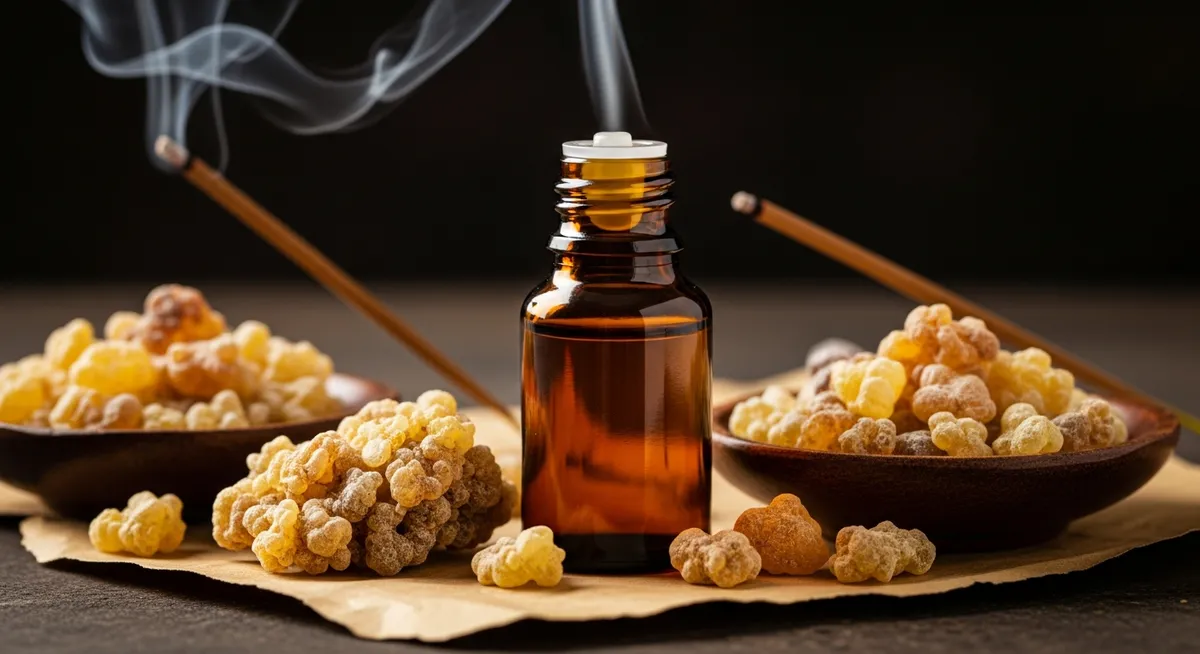
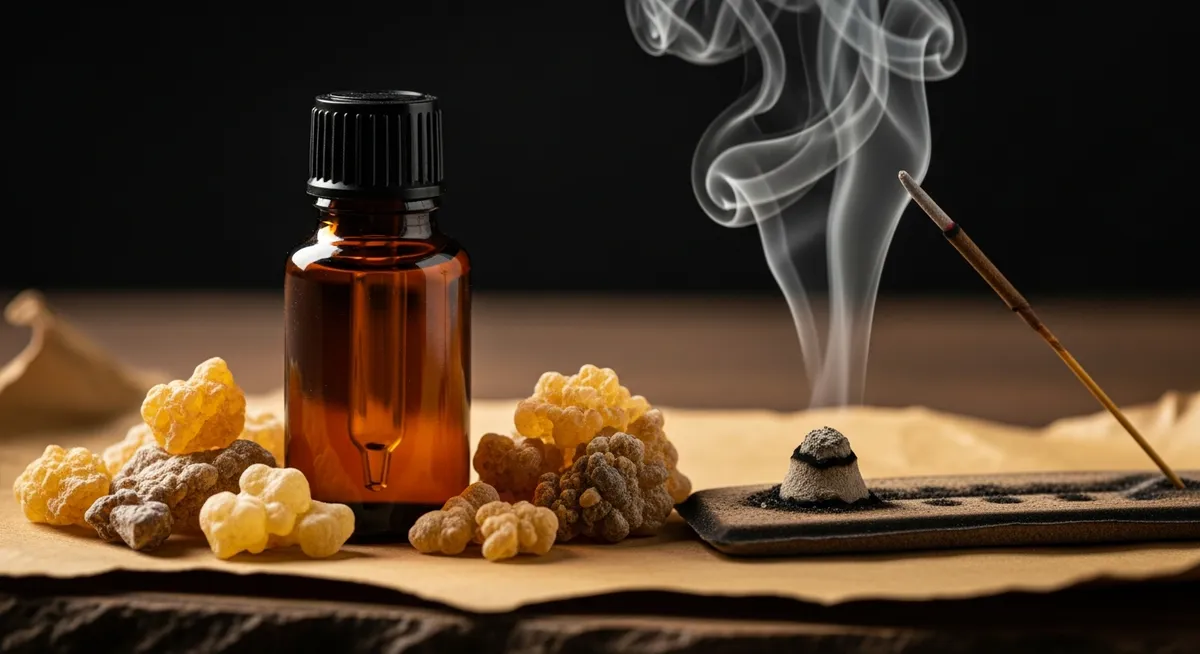
The oil is the volatile, aromatic fraction that steam carries off from the hardened resin of Boswellia trees. The resin itself is a different material, and so are the extracts made from it. NCCIH describes boswellia as an herbal extract of the gum resin or bark, taken by mouth or applied to skin (Boswellia: Usefulness and Safety). We sell six single-species essential oils, steam-distilled with no solvent, and no resin, so for burning resin you will want a resin supplier.
Does the oil contain boswellic acids?
Not in any amount reliably reported for normal distillation. Robert Tisserand explains that boswellic acids are non-volatile, that they are found in substantial amounts in almost any frankincense extract, and that there is no reliable report of them in any oil made with normal distillation parameters (Does Frankincense oil contain boswellic acid?). We make no boswellic acid claim for our oils. Our boswellic acids post covers the resin side.
Which type should I start with?
Choose by aroma, which is what you will actually notice. Serrata is warm and slightly woody with subtle citrus and pine notes. Carterii is warm and woody with a touch of citrus and classic resinous depth. Sacra is deep, balsamic and honeyed, and frereana is bright and lemon-pine. Neglecta is smoky and slightly fruity, and rivae is fresh, herbaceous and lightly sweet. Opened oil ages, so a small size is a sensible first purchase. Our species overview goes through all six.
How do I know an oil is genuine?
Smell and a drop on paper will not settle it. A GC/MS report for that variety and lot is the usual check, and it matters: a 2022 study compared 21 commercial oils sold online as Boswellia carteri with two lab-distilled oils and concluded that every market sample was either adulterated or contaminated with other species (Comparison of Volatile Constituents Present in Commercial and Lab-Distilled Frankincense (Boswellia carteri) Essential Oils for Authentication). Our own Certificate of Analysis covers one serrata batch and lists density, refractive index and optical rotation. If you need GC/MS, species or origin confirmation, ask us in writing through the contact page for the exact variety and lot, and get it in writing before you rely on it. Our guide to reading GC/MS reports shows what to look for.
Skin dilution rules for frankincense oil
How do I dilute it?
Always dilute. Tisserand's Dilution for essential oils gives 0.2 to 1 percent for sensitive or impaired skin, 0.5 to 1.2 percent for facial products and 1 to 3 percent for body oils, and suggests starting low. In a 30 ml bottle, 1 percent is 0.3 ml, which is about six drops if you use the rough convention of 20 drops per millilitre. Our oils are sold neat, so the dilution is yours to make. Our safety guide goes through it step by step.
Should I patch test?
Yes. Tisserand advises trying a properly diluted oil on a small patch of skin and watching for redness and irritation over 24 hours, and reminds us that anyone can have an allergy to any essential oil (A Beginner’s Guide to Essential Oils Part 2: How to Use Essential Oils). If a reaction appears, stop and see a dermatologist if it persists.
Is it safe during pregnancy?
Ask your OB/GYN or midwife first. NCCIH says little is known about whether frankincense is safe to use during pregnancy or breastfeeding. Our pregnancy post reports what authorities say.
Can I swallow it?
No. Ours is an external, aromatic oil and is not sold as a food or supplement. Poison Control recommends calling your poison center if someone swallows an essential oil (Essential oils: Poisonous when misused), and advises keeping oils locked up and out of reach of children and pets. The supplement trials people quote used resin extracts, not this oil. See our ingestion post.
Storing and enjoying several frankincense varieties
Can I keep more than one variety?
Of course, and it is a fun way to learn. Two bottles smelled side by side tell you more than any description. Open each one, breathe gently, give your nose a short rest between them, and notice which one you want to go back to. Most people find they have a clear favorite within a minute or two. A small size of each keeps the experiment small and keeps the oils fresher while you decide.
How do I diffuse it?
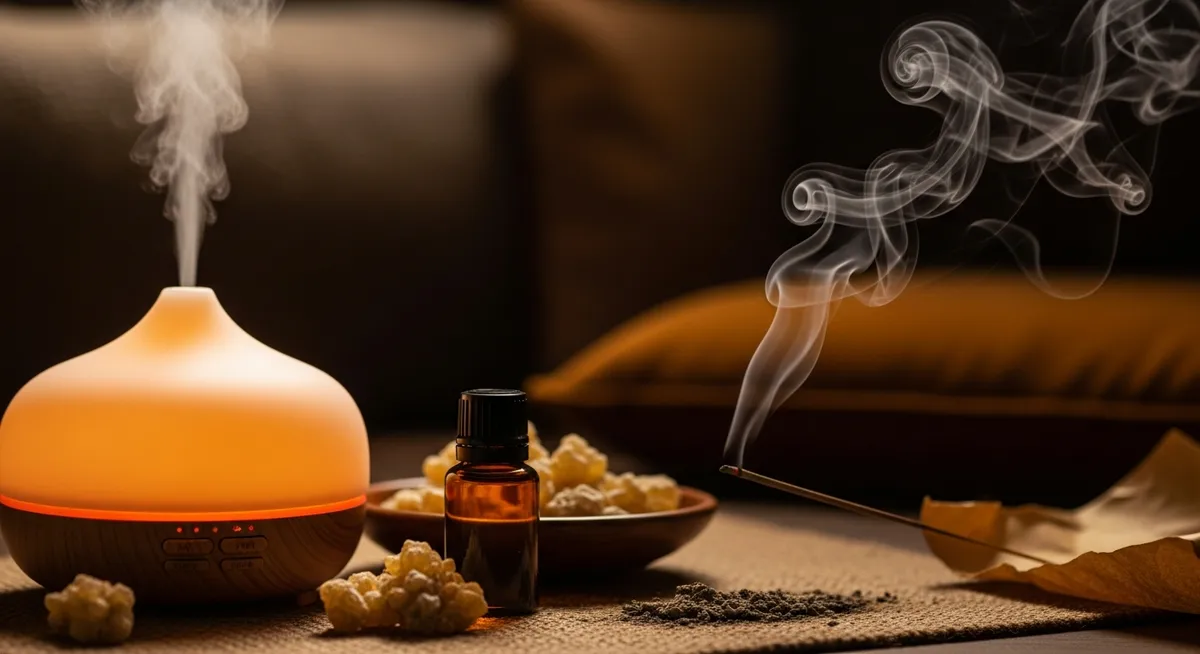
Tisserand suggests diffusing for 30 to 60 minutes on, then 30 to 60 minutes off, with some fresh air (How to Use Essential Oils Safely). If there are cats, dogs or someone with asthma in the home, check with a vet or physician first. Our diffuser guide covers the routine.
How should I store it?
A shelf in a cupboard away from the stove and the window is usually all it takes. Cap the bottle firmly every time, and wipe the neck so the cap does not stick.
Cool, dark and tightly capped, in glass rather than plastic. Tisserand notes that UV light, heat and oxygen accelerate degradation. That is general guidance for essential oils, and we publish no shelf life for ours. If the smell changes, retire the bottle from skin use. Our storage guide has more.
What does frankincense research really say?
Less than marketing suggests. NCCIH says most boswellia studies are small and low quality, and that there is not enough high-quality evidence to say whether it is useful for any health condition. Several oral studies looked at osteoarthritis, and those used extracts. NCCIH adds that frankincense may be safe to use topically or for aromatherapy, which is not the same as showing it works. We make no health claim for our oils, and we are glad to simply recommend them for the scent.
That is the short tour. If you are still weighing a first bottle, a small size of whichever aroma caught your imagination is a lovely place to begin.
Frankincense Essential Oil
Serrata, carterii, sacra, frereana, neglecta and rivae: steam-distilled, GC/MS verified, in sizes from 0.5 oz to bulk.
From $12.99 $10.40 with code BLACKFRIDAY
Sources & Further Reading
- Boswellia: Usefulness and Safety, NCCIH
- Does Frankincense oil contain boswellic acid?, Tisserand Institute
- Comparison of Volatile Constituents Present in Commercial and Lab-Distilled Frankincense (Boswellia carteri) Essential Oils for Authentication, Plants, 2022
- Dilution for essential oils, Tisserand Institute
- A Beginner’s Guide to Essential Oils Part 2: How to Use Essential Oils, Tisserand Institute
- Essential oils: Poisonous when misused, Poison Control
- How to Use Essential Oils Safely, Tisserand Institute