DIY Frankincense Lip Balm With a Hint of Scent
Frankincense in a lip balm should be something you notice for a second, when you lift the tube and catch that warm, resinous scent, and then forget about. That is the whole idea behind the formula below: a small amount of oil in a simple base of beeswax, shea butter and a liquid carrier, weighed rather than guessed.

Frankincense Essential Oil
Six single-origin frankincense varieties, steam-distilled and GC/MS verified.
From $12.99 $10.40 with code BLACKFRIDAY
Healthy lips versus cracked lips and fragrance
This balm is for lips that are in good shape and simply deserve something that smells wonderful. If yours are cracked or sore right now, the American Academy of Dermatology suggests fragrance free products, notes that cinnamon, citrus, mint and peppermint flavors can irritate dry lips, and points to a thick ointment such as white petroleum jelly for very dry, cracked lips because ointment seals in water longer than waxes or oils. It also says most dry lips settle in two to three weeks with that kind of care, and that a board-certified dermatologist is the person to see if they do not. We would follow that advice first and come back to a scented balm once the lips have calmed down.
Why keep frankincense oil low in lip balm?
Lips are thin, we lick them, and some of any balm ends up swallowed. DermNet NZ lists perfumes and flavourings among the allergens found in lip products, and describes a case of allergic reaction on the lips from peppermint oil in a lip balm. The Tisserand Institute's dilution guide gives 0.2 to 1% for sensitive or impaired skin and 0.5 to 1.2% for facial cosmetics, and it does not mention lips at all. Reasoning from those ranges, we would pick the very bottom, 0.2%, and treat it as a ceiling rather than a starting point. That is our judgment, not a published lip figure. We sell our frankincense oils neat, so the dilution is always yours to make, and at this rate a little goes a very long way.
Frankincense lip balm formula by weight
Weigh everything on a kitchen or jewellery scale. A rate this small cannot be controlled with spoons or drops. For a 100 g batch:
| Ingredient | Amount | Share |
|---|---|---|
| Beeswax pastilles | 22 g | 22% |
| Shea butter | 40 g | 40% |
| Liquid carrier oil, such as jojoba or sweet almond | 37.8 g | 37.8% |
| Frankincense essential oil | 0.2 g | 0.2% |
The wax, butter and carrier come from a craft or cosmetic-ingredient supplier. The beeswax share comes from a published starting point: a formulation answer on MySkinRecipes gives 20 to 25% beeswax with the rest mostly shea butter in a stick balm, and says more wax makes a firmer balm and less makes a softer one. We swapped some of the shea for a liquid oil to make it glide, so treat 22% as a starting point and adjust in a small test batch. Add a little more wax for a warm climate, a little less for a cool one.
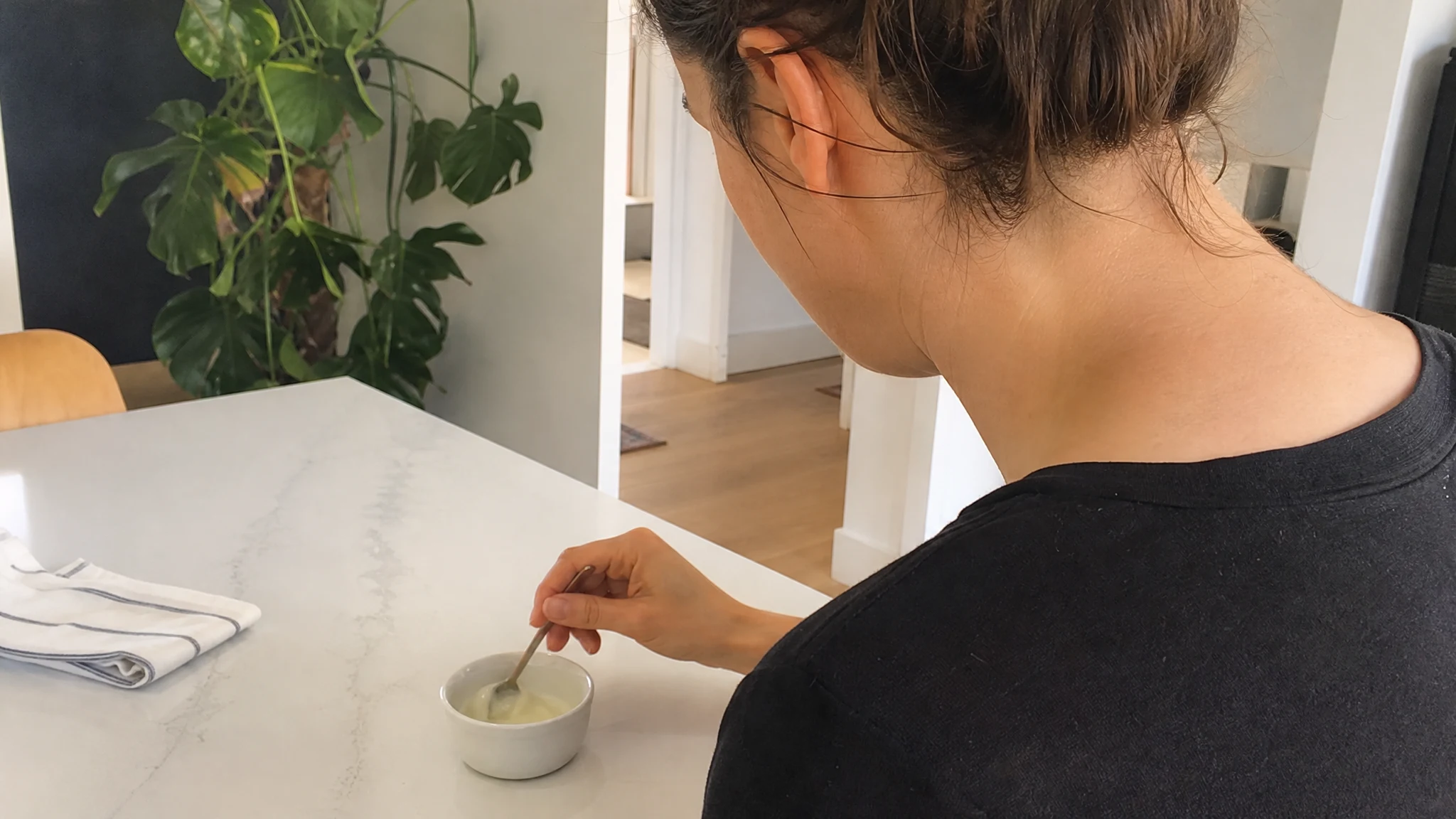
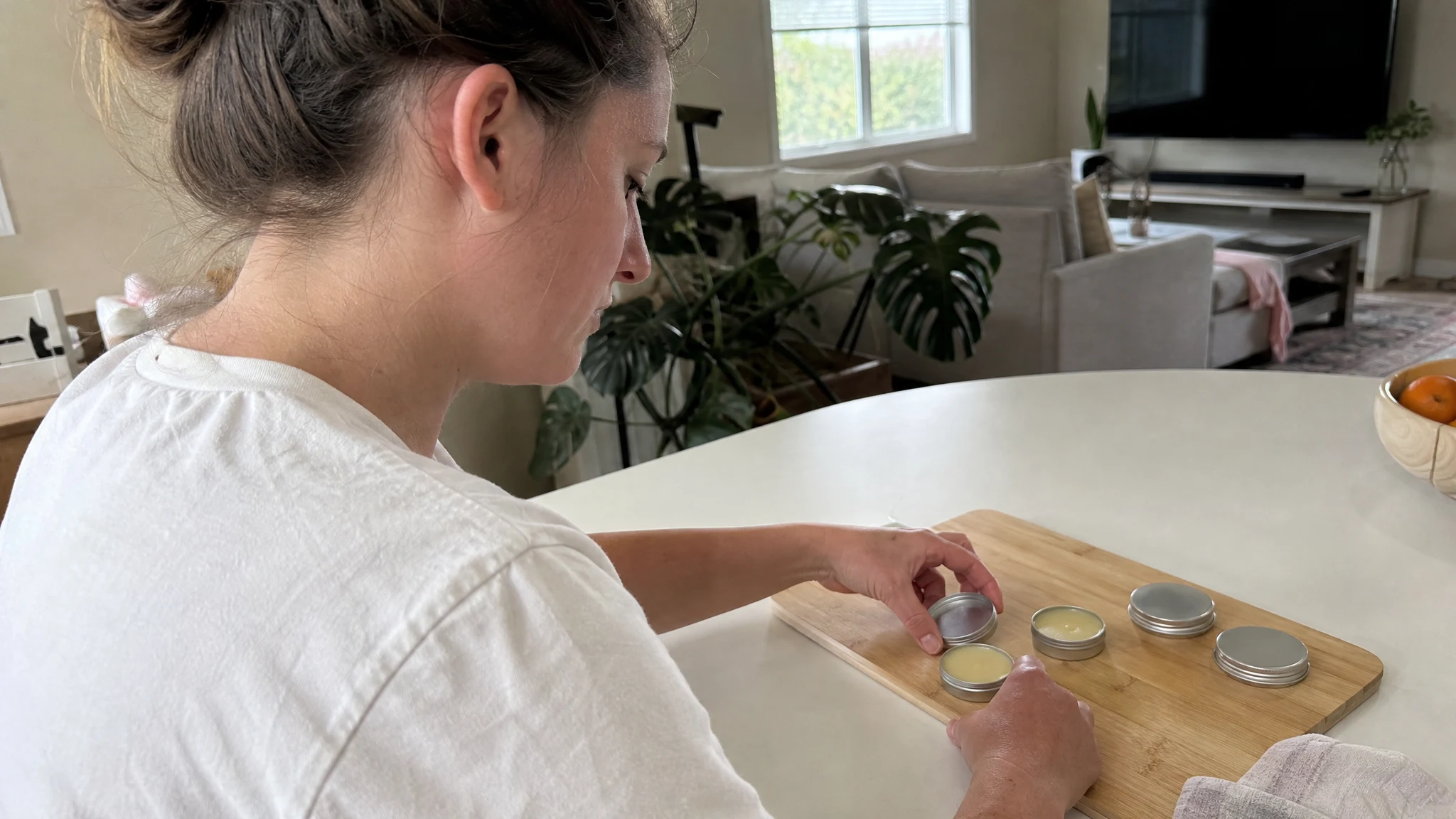
Melt the beeswax, shea and carrier together in a heatproof jar standing in hot water. Take it off the heat, let it cool for a minute or two, stir in the frankincense oil last so less of it drifts away as vapor, and pour straight into clean lip balm tubes. Leave them undisturbed until set.
The oil arithmetic
0.2 g in 100 g is 0.2%. The Certificate of Analysis we publish for a serrata batch gives a relative density of 0.838 at 20 C, so 0.2 g of that batch is about 0.24 ml, which is roughly five drops at the rule-of-thumb 20 drops per ml (droppers vary, so call that approximate). The other five varieties have no published density, so with those, weigh the oil instead of counting drops. In a small batch, one extra drop changes the percentage a lot, which is why we only suggest drop counts for a full 100 g.
Water, honey and aloe to leave out
- Water, honey, aloe or hydrosols. MySkinRecipes points out that stick balms are traditionally anhydrous, and that honey separates from a wax base without an emulsifier and water brings contamination risk. The FDA adds that some microorganisms grow faster in warm or damp conditions and that dipping fingers into a product is a way for contamination to get in. Tubes are a better choice than open tins for the same reason.
- Castor oil. DermNet NZ names ricinoleic acid, the main constituent of castor oil, as the most common current cause of allergic cheilitis from lip cosmetics in several large case series. Jojoba or sweet almond gives you the glide without it.
- Extra flavors. Frankincense is the only scent here. Adding peppermint or citrus brings back the very flavors the AAD lists as irritants.
Who should not use scented lip balm?
Do not make this for babies or small children, whose lips go straight into their mouths. If you have a history of lip or perioral eczema, or a reaction to fragranced cosmetics, skip scent altogether. The Tisserand Institute's beginner's guide says to test any new oil, properly diluted, on a small patch of skin and watch for 24 hours, and that anyone can be allergic to any essential oil. DermNet NZ notes that these allergic reactions are delayed and generally appear 24 to 72 hours after exposure, so give a test patch of the finished balm on your forearm a full three days before it goes near your mouth. If lips turn red, swollen or sore after any balm, stop and see a dermatologist. Our pregnancy and breastfeeding article covers that question, and a doctor or midwife is the right person to ask.
One small habit helps: put the date on a bit of masking tape on each tube. When the scent fades or the balm smells off, you will know how old it is and can simply make a fresh batch.
If this formula has you hooked on making things, our salve article uses the same weigh-everything approach for body skin, the dilution guide sets out the ranges used above, and the storage article keeps your oil in good shape between batches.
A balm like this is a small pleasure: a quiet bit of scent, a smooth glide, and the satisfaction of knowing exactly what is in the tube.
Frankincense Essential Oil
Serrata, carterii, sacra, frereana, neglecta and rivae: steam-distilled, GC/MS verified, in sizes from 0.5 oz to bulk.
From $12.99 $10.40 with code BLACKFRIDAY
Sources & Further Reading
- American Academy of Dermatology: 7 dermatologists' tips for healing dry, chapped lips
- DermNet NZ: Contact reactions to lipsticks and other lipcare products
- DermNet NZ: Allergic contact dermatitis to essential oils
- Tisserand Institute: Dilution for essential oils
- Tisserand Institute: A Beginner's Guide to Essential Oils Part 2: How to Use Essential Oils
- MySkinRecipes: Lip Balm Formulation: Adjusting Hardness and Adding Honey
- US Food and Drug Administration: Microbiological Safety and Cosmetics