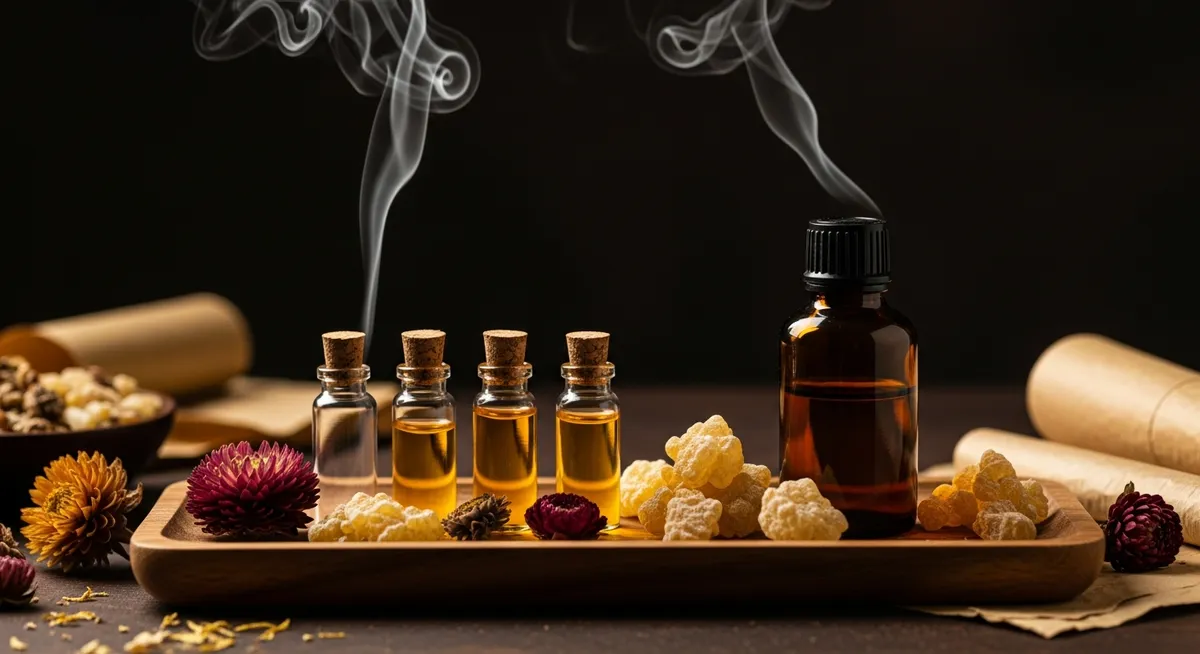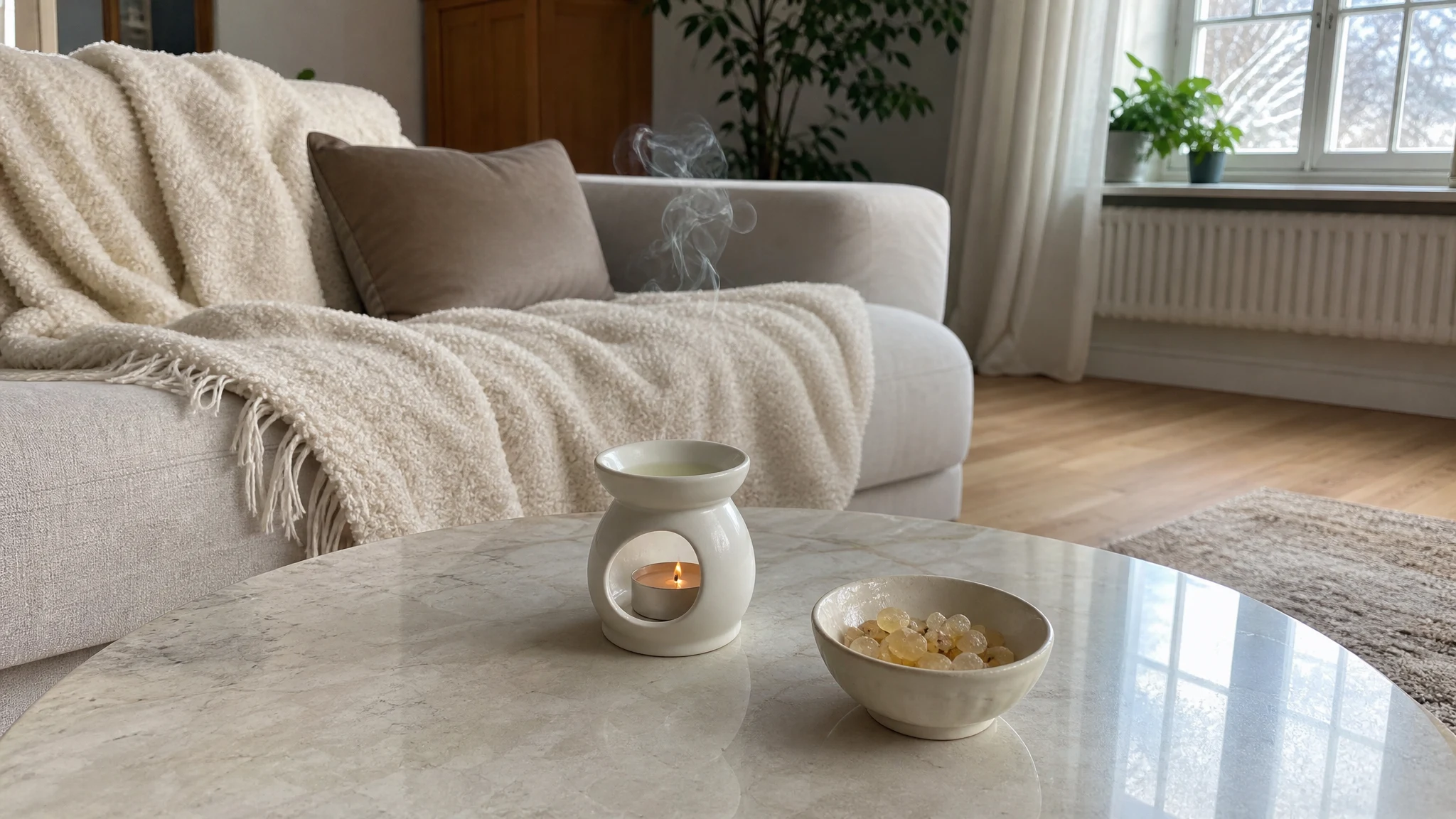
Winter Solstice with Frankincense: A Quiet Evening Ritual
On the longest night of the year, people have always reached for light and for something that smells like it is worth gathering around. Frankincense has a long reputation as that smell, though the link to midwinter is a modern one. What follows is the story of the solstice as the evidence tells it, how frankincense was burned in the past, and a quiet, low-smoke way to bring the two together in your own home.

Frankincense Essential Oil
Six single-origin frankincense varieties, steam-distilled and GC/MS verified.
From $12.99 $10.40 with code BLACKFRIDAY
What did the solstice mean at Stonehenge?
English Heritage describes the winter solstice as the shortest day and longest night in the northern hemisphere. At Stonehenge the stones were arranged to mark the midwinter sunset and the midsummer sunrise, and at nearby Durrington Walls, excavators found large quantities of pig and cattle bones, with the pigs probably slaughtered at about nine months old, which points to feasting around midwinter (English Heritage, What is the Winter Solstice?). Nothing there mentions incense, and we would not invent a link. The modern habit of lighting something fragrant on the longest night is simply a new ritual built on a very old theme: light is coming back.
Medieval Belgian pots show how resin was burned
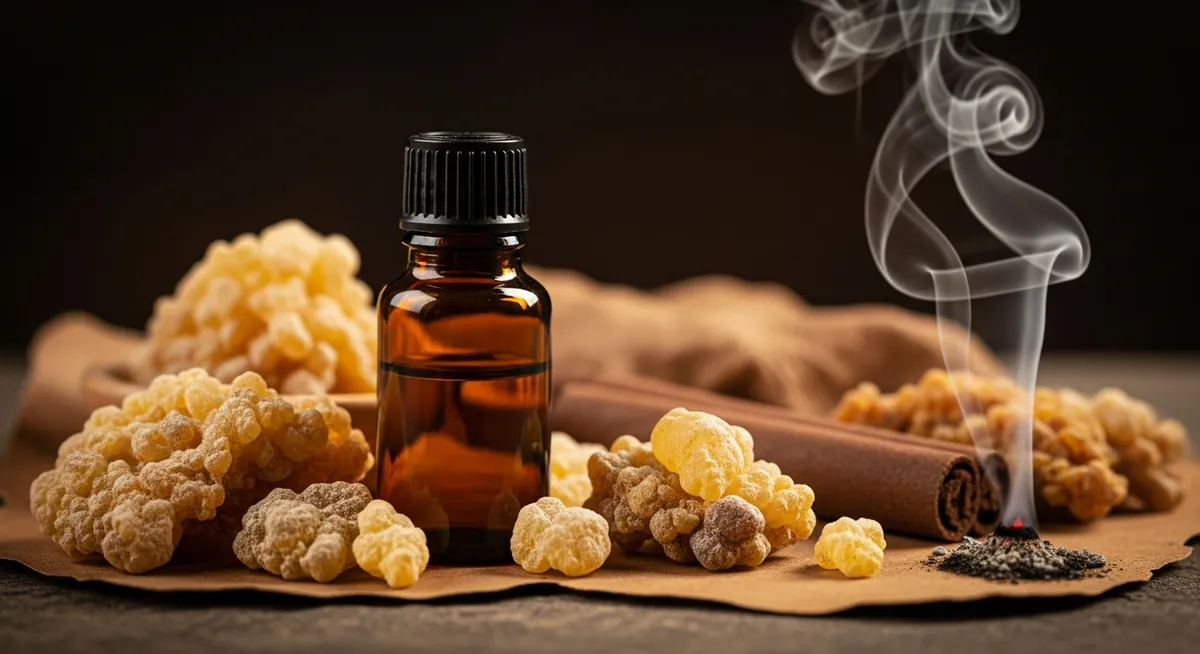
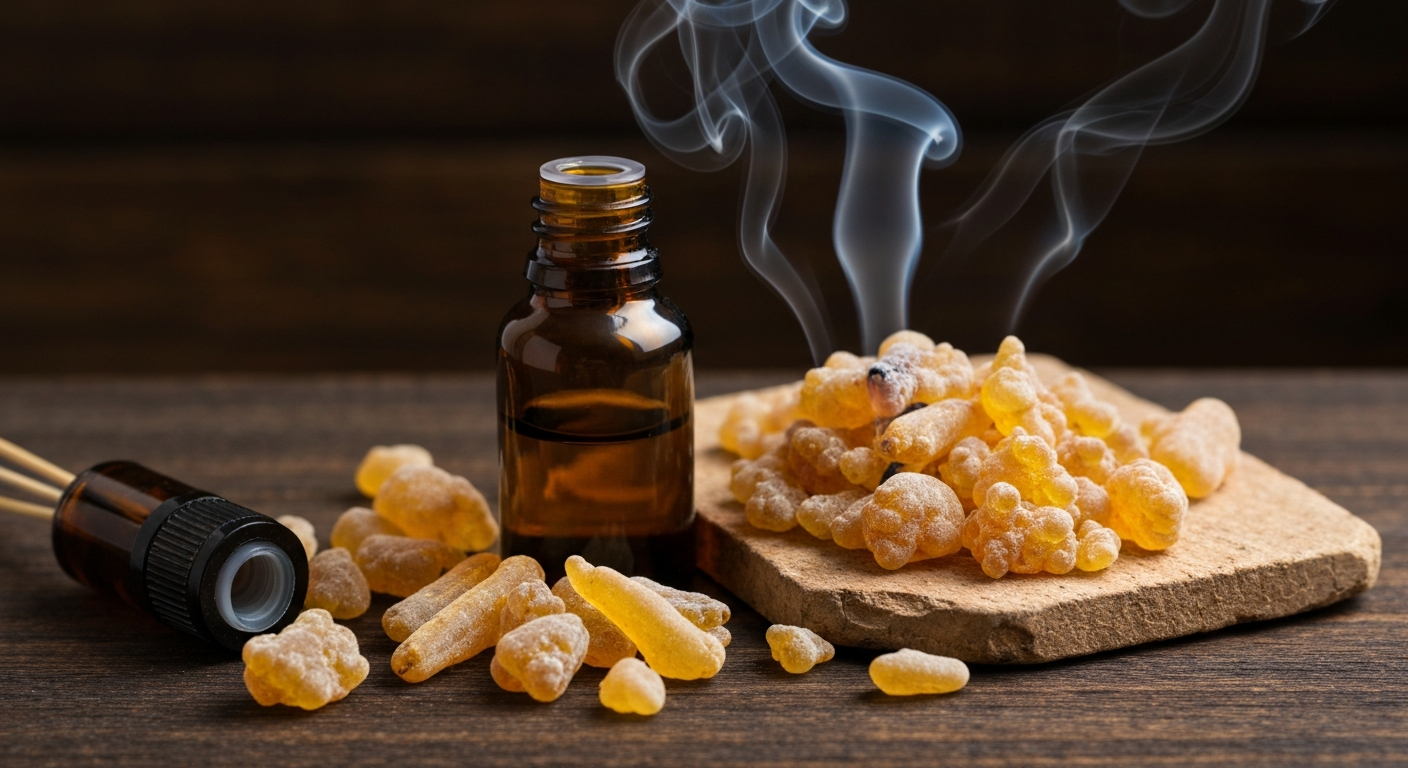
The documented use is burning resin on heat. A 2014 study of twelfth to fourteenth century pots from southern Belgium found incense burners that had held degraded frankincense, probably mixed with a little juniper and possibly pine tar, with charcoal used purely as fuel. The paper adds that demand peaked when the Romans burned frankincense in temples, at funerals and at home (Baeten et al., Holy smoke in medieval funerary rites). If that is the experience you want, our resin-burning article explains the method, and you will need a resin seller, because we sell the essential oil only. Our resin versus oil guide explains why the two behave so differently.
That difference matters for a practical reason. Essential oil is a flammable liquid, so it does not belong on a flame, a lit candle or hot charcoal, and the oil should never be used as a stand-in for resin on a charcoal disc. Keep the oil for a diffuser, where it does what it is good at, which is filling a room with scent.
Neglecta frankincense oil for a solstice evening
Because you are after atmosphere, choose by aroma. We describe our neglecta as smoky and slightly fruity over a dry resinous base, which makes it the nearest of our six to the smell of burning resin, no smoke required. Our sacra is deep, balsamic and honeyed, richer and warmer, and our carterii is warm, woody and slightly citrusy, the classic church-incense character. All three are steam-distilled from resin and sold neat, so the diffuser does the diluting for you. If you cannot decide, our meditation article is a good place to think about the quiet side of the evening.
If you are lighting this for a gathering, keep it simple: one oil, one diffuser, one short session. Guests should be able to ask "what is that?" without having to pick it out of a haze of three scents.
Room preparation for a quiet solstice night
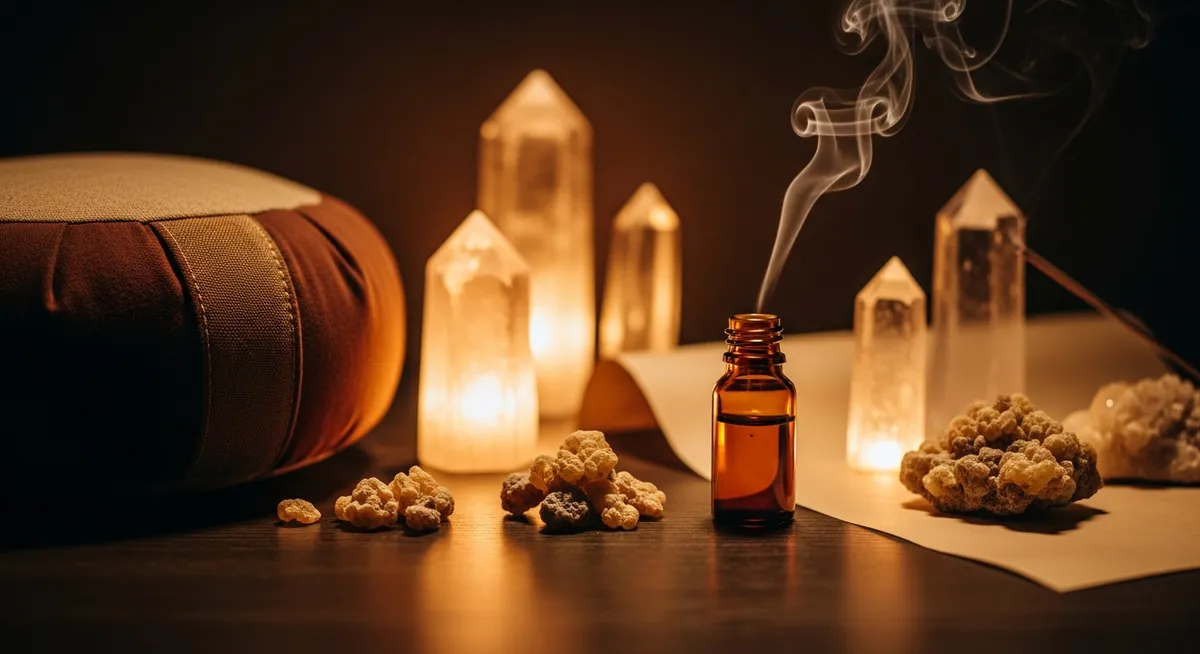
Before the evening starts, tidy the room, put a blanket where people will sit, and crack a window for fresh air. Switch on the lamp you like best and leave the overhead light off. The point is to make the room feel gathered, not busy. Then add the scent last, so it is the final thing you notice.
What are low-smoke ways to enjoy frankincense?
Smoke is worth thinking about. A 2022 review of incense smoke reports that burning incense releases fine particulate matter, with a figure of about 45 mg per gram burned compared with about 10 mg per gram for cigarettes, along with gases and other combustion products. It is a broad review that pools many studies, and it does not single out frankincense (Yadav et al., Health and Environmental Risks of Incense Smoke). Our reasoning from that is simple: one evening a year with the window open is a small thing, while a daily habit in a closed room is a larger one, and a diffuser avoids the question altogether.
So here is an evening we like the sound of. Run an ultrasonic diffuser for a short session with a little fresh air, rather than all night. Light an unscented candle in a proper holder, away from curtains, and put it out when you leave the room. Then do the part that needs no product at all: read something aloud, sit quietly for a few minutes, write down what you are leaving behind and what you hope the light brings. Our diffuser article covers the practical side.
A few households need extra care. The Pet Poison Helpline says cats are especially at risk from essential oils (Pet Poison Helpline, Updates on Essential Oils), and if asthma, a heart condition or a new baby makes scent or smoke a worry, your physician is the right person to ask first.
Closing a solstice evening with fresh air
When the evening winds down, switch the diffuser off, put out the candle, and open a window for a minute so the room can air. A faint trace of the scent lingers in the fabric for a little while, a soft reminder of the night. Cap the bottle tightly and put it back where it lives.
The solstice does not need frankincense, and frankincense does not need the solstice. But a ventilated room, a glowing candle and a deep resinous scent make a good reason to pause on the darkest night.
Frankincense Essential Oil
Serrata, carterii, sacra, frereana, neglecta and rivae: steam-distilled, GC/MS verified, in sizes from 0.5 oz to bulk.
From $12.99 $10.40 with code BLACKFRIDAY
Sources & Further Reading
- What is the Winter Solstice? English Heritage
- Holy smoke in medieval funerary rites: chemical fingerprints of frankincense in southern Belgian incense burners (Baeten et al., PLoS One, 2014)
- Health and Environmental Risks of Incense Smoke: Mechanistic Insights and Cumulative Evidence (Yadav et al., J Inflamm Res, 2022)
- Updates on Essential Oils, Pet Poison Helpline