A Frankincense Oil Collection: Where to Start
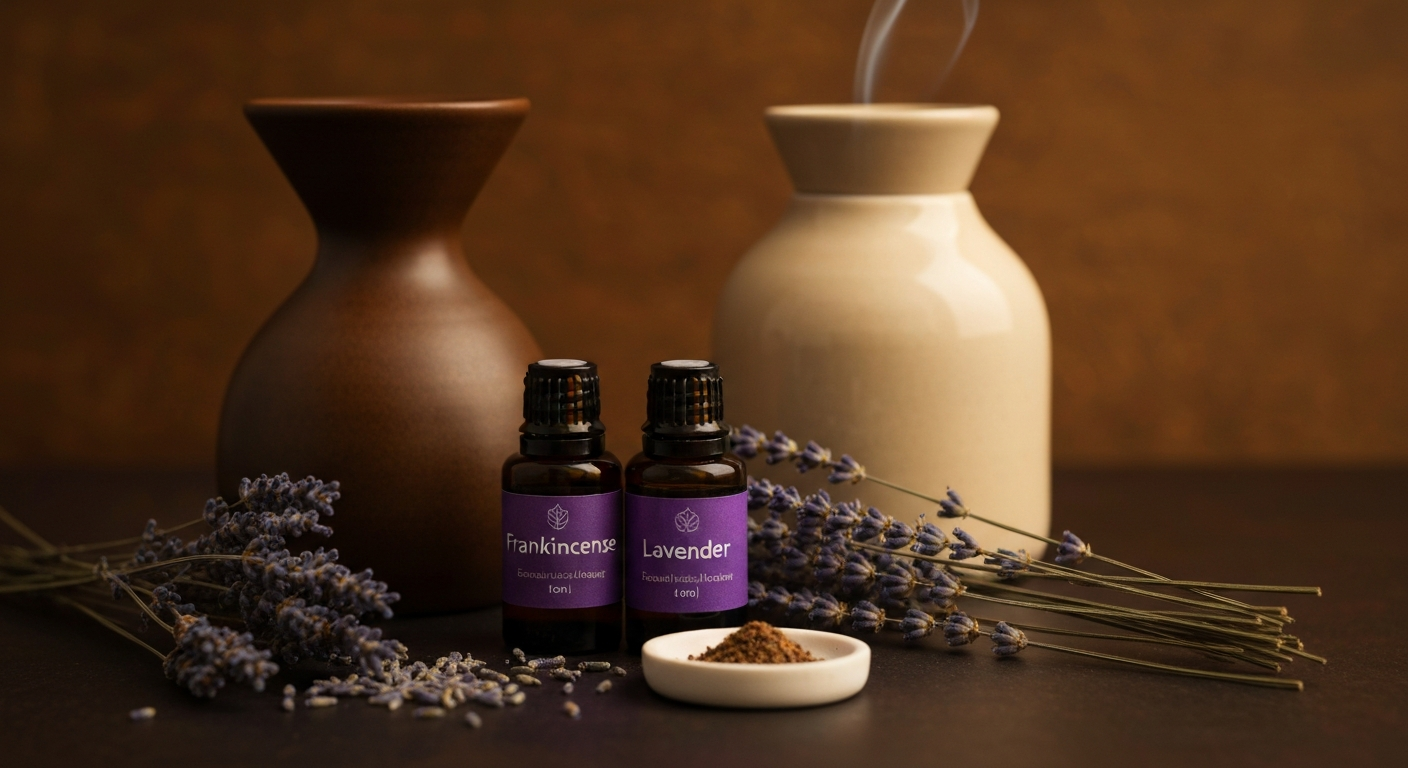
The best way to learn frankincense is not to buy all six of our oils at once. Start with two, smell them side by side, and add a third only when you can say what the first two are missing. Each variety is its own personality, and a collection built slowly teaches you far more than a shelf filled in a weekend.

Frankincense Essential Oil
Six single-origin frankincense varieties, steam-distilled and GC/MS verified.
From $12.99 $10.40 with code BLACKFRIDAY
What will you use a frankincense collection for?
Your answer sets the order. If you are simply curious what frankincense oil smells like, buy one oil, then a second that sounds different. If you diffuse it, pick the scent you will still enjoy in week three. If you make small batches of body products, remember that you will use only a few drops at a time, so a small bottle lasts. And if you formulate or sell, our wholesale page covers samples, consultation and larger sizes, and the bulk page lists the big ones. A personal collection is a different project.
Six single-species frankincense oils and their aromas
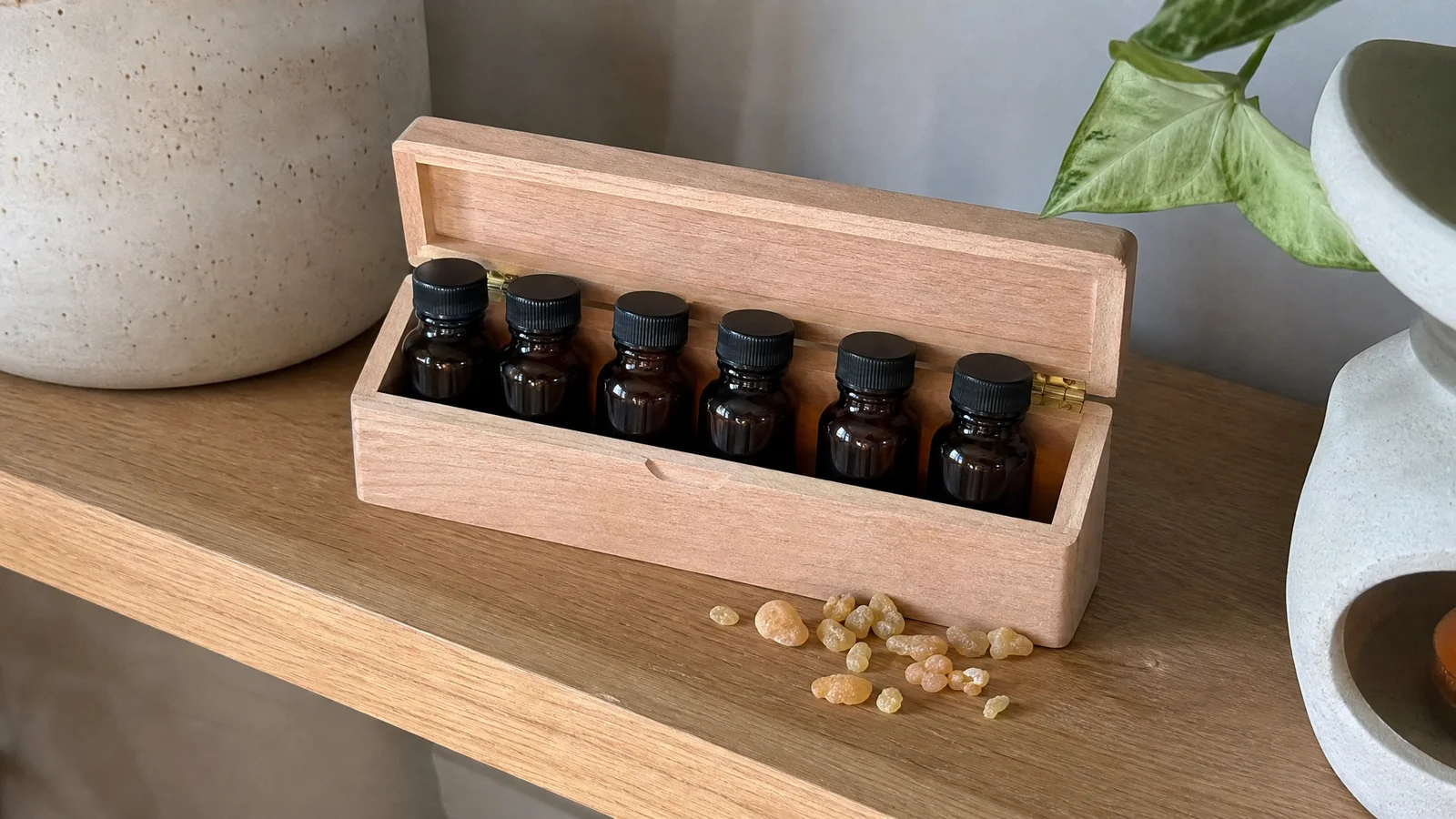
We sell six single-species frankincense essential oils, steam-distilled and sold neat, each in ten sizes from 0.5 oz up. Here is how we describe each one:
- Boswellia serrata, Rajasthan, India: warm and slightly woody, with subtle citrus and pine top notes.
- Boswellia carterii, Cal Madow mountains, Somalia: warm, woody and slightly citrusy, with classic resinous depth.
- Boswellia sacra, Dhofar, Oman: deep, balsamic and honeyed.
- Boswellia frereana, Maydi region, northern Somalia: bright, fresh and lemon-pine.
- Boswellia neglecta, Kenya and Ethiopia drylands: smoky and slightly fruity, with a dry resinous base.
- Boswellia rivae, Ogaden region, Ethiopia: fresh, herbaceous and lightly sweet, with green-resinous undertones.
Words only go so far, and several of them overlap. That is why we suggest pairing opposites. Sacra's deep, honeyed warmth next to frereana's bright lemon-pine tells you more per bottle than two warm, woody neighbors ever would.
Why do frankincense varieties smell different?
This is not marketing. In a 2016 study, Niebler and Buettner analyzed the volatile compounds in 46 mostly commercial resins and oils from four species, B. sacra, B. serrata, B. papyrifera and B. frereana, found 216 compounds, and reported that the profiles separated the species clearly. Another group compared Somali B. carterii and Omani B. sacra oils and found that while the standard analysis looked broadly similar, the average alpha-pinene was 68.2% in the sacra samples and 37.3% in the carterii samples, and their optical rotation had opposite signs. They concluded the two are distinct species. These figures describe the samples in those studies, not our oils, and we do not publish compound data for ours. They simply explain why a nose can tell the varieties apart.
It also explains why a species name on a label is the beginning of a conversation. Ojha and colleagues analyzed 21 commercial oils sold as B. carteri and reported that many had been adulterated or contaminated, which is one more reason we suggest you ask any seller, us included, for the report on the exact variety and lot if that matters to your purchase. Our GC/MS reading guide shows what to look for. The single Certificate of Analysis we publish is for a serrata batch and lists density, refractive index and optical rotation.
Purchase order for first-time collectors
We should say plainly that a collection is a pleasure, not a project. Nobody needs all six, and there is no prize for finishing the set. The point is to find the one or two scents you find yourself reaching for.
- Two varieties, smallest size. We list 0.5 oz and 1 oz. Smell each from the bottle, then again on a paper strip an hour later, because top notes fade first.
- Keep notes. Jot the variety, the date you opened it and a line each time you use it. Our bottle labels show the variety and size, so your notes carry the rest.
- Add a third only to fill a gap. If both are woody and warm, the gap is something bright.
- Size up only for the one you finish. Running out and reaching for the same bottle again is the clearest signal there is.
- Save the unusual ones for curiosity. Neglecta and rivae are the characters in the lineup, with smoky and green-herbaceous profiles that make them fun to add once you know your baseline.
If you want the three best-known species compared side by side, see our serrata, carterii and sacra comparison, and our types article for the wider map.
Comparing six frankincense bottles by smell
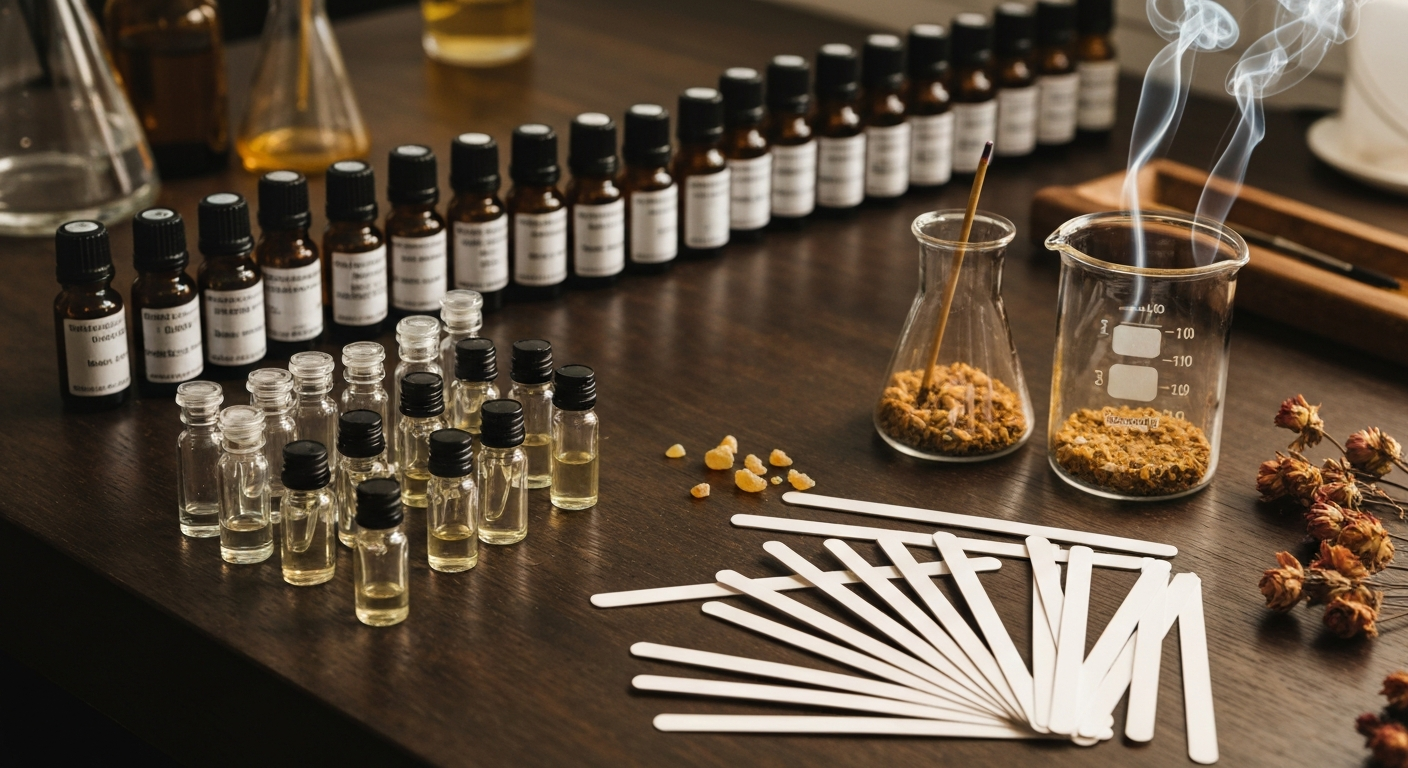
A few small habits make the comparison clearer. Smell in a room that does not already smell of coffee, candles or cooking. Take a break between bottles, and breathe in the crook of your elbow or step outside for a moment if your nose feels tired, since a nose adapts quickly and stops telling you the truth after three or four sniffs. Smelling two oils in one sitting is enough for most people; the third will tell you less than the first.
If you are comparing the deep, honeyed character of sacra with a brighter one such as frereana, you will probably find your preference within a minute. Pay attention to which one you want to smell again. That small tug is the best guide you have.
How many drops are in a 1 oz bottle?
One ounce is 29.57 ml, and at the rough convention of 20 drops per ml, a 1 oz bottle holds around 590 drops and a 0.5 oz bottle around 295. Drops vary by dropper, so these are estimates. As an example of arithmetic, a 1% mix in 30 ml of carrier needs 0.3 ml, about 6 drops; the Tisserand Institute's dilution guide sets out the ranges. Either way, a half-ounce bottle covers many small batches or several weeks of diffusing, which is why we say start small.
Oxidation and shelf life of essential oils
The Tisserand Institute names three causes of oxidation in essential oils: oxygen, light and heat. In practice that means a tight cap, a shelf away from sunlight and radiators, and buying the size you will finish, since a bottle that is mostly air has more oxygen in it. If you decant, use dark glass. If an oil smells noticeably different from when you opened it, keep it for aroma only and keep it off skin. Our storage article goes deeper.
A good collection should feel like a small library: a few favorites you reach for often, and one or two odd volumes you open when you feel curious.
Whichever you start with, give yourself a few weeks of living with it before you decide what comes next. Scents grow on you, or they do not, and time is the honest judge.
Frankincense Essential Oil
Serrata, carterii, sacra, frereana, neglecta and rivae: steam-distilled, GC/MS verified, in sizes from 0.5 oz to bulk.
From $12.99 $10.40 with code BLACKFRIDAY
Sources & Further Reading
- Niebler J, Buettner A, 2016: Frankincense Revisited, Part I: Comparative Analysis of Volatiles in Commercially Relevant Boswellia Species.
- Woolley CL et al., 2012: Chemical differentiation of Boswellia sacra and Boswellia carterii essential oils by gas chromatography and chiral gas chromatography-mass spectrometry.
- Ojha PK et al., 2022: Comparison of Volatile Constituents Present in Commercial and Lab-Distilled Frankincense (Boswellia carteri) Essential Oils for Authentication.
- Tisserand Institute: Oxidation and the Shelf Life of Essential Oils
- Tisserand Institute: Dilution for essential oils