What Is Indian Frankincense? Tree, Extract and Oil
Type "Indian frankincense" into a search bar and you will be shown three quite different products under one name: a tree that grows in India, a supplement made from its resin, and a steam-distilled essential oil. They share a species, Boswellia serrata, and not much else. Once you can tell them apart, a lot of the confusing claims around this oil start to make sense.

Frankincense Essential Oil
Six single-origin frankincense varieties, steam-distilled and GC/MS verified.
From $12.99 $10.40 with code BLACKFRIDAY
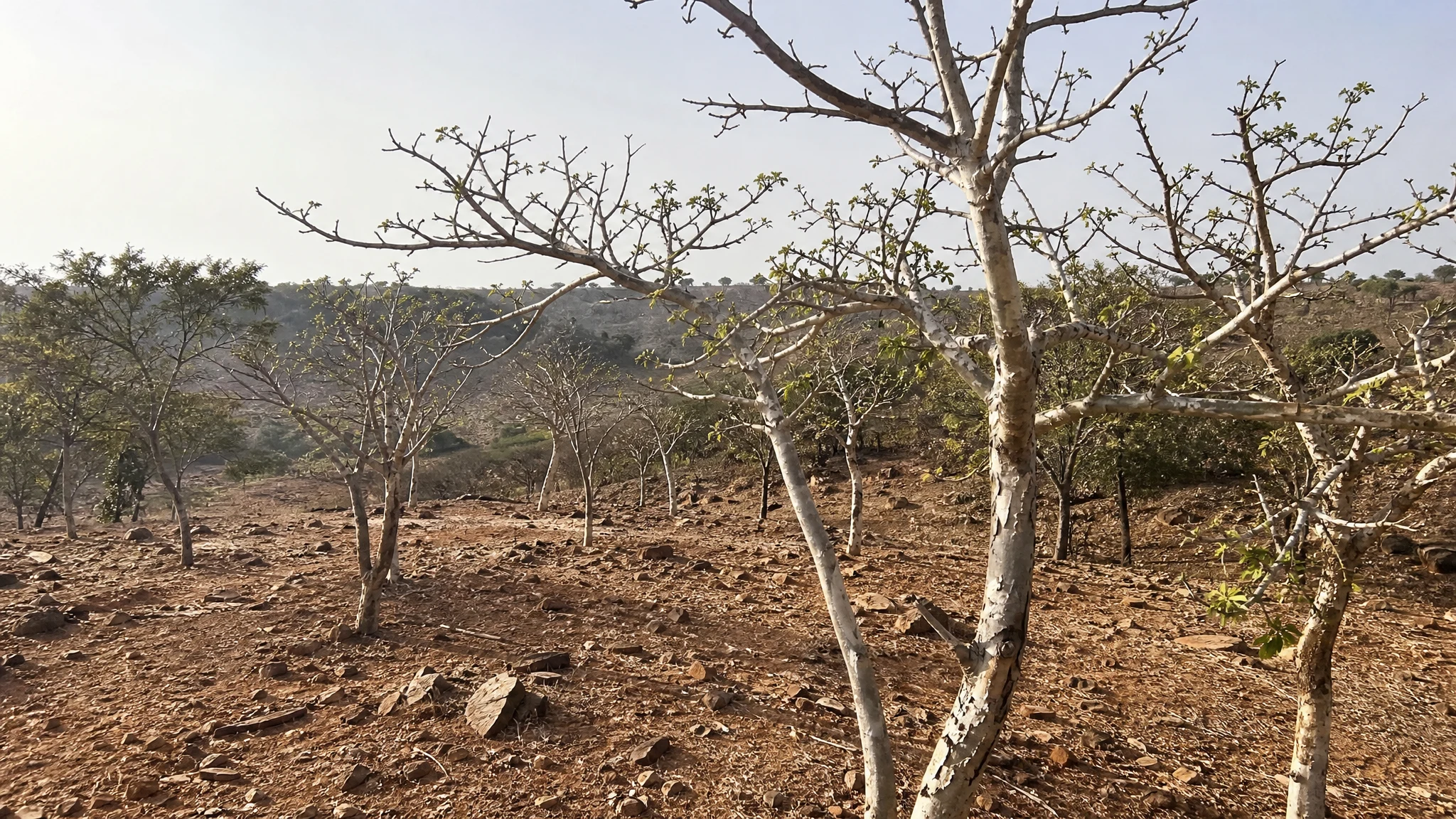
Boswellia serrata tree and its oleo-resin
Boswellia serrata is a multi-purpose tree. A 2018 review in the Journal of Ethnopharmacology describes it as a source of fodder and timber that is also tapped for an oleo-resin known as Indian frankincense or Indian olibanum, used in medicine, religious practice, cosmetics and perfumery. The authors report that India is the only producer of this resin, that exports were 102.8 metric tonnes in 2015-2016 and 74.56 in 2016-2017, and that demand appears to far exceed what can be collected without endangering the species. They call for sustainable harvesting and traceable supply chains, and they note that the gap between demand and supply opens the door to adulteration and substitution.
That last point is one we take seriously as sellers. When a resin is in demand and supply is tight, a buyer is right to ask what is actually in a bottle. We list our serrata as coming from Rajasthan, India, and it is the one variety for which we publish a Certificate of Analysis (more on that below).
Oral boswellia extracts in the supplement aisle
Most of what you read about "Boswellia benefits" comes from oral extracts, made from the gum resin or bark and sold as dietary supplements. The National Center for Complementary and Integrative Health describes the field plainly: there have been several studies, most of them small and of low quality, and not enough high-quality evidence to say whether boswellia is useful for any health condition. We sell an external cosmetic oil, not an extract, and a supplement question belongs with a physician or pharmacist, particularly if you take other medicines.
The reason an extract and an oil are different products is chemistry. The compounds that supplements are built around, the boswellic acids, are heavy molecules with boiling points in the 500 to 600 degrees C range. Tisserand's review of the literature notes that they are never seen in analyses of frankincense oils, and that the first published report of them in an oil came from a vacuum distillation, not ordinary commercial steam distillation. For the long version, see our boswellic acid explainer.
What does steam distillation carry into the oil?
Steam distillation captures the volatile part of the resin, the part you can smell. That is a lovely thing in its own right. When researchers analysed 46 mostly commercial frankincense resins and oils in 2016, they found 216 volatile compounds and profiles distinctive enough to separate B. serrata, B. sacra, B. papyrifera and B. frereana from each other. In other words, each species has a recognisable scent chemistry, and serrata has its own.
We describe our serrata as warm and slightly woody, with subtle citrus and pine top notes, and we position it as our everyday oil, the easiest of the six to reach for. The Certificate of Analysis we publish is for one serrata batch. It records a yellow liquid with a resinous, citrus, sweet smell, a relative density of 0.838 and a refractive index of 1.459 at 20 C, and an optical rotation of 29.12 degrees, along with the extraction method, steam distillation, from resin. Those are physical measurements, not a compound breakdown, and they apply to that batch. If you need a GC/MS report for the variety and lot you are buying, ask us in writing through the contact page and get it in hand before you rely on it.
The density has a practical use. At 0.838, one gram of that batch is about 1.19 ml, which is handy if you formulate by weight but measure by volume.
Opening a bottle of Indian frankincense oil
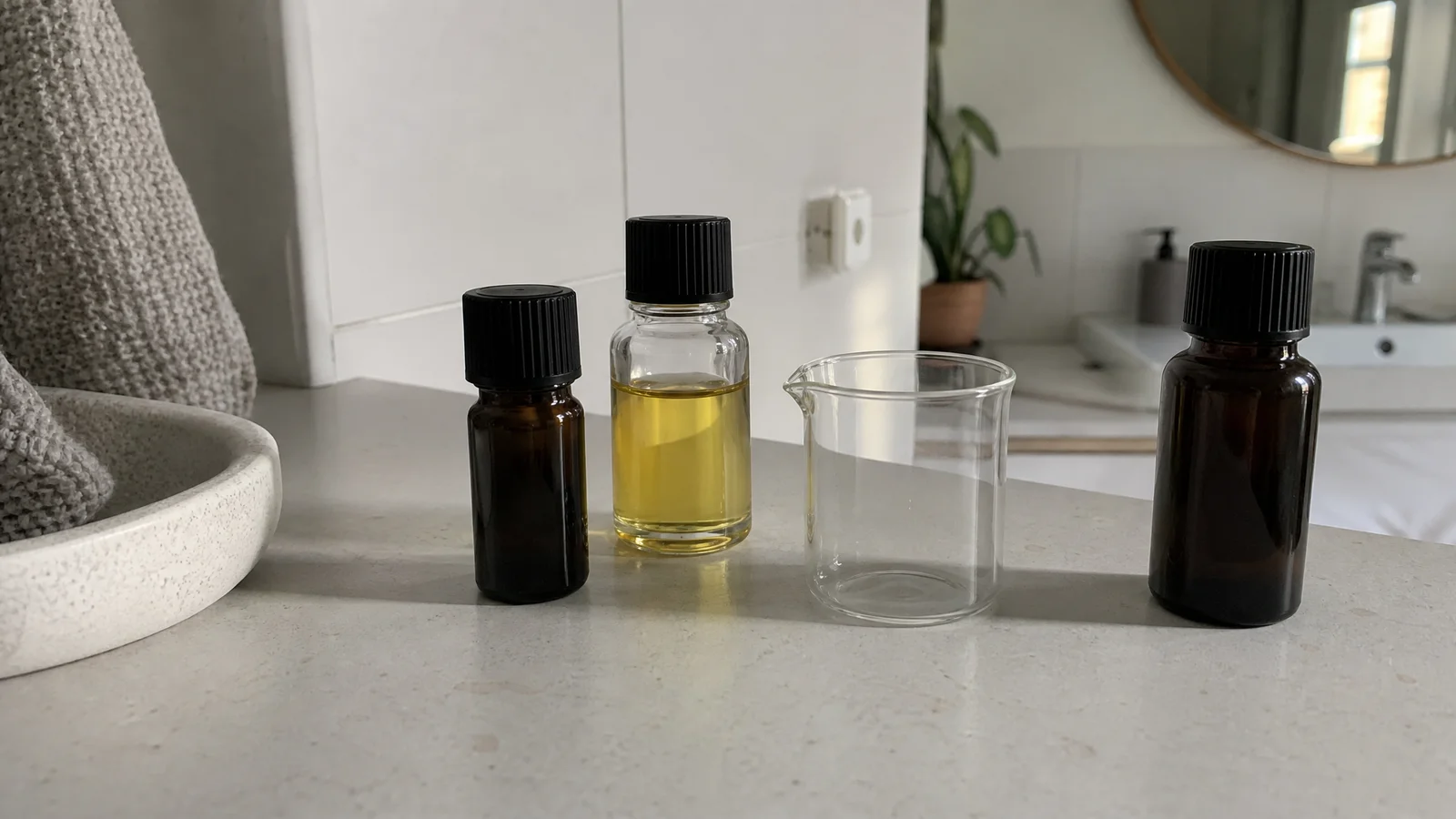
Take off the black cap and bring the amber bottle up slowly. The citrus and pine top notes come first, light and quick, and then the warm, slightly woody character settles in behind them. Our label reads "Indian frankincense oil," which is a good reminder that this is the oil, not the tree or the supplement. Give it a minute in the air and you will notice how the brighter notes fade while the wood stays.
Is Indian frankincense oil a supplement substitute?
- If you want a boswellia supplement, we do not sell one and a distilled oil is not that product. A pharmacist can help.
- If you want a frankincense oil for scent or a diluted cosmetic blend, our serrata is the place to begin, and the species overview sets it beside the other five.
- If you want to know what resin is, how it differs from the oil, and why that matters, resin versus essential oil walks through it.
- If the trees are on your mind, our sourcing and sustainability post covers the pressures on Boswellia more widely.
That is why we call serrata our everyday oil. It is easy to like and easy to reach for, and it is a comfortable place to begin if you have never owned frankincense before. Smell it on its own first, before you add anything to it, so you know what you are working with.
Indian frankincense is a tree, a heavily traded resin, a much-discussed extract and a warm, woody oil. Keep the four apart and the name stops being confusing and becomes a good place to start exploring frankincense.
Frankincense Essential Oil
Serrata, carterii, sacra, frereana, neglecta and rivae: steam-distilled, GC/MS verified, in sizes from 0.5 oz to bulk.
From $12.99 $10.40 with code BLACKFRIDAY
Sources & Further Reading
- Brendler T, Brinckmann JA, Schippmann U, 2018. Sustainable supply, a foundation for natural product development: The case of Indian frankincense (Boswellia serrata Roxb. ex Colebr.). Journal of Ethnopharmacology. PubMed 30031142
- National Center for Complementary and Integrative Health. Boswellia: Usefulness and Safety. nccih.nih.gov/health/boswellia
- Tisserand Institute. Does Frankincense oil contain boswellic acid? tisserandinstitute.org/frankincense-boswellic-acid
- Niebler J, Buettner A, 2016. Frankincense Revisited, Part I: Comparative Analysis of Volatiles in Commercially Relevant Boswellia Species. Chemistry and Biodiversity. PubMed 27012219