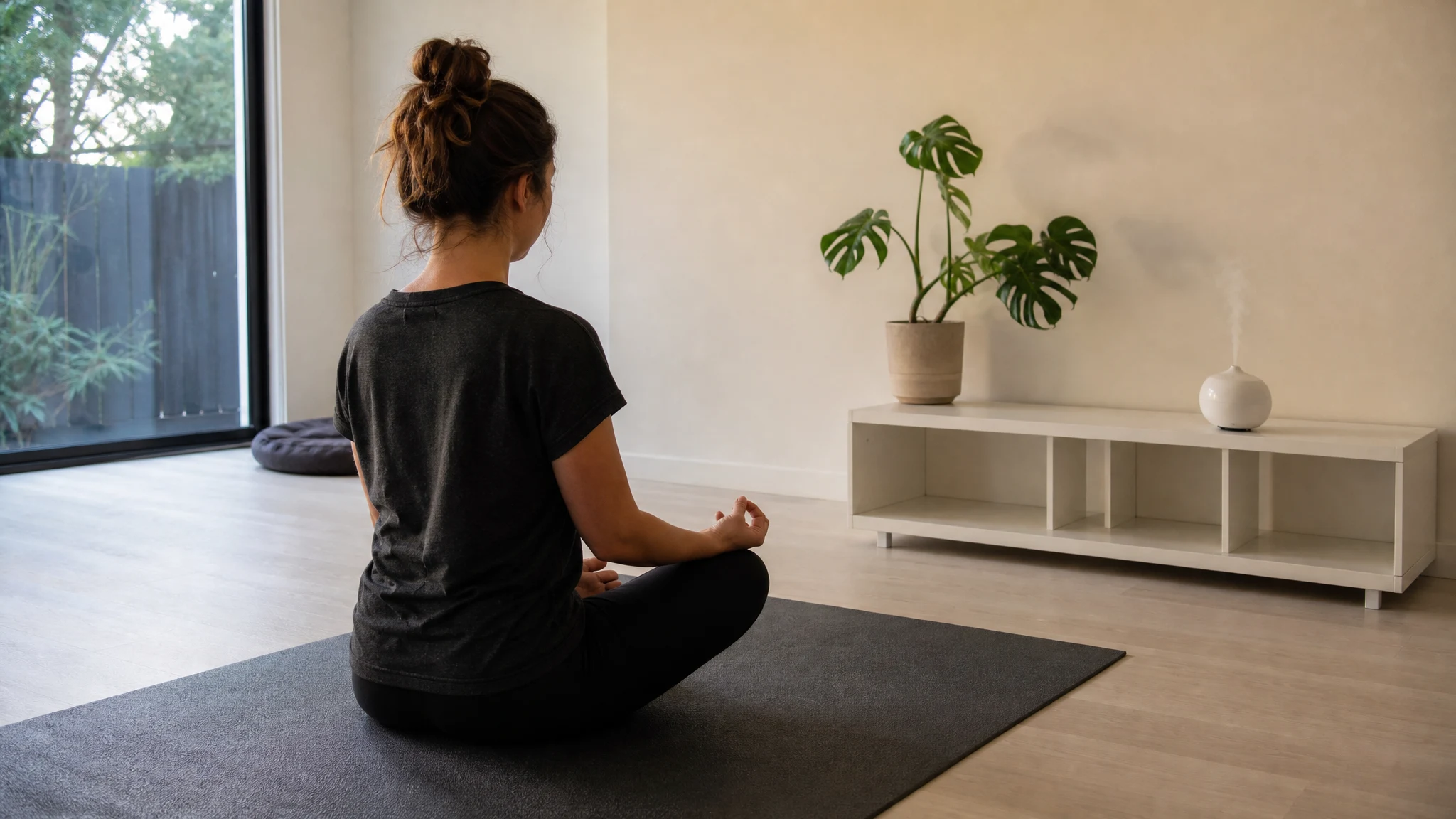
Using Frankincense Oil for Yoga and Breathwork
People have been burning frankincense at ceremonies for thousands of years, so it is no surprise that it turns up on yoga mats today. Scent is a wonderful way to mark the start of practice: you light, switch on or open something fragrant, and the room tells you to slow down. A little thought about how and where you use it keeps the experience pleasant for you and for everyone sharing the space.

Frankincense Essential Oil
Six single-origin frankincense varieties, steam-distilled and GC/MS verified.
From $12.99 $10.40 with code BLACKFRIDAY
Frankincense oil as setting, not breathing technique
We see frankincense oil as part of the setting, like a favourite mat or a candle. It is not a breathing method, and we do not claim it changes how a practice works. The research on aroma and wellbeing is still thin: the US National Center for Complementary and Integrative Health notes that little rigorous research has been done on aromatherapy, and the best-known laboratory work on a frankincense resin compound, incensole acetate, was done in mice. If you like the smell, it belongs in your ritual, and if you do not, you lose nothing.
Diffuser placement and timing before yoga class
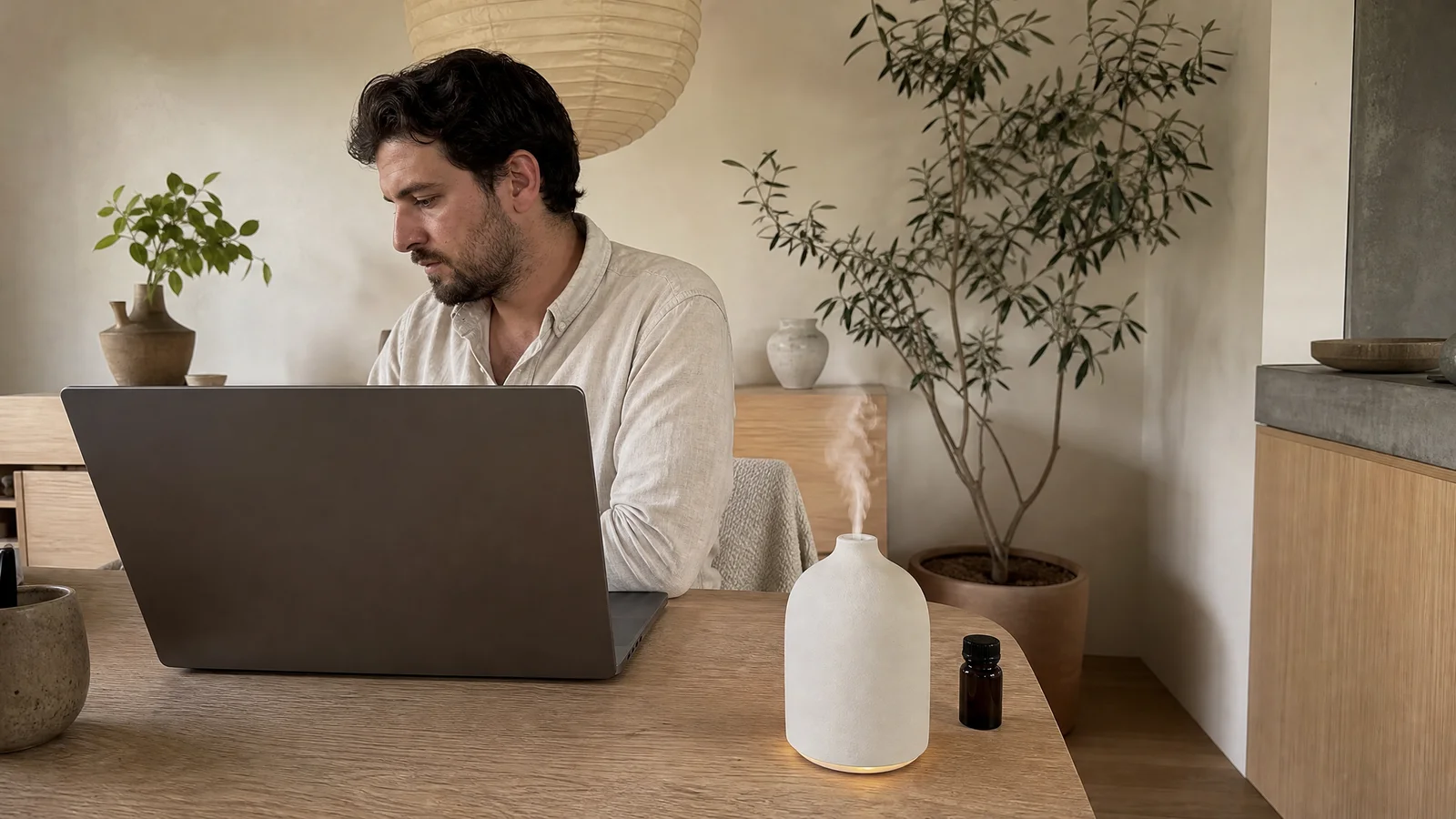
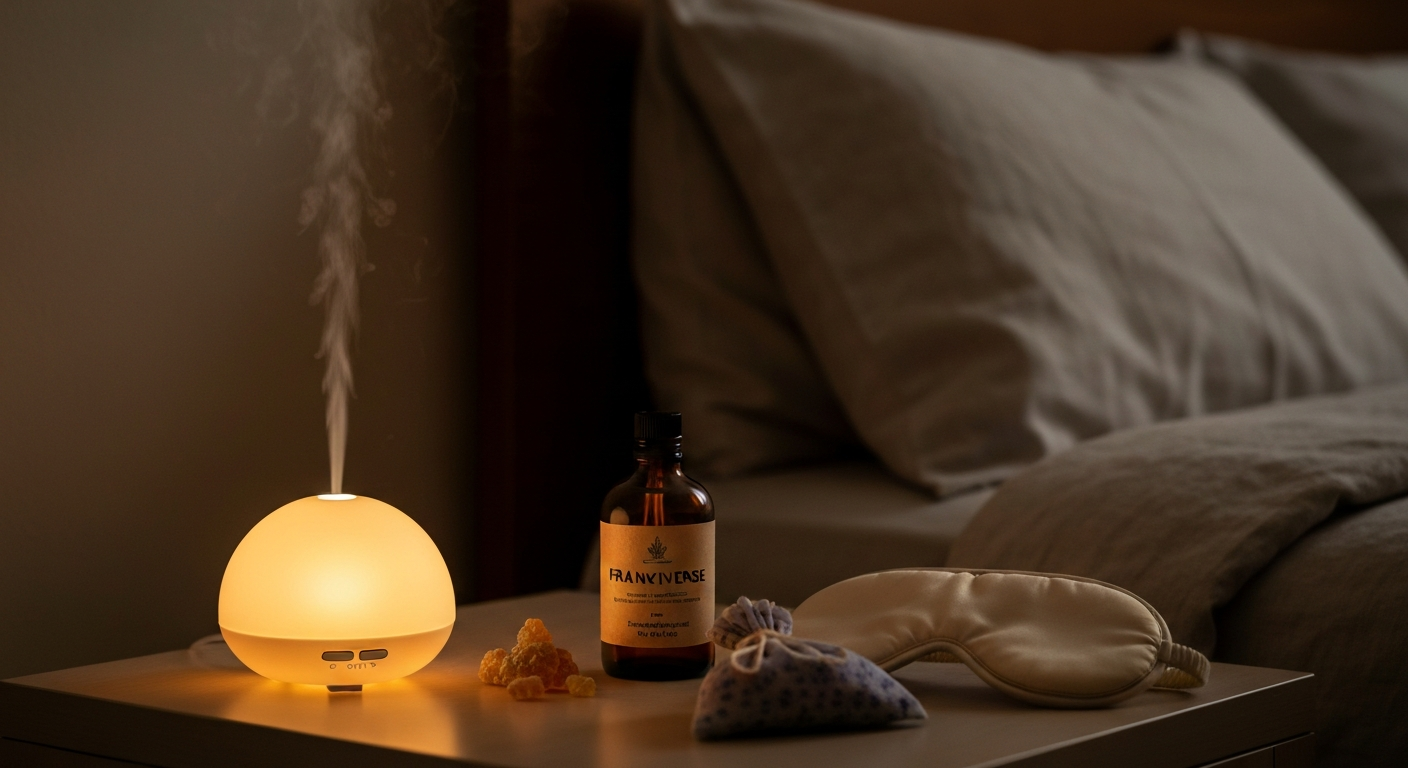
The gentlest approach is a diffuser placed away from your head, switched on before you begin. The Tisserand Institute suggests diffusing 30 to 60 minutes on, then 30 to 60 minutes off, and recommends some fresh air whenever you diffuse. Running it before class and switching it off as you settle means the room smells lovely while your long breaths are not drawing in the scent at full strength. Our diffuser article has more on drops and timing.
Why keep the bottle closed during breathwork?
Holding an open bottle under your nose as a breath anchor is tempting, and we would pass on it. The Tisserand Institute advises against directly and intensively inhaling essential oils for longer than 15 to 20 minutes, and slow, deep, repeated breaths from a bottle are about as direct as inhalation gets. If you like a scent anchor, smell the bottle for a few breaths at the start, close it and let the room do the rest. Pregnancy and essential oils are covered in our pregnancy and breastfeeding article; if you are pregnant, ask your provider first, as our disclaimer says.
Diluting oil for wrists and neck during practice
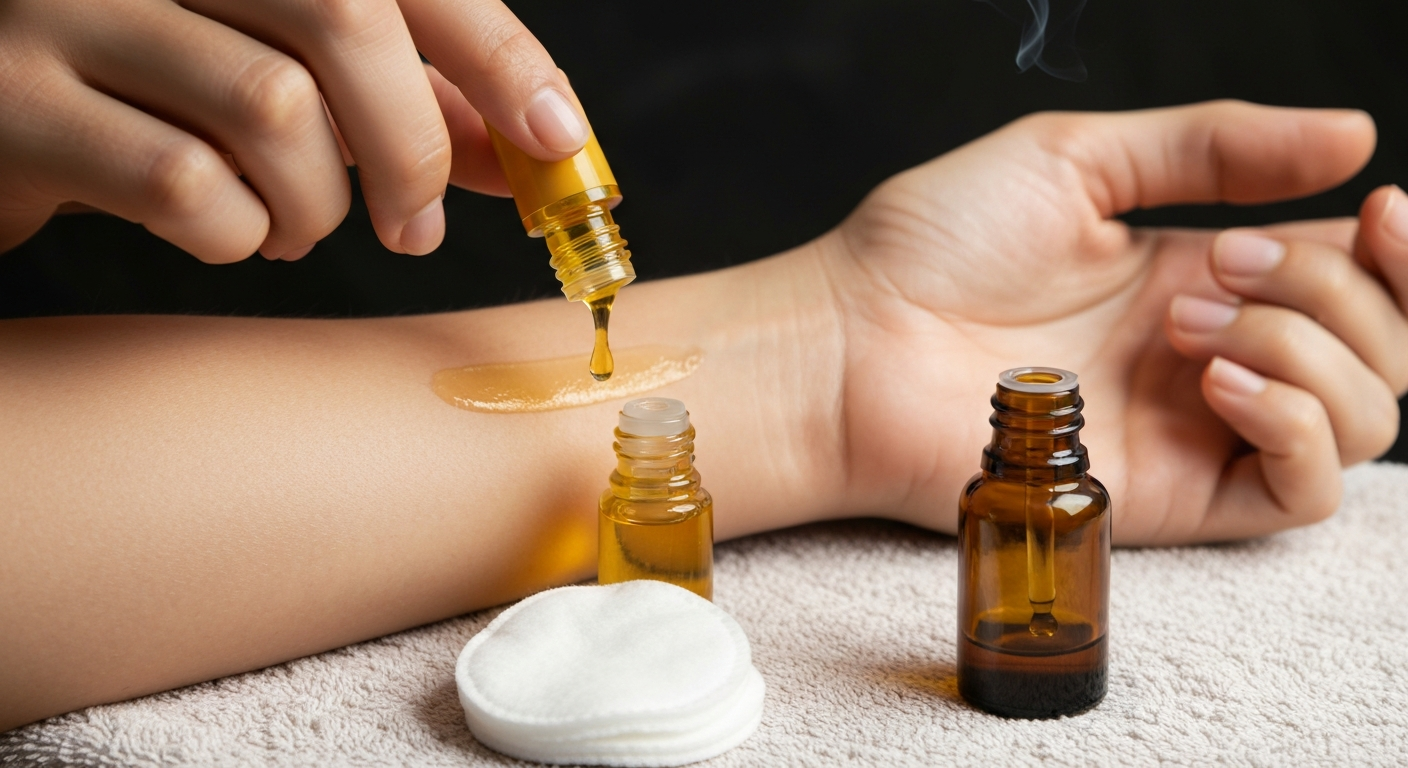
Many people like a dab on the wrists or the back of the neck. Any oil worn on skin needs diluting. The Tisserand Institute gives 0.2 to 1% for sensitive skin, 0.5 to 1.2% for facial products and 1 to 3% for body oils, and notes there are reports of reactions to undiluted frankincense oils. Our oils are sold neat, so the dilution is yours to prepare; our dilution guide shows how.
Two practical thoughts, reasoning from how a class feels. Heat and sweat travel, and a hand that touched your wrist can end up near your eyes, so keep oil away from the face before a hot class. And a mat or towel that meets your face in a forward fold is better off without scent on it. Patch test any new blend on a small area first, as the Tisserand beginner's guide suggests, and see our face application post for the method.
Ventilating a yoga studio before students arrive
A little preparation does more than extra drops ever will. Open a window or a door for a few minutes first so the room starts fresh. Put the diffuser near a wall, well away from the mats, and start it before the first person walks in. Then switch it off before you begin, and let whatever lingers be the scent of the room rather than something pressed on you.
When class is over, open the window again. You will probably notice that the aroma softens quickly once the air moves, which is exactly what a good practice scent should do.
Can diffused oils bother asthma in shared studios?
A studio is a shared airspace, and scent is personal. The American Academy of Allergy, Asthma and Immunology says no published studies have specifically examined diffused essential oils and asthma, notes that diffusing oils such as lavender, eucalyptus and tea tree releases terpenes and other volatile compounds, and advises people with asthma to use diffusers with caution. Our respiratory health article covers what frankincense research does and does not show.
So if you teach, a quick ask before scenting the room goes a long way, and a scent-free option is a kindness. If you are a student, a very light personal touch or none at all keeps everyone comfortable.
Are diffusers safe around cats and birds at home?
The Merck Veterinary Manual says cats are more sensitive to essential oils than dogs, birds have respiratory tracts particularly sensitive to aerosolised particles, and active diffusers add exposure for animals. It advises keeping pets out of the room while a diffuser runs, running it for short periods (under 30 minutes) and ventilating afterwards. It does not single out frankincense, and our pets article goes into more detail.
Carterii or sacra frankincense for yoga
Our carterii is warm, woody and slightly citrusy with classic resinous depth, and our sacra is deep, balsamic and honeyed. Both suit meditative practice in our view, and the meditation blend post has ideas. These are descriptions of scent, which is the whole of what we offer. Close the bottle tightly afterwards and keep it somewhere cool and dark.
If you can, smell the oil from the bottle, or on a tissue, before the first class where you plan to use it, so there are no surprises in the middle of a long hold.
Whichever you choose, the best practice scent is the one you barely notice, because it quietly says it is time to begin.
Frankincense Essential Oil
Serrata, carterii, sacra, frereana, neglecta and rivae: steam-distilled, GC/MS verified, in sizes from 0.5 oz to bulk.
From $12.99 $10.40 with code BLACKFRIDAY
Sources & Further Reading
- Tisserand Institute. How to Use Essential Oils Safely.
- Tisserand Institute. Dilution for essential oils.
- Tisserand Institute. A Beginner's Guide to Essential Oils Part 2: How to Use Essential Oils.
- NCCIH. Aromatherapy.
- Moussaieff A et al., 2008. Incensole acetate, an incense component, elicits psychoactivity by activating TRPV3 channels in the brain. FASEB Journal.
- AAAAI. Essential oil diffusers and asthma.
- Merck Veterinary Manual. Toxicoses From Essential Oils in Animals.