Frankincense Oil and Skin Marks: What to Know First
Stand in front of the mirror and you may be looking at three different things that all get called "marks": a scar, a stretch mark, and a dark spot. Frankincense gets mentioned for all of them, usually in the same breath. They have different causes and different timelines, though, and sorting out which one you have is the most useful step before any oil goes near your skin.

Frankincense Essential Oil
Six single-origin frankincense varieties, steam-distilled and GC/MS verified.
From $12.99 $10.40 with code BLACKFRIDAY
Naming a skin mark before treating it
The American Academy of Dermatology is clear about the first rule for anything scar-like: have a dermatologist examine it before it is treated, and if you cannot remember how you got it, make an appointment right away, because sometimes skin cancer can look like a scar. That advice outranks every product idea in this article, ours included.
Once a dermatologist has looked, the marks sort themselves out fairly neatly:
- A raised or textured scar is a change in the skin's structure. The AAD lists medical options such as silicone gel sheets, which it says appear to work better than silicone ointment, along with procedures your dermatologist can explain.
- A stretch mark appears when skin stretches or shrinks quickly, which is why pregnancy and growth spurts come up so often.
- A flat, darker patch is pigment. It usually follows something that inflamed the skin, such as a pimple, a bite, a cut or a burn.
What does research say about scar oils?
It helps to be realistic about the whole category. For over-the-counter scar products with ingredients like onion extract, vitamin A and vitamin E, the AAD says the research supporting them is limited and suggests talking to a board-certified dermatologist first. For stretch marks, a Cochrane review of six studies with 800 participants found no statistically significant average difference between women using topical products with active ingredients and those given a placebo or nothing, and a commentary on that review concluded that topical preparations have not been shown to prevent stretch marks in pregnancy. Those are well-known, well-advertised products. If they have a thin evidence base, a single essential oil has no head start.
The frankincense studies that do exist are mostly on other materials: boswellic acid creams, resin extracts, and a by-product oil studied in zebrafish for its effect on melanin production. None of that is a trial of a steam-distilled frankincense oil on a mark in a person, and we make no claim that our oils change a scar, a stretch mark or a dark spot.
Dark spots and frankincense oil fragrance
Here is the part most marketing leaves out. The AAD's page on dark spots lists the usual causes (a clearing pimple, a healing wound, certain medications, hormonal shifts such as pregnancy) and then includes this one: a skin or hair care product that irritates your skin can itself cause dark spots. Its advice is to switch to gentler products, often labeled "for sensitive skin" or "fragrance-free," and it says a spot a few shades darker than your natural tone will usually fade within 6 to 12 months once the cause is stopped, while deeper discoloration can take years.
An essential oil is a fragrance. So the sensible reading is simple: if your skin is already inflamed or touchy, a scented leave-on oil is more likely to be a distraction than a help. That is our reasoning from the AAD guidance, not a statement from the AAD about frankincense, but we think it is the honest place to land.
Where does diluted frankincense oil still fit?
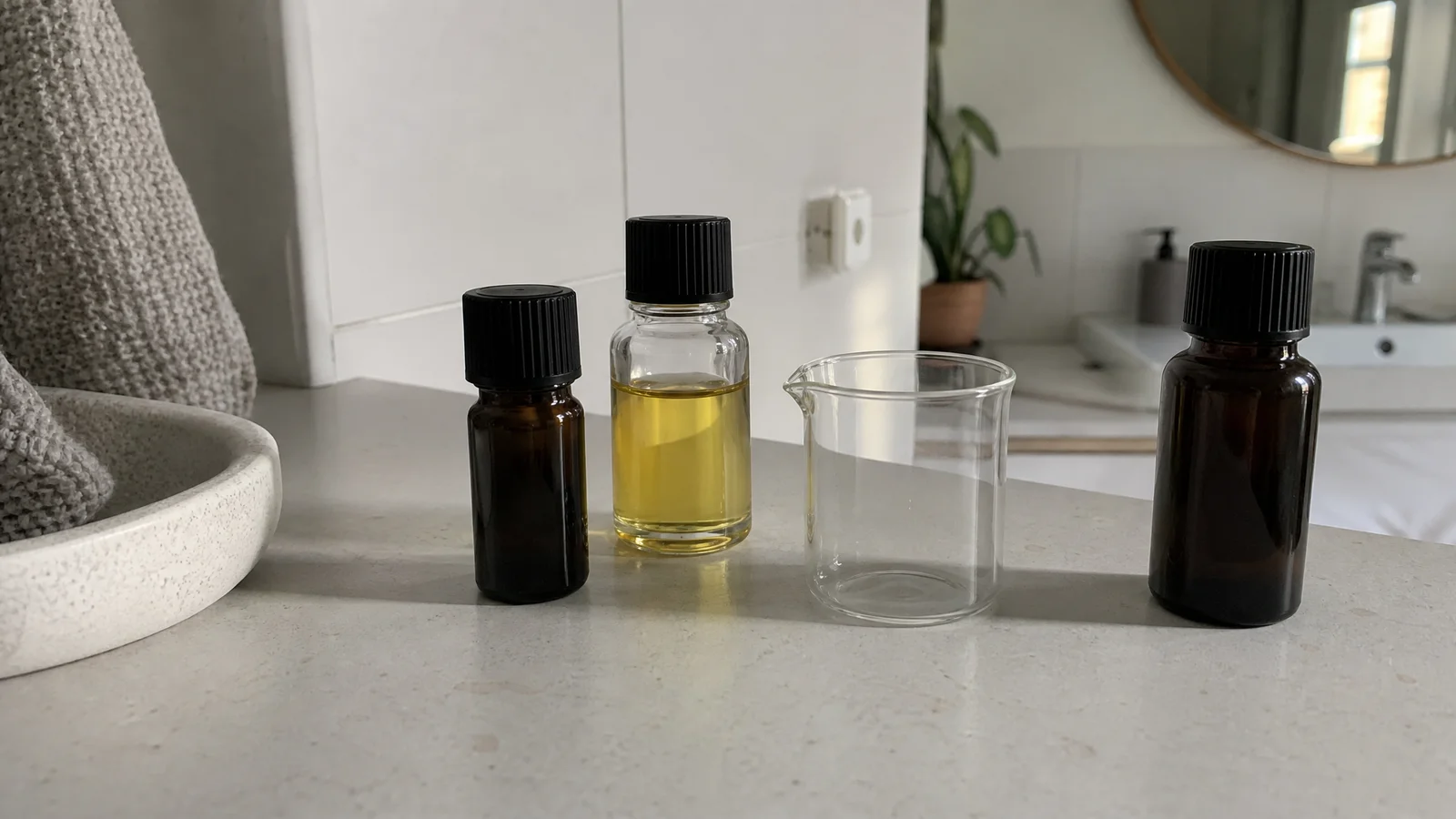
If you simply love the aroma and your skin tolerates fragrance, a well-diluted oil on intact skin is a perfectly reasonable cosmetic pleasure. The Tisserand Institute's dilution page gives 0.5 to 1.2% for facial products, 1 to 3% for body oils and lotions, and 0.2 to 1% for sensitive or impaired skin, and it says undiluted oils should never go on skin. It also mentions reports of reactions to undiluted frankincense oils. Because we sell our oils neat, the dilution maths is yours: at 1%, inside the facial range, 30 ml of carrier takes 0.3 ml of oil, which is roughly 6 drops on the rough convention of 20 drops per milliliter (droplet size varies, so measure when you can).
If you do try it, treat it like a favorite candle: a small ritual, not a project. Open the bottle, take one slow sniff from arm's length, and decide whether you actually like the smell before it goes anywhere near a carrier. Scent is personal, and an aroma you merely tolerate is not worth a place in your routine.
A few habits keep it enjoyable:
- Patch test a small amount of the diluted oil on your inner forearm and wait a day.
- Keep it off open wounds, fresh incisions and irritated skin.
- Introduce one new product at a time, so you know what you are reacting to.
- If you are pregnant, ask your OB/GYN or midwife before putting any essential oil on your skin.
Our safety guide and the article on applying frankincense oil to your face go through the mechanics, and the boswellic acids article explains why research on resin extracts does not carry over to the oil. If you want to pick a variety for its scent, the species overview compares our six. Our serrata is warm and slightly woody with subtle citrus and pine top notes, and that is the extent of what we say about it.
Any mark that is changing, bleeding, growing or simply bothering you deserves a dermatologist's eyes, not a bottle. If you need GC-MS information for a variety and lot, you can ask us in writing through our contact page. Frankincense belongs in your routine for the way it smells, and the marks belong with a professional.
Frankincense Essential Oil
Serrata, carterii, sacra, frereana, neglecta and rivae: steam-distilled, GC/MS verified, in sizes from 0.5 oz to bulk.
From $12.99 $10.40 with code BLACKFRIDAY
Sources & Further Reading
- American Academy of Dermatology. Scars: Diagnosis and treatment.
- American Academy of Dermatology. How to fade dark spots in darker skin tones.
- McAvoy BR (2013). No evidence for topical preparations in preventing stretch marks in pregnancy. British Journal of General Practice.
- Tisserand Institute. Dilution for essential oils.