Frankincense Facial Steam: A Safer Way to Do It
A warm towel, a quiet ten minutes and the scent of frankincense is a lovely little ritual. A bowl of near-boiling water under your chin is a different matter. This post is about getting the ritual without the bowl, and about what steam can and cannot do.

Frankincense Essential Oil
Six single-origin frankincense varieties, steam-distilled and GC/MS verified.
From $12.99 $10.40 with code BLACKFRIDAY
Does steam really open pores?
The popular idea is that steam opens pores and lets dirt out. Medical News Today, in an article by Jessica Caporuscio, PharmD, with Cynthia Cobb, DNP, as medical reviewer, says "changes in skin temperature will not change the size of the pore," and adds that researchers have not studied the benefits of face steaming, so most claims are anecdotal. We found no trial of frankincense oil in facial steam either. So think of a steam as a warm, relaxing pause for the senses, rather than a cleaning step. A gentle cleanser does the cleaning.
Steam burn risks from bowls of hot water
The same article notes that anyone who steams their face is at risk of steam burns, whatever the method. The clearest numbers come from a related habit, steam inhalation over a bowl of hot water. A Welsh burns centre reviewed sixteen children who came in with steam inhalation scalds between 2010 and 2015, with an average burn of 3.1% of body area, one child needing surgery and treatment costs of 37,133 pounds in total. The authors called the practice dangerous for children, who have limited awareness of danger. It is a small, retrospective study about children and colds, not adult facial steams, but the mechanism travels well: a hot bowl, a tipped table, a face a few inches away.
The Tisserand Institute adds a time limit: it is not advisable to directly and intensively inhale essential oils for longer than 15 to 20 minutes, such as with steam inhalation. A facial steam falls squarely in that category.
Frankincense oil left out of steam bowls
The Tisserand dilution tables are for skin products, not vapor, so no published source gives a drop count for steam, and any number we offered would be invented. There is also a simple physical point. The serrata batch on our Certificate of Analysis has a relative density of 0.838, lighter than water, and essential oils do not mix with water. Reasoning from that, the oil would float as a film on top of the bowl, and the layer closest to your face would be the most concentrated one. That is an inference rather than a measurement.
Warm damp towel instead of boiling water
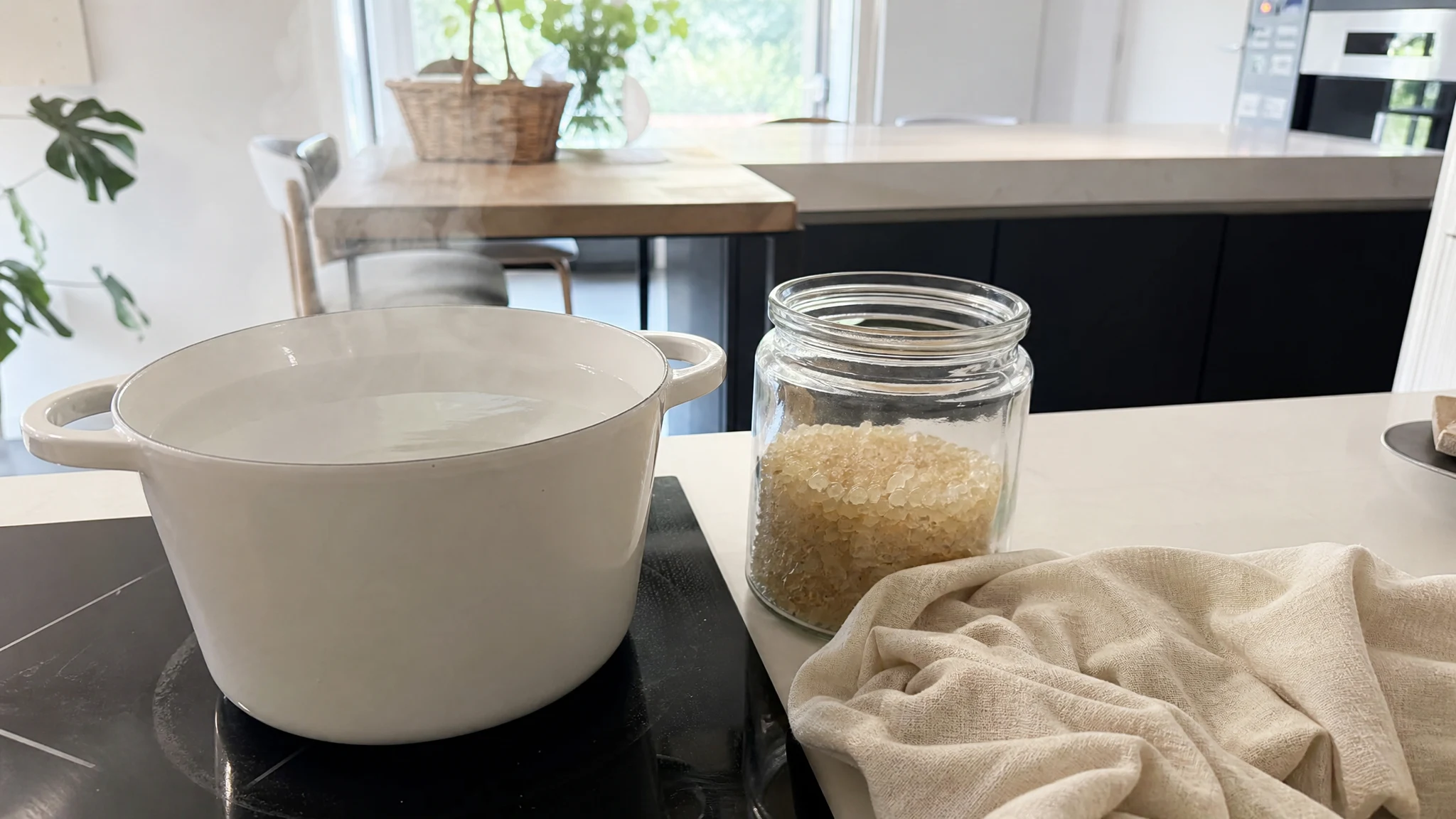
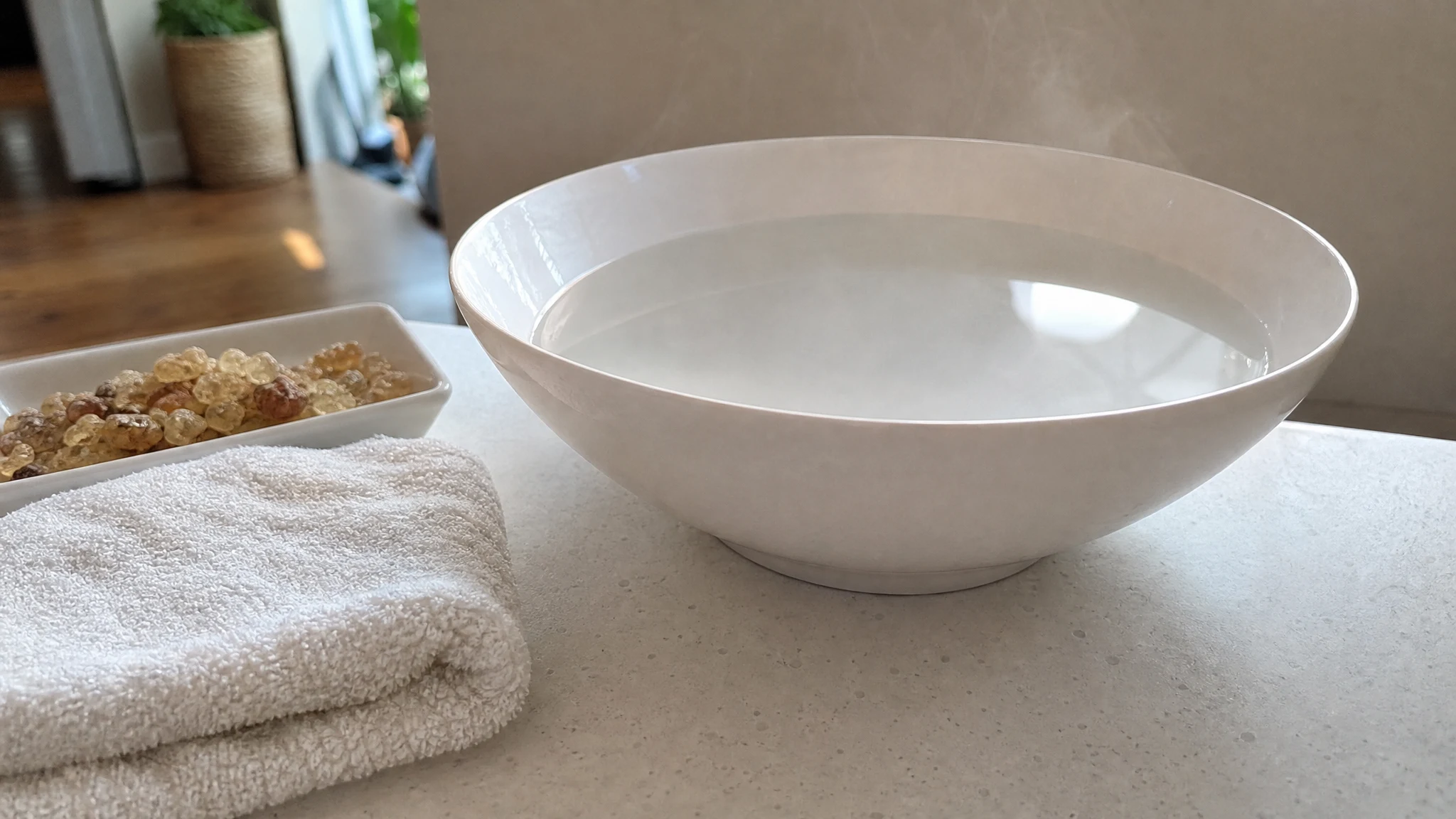
- Use a warm damp towel, not a bowl of boiling water. Wring out a clean towel under hot tap water, let it cool to a comfortable warmth, and rest it over your face for a few minutes.
- Bring the scent separately. A single drop on a tissue held a hand's width from your nose gives you frankincense with no water vapor and no contact with skin. Our oils are steam-distilled and sold neat, so keep the drop on the tissue and off your face.
- Keep it short. Medical News Today notes that frequent, prolonged steaming may dry out skin, so a few minutes is plenty.
- Moisturize afterward with a fragrance-free product if your skin runs dry.
- Stop if skin stings, flushes or feels hot. Rinse with cool water and get medical care for a blister.
If you want frankincense oil on your face on purpose, a diluted facial oil in the 0.5 to 1.2% range from Tisserand is a better-understood route than steam. Our post on putting frankincense oil on the face walks through the mixing and patch test. For the wider limits, read our safety and dilution guide.
Chair, tissue and timer for a calm ritual
The ritual works best when it is simple. Pick a comfortable chair, dim the light if you like, and put a tissue, a glass of water and a timer within reach. Set the timer for five minutes before you start, so you are not guessing, and so a quiet moment does not stretch on longer than you meant.
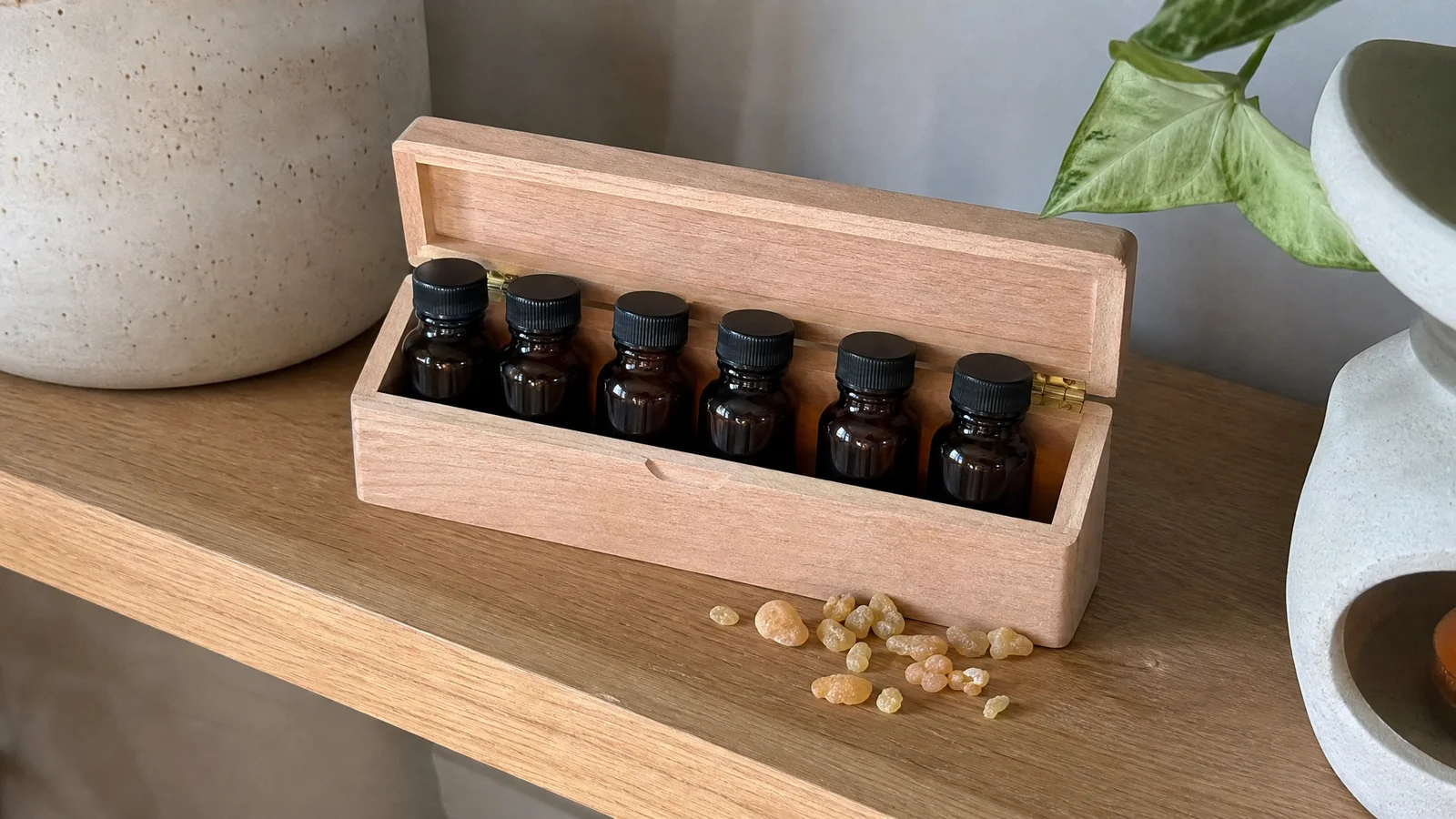
Fold the tissue once and keep it a hand's width from your nose. Choose the variety by the mood you want: carterii is warm and woody with a little citrus, sacra is deep, balsamic and honeyed, and frereana is bright and lemon-pine. Open the bottle briefly, put one drop on the tissue, and close the cap again.
Why does frankincense scent fade within minutes?
You will probably find the scent is strongest in the first minute or so, then fades into the background as your nose adjusts. That is normal, and it is not a reason to add another drop. Our noses are quick to get used to a smell, and a second drop mostly makes the room stronger for anyone who walks in.
When the timer sounds, put the tissue in a covered bin or let it dry out of reach of children and pets, and open a window for a moment. The towel, the quiet and a single drop of scent are the whole ritual, and nothing about it needs to be bigger than that.
Who should skip facial steaming with rosacea or eczema?
Medical News Today says people with skin conditions such as rosacea, eczema and other inflammatory conditions should avoid steaming their faces, because heat dilates blood vessels and can increase redness. Children should not be steamed at all, and anyone who is pregnant or breastfeeding or has asthma should ask a doctor before inhaling essential oil vapor. Our pregnancy and breastfeeding article covers that case. If blocked pores or breakouts are the real worry, a board-certified dermatologist can say what is going on and what has evidence behind it. We sell an aromatic oil, not a skincare treatment.
The nicest version of this ritual is the least dramatic one: a warm towel, a quiet room and one drop of resinous scent on a tissue.
Frankincense Essential Oil
Serrata, carterii, sacra, frereana, neglecta and rivae: steam-distilled, GC/MS verified, in sizes from 0.5 oz to bulk.
From $12.99 $10.40 with code BLACKFRIDAY
Sources & Further Reading
- Medical News Today: Benefits of steaming face: Lemon, salt water, green tea, and more
- Al Himdani S et al., 2016: Home remedy or hazard?: management and costs of paediatric steam inhalation therapy burn injuries.
- Tisserand Institute: How to Use Essential Oils Safely
- Tisserand Institute: Dilution for essential oils