Frankincense Cuticle Oil: A Gentle DIY Recipe
A cuticle oil is one of the nicest small things you can make: a little glass bottle, a few drops of something fragrant, and a daily habit that smells like a spa. Frankincense is a lovely scent for it, warm and resinous with a hint of citrus. What matters is the proportion. Skin around the nails is thin and works hard, so the scent goes in at a whisper, and the base oil does the real work.

Frankincense Essential Oil
Six single-origin frankincense varieties, steam-distilled and GC/MS verified.
From $12.99 $10.40 with code BLACKFRIDAY
Nail care basics before adding scent
Before any scent, the American Academy of Dermatology's advice for healthy nails is refreshingly practical: moisturize after washing your hands, wear gloves when cleaning or washing dishes, and do not bite your nails or remove the cuticle. Water exposure is what dries nails out, so protecting them from it is half the job. A plain carrier oil on the cuticles after handwashing fits that advice nicely, with or without fragrance.
The same page says to see a dermatologist if nails change, swell or become painful, and that people with diabetes or poor circulation should be especially quick to seek care for any nail problem. Those are conversations for a clinician, and an oil is not part of them.
Why leave the cuticle alone?
An American Family Physician review describes the cuticle as forming a watertight barrier between the nail plate and the skin. Its prevention advice for chronic nail-fold irritation, which the author notes rests on expert opinion rather than trials, includes moisturizing after washing hands, avoiding prolonged moisture and irritants, keeping nails short, and not trimming cuticles or using cuticle removers. In other words, gently conditioning the cuticle is welcome, and cutting it is not.
It also means a scented oil belongs on healthy, intact skin. If the skin around a nail is red, swollen, tender or sore, skip the essential oil and ask a doctor or dermatologist what is going on.
Choosing a frankincense scent for cuticle oil
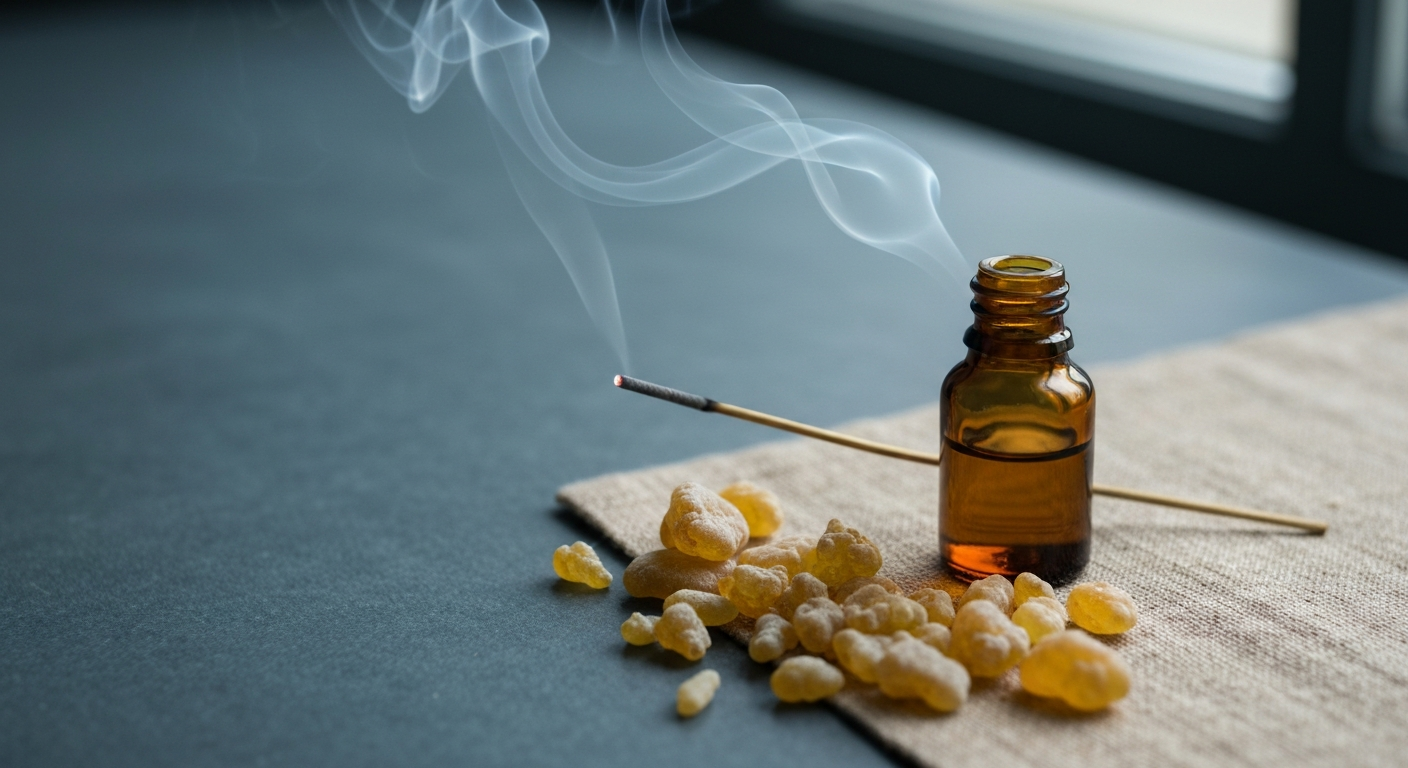
At a strength this low, the scent is a whisper, so it is worth picking the oil you like best. We describe serrata as warm and slightly woody with subtle citrus and pine top notes, carterii as warm and woody with a little citrus, and frereana as bright, fresh and lemon-pine. Open each bottle and smell it for a moment before you decide; the one you smile at is the right one.
Smell your carrier oil too. Some carriers have a scent of their own, and a strongly scented one can bury a whisper of frankincense. A mild carrier lets the resinous note come through, even at the lowest strength in the table.
Mixing a low-strength scented cuticle batch
What follows is a formulation worked out from published guidance and simple arithmetic. We sell essential oil only, so you will find the carrier oil and a small dark glass bottle at a craft supplier, cosmetic-ingredient shop or pharmacy. Because it contains no water, it needs no preservative.
For the ceiling, the Tisserand Institute's dilution guide gives 0.2 to 1% for sensitive or impaired skin and 0.5 to 1.2% for facial products, and notes that undiluted application is not sensible or necessary. Skin around the nails sees a lot of washing, so we would start at the lowest end. The guide also advises working in percentages, since drops are only an approximation.
| Batch | Strength | Essential oil by weight | Rough drops |
|---|---|---|---|
| 30 g carrier oil | 0.2% | 0.06 g | about 1.4 |
| 30 g carrier oil | 0.5% | 0.15 g | about 3.6 |
| 30 g carrier oil | 1% | 0.30 g | about 7.2 |
The drop column is our arithmetic: it uses the 0.838 relative density on the Certificate of Analysis we publish for one serrata batch, and the common convention of about 20 drops per ml. Droppers vary and other varieties have no published density, so weigh if you can. Without a scale that reads to 0.01 g, treat the drop counts as a rough guide and begin with the lowest strength.
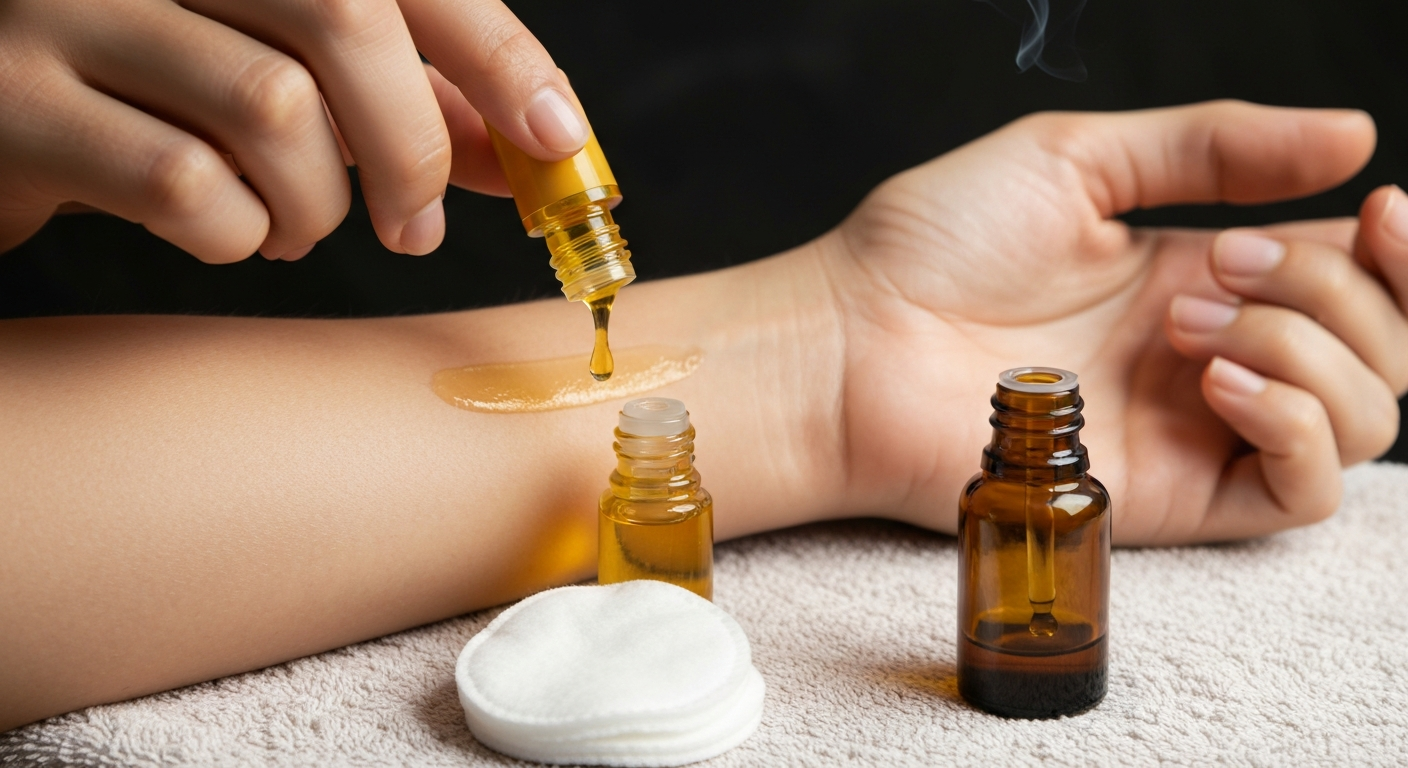
To mix, weigh the carrier into a clean, dry bottle, add the oil, cap, tilt gently to blend and label with the date. Patch test first, as the Tisserand Institute's beginner's guide suggests: test the properly diluted oil on a small patch of skin and watch for redness and irritation over 24 hours. Keep it off broken skin, away from the eyes and out of children's reach.
How much cuticle oil per hand daily?
The nicest thing about a cuticle oil is that it asks for almost nothing: a drop or two on each hand, worked in with your thumb and finger, once your hands are dry after washing. Keep the bottle where you will see it, beside the kitchen sink or on your desk, because the best recipe in the world does little in a drawer.
You will probably notice the scent mostly when your hands are close to your face, which is exactly how it should be at 0.2% to 1%. If you cannot smell it at all from arm's length, that is not a reason to add more. Enjoy the quiet version first.
Storing small frankincense cuticle oil batches
Oils react with air, so cap the bottle promptly, keep it somewhere cool and dark and make small batches you will finish. Our storage post goes through why. If a blend smells sharp or flat, make a fresh one.
For more on dilution maths, see our dilution guide, and the salve post for a thicker, balm-style base. Our face application post covers patch testing in more detail.
A tiny bottle, a little ritual after handwashing and a scent that makes you smile: that is the whole idea.
Frankincense Essential Oil
Serrata, carterii, sacra, frereana, neglecta and rivae: steam-distilled, GC/MS verified, in sizes from 0.5 oz to bulk.
From $12.99 $10.40 with code BLACKFRIDAY