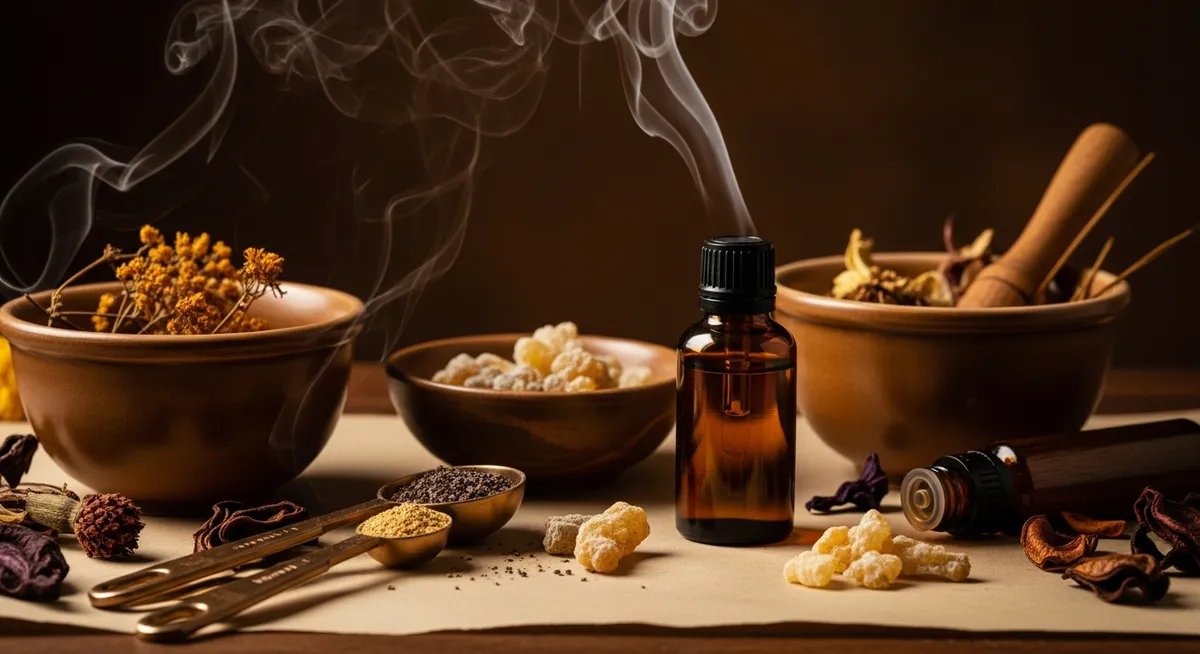
Homemade Frankincense and Turmeric Anti-Inflammatory Cream
In the world of natural skincare, few combinations are as revered as frankincense and turmeric. This ancient pairing has been treasured across cultures for centuries, and today, you can harness their traditional properties in a luxurious homemade cream. Our frankincense turmeric cream recipe combines these time-honored botanicals with modern formulation techniques to create a sophisticated skincare preparation.
Frankincense Essential Oil
Six single-origin frankincense varieties, steam-distilled and GC/MS verified.
From $12.99
Shop Frankincense Oil →This DIY anti-inflammatory cream draws upon the traditional uses of both frankincense and turmeric, which have been valued in various cultural practices for their skin-supporting properties. While we make no medical claims, many people report enjoying the sensory experience and luxurious feel of this handcrafted cream.
Important Disclaimer: This recipe is for educational and cosmetic purposes only. These statements have not been evaluated by the FDA. This product is not intended to diagnose, treat, cure, or prevent any disease. Always consult with a qualified healthcare provider before using essential oils, especially if you have medical conditions or take medications.
Understanding the Traditional Background
Before diving into our recipe, it's worth exploring why this combination has stood the test of time. Frankincense vs turmeric reveals how these two botanicals have complemented each other in traditional wellness practices. Frankincense, derived from the Boswellia tree, has been prized for its aromatic and skin-conditioning properties, while turmeric has been celebrated in various cultural traditions for its vibrant color and traditional applications.
Some research suggests that both ingredients contain compounds that may support skin comfort, though individual experiences vary. Many users of this natural inflammation cream recipe report enjoying the smooth texture and pleasant aroma of the finished product.
Recipe Overview
Difficulty Level: Intermediate
Prep Time: 45 minutes
Total Time: 2 hours (including cooling time)
Yield: Approximately 8 oz (240ml)
Shelf Life: 6-8 months when stored properly
Complete Ingredients List
Base Oils and Butters
- 4 tablespoons (60ml) organic coconut oil
- 3 tablespoons (45ml) organic shea butter
- 2 tablespoons (30ml) organic sweet almond oil
- 1 tablespoon (15ml) organic jojoba oil
- 1 tablespoon (15ml) organic avocado oil
Wax and Emulsifier
- 1 tablespoon (15ml) organic beeswax pellets (or candelilla wax for vegan option)
- 1 teaspoon organic emulsifying wax
Active Botanicals
- 1/2 teaspoon organic turmeric powder (high-quality, cosmetic grade)
- 15-20 drops frankincense essential oil (Boswellia carterii or Boswellia sacra)
- 5 drops vitamin E oil (natural preservative)
Optional Enhancement Ingredients
- 1/4 teaspoon organic arrowroot powder (for texture)
- 3-5 drops lavender essential oil (for additional aroma)
- 1/4 teaspoon organic calendula oil
Essential Equipment
- Double boiler or heat-proof bowl and saucepan
- Digital kitchen scale (recommended for precision)
- Fine mesh strainer
- Electric hand mixer or immersion blender
- Clean glass jars or containers (sterilized)
- Wooden stirring spoons
- Measuring spoons and cups
Step-by-Step Instructions
Phase 1: Preparing Your Workspace
- Sanitize all equipment and containers with rubbing alcohol. Allow to air dry completely.
- Set up your double boiler or place a heat-proof bowl over a saucepan with 1-2 inches of water.
- Gather all ingredients and measure them precisely. Accuracy is crucial for proper texture and preservation.
Phase 2: Creating the Turmeric Infusion
- In your double boiler, combine the sweet almond oil and turmeric powder.
- Heat gently on low heat for 20-25 minutes, stirring occasionally. The oil should turn a rich golden color.
- Strain the mixture through a fine mesh strainer lined with cheesecloth to remove turmeric particles. Set aside to cool slightly.
Safety Note: Turmeric can stain clothing and surfaces permanently. Work carefully and wear gloves if desired.
Phase 3: Melting the Base
- In the same double boiler, combine coconut oil, shea butter, beeswax, and emulsifying wax.
- Heat gently until completely melted, stirring occasionally. This typically takes 8-10 minutes.
- Remove from heat and add the turmeric-infused oil, jojoba oil, and avocado oil.
- Stir thoroughly to combine all ingredients.
Phase 4: Cooling and Essential Oil Integration
- Allow the mixture to cool at room temperature for 15-20 minutes, stirring every 5 minutes to prevent separation.
- When the mixture reaches a consistency similar to soft butter, add the frankincense essential oil and vitamin E oil.
- If using optional ingredients, add them at this stage.
Phase 5: Whipping and Final Texture
- Using an electric hand mixer or immersion blender, whip the mixture for 3-5 minutes until it reaches a light, creamy consistency.
- Test the texture – it should be smooth and easily spreadable.
- Transfer immediately to sterilized containers, leaving 1/4 inch headspace.
- Allow to set completely at room temperature for 2 hours before use.
Critical Safety Information
Proper Dilution and Usage
This recipe maintains a safe essential oil dilution of approximately 1-1.5%, appropriate for topical skincare use. Frankincense for inflammation applications traditionally involve even lower concentrations, making this formulation suitable for regular use by most individuals.
Patch Testing Protocol
Always perform a patch test before first use:
- Apply a small amount to the inside of your wrist or behind your ear
- Cover with a bandage and leave for 24-48 hours
- Check for any signs of irritation, redness, or discomfort
- Discontinue use immediately if any adverse reactions occur
Important Contraindications
- Pregnancy and nursing: Consult healthcare providers before use
- Sensitive skin: Reduce turmeric concentration by half
- Blood-thinning medications: Turmeric may interact; consult your doctor
- Upcoming surgery: Discontinue use 2 weeks prior
- Sun sensitivity: Some users report increased photosensitivity
Storage and Preservation
Proper storage is crucial for maintaining the quality and safety of your homemade cream:
- Container: Use dark glass jars or opaque containers to protect from light
- Temperature: Store in a cool, dry place below 75°F (24°C)
- Humidity: Keep away from bathroom moisture and steam
- Shelf Life: 6-8 months when stored properly
- Signs of spoilage: Off odors, color changes, or texture separation
Recipe Variations and Substitutions
For Sensitive Skin
- Reduce turmeric to 1/4 teaspoon
- Substitute frankincense with gentle lavender essential oil
- Add 1 tablespoon of calendula-infused oil
Vegan Alternative
- Replace beeswax with equal amount of candelilla wax
- All other ingredients remain the same
Enhanced Nourishment Version
- Add 1 tablespoon of sea buckthorn oil
- Include 1/2 teaspoon of organic rosehip seed oil
- Consider adding 3-5 drops of helichrysum essential oil
Lighter Texture Modification
- Increase jojoba oil to 2 tablespoons
- Reduce shea butter to 2 tablespoons
- Add 1/2 teaspoon of arrowroot powder during the whipping phase
Application and Usage Tips
For optimal results, apply this cream to clean, slightly damp skin. Many users report that frankincense for pain applications work best when massaged gently into the targeted area. The turmeric component may temporarily tint the skin slightly golden, which typically fades within an hour.
Use sparingly – a little goes a long way. Start with a pea-sized amount and add more as needed. The cream may feel slightly warming upon application due to the turmeric content.
Troubleshooting Common Issues
| Issue | Cause | Solution |
|---|---|---|
| Grainy texture | Beeswax overheated | Remelt gently and whip again |
| Too soft | Insufficient wax | Add 1/2 tsp more emulsifying wax |
| Too hard | Excess wax content | Add 1 tbsp liquid oil and remix |
| Separation | Temperature shock | Remelt and cool gradually |
| Weak scent | Essential oil added too hot | Add 5 more drops when cool |
The Science Behind the Ingredients
While we make no therapeutic claims, research has explored various compounds found in both frankincense and turmeric. Some studies suggest that boswellic acids in frankincense and curcumin in turmeric have been subjects of scientific interest, though individual responses to topical applications vary greatly.
The carrier oils in this formulation serve specific purposes: jojoba closely mimics skin's natural sebum, shea butter provides excellent skin conditioning, and sweet almond oil offers easy absorption and skin-softening properties.
Final Thoughts and Recommendations
Creating your own frankincense and turmeric cream is a rewarding journey into the world of natural skincare formulation. This recipe represents a careful balance of traditional botanicals and modern cosmetic science, resulting in a luxurious product that many users find enjoyable and skin-conditioning.
Remember that natural doesn't always mean suitable for everyone. Individual skin types and sensitivities vary, making patch testing and gradual introduction essential. Start with small batches to test your personal tolerance and preferences before committing to larger quantities.
As with any skincare routine, consistency and patience are key. Many users report the most satisfaction when incorporating this cream into a regular self-care routine, allowing time to assess how their skin responds to the natural ingredients.
Should you experience any adverse reactions or have concerns about interactions with existing skincare products or medications, discontinue use and consult with a qualified healthcare professional or dermatologist.
Frankincense Essential Oil
Serrata, carterii, sacra, frereana, neglecta and rivae: steam-distilled, GC/MS verified, in sizes from 0.5 oz to bulk.
From $12.99
Shop Frankincense Oil →