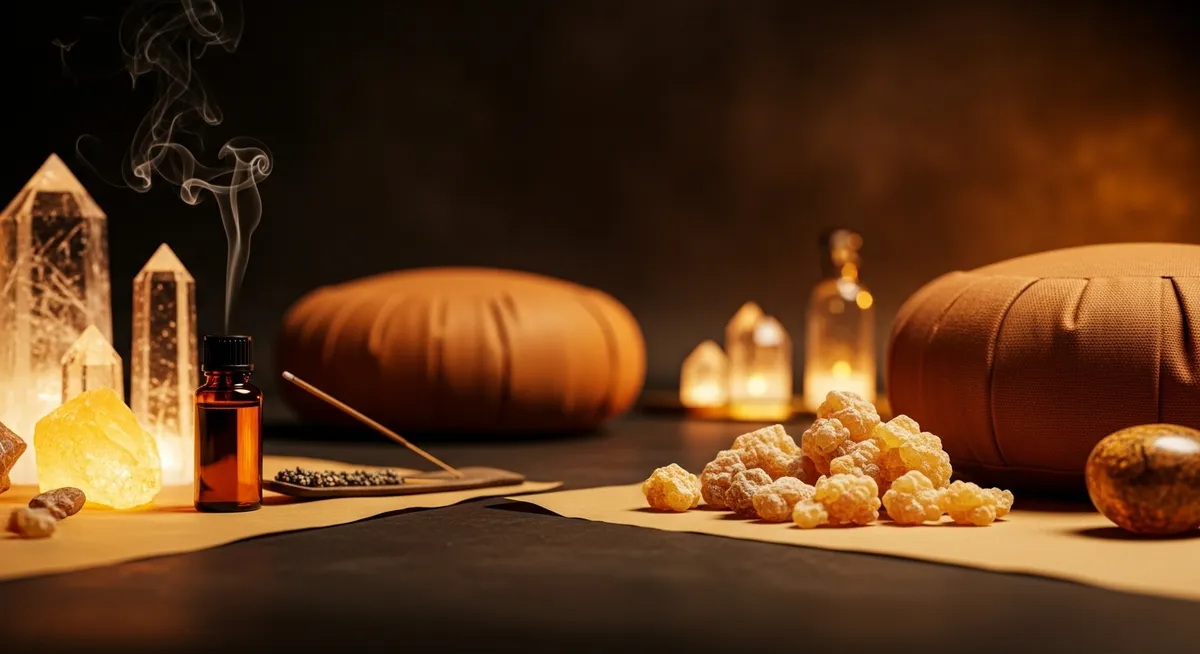
DIY Frankincense and Sandalwood Meditation Incense Cones
The ancient art of incense making transforms simple natural materials into vessels of sacred fragrance, carrying prayers and intentions on wisps of aromatic smoke. In this comprehensive guide, we'll explore the time-honored craft of creating frankincense incense cones diy blended with the warm, woody essence of sandalwood—two of the world's most revered ceremonial aromatics.
Frankincense Essential Oil
Six single-origin frankincense varieties, steam-distilled and GC/MS verified.
From $12.99
Shop Frankincense Oil →This homemade incense recipe honors traditions spanning millennia while providing modern practitioners with a meaningful way to deepen their spiritual practice. The combination of frankincense and sandalwood creates a harmonious blend that many find conducive to meditation, prayer, and contemplative practices.
Understanding Your Sacred Ingredients
Before embarking on this aromatic journey, it's essential to understand the materials that form the foundation of our frankincense sandalwood incense. Each component brings its own unique properties and cultural significance to the blend.
Frankincense: The King of Sacred Resins
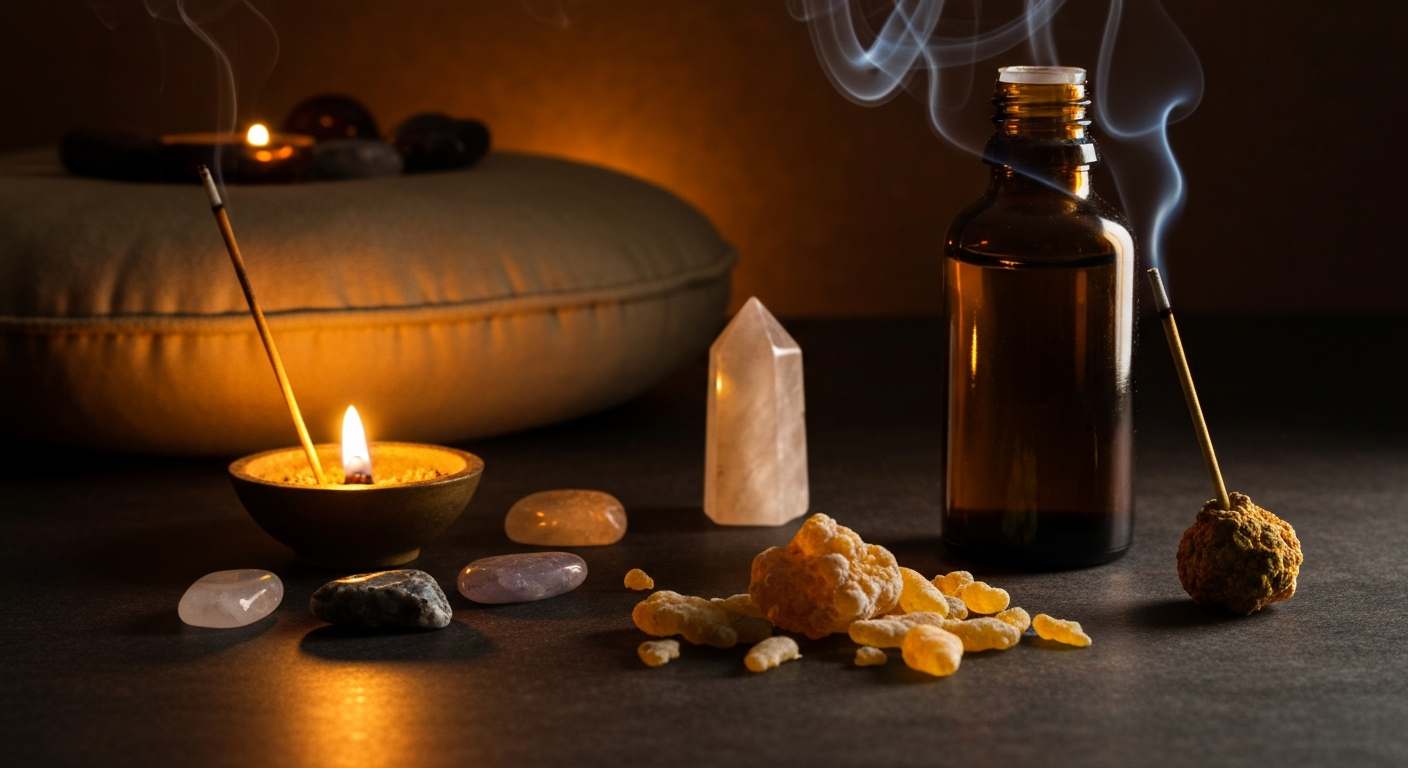
Frankincense resin, harvested from Boswellia trees, has been prized for over 4,000 years for its complex, ethereal fragrance. When selecting frankincense for incense making, look for pale golden to amber tears that feel slightly sticky to the touch. High-quality resin will have a bright, clean aroma with citrusy top notes and deep, balsamic undertones.
For those interested in exploring the nuances between different forms of this sacred material, our comprehensive guide on frankincense resin versus oil provides valuable insights into their distinct applications and benefits.
Sandalwood: The Sacred Wood
Sandalwood powder brings a creamy, woody sweetness that complements frankincense beautifully. True sandalwood (Santalum album) is becoming increasingly rare, making sustainable sourcing crucial. Australian sandalwood (Santalum spicatum) offers an excellent alternative with similar aromatic properties.
The pairing of these two aromatics creates a synergy explored in depth in our comparison of frankincense versus sandalwood, helping you understand how these complementary scents work together in spiritual practices.
Complete Ingredients List
This recipe yields approximately 20-25 small incense cones, perfect for personal use or sharing with fellow practitioners.
Base Ingredients
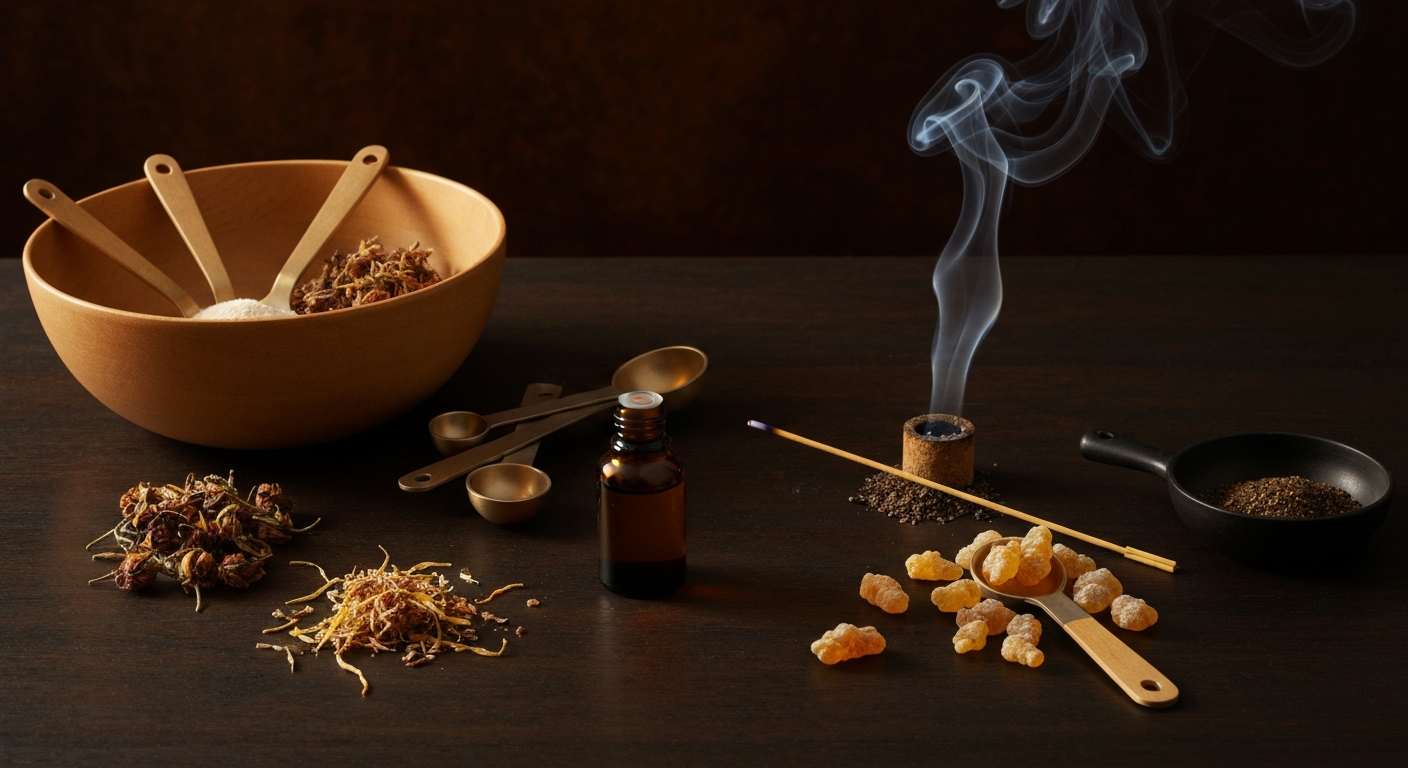
- 2 tablespoons frankincense resin, finely ground
- 1 tablespoon sandalwood powder
- 1 tablespoon makko powder (combustible base)
- 1/2 teaspoon benzoin resin powder (natural binder)
- Distilled water (approximately 1-2 teaspoons)
Optional Enhancement Ingredients
- 1/4 teaspoon myrrh resin powder (for depth)
- 1/4 teaspoon cedar powder (for grounding)
- Pinch of rose petals, finely ground (for heart-opening qualities)
Essential Equipment
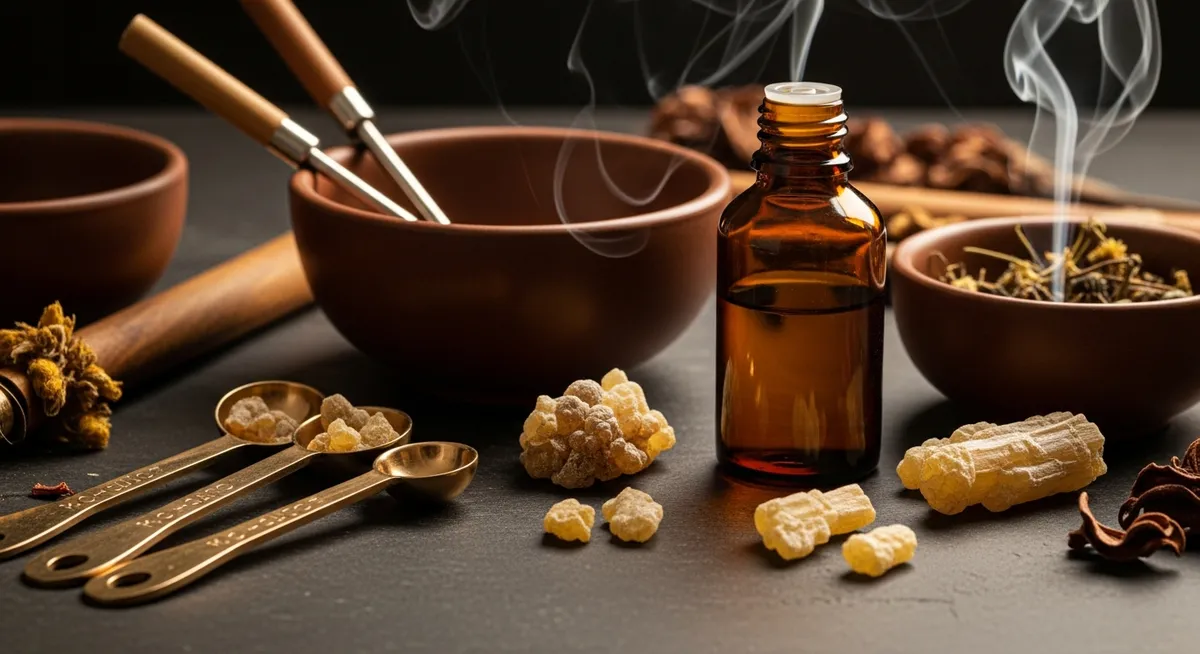
- Coffee grinder or mortar and pestle
- Fine mesh strainer
- Small mixing bowl
- Teaspoon for measuring
- Small cone molds or clean hands for shaping
- Parchment paper
- Airtight storage containers
Difficulty Level and Timing
Difficulty: Beginner to Intermediate
Active Preparation Time: 45-60 minutes
Drying Time: 24-48 hours
Total Project Time: 2-3 days
Step-by-Step Instructions
Step 1: Prepare Your Workspace
Create a clean, well-ventilated workspace away from drafts. Lay out parchment paper and ensure all equipment is thoroughly clean. Consider this preparation time as part of your meditative practice, approaching each step with mindfulness and intention.
Step 2: Grind the Frankincense Resin
If your frankincense isn't already powdered, place the resin in a coffee grinder or mortar and pestle. Grind in short bursts to prevent the resin from becoming gummy due to heat buildup. Aim for a fine powder consistency. If the resin becomes sticky, place it in the freezer for 10-15 minutes before continuing.
Step 3: Sift and Combine Dry Ingredients
Pass the ground frankincense through a fine mesh strainer to ensure uniformity. In your mixing bowl, combine the frankincense powder, sandalwood powder, makko powder, and benzoin powder. Whisk gently to distribute evenly.
Step 4: Add Optional Ingredients
If using myrrh, cedar, or rose petals, add these to your dry mixture now. Each addition will subtly alter the final fragrance profile, so consider your intended use when deciding on inclusions.
Step 5: Gradually Add Water
Add distilled water one drop at a time, mixing thoroughly between additions. The mixture should hold together when pressed but not be soggy. The ideal consistency resembles damp sand that can be molded without crumbling.
Critical Tip: Add water very slowly. Too much water will make the mixture impossible to shape and may prevent proper burning.
Step 6: Form the Cones
Take small portions of the mixture (about 1/2 teaspoon) and roll into balls between your palms. Then, gently roll one end to create a cone shape, or use small cone molds if available. The base should be stable enough to stand upright.
Step 7: Drying Process
Place formed cones on parchment paper in a dry, well-ventilated area away from direct sunlight. Turn them every 8-12 hours to ensure even drying. Properly dried cones will feel firm to the touch and have lost their plasticity.
Critical Safety Guidelines
Important Safety Notice: Always prioritize safety when making and burning incense. (See: NIH — Boswellia Research.) Follow these essential guidelines:
During Preparation
- Work in a well-ventilated area to avoid inhaling fine particles
- Wear a dust mask when grinding resins to prevent respiratory irritation
- Keep workspace clean to prevent contamination
- Store raw materials in airtight containers away from moisture and heat
During Use
- Always burn incense in a well-ventilated room
- Use a proper incense holder on a heat-resistant surface
- Never leave burning incense unattended
- Keep away from flammable materials, curtains, and papers
- Ensure complete extinguishing before disposal
Health Considerations
- Individuals with respiratory sensitivities should use caution
- Pregnant women should consult healthcare providers before exposure to incense smoke
- Children and pets should be supervised around burning incense
- If experiencing any adverse reactions, discontinue use immediately
Storage Instructions and Shelf Life
Properly stored homemade incense recipe creations can maintain their potency for 12-18 months. Store completely dried cones in airtight glass jars or sealed containers in a cool, dry place away from direct sunlight.
Label containers with the creation date and ingredient list. If you notice any signs of mold, deterioration, or off-odors, discard the entire batch immediately. Quality incense should maintain its fragrant properties and burn cleanly throughout its shelf life.
Creative Variations and Substitutions
Seasonal Adaptations
Winter Solstice Blend: Add a pinch of cinnamon powder and orange peel powder for warming qualities during cold months.
Spring Renewal Blend: Incorporate finely ground lavender flowers and lemon verbena for a lighter, more uplifting fragrance.
Autumn Reflection Blend: Include sage powder and a touch of clove for deeper contemplative practices.
Ingredient Substitutions
If certain ingredients are unavailable, consider these alternatives:
- Makko powder substitute: Bamboo powder or elm bark powder
- Benzoin substitute: Gum arabic powder (use half the amount)
- Sandalwood substitute: Cedar powder or agarwood powder (oud)
- Frankincense varieties: Experiment with different species like Boswellia carterii, serrata, or frereana
Intensity Variations
For a more subtle fragrance, reduce frankincense to 1 tablespoon and increase sandalwood to 1.5 tablespoons. For a more resinous, traditional temple incense, increase frankincense to 3 tablespoons and add 1/2 teaspoon of copal resin powder.
Enhancing Your Meditation Practice
These handcrafted frankincense incense cones diy creations can serve as powerful anchors for spiritual practice. The act of creating them becomes a meditation in itself, while their use can help establish sacred space and mindful presence.
Many practitioners find that lighting incense at the beginning of meditation helps signal the transition from ordinary consciousness to contemplative awareness. The gradual release of fragrance can serve as a timer for practice sessions and a focal point for wandering attention.
For those seeking to deepen their understanding of how frankincense can enhance contemplative practices, our detailed frankincense meditation guide offers comprehensive insights into incorporating this sacred resin into daily spiritual routines.
Troubleshooting Common Issues
Cones Won't Hold Shape
If your mixture is too dry, add water one drop at a time. If too wet, incorporate more makko powder gradually until the proper consistency is achieved.
Poor Burning Characteristics
Incense that won't stay lit typically needs more makko powder. Incense that burns too quickly may have too much makko or insufficient compression during forming.
Weak Fragrance
Ensure your resins are fresh and properly ground. Old or poorly stored materials lose their aromatic potency over time.
The Sacred Art of Incense Making
Creating your own frankincense sandalwood incense connects you to an unbroken chain of tradition stretching back millennia. Each cone you craft carries your intentions and becomes a vessel for contemplation and reverence.
This ancient craft reminds us that the most meaningful spiritual tools are often those we create with our own hands, imbuing them with personal intention and care. As you light these handmade cones, remember that you're participating in a practice that has brought comfort, clarity, and sacred atmosphere to countless generations before us.
Take time to appreciate the transformation of simple materials into something that can elevate consciousness and create sacred space. In our modern world of mass production, the deliberate act of crafting incense by hand becomes itself a form of meditation and devotion.
Frankincense Essential Oil
Serrata, carterii, sacra, frereana, neglecta and rivae: steam-distilled, GC/MS verified, in sizes from 0.5 oz to bulk.
From $12.99
Shop Frankincense Oil →