Five frankincense varieties. Five Boswellia species. Five sourcing regions — from the Hojari resin cliffs of Dhofar to the highland groves of Ethiopia. Traceability, testing, and trust at every step.
Frankincense has been traded for millennia, yet today most of what reaches consumers is anonymously sourced, adulterated, or mislabeled. We started True Frankincense to fix that.
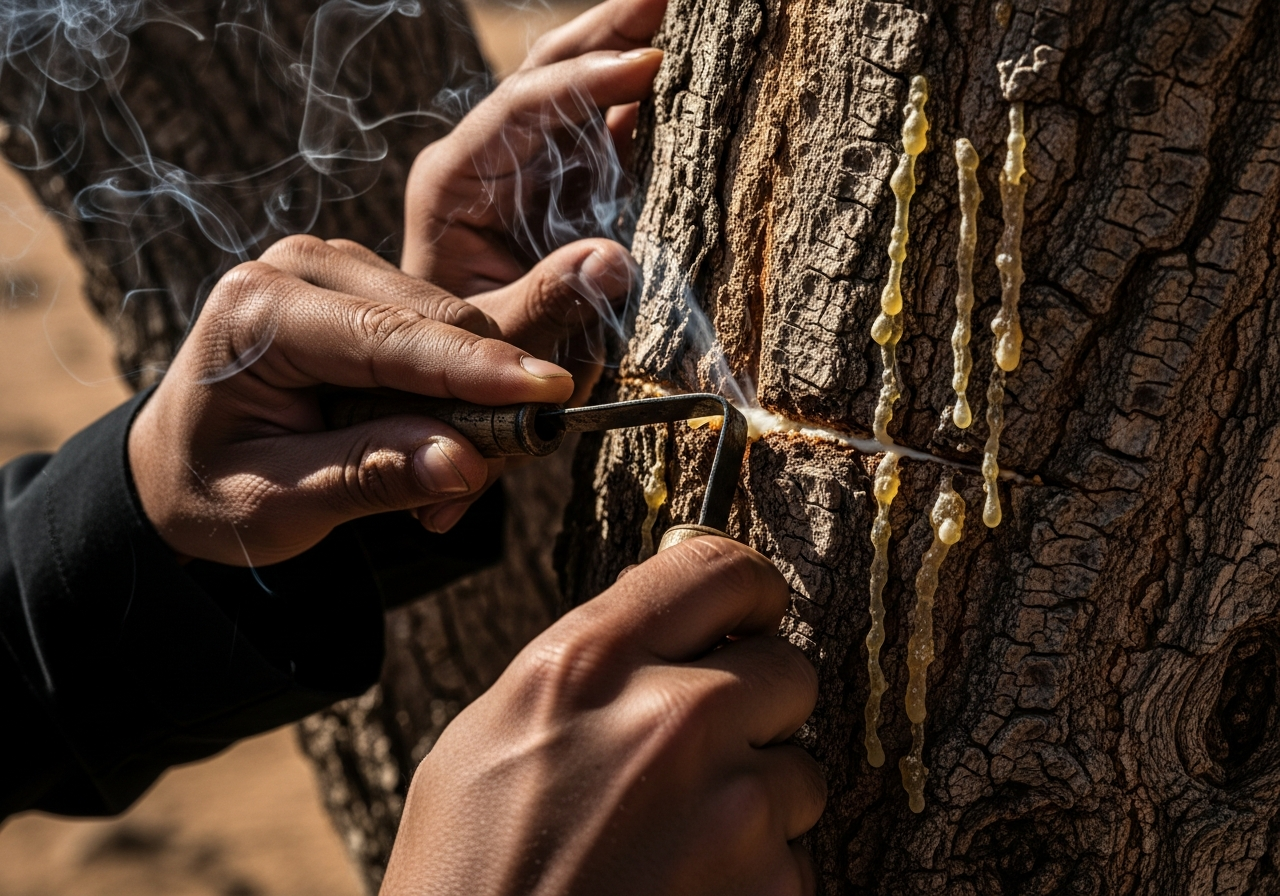
We don't buy from commodity brokers or anonymous middlemen. Every batch of our frankincense traces back to specific harvesting cooperatives across the six regions where genuine Boswellia grows wild:
Our sourcing partners are multigenerational harvesters who use traditional tapping methods passed down for centuries. We visit these sites, know the families, and pay fair-trade premiums that sustain both the communities and the trees they steward.
This isn't marketing language. It's the reason our resin grades, aroma profiles, and chemical compositions are consistent from batch to batch — something anonymous supply chains simply cannot guarantee.
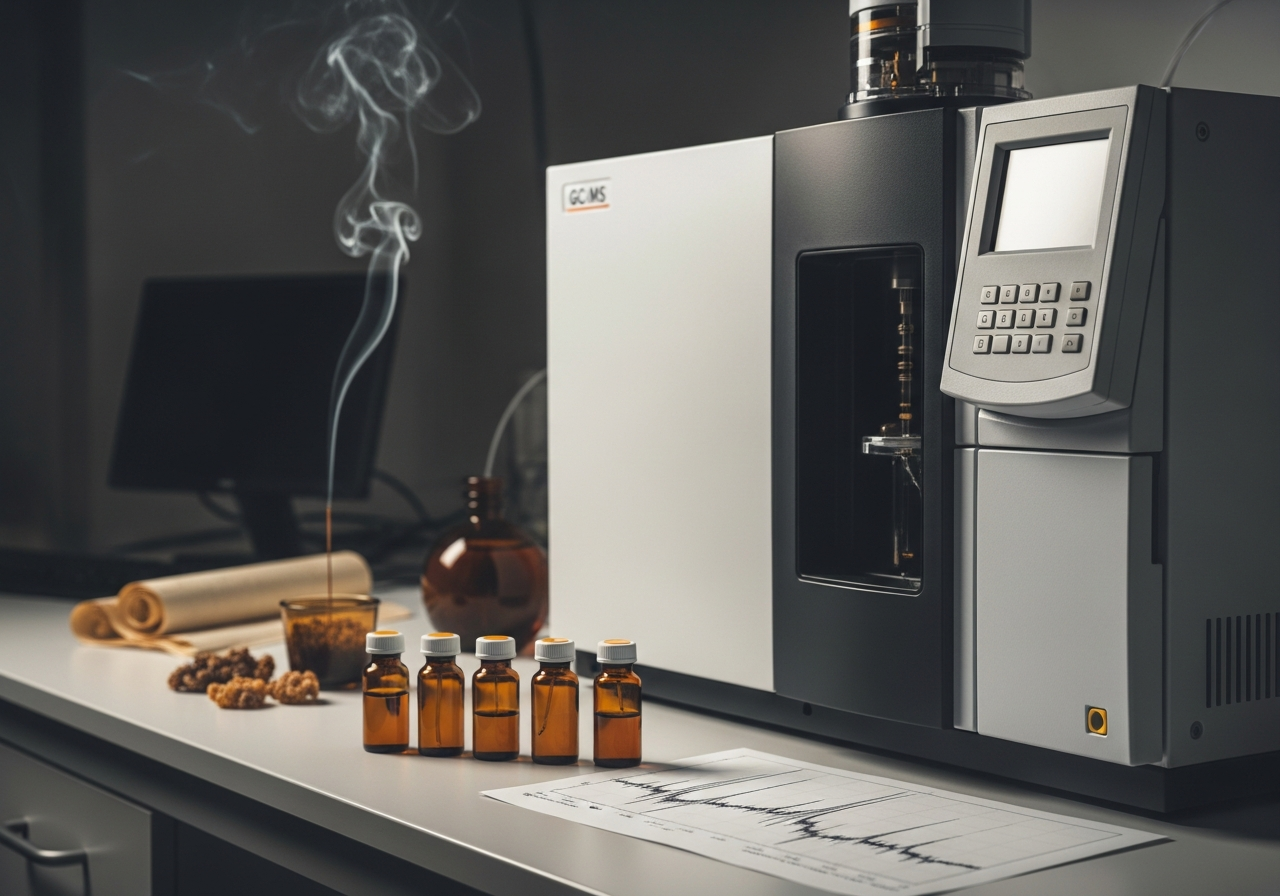
Gas Chromatography–Mass Spectrometry is the gold standard for verifying essential oil authenticity. Every batch we sell is tested by an independent, ISO-accredited laboratory — not by us, and not by our supplier.
The GC/MS report confirms the full chemical profile: alpha-pinene, incensole, incensole acetate, limonene, alpha-thujene, and dozens of other compounds that define genuine frankincense across each of our six varieties. Each species has a distinct chemical fingerprint — sacra is rich in incensole acetate, frereana in alpha-pinene and alpha-thujene, serrata in boswellic acid precursors. If a batch doesn't match the expected fingerprint for its declared species — whether due to adulteration, mislabeling, or degradation — it doesn't ship.
We publish batch-specific reports so you can verify exactly what's in the bottle you receive. No vague "purity tested" claims. The actual chromatogram, the actual numbers.
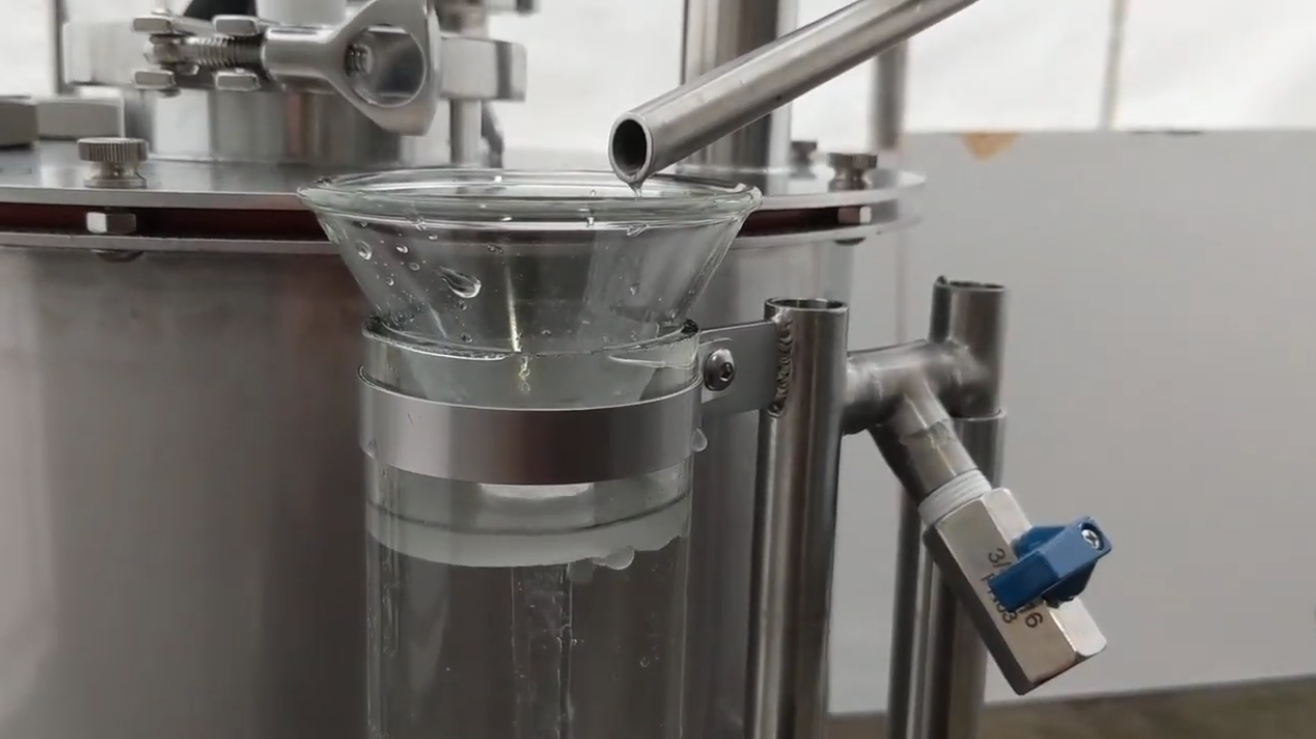
How frankincense oil is extracted determines what ends up in the bottle. We use low-pressure steam distillation at controlled temperatures to preserve the full spectrum of therapeutic compounds — particularly the boswellic acid precursors, incensole acetate, and species-specific terpenes that distinguish each variety.
We don't use solvent extraction, and we never blend distillation fractions from different species. When a label says Boswellia sacra, B. carterii, B. frereana, B. serrata, B. neglecta, or B. rivae steam-distilled essential oil, that's exactly what it is — single-species, single-method, single-origin. No mystery blends.
Every bottle carries the distillation date, not just a vague "best by" window. Essential oil quality degrades over time, and you deserve to know how fresh your oil actually is.
Frankincense resin can sit in warehouses for years before distillation, and older resin yields a different — and diminished — chemical profile. That's why we track freshness at every stage of our supply chain:
Most of the frankincense on the market passes through multiple middlemen with no visibility into when the resin was harvested or how long it sat before processing. Our direct relationships eliminate that uncertainty — we control the timeline, so freshness is built into the process rather than left to chance.
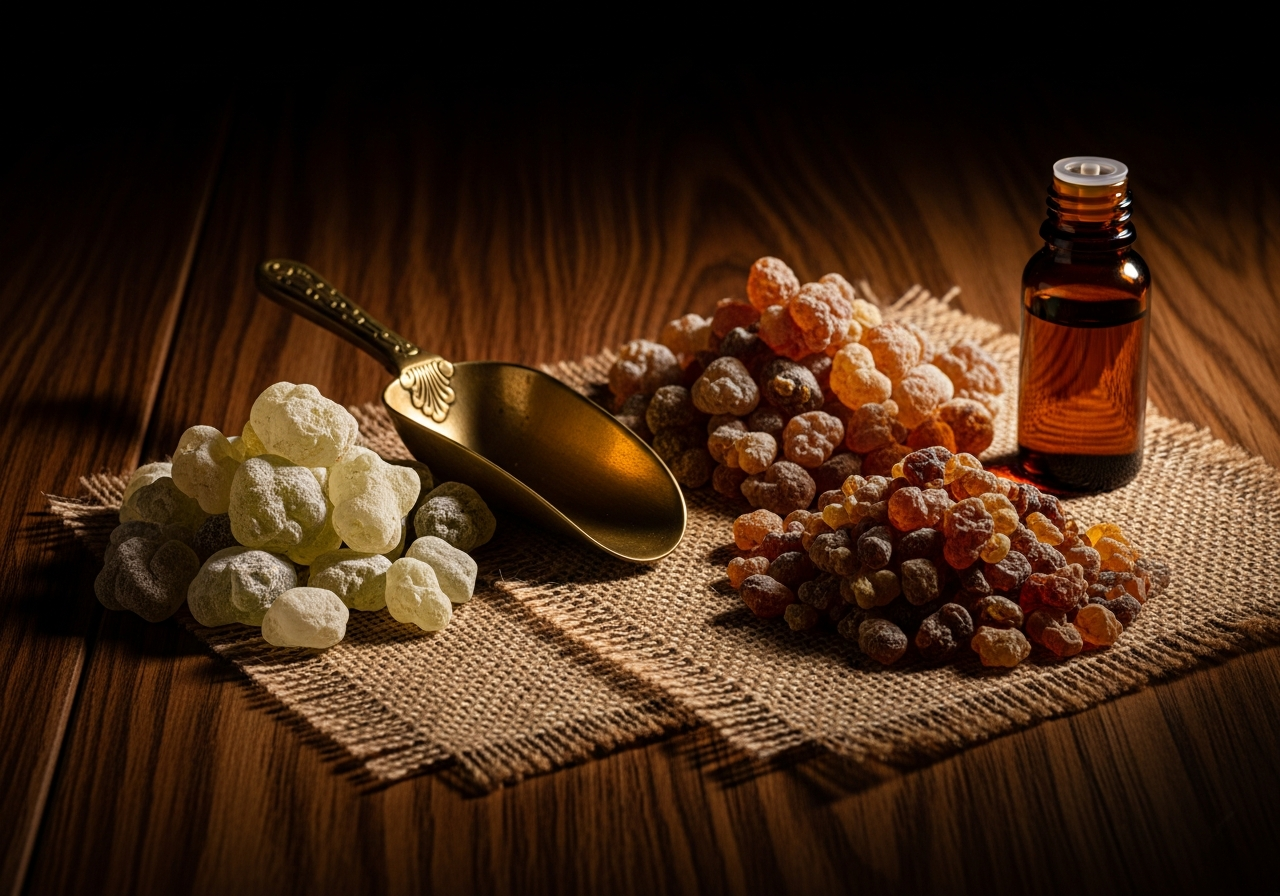
Each species has its own chemistry, aroma, history, and use case. We never lump them together as generic "frankincense."
Origin: Dhofar, Oman. The most prized variety, with the highest incensole acetate content — the molecule behind sacra's traditional reputation as the “sacred” frankincense of antiquity. Deep, balsamic, honeyed aroma. Shop Sacra →
Origin: Cal Madow, Somalia. The classic “church frankincense” of historic religious ceremony. Warm, woody, slightly citrusy with the deeply resinous profile most people picture when they think of frankincense. Shop Carterii →
Origin: Maydi region, northern Somalia. The rare “king of frankincense.” Distinct bright lemon-pine aroma driven by high alpha-pinene and alpha-thujene — nothing else in the family smells like it. Shop Frereana →
Origin: Rajasthan, India. The most accessible and best-studied variety. Widely researched for its boswellic acid content and a favorite for daily aromatherapy, skincare, and value-conscious bulk use. Shop Serrata →
Origin: East African drylands (Kenya, Ethiopia, northern Somalia). Wild-harvested "black frankincense" with a smoky, slightly fruity aromatic profile unlike sacra or carterii. A traditional aromatic resin of Borana and Somali pastoralist communities. Shop Neglecta →
Origin: Ogaden region, Ethiopia/Somali borderlands. The rarely-bottled "Ogaden" frankincense with a strikingly green, herbaceous, lightly sweet aromatic profile. Production is tiny; lots sell out each harvest season. Shop Rivae →
See the side-by-side aroma, origin, and pricing comparison for the full lineup. The right variety depends entirely on what you plan to use it for.
Six standards we hold ourselves to on every bottle we sell, regardless of variety.
We identify every oil to the species level — Boswellia sacra, B. carterii, B. frereana, B. serrata, B. neglecta, B. rivae — because “frankincense” alone tells you almost nothing. Different species have different chemistry and different uses.
We name the exact region of origin: Dhofar (Oman), Cal Madow and Maydi (Somalia), Rajasthan (India), or the Ethiopian highlands. Geography shapes the resin's terpene profile as much as the species itself.
Every batch undergoes GC/MS analysis by a third-party laboratory that has no financial relationship with us. Reports are published and linked to batch numbers on each bottle.
We track harvest windows, distillation timing, and batch records through our supply chain so every bottle traces back to recently harvested, promptly processed resin.
Our cooperatives follow traditional tapping rotations that allow trees to heal between harvests. Over-tapping is the greatest threat to wild Boswellia populations, and we refuse to contribute to it.
We never purchase from commodity aggregators, auction houses, or anonymous wholesale lots. Every gram of resin in our supply chain has a name and a place attached to it.
Five genuine frankincense varieties — each single-species, single-origin, sourced directly, tested independently, dated transparently. Pick the one that fits your purpose.
Browse the Variety Lineup