Frankincense Room Spray Recipe: Bright Citrus Frereana for Every Space
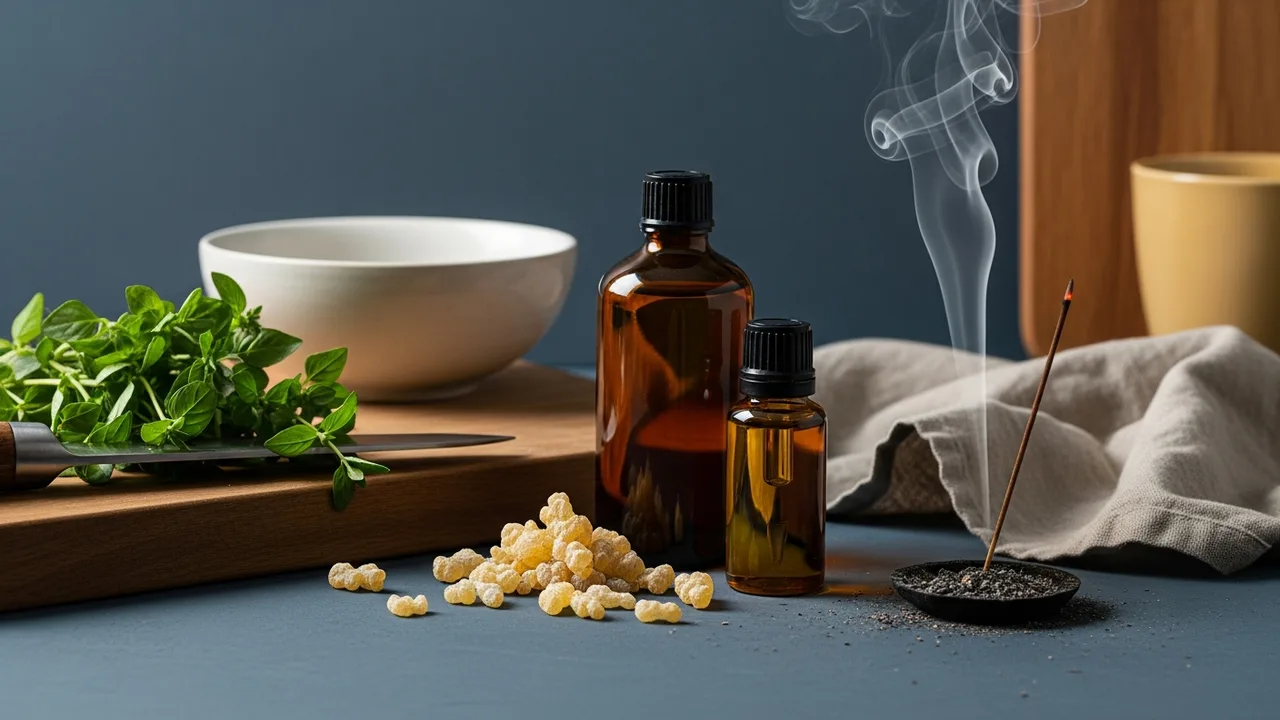
There is a particular kind of morning light that feels almost edible — crisp, golden, faintly resinous, alive with the promise of something good. Bottling that feeling is, admittedly, an ambitious project. And yet, a well-crafted frereana room spray comes remarkably close. When the clean, lemony lift of Boswellia frereana meets a chorus of bright citrus oils and a whisper of cool mint, the result is a natural fragrance that transforms any room from merely occupied to genuinely inhabited.
Frankincense Essential Oil
Six single-origin frankincense varieties, steam-distilled and GC/MS verified.
From $10.99
Shop Frankincense Oil →This guide walks you through everything you need — the story behind the star ingredient, a full frankincense linen spray recipe with precise measurements, step-by-step instructions, safety guidance, and three variations to suit every mood and season. Whether you are misting freshly laundered bedding, welcoming guests into an entryway, or simply resetting the atmosphere of a home office mid-afternoon, this citrus room spray natural formula is designed to be both effortless to make and genuinely beautiful to experience.
Why Frereana? The Frankincense of Choice for Bright, Airy Blending
Boswellia frereana is, in the world of frankincense, something of a singular character. Harvested primarily in the Nugaal Valley of northern Somalia — a region with a tradition of resin harvesting stretching back many centuries — frereana has long carried a distinct cultural identity. Somali traders historically referred to it as Maydi, the frankincense reserved for chewing and for the most prestigious ceremonial uses, setting it apart from other varieties destined for incense burning.
What makes it particularly well-suited to a room and linen spray is its aroma profile. Unlike the deeper, more balsamic warmth of Boswellia sacra or the rich, earthy sweetness of Boswellia serrata, frereana presents with a bright, almost effervescent citrus-pine character. There is a clean, slightly camphoraceous freshness to it — some describe a faint note of green apple or white grapefruit in the top register — that makes it a natural companion for lemon, bergamot, and sweet orange oils. Rather than anchoring a blend into heaviness, it lifts it. It adds complexity and a faint resinous backbone without ever pulling the fragrance into the incense-smoke territory that, wonderful as it is in other contexts, might feel too intense for a bedroom pillow spray at seven in the morning.
Frereana essential oil is also notable for being largely alpha-pinene and limonene dominant in its chemical composition — the same aromatic compounds responsible for the clean, bright quality of pine forests and citrus peel. This affinity for citrus at a molecular level is part of why the pairing feels so cohesive rather than constructed.
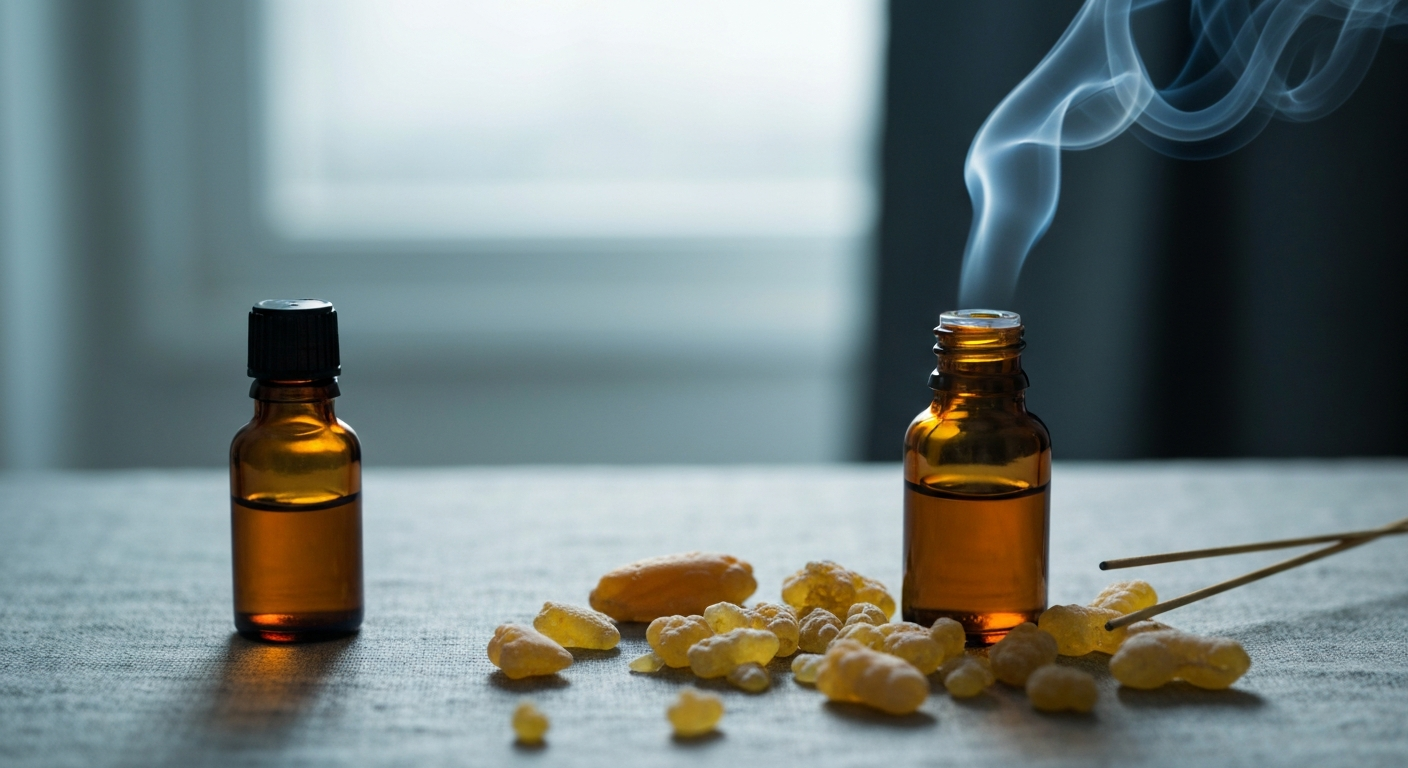
You can explore our full range of ethically sourced resin and essential oil at the frereana product page — including both the essential oil and the raw resin tears for those who wish to understand the source material a little more intimately.
The Full Recipe: Bright Citrus Frereana Room and Linen Spray
This formula is designed for a 100 ml (approximately 3.4 fl oz) glass spray bottle and results in a dilution of approximately 1.5% — a concentration appropriate for a room and linen spray that may contact fabric and occasionally skin. For a pure room-only spray that will never touch skin, you may increase to 2%, but we recommend starting at 1.5% and adjusting from there.
Equipment
- 1 × 100 ml dark glass spray bottle (amber or cobalt — UV protection extends shelf life)
- Small glass measuring jug or beaker
- Pipette or dropper
- Fine permanent marker for labeling
- Funnel (optional but tidy)
Ingredients
| Ingredient | Drops | Approximate ml | Role in Blend |
|---|---|---|---|
| Boswellia frereana essential oil | 12 drops | ~0.6 ml | Bright resinous anchor, citrus-pine lift |
| Sweet orange essential oil (Citrus sinensis) | 8 drops | ~0.4 ml | Warm, juicy top note |
| Bergamot essential oil (bergapten-free) | 6 drops | ~0.3 ml | Floral-citrus brightness, elegant lift |
| Lemon essential oil (Citrus limon) | 4 drops | ~0.2 ml | Crisp, sparkling top note |
| Spearmint essential oil | 2 drops | ~0.1 ml | Cool, clean accent |
| Witch hazel (alcohol-free, or 86-proof vodka) | — | 10 ml | Dispersant, helps oils blend with water |
| Distilled water | — | To 100 ml | Base carrier |
Total essential oil: approximately 32 drops / ~1.6 ml in 100 ml = ~1.6% dilution.
A note on bergapten-free bergamot: Standard bergamot essential oil contains bergapten (a furanocoumarin) that may cause photosensitivity on skin exposed to sunlight. For a linen spray, we recommend using bergapten-free (FCF) bergamot as a precaution, since the spray may contact skin indirectly via fabric.
Step-by-Step Instructions
- Prepare your workspace. Work on a clean, stable surface away from direct sunlight. Essential oils can damage certain finishes, so protect wooden or painted surfaces with a cloth.
- Measure your dispersant. Pour 10 ml of witch hazel (or vodka) into your glass beaker or directly into the spray bottle using a funnel.
- Add your essential oils. Drop each essential oil directly into the witch hazel — frereana first, then sweet orange, bergamot (FCF), lemon, and spearmint. The alcohol helps suspend the oils and begin the blending process.
- Swirl gently. Give the bottle or beaker a gentle swirl (do not shake vigorously at this stage) to encourage initial integration. Let the blend rest for 60 seconds.
- Add distilled water. Slowly pour distilled water up to the 100 ml mark. Using distilled rather than tap water removes chlorine and mineral content that can interfere with the fragrance over time.
- Cap and label. Seal the bottle, label it with the blend name, date of creation, and contents. Store in a cool, dark place.
- Before each use, shake well. Water and essential oils will naturally separate between uses — always shake the bottle for 5–10 seconds before spraying.
Dilution Ratios, Patch Testing, and Safety Notes
Dilution
This recipe sits at approximately 1.5–1.6% total essential oil dilution. For a room-only spray (never contacting skin), a maximum of 2% is generally considered appropriate by most aromatherapy guidelines. For a spray that may contact skin through fabric, 1–1.5% is a more cautious and widely recommended threshold. If you intend to use this spray directly on skin as a body mist, it should be reformulated at a stricter dilution and assessed for suitability by a qualified aromatherapist.
Patch Testing
If this spray will contact fabric worn close to skin — pillowcases, clothing, soft furnishings — we recommend a preliminary patch test. Spray a small amount onto an inconspicuous area of the fabric, allow it to dry fully, and observe for 24 hours before general use. Additionally, if you or anyone in your household has sensitive skin, apply a small amount to the inner forearm and monitor for any reaction before widespread use on bedding.
Safety Considerations
- Citrus oils and photosensitivity: While this spray is not intended for direct skin application, note that cold-pressed lemon essential oil contains furanocoumarins. The bergapten-free bergamot specified in this recipe removes the primary photosensitivity concern from that ingredient.
- Children: Spearmint contains carvone and is generally considered unsuitable for use around very young children. If spraying in spaces regularly used by infants or toddlers under three years, omit the spearmint and replace with an additional 2 drops of sweet orange.
- Pregnancy: If you are pregnant or nursing, consult a qualified healthcare provider before using essential oil blends.
- Pets: Cats and some small animals are sensitive to essential oils. Avoid spraying in enclosed spaces regularly occupied by pets without first consulting a veterinarian.
- Flammability: Witch hazel and essential oils are flammable. Store away from open flames and heat sources.
Storage and Shelf Life
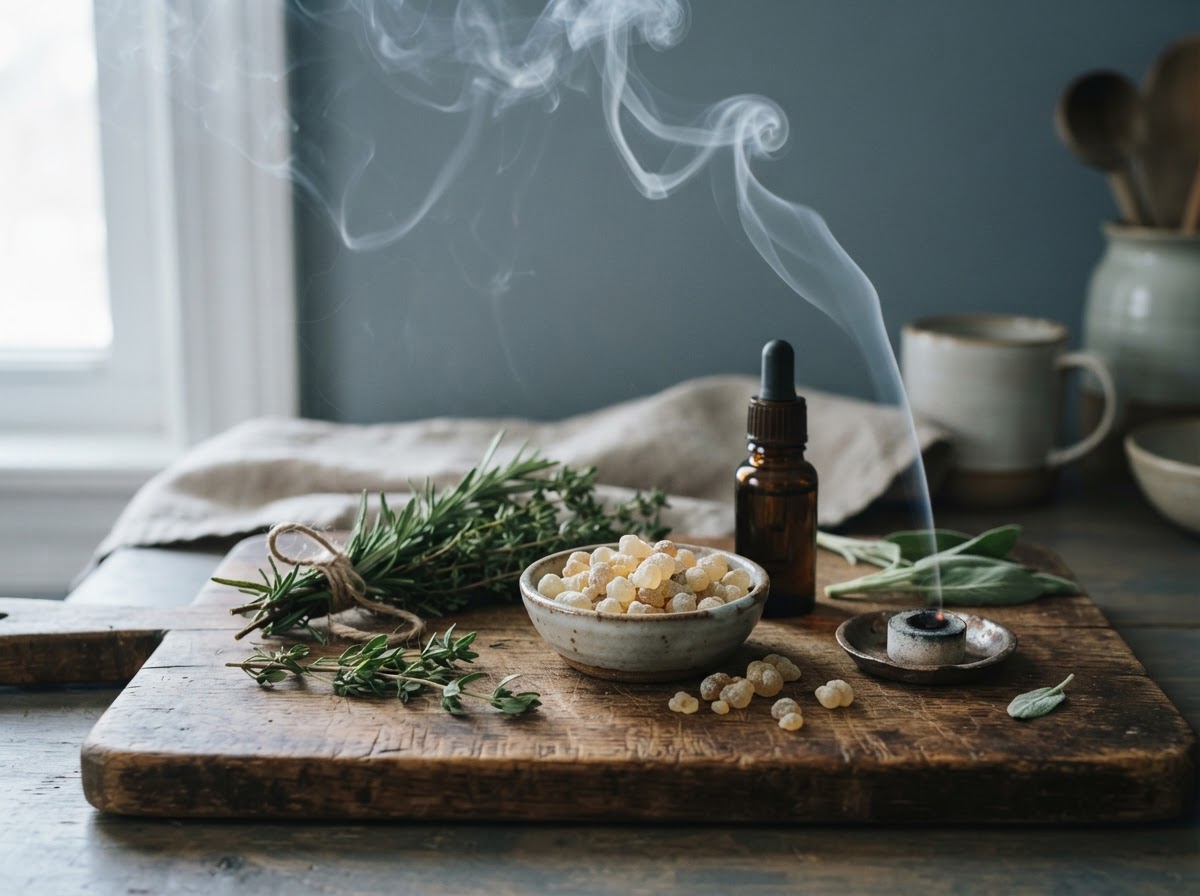
Stored in a dark glass bottle in a cool, dry location away from direct sunlight and heat, this spray will typically maintain its aromatic character for 4 to 6 weeks. The limiting factor is not the essential oils themselves (which are relatively stable) but the distilled water base, which can begin to support microbial growth over time even without added preservatives.
To extend shelf life:
- Increase the witch hazel proportion to 15–20 ml (this raises alcohol content and acts as a mild preservative).
- Add 5 drops of rosemary antioxidant (ROE) per 100 ml to slow oxidation of the citrus components.
- Store in the refrigerator between uses — the cool temperature slows microbial activity and keeps citrus top notes particularly vivid.
- Always use a clean bottle and avoid introducing contaminants by touching the nozzle to surfaces.
Discard and remake if you notice any cloudiness, unusual odor, or change in color.
Three Variations to Explore
Variation 1: Warm Spice Morning — Frereana and Cardamom
For a blend that carries a little more warmth and a subtle gourmand quality — well-suited to a kitchen or dining room — replace the spearmint with 2 drops of cardamom essential oil and increase the sweet orange to 10 drops. Cardamom's slightly sweet, spicy, and eucalyptol-rich character deepens the frereana beautifully while the increased orange keeps the overall impression bright rather than heavy. This variation performs particularly well during autumn and winter months when the clean, purely citrus version may feel too summery.
Variation 2: Green and Herbal — Frereana, Lemon, and Basil
To push the freshness in a more herbal, garden-like direction, omit the spearmint and reduce the sweet orange to 4 drops. Add 4 drops of basil ct. linalool essential oil and increase the lemon to 8 drops. The result is a spray that feels almost like a sun-warmed herb garden — clean, green, and alive. This variation works beautifully in a home office or study, where something more energetically present than a purely floral or sweet blend may support a focused, clear atmosphere.
Variation 3: Floral Luminosity — Frereana, Bergamot, and Neroli
For a more refined, almost luxury-hotel quality, reduce the sweet orange to 4 drops and the lemon to 2 drops, and omit the spearmint entirely. Add 4 drops of neroli essential oil and increase the bergamot FCF to 10 drops. Neroli — distilled from orange blossom — shares obvious aromatic kinship with bergamot and sweet orange while introducing a honeyed, slightly green floral dimension that elevates the blend into something genuinely special. This variation is perhaps the most evocative for a bedroom or bathroom, where a sense of softness and luxury is the desired atmosphere.
Bringing It All Together: Ritual Over Routine
There is something quietly powerful about making your own natural fragrance for your home. A frankincense linen spray recipe like this one is, on one level, simply a useful household item — a way to keep spaces smelling beautiful with ingredients you have consciously chosen. On another level, it is an act of curation: you are deciding, with intention, what the air in your home will carry.
Boswellia frereana, with its long history and its distinct, luminous character, brings something to that act of curation that a synthetic fragrance simply cannot replicate — a connection to a specific tree, a specific landscape, a specific tradition of harvest and trade that stretches back across centuries. The bright citrus notes that accompany it in this blend are vivid and modern, but they rest on something ancient and considered.
That combination — old and alive at once — is, perhaps, exactly what a good room spray should offer. Not just a pleasant smell, but a sense of place. Make a bottle, shake it well, and mist the morning into something worth inhabiting.
Ready to source your frereana? Explore our ethically harvested selection via the frereana shop page and find the essential oil, resin tears, and more to complete your blend.