Frankincense Anointing Oil Recipe: A Sacred Hojari Blend with Sacra
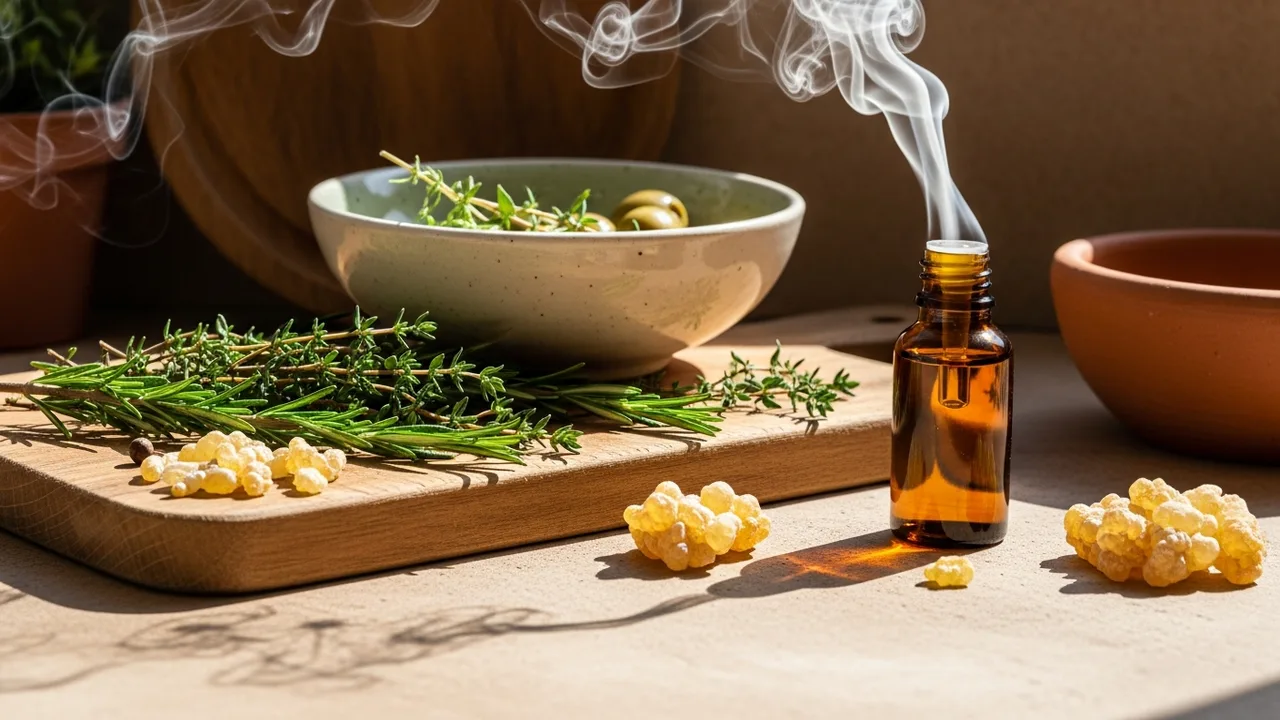
There is a moment, just after you uncap a vial of true Hojari frankincense essential oil, when the air in the room seems to change. The scent rises — crystalline, resinous, softly citric — and something in the nervous system quiets. Cultures across the Arabian Peninsula, the Horn of Africa, and the ancient Mediterranean have known this moment for millennia. They built rituals around it. They consecrated kings with it. They carried it to temples as an offering worthy of the divine.
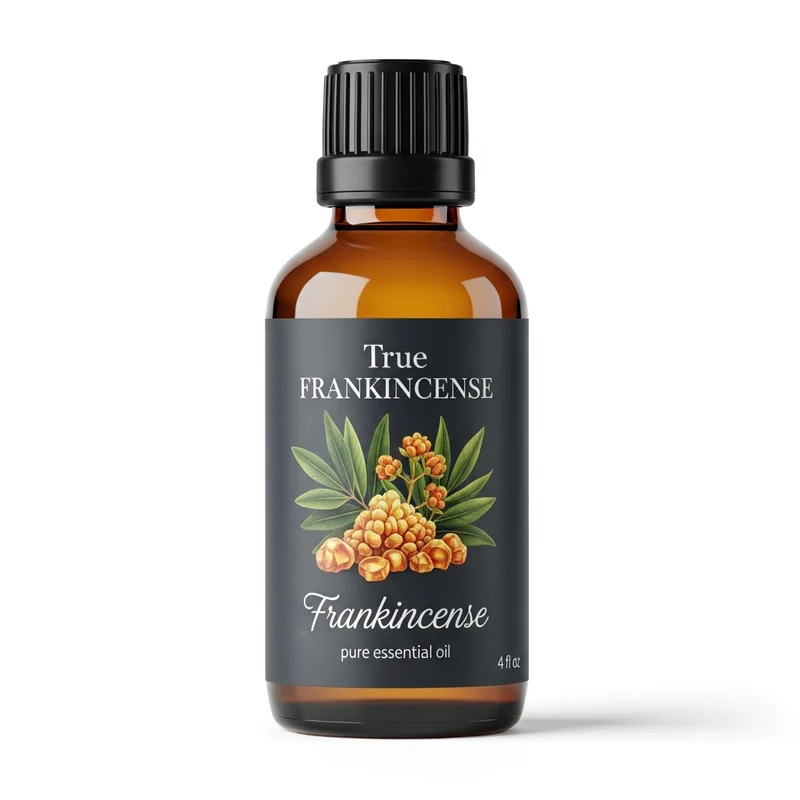
Frankincense Essential Oil
Six single-origin frankincense varieties, steam-distilled and GC/MS verified.
From $10.99
Shop Frankincense Oil →Today, the art of the sacred anointing oil is enjoying a renaissance among those who value intentional living, ceremonial self-care, and the living heritage of botanical fragrance. This guide walks you through crafting a hojari anointing oil of genuine quality — one grounded in the ancient tradition of Boswellia sacra and made with the care it deserves.
Why Boswellia Sacra? The Soul of the Hojari Tradition
Boswellia sacra is, by most accounts, the frankincense. It is the species most intimately linked to the ancient incense trade routes of the Arabian Peninsula, harvested primarily in Oman's remote Dhofar region — a landscape of dramatic limestone escarpments that catch the monsoon mist and produce conditions found nowhere else on earth. The name sacra — "sacred" in Latin — was not assigned casually.
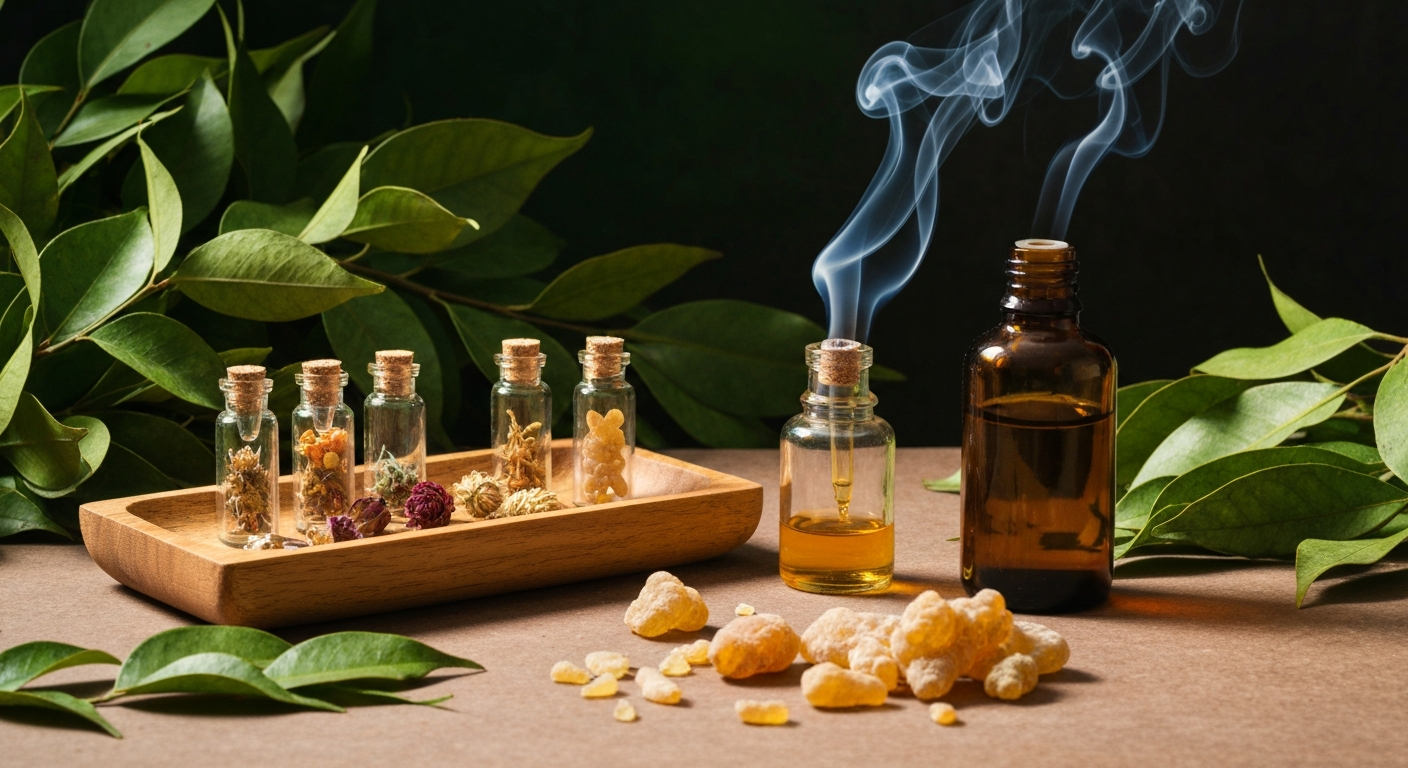
Within the world of sacra, the grade known as Hojari (sometimes spelled Hojri or Hougari) represents the finest expression of the species. Harvested from the first and second tappings of the resin — often called the "silver" and "royal" cuts — Hojari tears are distinguished by their pale, almost translucent appearance and an aroma profile of uncommon complexity.
Aroma Profile of Hojari Sacra Essential Oil
- Top notes: Bright, fresh citrus — lemon peel, green lime, a whisper of pine needle
- Heart notes: Warm, clean resin — classic frankincense depth without heaviness; faintly sweet, almost honeyed
- Base notes: Soft earthiness, dry woods, a subtle powdery incense quality that lingers beautifully on warm skin
This aromatic architecture makes sacra uniquely suited to anointing work. Where other frankincense varieties — the darker, more balsamic carterii, the camphorous frereana — speak in louder registers, Hojari sacra whispers with authority. It does not overpower; it elevates. On skin, warmed by the body, it unfolds slowly and remains present for hours.
You can explore our carefully sourced Omani Hojari oil and resin at the Boswellia sacra product page, where we detail provenance, distillation method, and quality benchmarks for every batch we carry.
Understanding Anointing Oils: A Brief Historical Context
Anointing — the deliberate application of scented oil to the body — is among the oldest recorded ritual practices in human history. References appear in the Hebrew scriptures (the holy anointing oil of Exodus 30 famously combines myrrh, cinnamon, calamus, and cassia in an olive oil base), in ancient Egyptian temple records, in Greek and Roman ceremonial texts, and throughout Islamic perfumery tradition, where attars applied to pulse points are considered an act of spiritual preparation.
Common threads run through all these traditions: the use of precious aromatic resins, the importance of carrier oils with their own symbolic and sensory significance, the intentionality of application to specific points on the body — forehead, wrists, throat, sternum — and the understanding that fragrance is not merely aesthetic but participates in the creation of sacred space.
A sacra frankincense anointing oil draws from this deep well. Its purpose, in a modern context, is to support ritual and intentional practice — meditation, prayer, journaling, ceremony, or simply a moment of deliberate stillness in an overscheduled day.
The Hojari Anointing Oil Recipe
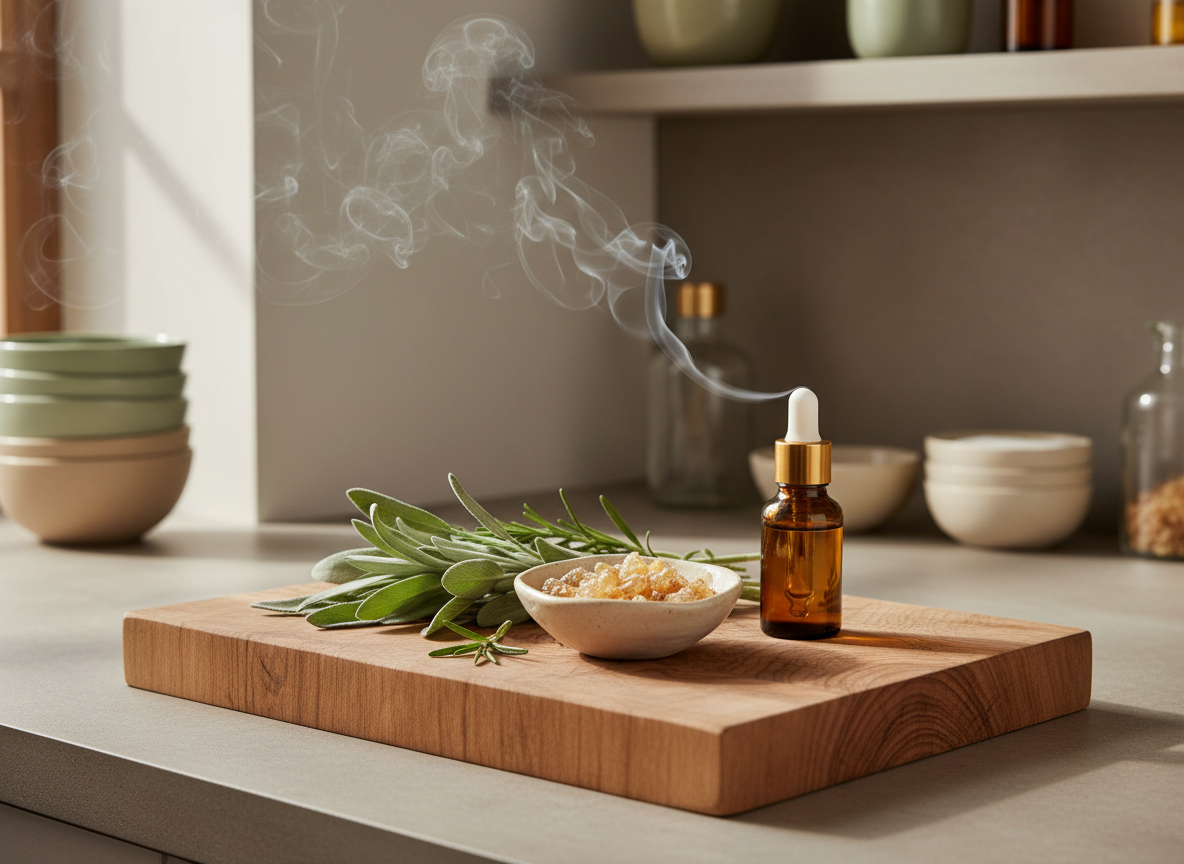
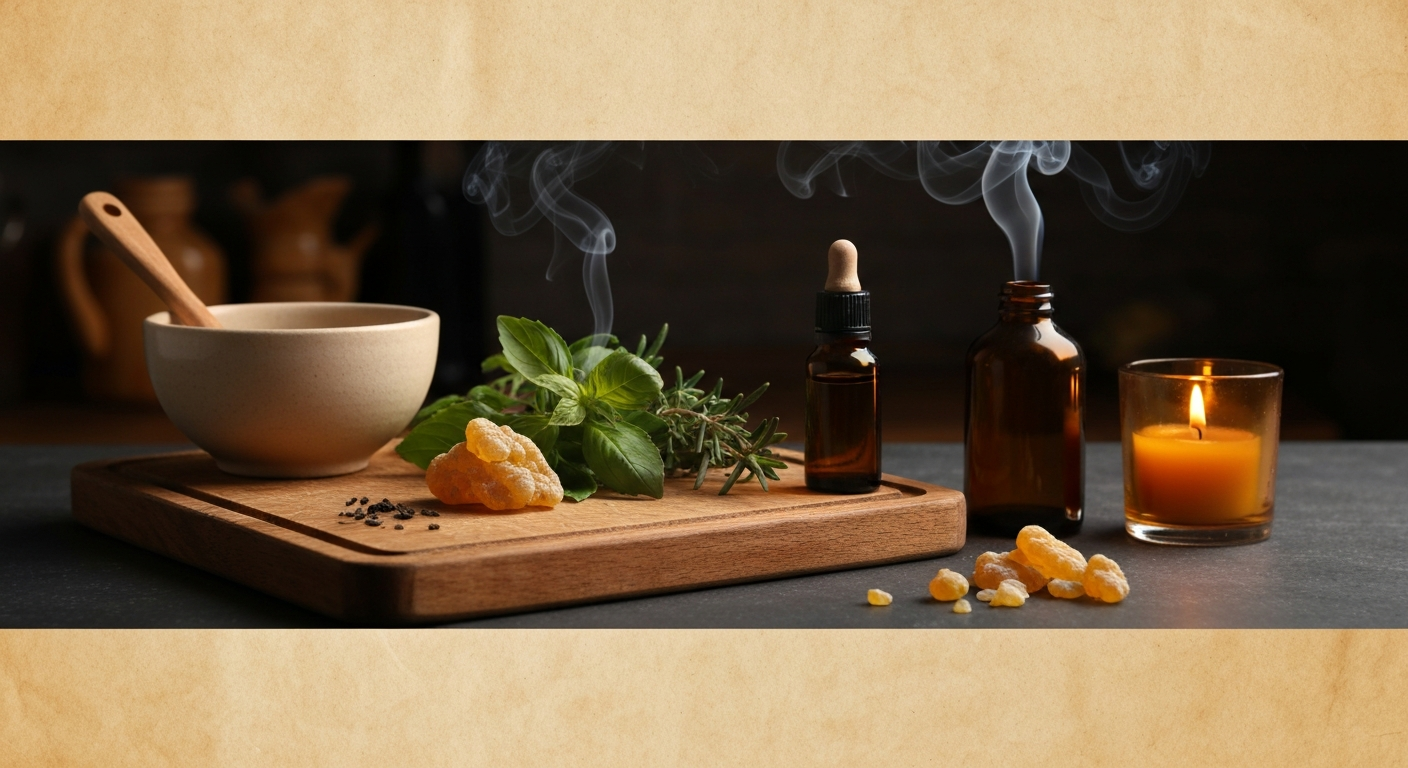
What You Will Need: Equipment
- One 10 ml amber or cobalt glass roller bottle or a 10 ml dark glass dropper bottle
- A small glass or stainless steel mixing rod or toothpick for blending
- A clean pipette or small funnel
- Labels and a permanent marker (always label your blends with date and contents)
- A clean, dry work surface
Ingredients
| Ingredient | Role | Amount (drops) | Amount (ml) |
|---|---|---|---|
| Boswellia sacra (Hojari) essential oil | Primary aromatic | 14 drops | ~0.70 ml |
| Rose otto essential oil (Rosa damascena) | Heart note; softening companion | 4 drops | ~0.20 ml |
| Sandalwood essential oil (Santalum album or S. spicatum) | Base note; fixative | 4 drops | ~0.20 ml |
| Myrrh essential oil (Commiphora myrrha) | Base note; resinous depth | 2 drops | ~0.10 ml |
| Fractionated coconut oil | Primary carrier | — | ~7.80 ml |
| Jojoba oil (Simmondsia chinensis) | Secondary carrier; skin feel, longevity | — | ~1.00 ml |
Total volume: 10 ml | Total essential oil drops: 24 drops | Dilution ratio: approximately 2.2% — within the 1–3% range generally recommended for leave-on facial and body products.
A note on dilution: The standard guideline from aromatherapy professional bodies such as the Alliance of International Aromatherapists (AIA) recommends a 1–3% dilution for leave-on skin applications in adults. This recipe falls comfortably within that range. For those with sensitive skin, reduce total essential oil drops to 12 (approximately 1.1% dilution) and increase carrier oil accordingly.
Step-by-Step Blending Instructions
- Prepare your space. Wipe your work surface clean. Gather all ingredients and equipment. Many practitioners of the anointing tradition suggest beginning with a moment of intention — a breath, a brief meditation, or a simple statement of purpose for the oil you are about to create. This is, of course, entirely personal, but it does speak to the spirit of the practice.
- Add the essential oils first. Working directly into your glass roller or dropper bottle, add the Hojari sacra drops first, followed by sandalwood, then myrrh, then rose otto. Adding the heavier base notes after the primary gives you a cleaner sense of the blend as you go.
- Observe the dry scent. Before adding carriers, hold the open bottle briefly under your nose (do not inhale sharply; allow the vapour to drift naturally to you). This gives you a concentrated impression of the blend. Adjust at this stage if desired — an additional 1–2 drops of sacra will brighten; an additional drop of myrrh will deepen.
- Add the jojoba oil. Using a pipette, add approximately 1 ml of jojoba oil. Jojoba's waxy molecular structure acts as a mild fixative, helping anchor the volatile top notes and improving the oil's longevity on skin.
- Add fractionated coconut oil to fill. Add fractionated coconut oil to bring the total volume to 10 ml. Fractionated coconut oil is the preferred carrier here: it is odourless, absorbs cleanly, and will not compete with the Hojari's delicate citrus-resin profile.
- Cap and blend gently. Seal the bottle and roll it slowly between your palms for 30–45 seconds. This gentle warming and motion integrates the oils without aerating them.
- Label immediately. Write the blend name, date of creation, and dilution ratio on your label. Apply to the bottle.
- Rest period. Allow the blend to rest, capped, in a cool dark place for 24–48 hours before first use. Like a fine perfume, an anointing oil benefits from a brief period of maceration during which the aromatic molecules harmonise and the scent settles into its true character.
How to Apply Your Hojari Anointing Oil
Traditional anointing practices direct oil to specific points of the body — places where the skin is thin, warmth is concentrated, and pulse is felt. The most common application points for a sacred anointing oil of this type are:
- The forehead (third eye centre): A single touch or small circular application at the centre of the brow. In many traditions, this is the primary point of anointing, associated with clarity and inner perception.
- The wrists: Apply and allow the warmth of the pulse point to gently diffuse the scent throughout a meditation or ceremonial period.
- The sternum (heart centre): A small amount over the breastbone, inhaled briefly after application.
- The throat: For those who work with voice, prayer, or spoken intention.
Apply with deliberateness. Anointing oils are not body moisturisers — their purpose is intentional, their application measured.
Safety Notes, Patch Testing & Contraindications
Even the most exquisitely sourced essential oils require respect and care. Please read the following before using your blend:
- Patch test before first use: Apply a small amount of the blended oil to the inner forearm. Wait 24 hours. If any redness, itching, or irritation occurs, discontinue use.
- Not for use during pregnancy: Frankincense, myrrh, and rose otto essential oils are traditionally avoided during pregnancy. Consult a qualified healthcare provider before using any essential oil blend if you are pregnant or breastfeeding.
- Not for use on broken or irritated skin.
- Keep away from eyes and mucous membranes.
- Not for internal use. Anointing oils are for external, topical application only.
- Children and elderly individuals: Reduce dilution to 0.5–1% and consult a qualified aromatherapy practitioner before use on children or elderly individuals with sensitive skin.
- Medication and health conditions: Essential oils are not a substitute for medical treatment. If you have any health concerns or are taking medication, please consult your healthcare provider before incorporating essential oils into your routine.
Storage and Shelf Life
Proper storage significantly extends the quality and aromatic integrity of your anointing oil.
- Store in a cool, dark place — a drawer, a cabinet, or a dedicated essential oil box away from heat and direct sunlight.
- Ideal storage temperature: 15–20°C (59–68°F).
- Shelf life: With fractionated coconut oil and jojoba as carriers — both of which are highly stable and slow to oxidise — this blend should remain at peak quality for 12–18 months. The addition of 1–2 drops of Vitamin E oil (tocopherol) at blending can extend this further.
- Signs of oxidation: A rancid, sharp, or "off" smell indicates the carrier oils have begun to oxidise. Discard and make a fresh batch.
- Always close the bottle tightly after each use to minimise oxygen exposure.
Variations on the Sacred Hojari Blend
Variation 1: The Desert Monastics Blend
For a more austere, incense-forward character evoking the ancient frankincense churches of Oman and Ethiopia, omit the rose otto entirely and replace with 2 drops of cistus (rock rose) essential oil and 2 drops of vetiver. The result is darker, drier, and profoundly meditative — closer in spirit to raw resin smoke than to perfume. Ideal for early morning contemplative practice or prayer.
Variation 2: The Luminous Gold Blend
For a softer, more radiant quality that leans into Hojari's natural citrus brightness, replace the myrrh with 2 drops of neroli (Citrus aurantium var. amara, blossom) and add 1 drop of ylang ylang (used sparingly — ylang can overwhelm). This variation is warmer and more openly floral, suited to intention-setting rituals around creative work, celebration, or transitions.
Variation 3: The Minimal Sacred — Pure Sacra Attar Style
Strip the blend back to its essential truth: 18 drops of Hojari sacra essential oil in 10 ml of pure jojoba oil — nothing else. This is the anointing oil in its most classical form, echoing the ancient practice of infusing resin directly into a single fine oil. At approximately 1.7% dilution, it is safe for regular use, and the undiluted character of the sacra shines without companion notes competing for attention. For those new to frankincense, this minimalist variation is the most educational — it teaches you to hear what sacra alone can say.
A Final Word on Sourcing
The quality of your hojari anointing oil depends entirely on the quality of the Hojari sacra essential oil at its heart. This is not an ingredient to economise on. Look for oils that disclose species (Boswellia sacra), grade (Hojari), country of origin (Oman), distillation method (steam distillation of resin), and batch or lot number. GC/MS testing documentation — which identifies the chemical constituents of the oil and guards against adulteration — should be available on request.
Transparency in sourcing is not a luxury feature; it is the baseline expectation for an oil that carries this much history and this much promise.
When the oil is right — genuinely Hojari, genuinely sacra, genuinely from the limestone mountains of Dhofar — the anointing ritual that follows is not merely aromatic. It is a thread connecting you to something vast and old. That is, perhaps, what the word sacred has always meant.