Frankincense Oil Blend for Meditation and Breathwork: A Carterii Guide
There is a moment — somewhere between an exhale and the silence that follows — when scent becomes more than scent. It becomes an anchor. For thousands of years, the smoke of frankincense resin has marked that threshold, signalling to body and mind alike that something intentional is about to begin. Among the many species of Boswellia revered across cultures and continents, Boswellia carterii holds a particular distinction: it is perhaps the most universally recognised, the most widely traded, and, for practitioners of meditation and breathwork, arguably the most perfectly suited to the mat, the cushion, and the breath.
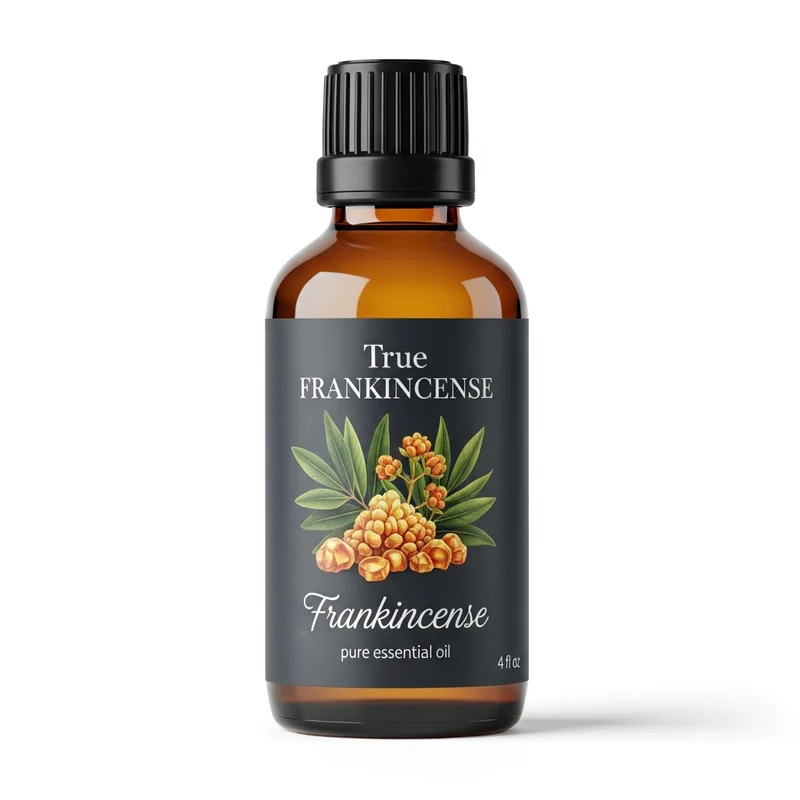
Frankincense Essential Oil
Six single-origin frankincense varieties, steam-distilled and GC/MS verified.
From $10.99
Shop Frankincense Oil →This guide is built entirely around carterii frankincense — its character, its origin story, and how to weave it into a series of signature blends designed for still mornings, breath-centred practices, and the quiet ritual of settling inward. You will find full recipes with precise measurements, step-by-step blending instructions, dilution ratios, safety notes, and three beautiful variations to explore as your practice evolves.
Why Carterii? The Aroma, the Origin, the Character
Boswellia carterii is native to the arid coastal regions of Somalia, Ethiopia, and the Horn of Africa — landscapes of extraordinary harshness and beauty where the trees grow from near-bare rock, drawing moisture from sea mist and producing resin of singular quality. The essential oil is steam-distilled from these tears of dried resin, and its aromatic character reflects that landscape precisely: expansive, clean, and luminous, with a dry woody base, a whisper of citrus brightness in the top notes, and a soft, almost smoky depth that lingers long after the opening accord has faded.
What distinguishes carterii from its relatives — sacra, serrata, frereana — is a particular quality of openness in its aroma. Where Omani sacra can feel intensely sacred and resinous, and Indian serrata tends toward earthier, greener registers, carterii occupies a middle ground that feels simultaneously ancient and airy. It does not crowd a room; it opens one. For breathwork in particular, that airy quality matters enormously. The scent profile encourages slow, expansive inhalation without ever feeling heavy or overwhelming, making it a natural companion for pranayama, box breathing, and mindfulness-based sitting practices.
You can explore our Boswellia carterii essential oil and its full sourcing story before building your first blend.
The Signature Blend: Still Point
Still Point is the foundational carterii meditation blend in this guide — a simple, beautifully balanced formula designed to be diffused during seated meditation or applied as a personal inhaler for breathwork sessions. It pairs carterii's luminous dryness with the grounding sweetness of sandalwood, the cool clarity of ho wood, and a single drop of vetiver to anchor the whole composition to the earth.
Ingredients — Diffuser Version (for a 100ml water-reservoir diffuser)
| Ingredient | Drops | Approx. Volume | Role in Blend |
|---|---|---|---|
| Frankincense carterii essential oil | 5 drops | ~0.25ml | Heart — expansive, resinous anchor |
| Sandalwood (Australian or Hawaiian) essential oil | 3 drops | ~0.15ml | Base — warm, creamy sweetness |
| Ho wood essential oil | 3 drops | ~0.15ml | Top/mid — clean, softly woody clarity |
| Vetiver essential oil | 1 drop | ~0.05ml | Base — deep, smoky, grounding |
Total: 12 drops | ~0.60ml essential oil blend
Ingredients — Personal Inhaler Version (standard cotton wick inhaler)
| Ingredient | Drops | Approx. Volume |
|---|---|---|
| Frankincense carterii essential oil | 10 drops | ~0.50ml |
| Sandalwood essential oil | 6 drops | ~0.30ml |
| Ho wood essential oil | 6 drops | ~0.30ml |
| Vetiver essential oil | 2 drops | ~0.10ml |
Total: 24 drops | ~1.20ml essential oil blend
Step-by-Step Blending Instructions
- Gather and label. Before opening any bottle, assemble all ingredients and a clean glass mixing vessel or small dark glass bottle. Label your final container with the blend name, date, and ingredients — this matters for shelf life tracking.
- Add the heaviest note first. Drop vetiver into your vessel first. Its thick viscosity can cause drops to cling inside the dropper if added last; adding it first allows lighter oils to wash it down into the blend naturally.
- Layer the base and heart. Add sandalwood drops, followed by frankincense carterii. Observe the aroma at this stage — this is the soul of your blend, and it is worth pausing to appreciate it.
- Finish with the top note. Add ho wood last. Swirl the vessel gently (do not shake) to encourage the oils to marry.
- Rest the blend. Cap the bottle and allow the blend to sit for at least 24 hours before use. The aroma will round and deepen considerably as the molecules meld. Many blenders prefer 48–72 hours of resting time for resinous compositions.
- For diffuser use: Add the specified drops directly to your diffuser's water reservoir per the manufacturer's instructions. Run in 30–60 minute intervals rather than continuously.
- For personal inhaler use: Using tweezers, place the cotton wick into your inhaler tube. Drop the blend directly onto the wick, replace the inner tube into the outer casing, and cap. Hold the inhaler approximately two centimetres from one nostril and inhale slowly and deliberately during your breathwork practice.
Dilution Ratios, Patch Testing, and Safety Notes
The Still Point blend above is formulated for aromatic use only (diffusion and inhalation) — the essential oils are not diluted into a carrier oil at this stage and are not intended for direct skin application in undiluted form.
If you wish to use any frankincense carterii meditation blend as a topical pulse-point application (wrists, sternum, temples), you must first dilute the essential oils into an appropriate carrier oil. Observe the following guidelines:
- 1% dilution (general use for most adults): 1 drop essential oil per 5ml carrier oil. Suitable for large surface areas, daily use.
- 2% dilution (targeted application): 2 drops essential oil per 5ml carrier oil. Suitable for pulse points in a ritual context.
- Recommended carriers for this blend: Jojoba (closest to skin's natural sebum, excellent shelf life), fractionated coconut oil (lightweight, neutral), or sweet almond oil (softly nourishing).
Patch Test Protocol: Before applying any new diluted blend to skin, apply a small amount (2–3 drops of the diluted formula) to the inner forearm. Cover loosely and wait 24 hours. If any redness, itching, or irritation occurs, do not proceed with skin application. Discontinue use and consult a qualified healthcare provider if a reaction develops.
- Keep all essential oils away from eyes and mucous membranes.
- Essential oils are not appropriate for use on infants. Consult a qualified healthcare provider before use around young children, during pregnancy, or if nursing.
- Vetiver and sandalwood are generally well tolerated, but individual sensitivities vary. Always introduce new aromatic blends gradually.
- Diffuse in well-ventilated spaces. Limit sessions to 30–60 minutes to avoid olfactory fatigue.
- Keep all oils stored out of reach of children and pets.
Storage and Shelf Life
Frankincense carterii essential oil is notably stable compared to many essential oils, owing to its predominantly sesquiterpene-rich composition. When blended thoughtfully and stored correctly, your Still Point blend can retain its aromatic integrity for an extended period.
- Container: Store in dark amber or cobalt glass bottles with orifice reducers or tight-fitting caps. Avoid plastic, which can interact with essential oils over time.
- Environment: Keep away from direct sunlight, heat sources, and humidity. A cool, dark drawer or a dedicated essential oil storage box is ideal.
- Shelf life (aromatic blend, no carrier): Approximately 2–3 years from the date of blending, provided storage conditions are observed. Vetiver and sandalwood notes are particularly stable and may even improve slightly with age.
- Shelf life (if diluted into carrier oil): Dependent on carrier oil used. Jojoba: up to 2 years. Sweet almond or fractionated coconut: 12–18 months. Always check for any change in scent (rancidity) before use.
- Label every bottle with the blend name, full ingredient list, date made, and dilution ratio if applicable.
Three Variations to Explore
Variation One: Dawn Breath
Designed for early morning breathwork and pranayama, Dawn Breath lifts the carterii frankincense breathwork profile into brighter, more clarifying registers. It pairs the expansive dryness of carterii with bergamot's luminous citrus lift and a grounding note of cedarwood — ideal for practices that begin in the blue-dark quiet before sunrise and move into increasing wakefulness.
| Ingredient | Drops (diffuser) | Character |
|---|---|---|
| Frankincense carterii | 5 drops | Expansive resinous heart |
| Bergamot (bergapten-free) | 4 drops | Bright, uplifting citrus |
| Cedarwood Atlas | 3 drops | Warm, dry, woody anchor |
Note: Use bergapten-free (FCF) bergamot if applying any diluted version topically, as standard bergamot contains photosensitising compounds.
Variation Two: Deep Stillness
Where Dawn Breath rises, Deep Stillness descends. This variation is built for longer seated meditation sessions, yin yoga, yoga nidra, or evening wind-down practices. The carterii is allowed to anchor deeply here, supported by myrrh's balsamic complexity, blue chamomile's soft, almost herbaceous sweetness, and a generous base of patchouli that holds the whole composition in a state of settled quietude.
| Ingredient | Drops (diffuser) | Character |
|---|---|---|
| Frankincense carterii | 5 drops | Luminous, airy resin |
| Myrrh | 3 drops | Deep, balsamic, ancient |
| Blue chamomile (German chamomile) | 2 drops | Softly herbaceous, enveloping |
| Patchouli (aged) | 2 drops | Earthy, settled, grounding |
Variation Three: Breath of the Desert
This third meditation essential oil blend variation leans into the carterii's Somali-Horn of Africa origin story, building a composition that feels as though it was drawn directly from those sun-baked, wind-scoured landscapes. Rose otto adds an unexpected softness — a note of beauty against the arid — while black pepper contributes a faint, energising spice that keeps the blend alive and present rather than drowsy. For breathwork practices where you wish to remain alert and fully engaged.
| Ingredient | Drops (diffuser) | Character |
|---|---|---|
| Frankincense carterii | 6 drops | Expansive, dry, luminous |
| Rose otto (or rose absolute) | 2 drops | Soft floral heart, a note of beauty |
| Black pepper | 2 drops | Warm spice, sharpening presence |
| Cistus (labdanum) | 1 drop | Ancient, amber-like, resinous depth |
Bringing It All Together: Your Aromatic Practice
A carterii meditation blend is not simply a pleasant fragrance added to a room. Used with intention — diffused before your cushion, carried in an inhaler to a breathwork class, or applied as a diluted ritual touch to the sternum before pranayama — it becomes a consistent aromatic cue. Over time, your nervous system learns to associate this particular constellation of scent with the act of settling inward. The ritual deepens. The threshold between ordinary time and practice time becomes easier to cross.
Boswellia carterii has been part of human ritual for millennia — traded along ancient incense routes, burned in temples and sacred spaces, carried across deserts in camel caravans. When you open a bottle of quality carterii essential oil and begin building your own frankincense breathwork blend, you are not beginning something new. You are joining something very, very old.
Begin with Still Point. Rest in it for a season. Then, when curiosity calls, explore the variations. Let the blending itself become part of the practice — a slow, deliberate act of attention before the sitting even begins.