Frankincense Beard Oil Recipe: A Woody Rivae Blend in Ten Minutes
There is a particular pleasure in reaching for a grooming oil that carries genuine provenance — something that connects a morning ritual to an ancient resin, a specific landscape, a tradition of craft that predates modern perfumery by millennia. This frankincense beard oil recipe does exactly that. Built around the rare and underappreciated Boswellia rivae, it is a woody hair oil blend that can be measured, mixed, and bottled in ten minutes flat, yet smells as considered as anything you might find on the shelf of a luxury apothecary.
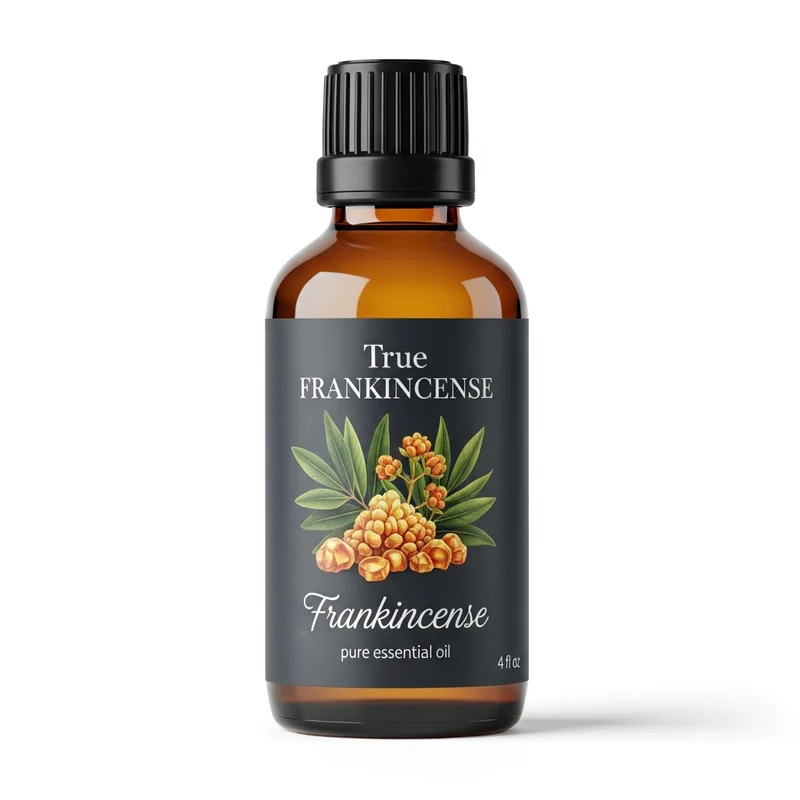
Frankincense Essential Oil
Six single-origin frankincense varieties, steam-distilled and GC/MS verified.
From $10.99
Shop Frankincense Oil →Whether you are new to DIY grooming blends or a seasoned formulator looking to elevate your toolkit, this rivae beard oil recipe will give you everything you need: the why behind the star ingredient, a precise full formula with both drop counts and milliliter measurements, step-by-step instructions, safety guidance, and three variations to explore once the base becomes second nature.
Why Frankincense Rivae? The Case for This Particular Resin
The world of frankincense is far more nuanced than a single bottle labeled "frankincense" would suggest. Each Boswellia species produces resin with a distinct aromatic fingerprint shaped by soil, altitude, rainfall, and the tree's own genetic character. Boswellia rivae is native to the arid lowlands of southern Ethiopia, where it grows in rocky, semi-desert terrain at lower elevations than its more celebrated cousin Boswellia sacra.
That origin matters to your nose. Where sacra tends toward a bright, almost citrus-touched transparency, and carterii leans into a classic resinous sweetness, rivae presents something considerably more grounded. Its aroma profile is characteristically deep, dry, and woody — think warm amber resin underscored by a dry earthiness with just the faintest whisper of smoke. Some describe a subtle leather quality, a mineral edge, a sense of ancient stone warmed by afternoon sun.
For a beard oil or woody hair oil blend, this profile is ideal for several reasons:
- Depth without sweetness. Many frankincense varieties can tip slightly sweet when blended with rich carrier oils. Rivae stays dry and resinous, which reads as genuinely masculine and sophisticated on skin and hair.
- Natural synergy with wood and bark notes. Rivae's earthy character pairs beautifully with cedarwood, sandalwood, and vetiver — all notes that anchor and deepen a grooming blend.
- Moderate volatility. Rivae is a mid-to-base note leaning essential oil. It won't flash off quickly. In a leave-on grooming product like beard oil, that staying power means the aroma evolves gently over the course of the day rather than disappearing within the first hour.
- Rarity as ritual. There is something worth appreciating in choosing an ingredient that most people have never encountered. Using rivae in your daily grooming practice is a quiet act of connoisseurship.
You can explore our full range and learn more about the sourcing and character of this resin on the frankincense rivae product page.
The Full Rivae Beard and Hair Oil Formula
This formula is designed to fill one 30 ml (1 fl oz) amber dropper bottle — a practical size for approximately three to four weeks of daily use. The total essential oil concentration sits at 2%, which is a widely recommended dilution for leave-on facial and hair applications on adult skin. See the safety section below before proceeding.
Ingredients
| Ingredient | Role | Amount (drops) | Amount (ml) |
|---|---|---|---|
| Jojoba oil (golden) | Primary carrier — lightweight, long shelf life | — | 15 ml |
| Argan oil | Secondary carrier — softening, luxurious texture | — | 10 ml |
| Sweet almond oil | Tertiary carrier — smooths blend, adds slip | — | 4 ml |
| Vitamin E oil (tocopherol) | Natural antioxidant, supports shelf life | — | 1 ml |
| Frankincense rivae essential oil | Star note — deep, dry, woody resin accord | 8 drops | ~0.4 ml |
| Virginian cedarwood essential oil | Mid-base note — warm, pencil-shaving wood | 4 drops | ~0.2 ml |
| Vetiver essential oil | Base note anchor — smoky, earthy, dry grass | 2 drops | ~0.1 ml |
| Black pepper essential oil | Top-mid note — warm spice, lifts the blend | 2 drops | ~0.1 ml |
Total volume: approximately 30 ml
Total essential oils: 16 drops (~0.8 ml)
Dilution rate: approximately 2% — suitable for leave-on adult skin and hair application
A note on drop counts: Drop sizes vary slightly between essential oil bottles, pipettes, and dropper inserts. The milliliter measurements above represent a more precise reference point. If you are scaling this recipe up or have access to a digital scale accurate to 0.01 g, measuring by weight will give you the most consistent results.
Step-by-Step Blending Instructions
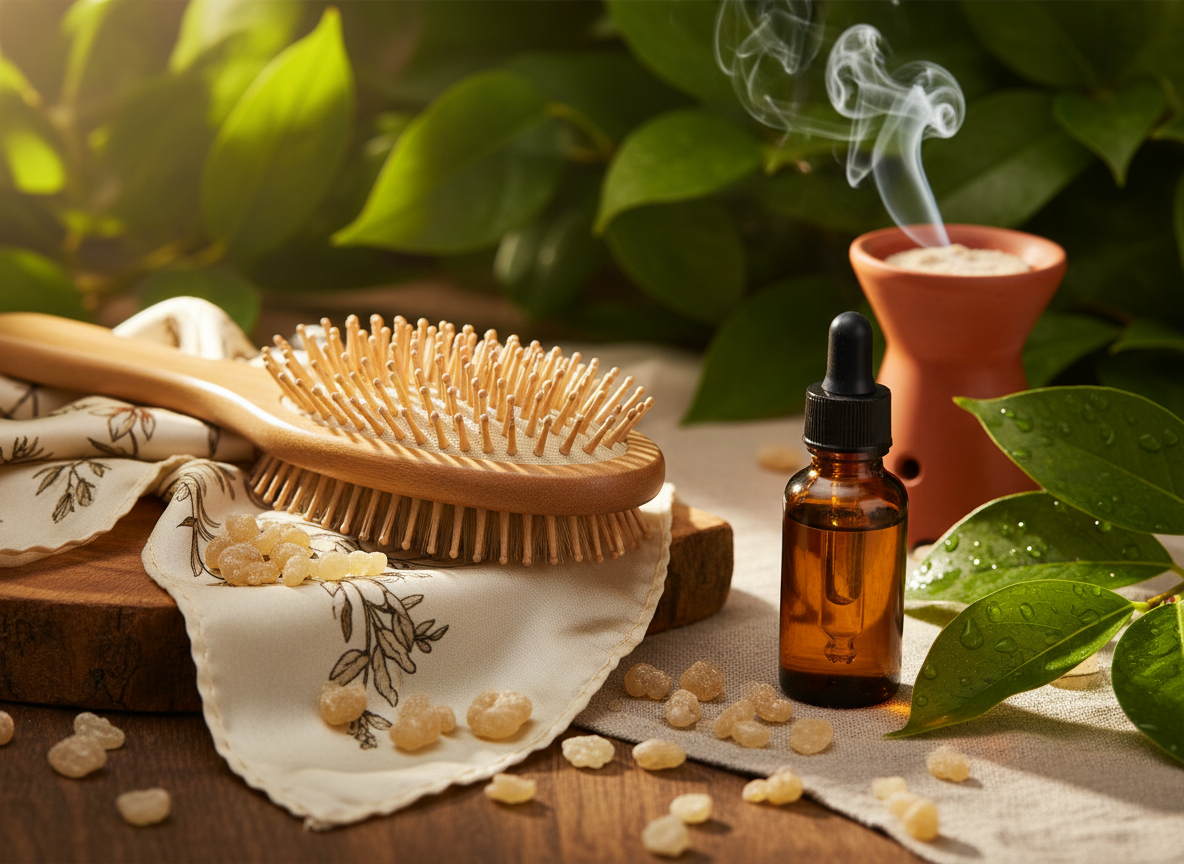
This entire process takes approximately ten minutes, assuming your ingredients and equipment are gathered in advance. You will need: a clean 30 ml amber dropper bottle, a small funnel or pipette for the carriers, and a clean surface or tray to work on.
- Prepare your workspace. Wipe down your surface with a clean cloth. Gather all ingredients, your bottle, funnel, and any measuring tools. Working in a well-ventilated area is good practice whenever handling essential oils.
- Add the vitamin E first. Measure 1 ml of tocopherol vitamin E oil into your 30 ml bottle. This acts as a natural antioxidant for the carrier oil base.
- Add the carrier oils. Using your funnel or pipette, measure and pour in the sweet almond oil (4 ml), then the argan oil (10 ml), and finally the jojoba oil (15 ml). The bottle should now be approximately filled to the 30 ml shoulder, leaving a small headspace for the essential oils.
- Add your essential oils. Working drop by drop, add the vetiver first (2 drops — the thickest, most viscous oil in this formula, so adding it early allows it to integrate), then cedarwood (4 drops), then black pepper (2 drops), and finally frankincense rivae (8 drops). Rivae is added last as the star note so you can appreciate its character as it enters the blend.
- Seal and blend. Fit the dropper insert and cap securely. Gently roll the bottle between your palms for 30–60 seconds. Do not shake vigorously — rolling integrates the oils without introducing air bubbles or disturbing the emulsion.
- Rest the blend. Ideally, allow the blend to sit capped for 24–48 hours before first use. This resting period allows the aromatic molecules to marry and the scent to develop its full character. Many blenders find the aroma noticeably rounder and more cohesive after this short maturation.
- Label your bottle. Record the name, date of creation, and ingredient list on a label. Practical and important for tracking shelf life.
How to Apply
Dispense 3–5 drops into your palm, rub your hands together briefly to warm the oil, and work through the beard from root to tip, finishing with a stroke along the surface to smooth the hair and impart a subtle, sophisticated sheen. For scalp and longer hair use, focus application on mid-lengths and ends, avoiding heavy application at the roots if your scalp tends toward oiliness.
Dilution Ratios, Patch Testing, and Safety Notes
Please read this section in full before making or using this blend.
Dilution
This recipe is formulated at approximately 2% total essential oil dilution, which aligns with widely referenced guidelines for leave-on products applied to adult facial skin and hair. Do not increase the essential oil quantity without carefully considering the impact on dilution rate. Higher concentrations increase the potential for skin sensitization, particularly with repeated daily use.
Patch Testing
Before applying any new blend to your face or scalp, perform a patch test. Apply a small amount of the finished blend to the inside of your elbow or wrist. Leave undisturbed for 24 hours and observe for any redness, itching, or irritation. If any reaction occurs, discontinue use. This is especially important if you have reactive, sensitive, or broken skin.
Contraindications and Cautions
- Nut allergies: This recipe contains sweet almond oil. If you have a tree nut allergy, substitute with a hypoallergenic carrier such as fractionated coconut oil or sunflower seed oil, and consult with a healthcare provider before use.
- Pregnancy and nursing: Consult a qualified healthcare provider before using essential oil blends during pregnancy or while nursing.
- Children: This blend is formulated for adults only. Keep all essential oils and finished blends out of reach of children.
- Black pepper essential oil: May cause a gentle warming sensation on skin. This is normal at 2 drops in 30 ml but discontinue use if you experience discomfort.
- Eye contact: Avoid contact with eyes. If contact occurs, flush with a carrier oil (not water) and seek medical advice if irritation persists.
- Existing skin conditions: If you have any existing skin conditions or are under the care of a dermatologist, please consult your healthcare provider before introducing new topical products.
Nothing in this recipe constitutes medical advice. Essential oils are not intended to diagnose, treat, cure, or prevent any disease or condition. Always consult a qualified healthcare professional with any health concerns.
Storage and Shelf Life
Stored correctly, this woody hair oil blend should maintain its quality for approximately 9–12 months. The primary limiting factor is the carrier oil base rather than the essential oils. Argan and sweet almond oil are moderately stable but will oxidize over time, which is why the vitamin E addition is worthwhile — it helps slow the process.
- Store in a cool, dark location away from direct sunlight and heat sources. A bathroom cabinet (away from the shower's steam) or a bedroom drawer works well.
- Use amber glass bottles rather than clear glass or plastic, as these filter light and slow oxidation.
- Keep the cap tight between uses to minimize air exposure.
- Trust your senses. If the oil develops a noticeably sharp, crayon-like, or rancid smell, the carrier oils have oxidized and the blend should be discarded. Fresh blends have a clean, pleasant aroma from the first pour.
Three Variations to Explore
Once the base recipe feels like home, these variations allow you to shift the aromatic personality of your frankincense beard oil without changing the carrier oil base or the 2% dilution framework. Simply substitute the essential oil portion as indicated, keeping all carriers identical.
Variation 1: The Deep Forest — Rivae and Atlas Cedarwood
Replace the Virginian cedarwood with Atlas cedarwood essential oil, and swap the black pepper for a single drop of patchouli. The result is a darker, more resinous, almost oud-adjacent accord — deeply woody, slightly sweet, and extraordinarily long-lasting on the skin. Ideal for anyone who enjoys the languorous depth of Middle Eastern perfumery traditions.
- Frankincense rivae: 8 drops
- Atlas cedarwood: 5 drops
- Vetiver: 2 drops
- Patchouli: 1 drop
Variation 2: The High Desert — Rivae and Juniper Berry
Replace the cedarwood entirely with juniper berry essential oil and add a drop of cardamom. This brightens the woody profile considerably, introducing an aromatic, almost gin-like crispness that sits beautifully above rivae's dry earthiness. The result is a frankincense beard oil that feels simultaneously ancient and refreshingly contemporary.
- Frankincense rivae: 7 drops
- Juniper berry: 4 drops
- Cardamom: 2 drops
- Vetiver: 2 drops
- Black pepper: 1 drop
Variation 3: The Smoky Scholar — Rivae and Smoked Oud Accord
This variation replaces the black pepper with a single drop of clove bud essential oil (used sparingly, as it is a potent sensitizer at higher concentrations — one drop in 30 ml keeps the dilution comfortable) and doubles the vetiver. The result is the most intense and contemplative of the three variations — a meditative, smoky, resinous blend that people in your vicinity will quietly notice and wonder about.
- Frankincense rivae: 8 drops
- Virginian cedarwood: 4 drops
- Vetiver: 3 drops
- Clove bud: 1 drop
Note: Clove bud essential oil may cause sensitization. Perform a patch test and do not exceed the stated quantity.
A Final Word on the Ritual
There is something worth preserving in the act of making rather than simply purchasing. A rivae beard oil recipe like this one takes ten minutes to assemble, but the attention you bring to it — selecting the oils, understanding the origin of the resin, rolling the bottle between your palms and watching the carriers catch the light — extends the experience into something closer to genuine craft.
Boswellia rivae has been producing its resin in the Ethiopian lowlands for thousands of years without any awareness of modern grooming trends. Using it in a thoughtfully composed woody hair oil blend is a quiet way of acknowledging that lineage. And on mornings when you open the bottle and that dry, warm, ancient woody character rises to meet you, it is difficult not to appreciate how well the old world and the contemporary ritual can coexist.
Ready to source the star ingredient? Explore our ethically sourced frankincense rivae essential oil and bring this recipe to life.