Frankincense Facial Oil Recipe for Mature Skin: The Classic Carterii Blend
There is a particular pleasure in reaching for an oil that has been trusted for millennia — not because of marketing copy, but because of accumulated, quiet consensus across cultures and centuries. Boswellia carterii is that oil. Distilled from the sacred resin of trees rooted in the Horn of Africa, carterii frankincense carries with it the weight of ancient Egyptian cosmetic ritual, the refinement of Arabian trade routes, and, today, a growing body of preliminary research that has made it one of the most discussed botanicals in contemporary natural skincare circles.
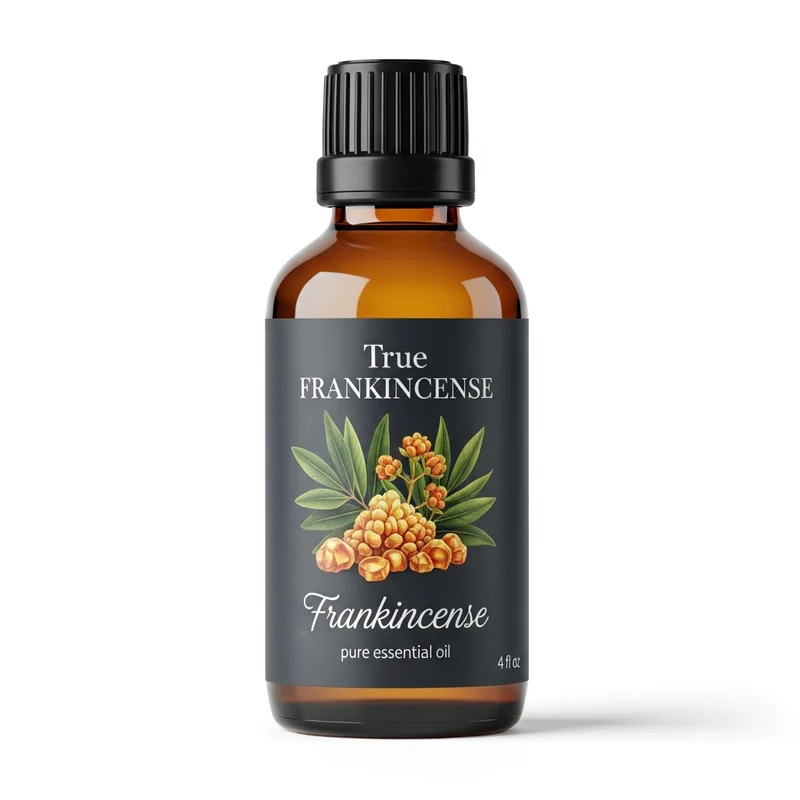
Frankincense Essential Oil
Six single-origin frankincense varieties, steam-distilled and GC/MS verified.
From $10.99
Shop Frankincense Oil →This guide presents a complete, thoughtfully formulated carterii frankincense facial oil recipe designed with mature skin in mind — its particular needs, its richness, and the ritual it deserves. Here you will find the full ingredient list, step-by-step blending instructions, dilution guidance, safety notes, shelf-life considerations, and three distinct variations to make this blend entirely your own.
Why Boswellia Carterii? The Case for the Classic
Not all frankincense is the same. The genus Boswellia encompasses more than twenty species, each with its own resin chemistry, aroma character, and traditional context. Choosing the right variety for a facial oil is not an arbitrary decision — it is, in fact, the most important one you will make in this formulation.
Origin and Character
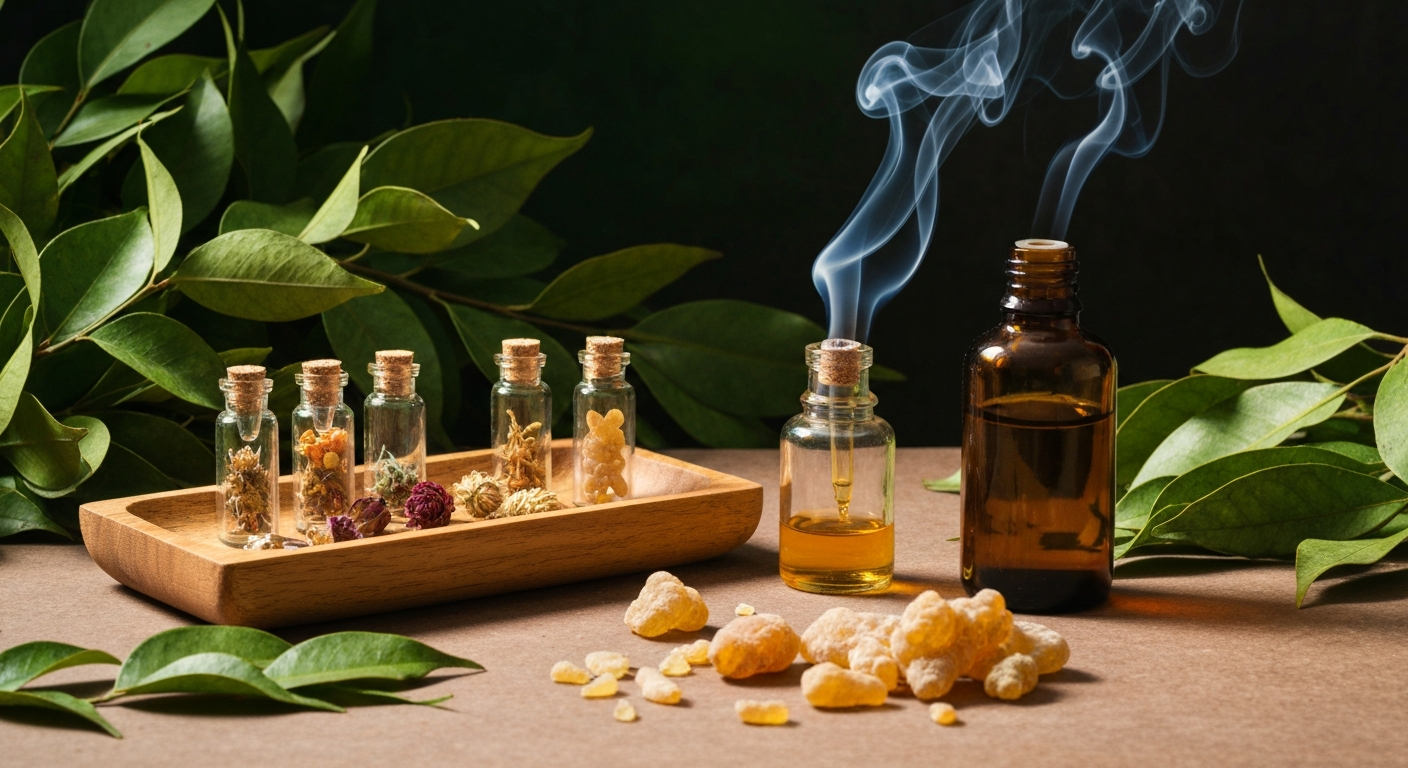
Boswellia carterii is native primarily to Somalia and the surrounding regions of the Horn of Africa, where it grows in arid, rocky terrain under conditions that seem designed to concentrate the resin's complexity. The trees are hand-tapped by harvesters who have inherited this knowledge across generations, and the resulting resin tears — pale, golden, and luminous — are steam-distilled into an essential oil of remarkable nuance.
Aromatically, carterii is the quintessential frankincense: warm, balsamic, and slightly citrus-lifted, with a clean, almost crystalline drydown that distinguishes it from the earthier, more resinous serrata or the intensely sacred sacra. That lifted, fresh quality is one reason carterii has long been favoured in perfumery and cosmetic blending — it integrates beautifully with the green, herbaceous, and floral notes common in facial oil formulations without overwhelming them.
Why Carterii Suits Mature Skin Blending
From a formulation perspective, carterii's aroma profile is neither too heavy nor too sharp, making it deeply pleasant for a daily-use facial oil that will be applied close to the face. Its olfactory character lends the finished blend an immediate sense of grounded luxury — a small but meaningful contribution to the ritual of skincare as self-care.
Beyond aroma, Boswellia carterii has attracted significant attention from researchers interested in its constituent compounds. Some preliminary research suggests that boswellic acids and other terpenoid constituents found in carterii resin extracts may be worth further study in the context of skin-related applications. It is important to note that essential oil distillates contain different constituents than resin extracts, and no essential oil — including carterii — should be considered a treatment for any skin condition. What we offer here is a beautifully crafted aromatic blend for the pleasure of ritual and self-care.
You can explore our full range of ethically sourced resin and oil at the Boswellia carterii product page, where sourcing details and quality specifications are outlined in full.
The Classic Recipe: Carterii Frankincense Facial Oil for Mature Skin
Yield and Dilution
This recipe yields 30 ml (approximately 1 fl oz) of finished facial oil — enough to fill one standard 30 ml amber glass dropper bottle. The essential oil dilution is maintained at 1%, which is the widely recommended maximum for facial application according to established aromatherapy safety guidelines from organisations such as the Alliance of International Aromatherapists (AIA) and the National Association for Holistic Aromatherapy (NAHA). Facial skin is more sensitive than body skin, and the 1% dilution is considered appropriate for daily use on adult facial skin.
1% dilution in 30 ml = approximately 9 drops of total essential oil.
Ingredients
| Ingredient | Amount (drops) | Amount (ml) | Role |
|---|---|---|---|
| Rosehip seed oil (Rosa canina) | — | 15 ml | Primary carrier; rich in linoleic acid |
| Jojoba oil (Simmondsia chinensis) | — | 10 ml | Stabilising carrier; structurally similar to sebum |
| Squalane (olive-derived) | — | 4 ml | Lightweight emollient; extends shelf life |
| Vitamin E oil (tocopherol, mixed) | — | 1 ml | Natural antioxidant; preservative support |
| Boswellia carterii essential oil | 6 drops | ~0.30 ml | Primary aromatic + botanical focus |
| Neroli essential oil (Citrus aurantium) | 2 drops | ~0.10 ml | Floral top note; aromatic complement |
| Rose otto essential oil (Rosa damascena) | 1 drop | ~0.05 ml | Rich floral anchor; aromatic depth |
Total essential oil: 9 drops (~0.45 ml) in 30 ml carrier = 1.5% — please see the dilution note below.
A note on dilution: Because rose otto is exceptionally concentrated and potent, and because individual skin sensitivity varies, we recommend starting with a 1% dilution (6 drops total essential oil) if you have sensitive skin, are new to facial oils, or are over 65. The formulation above sits at approximately 1.5%, which remains within widely cited safe ranges for adult facial application but represents the upper end. Always patch test before full application. If any irritation occurs, discontinue use immediately.
Step-by-Step Blending Instructions
- Prepare your workspace. Ensure all equipment — glass beakers, stirring rods, pipettes, and your storage bottle — has been cleaned with isopropyl alcohol and allowed to dry fully. Contaminated equipment is the primary cause of premature rancidity in facial oils.
- Measure your carriers. Using a precision scale or calibrated pipette, measure 15 ml of rosehip seed oil into a clean glass beaker. Add 10 ml of jojoba, followed by 4 ml of squalane. Swirl gently to combine.
- Add the vitamin E. Measure 1 ml of mixed tocopherol vitamin E oil and add to the carrier blend. This acts as a natural antioxidant to slow oxidation of the finished oil. Stir gently.
- Add your essential oils. Using a clean dropper or pipette for each, add the Boswellia carterii essential oil first (6 drops), followed by neroli (2 drops) and rose otto (1 drop). Adding in this order — heaviest aromatic commitment first — helps you adjust if needed before completing the blend.
- Blend with intention. Stir the completed blend slowly with a clean glass rod for approximately 60 seconds. Avoid vigorous shaking or whipping, which introduces air and may accelerate oxidation.
- Transfer to your storage bottle. Using a clean funnel or pipette, transfer the blend into your 30 ml amber glass dropper bottle. Seal immediately.
- Label clearly. Include the date of blending, the full ingredient list, and a "use by" date of 6 months from today.
- Rest before use. Allow the blend to rest for 24 hours before first use. This resting period allows the aromatic molecules to fully integrate, producing a more rounded, harmonious scent profile.
Application Ritual
To use: after cleansing and toning, warm 3–5 drops of the oil between the palms of your hands. Press gently onto the face and neck, working inward from the jawline. Breathe slowly as you apply — this is as much a sensory ritual as a skincare step. The warm, balsamic opening of the carterii frankincense, softened by neroli's bright floral lift and anchored by the deep rose otto, is designed to be experienced deliberately.
Patch Testing and Safety Notes
- Patch test before first use: Apply a small amount of the finished oil to the inside of your wrist or elbow. Wait 24 hours and observe for any redness, itching, or irritation. Do not proceed with facial application if any reaction occurs.
- Essential oils must always be diluted before skin application. Never apply undiluted essential oil directly to the face or any sensitive skin area.
- Pregnancy and nursing: Some essential oils are traditionally avoided during pregnancy. Consult a qualified healthcare provider or certified aromatherapist before using any essential oil blend if you are pregnant, nursing, or trying to conceive.
- Medication and medical conditions: This blend is a cosmetic aromatic preparation. It is not a substitute for medical treatment. Always consult a qualified healthcare provider regarding any skin concerns or health conditions.
- Children and elderly individuals may require lower dilution ratios. Consult a qualified aromatherapist for personalised guidance.
- Eye area: Avoid application around the immediate eye contour. Keep all essential oil blends away from eyes.
- Photosensitivity: Neroli (from Citrus aurantium flower) is generally considered non-phototoxic, unlike cold-pressed citrus oils. However, if substituting any cold-pressed citrus essential oil, avoid sun exposure on treated areas for at least 12 hours.
Storage and Shelf Life
Store your finished facial oil in its amber glass bottle in a cool, dark location away from direct sunlight and heat sources. A bathroom cabinet or bedroom drawer is suitable; a bathroom shelf in direct light is not.
- Estimated shelf life: 4–6 months from blending date, owing primarily to the rosehip seed oil, which is rich in polyunsaturated fatty acids and therefore more susceptible to oxidation than more stable carriers.
- The addition of vitamin E oil supports shelf life but does not extend it indefinitely.
- Signs of rancidity include a sharp, crayon-like, or "off" odour. If your oil develops any unusual scent, discontinue use and discard.
- Do not store in plastic containers. Glass is essential for preserving both aromatic integrity and carrier oil quality.
Three Signature Variations
Variation 1: The Minimalist (Single-Note Purity)
For those who prefer to experience Boswellia carterii unadorned — and it is an experience genuinely worth having — this variation removes all additional essential oils, allowing the frankincense to speak entirely for itself.
- Rosehip seed oil: 18 ml
- Jojoba oil: 10 ml
- Squalane: 1 ml
- Vitamin E oil: 1 ml
- Boswellia carterii essential oil: 6 drops (1% dilution)
This single-note approach is particularly recommended for those who are new to essential oils, have sensitive skin, or wish to assess their personal response to carterii before introducing additional botanicals.
Variation 2: The Grounding Forest Blend
This variation leans into the woody, meditative depth of carterii, complementing it with the quieter resinous warmth of cedarwood and the gentle, green softness of helichrysum — creating an oil with a distinctly contemplative aromatic character.
- Rosehip seed oil: 12 ml
- Jojoba oil: 12 ml
- Squalane: 5 ml
- Vitamin E oil: 1 ml
- Boswellia carterii essential oil: 5 drops
- Cedarwood Atlas essential oil (Cedrus atlantica): 2 drops
- Helichrysum essential oil (Helichrysum italicum): 2 drops
The aroma of this variation is deeper and more resinous — ideal for evening application as part of a wind-down ritual.
Variation 3: The Brightening Citrus Accord
This variation lifts the carterii with the sparkling brightness of steam-distilled lemon or sweet orange — both of which are non-phototoxic in their steam-distilled form (as opposed to cold-pressed) — and a touch of ylang ylang for exotic floral warmth.
- Jojoba oil: 20 ml
- Marula oil (Sclerocarya birrea): 8 ml
- Vitamin E oil: 2 ml
- Boswellia carterii essential oil: 5 drops
- Steam-distilled lemon essential oil: 2 drops
- Ylang ylang (extra) essential oil: 1 drop
- Sandalwood essential oil (Santalum album): 1 drop
Important: Ensure you are using steam-distilled lemon essential oil, not cold-pressed, to avoid phototoxicity concerns. If you are uncertain, substitute with sweet orange (steam-distilled) or omit the citrus element entirely.
A Final Note on Sourcing
The quality of your finished blend is entirely dependent on the quality of your starting materials. Boswellia carterii essential oil varies considerably between suppliers in terms of purity, GC/MS testing transparency, and ethical sourcing practices. We encourage you to source from suppliers who can provide full traceability, third-party test results, and who demonstrate a genuine commitment to the sustainability of wild-harvested Boswellia populations — a cause that matters deeply to the long-term future of this remarkable botanical tradition.
Explore our ethically sourced, fully tested Boswellia carterii essential oil and begin your blending practice with confidence in what you are working with.
This article is provided for educational and informational purposes only. The blend described is a cosmetic aromatic preparation and is not intended to diagnose, treat, cure, or prevent any disease or medical condition. Always consult a qualified healthcare provider before beginning any new skincare regimen, particularly if you have existing skin conditions, are pregnant, or are taking medication.