Frankincense Candle Making: Wax and Wick Come First
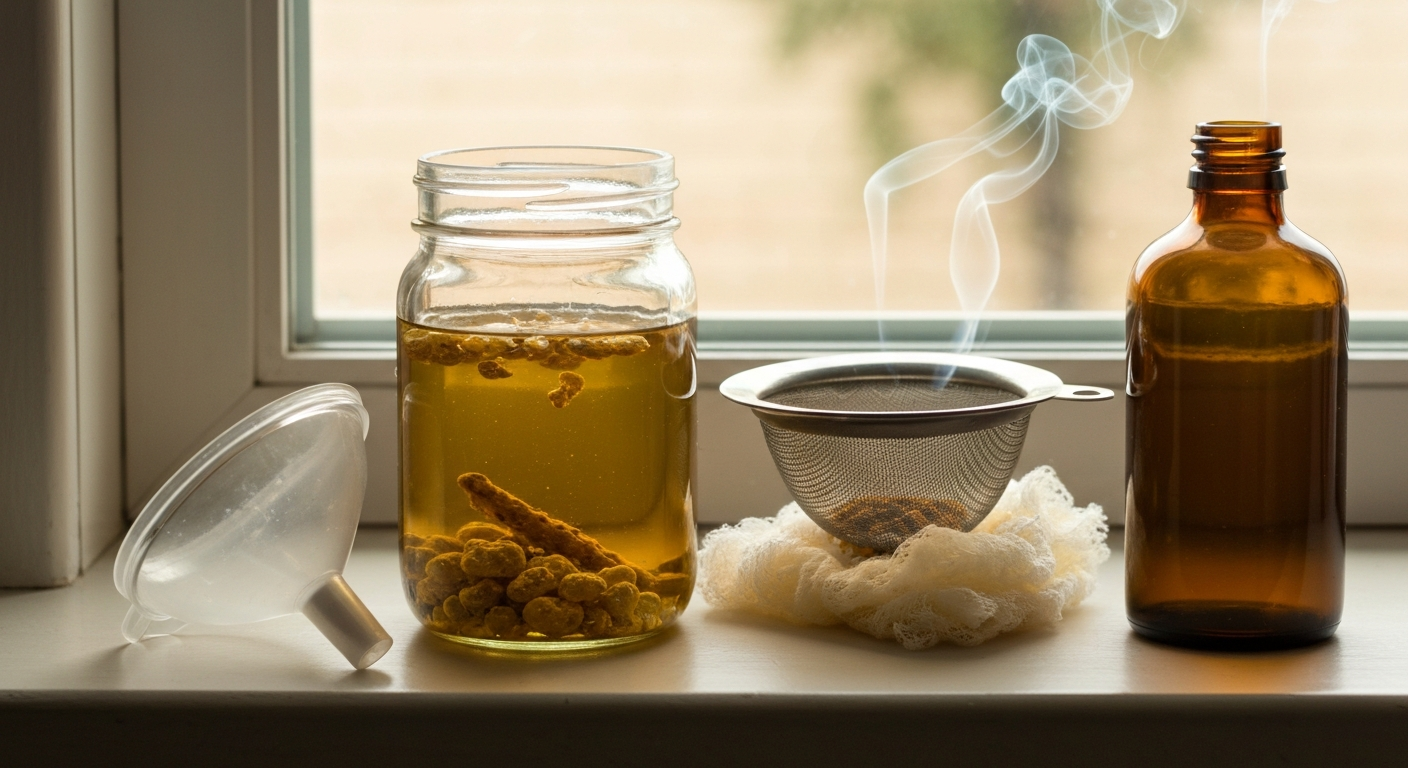
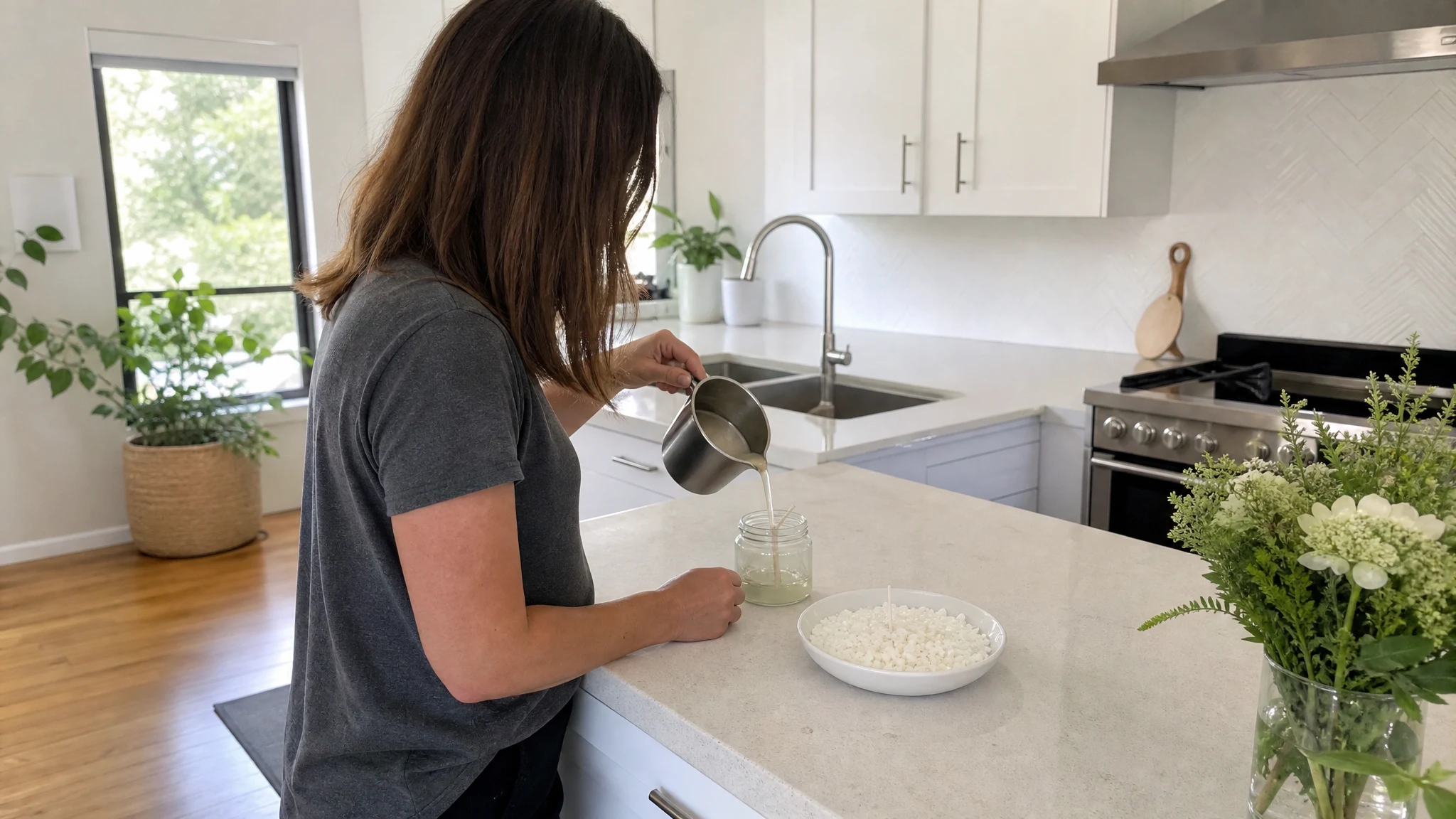
A frankincense candle sounds like the easiest project there is: melt the wax, stir in the oil, pour. The catch for beginners is the order of decisions. The oil feels like the star, but it is the last thing to settle, and the candles that smell the way you imagined are usually the ones where wax, wick and jar were sorted out first. Here is how we would walk through it.

Frankincense Essential Oil
Six single-origin frankincense varieties, steam-distilled and GC/MS verified.
From $12.99 $10.40 with code BLACKFRIDAY
Wax, wicks and jars to buy elsewhere
We sell six frankincense essential oils and nothing else you need for a candle: no wax, wicks, jars or dyes. Those come from a candle-supply shop, and the wax maker's instructions are the ones to follow for how much fragrance a wax can hold and what temperature to stir it in at. That sheet is more useful than any general rule, because soy, paraffin and blended waxes behave differently and a wick is sized to a particular jar.
It is worth knowing why the temperature matters. The Tisserand Institute's safety guidelines point out that essential oils are flammable and should not be used in any way that puts them close to a naked flame, while also saying fragrant candles are fine. Reasoning from the two statements, the sensible habit is to stir the oil into wax that has cooled to the range your supplier gives, never into wax that is still much hotter.
How much frankincense oil per candle wax weight?
Candle makers often work in percentages of the wax weight. One recent emissions study chose a paraffin candle with 6% lavender essential oil because it is a widely sold type. That is a description of what the researchers burned, not a recommendation, but it gives a feel for the quantities, and here is the arithmetic:
- 6% of 300 g of wax is 18 g of oil.
- The one Certificate of Analysis we publish is for a serrata batch with a relative density of 0.838, so 18 g of that oil is about 21.5 ml, close to three quarters of a fluid ounce. Other varieties may differ, so treat this as an estimate.
- For a pound of wax (453.6 g), 6% is about 27 g, or roughly 32 ml, a little over an ounce.
Candles drink oil. That is why the smallest bottle is a good way to begin, and it is also why makers working at volume look at the wholesale route. Our wholesale page describes sample bottles for trying an oil in your own product before committing to a bigger size.
Which frankincense species suits a candle best?
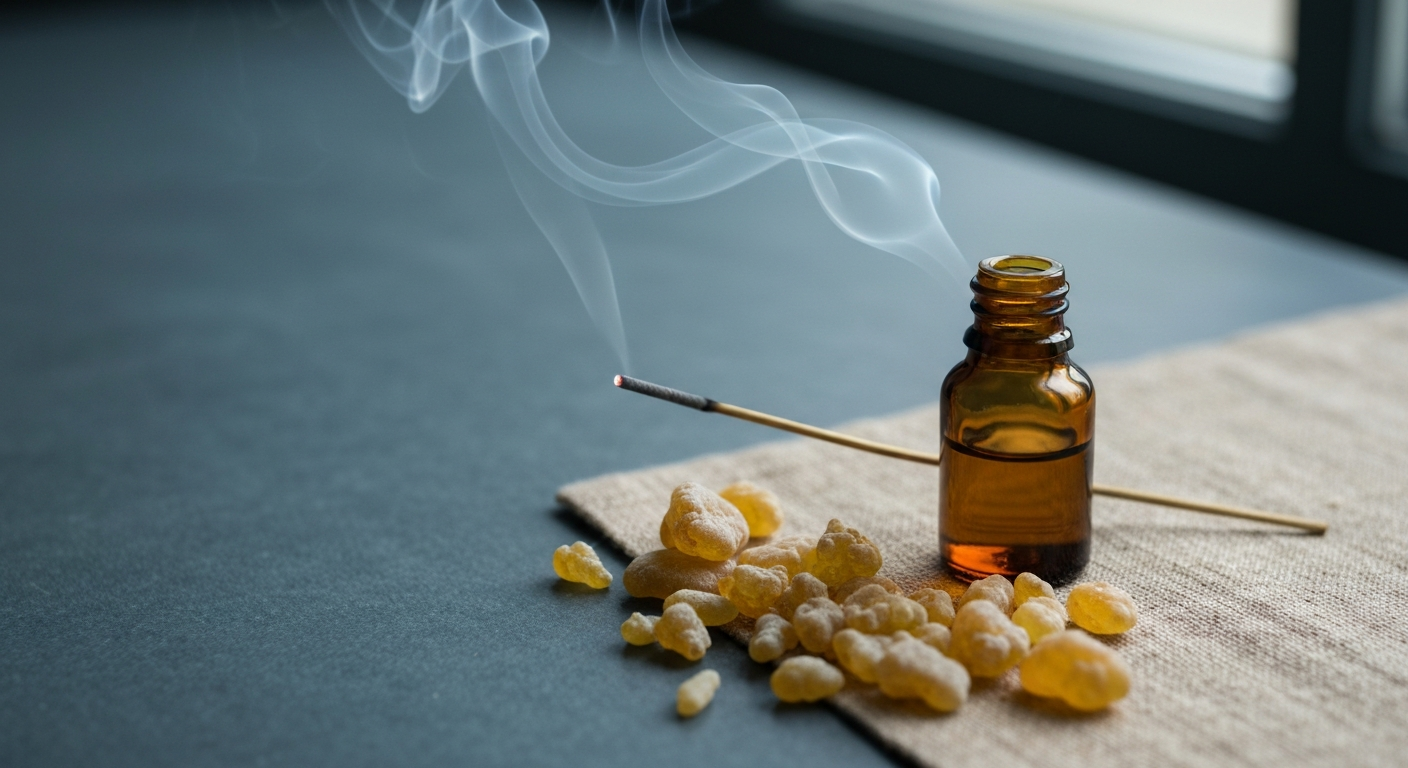
Because the oil is mostly about scent here, the choice comes down to the aroma you want to walk into. We describe serrata as warm and slightly woody with subtle citrus and pine top notes, carterii as warm and woody with a little citrus over classic resinous depth, sacra as deep, balsamic and honeyed, frereana as bright and fresh, lemon-pine, and neglecta as smoky and slightly fruity over a dry resinous base. If you picture an old stone church, carterii is the one we would reach for first; for a smokier, incense-like room, neglecta is the closest match on paper.
How each one carries in a particular wax is something to find out on a small pour, since wax type, wick and jar all change how a scent throws. Two small test candles from two oils will teach you more than any description. For more on how the six differ, see the species overview. If you need species, origin or compound data for a particular variety and lot before you buy in quantity, ask us in writing through the contact page and get the answer on paper before you rely on it.
Sniff-testing frankincense oils before pouring wax
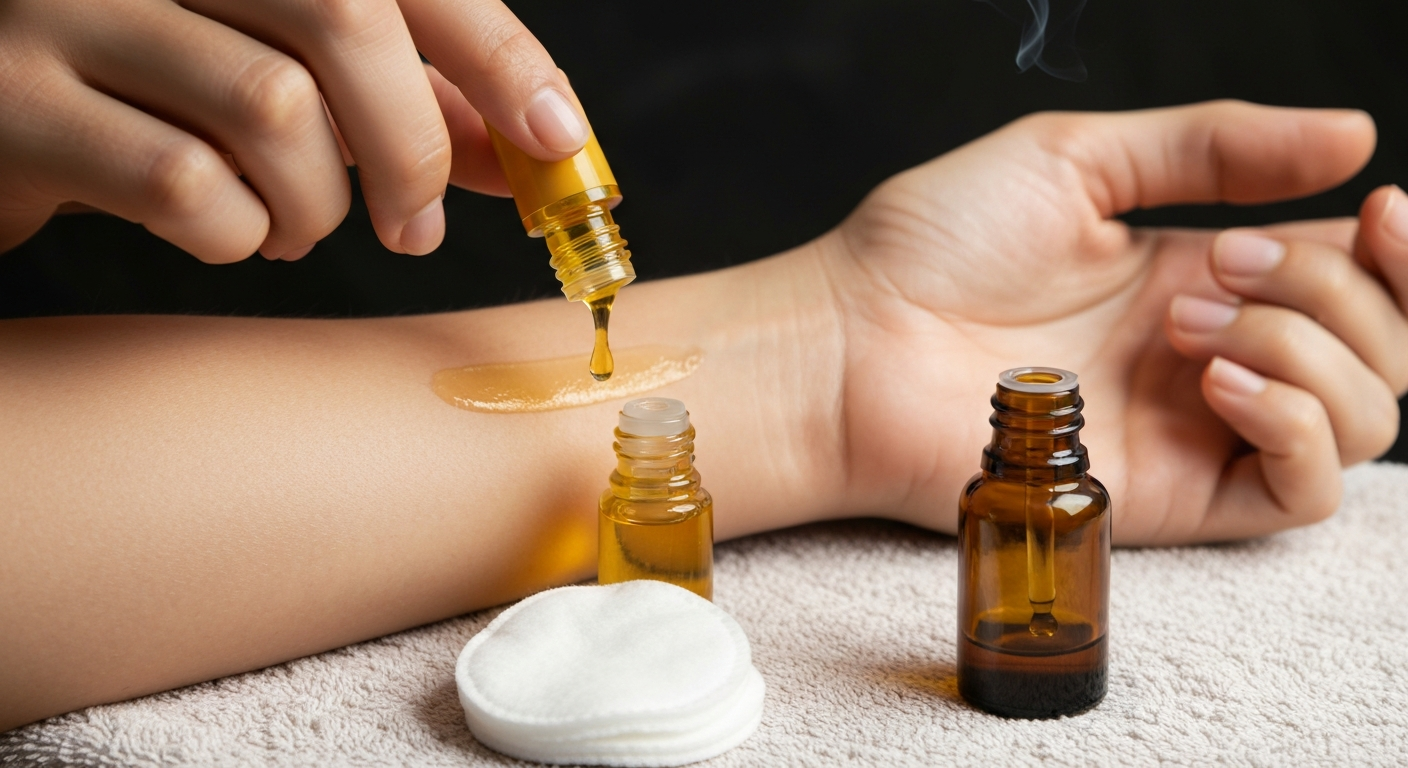
Before you pour anything, open the bottle of each oil you are considering and take a slow sniff from a hand's width away. Wait a few seconds and sniff again. Frankincense shifts as it sits in the air: the first impression is often the brighter, citrusy top, and what lingers is the resinous, woody base. A candle tends to show you that second part, so choose the oil whose lingering scent you like best, not the one that smells best in the first second.
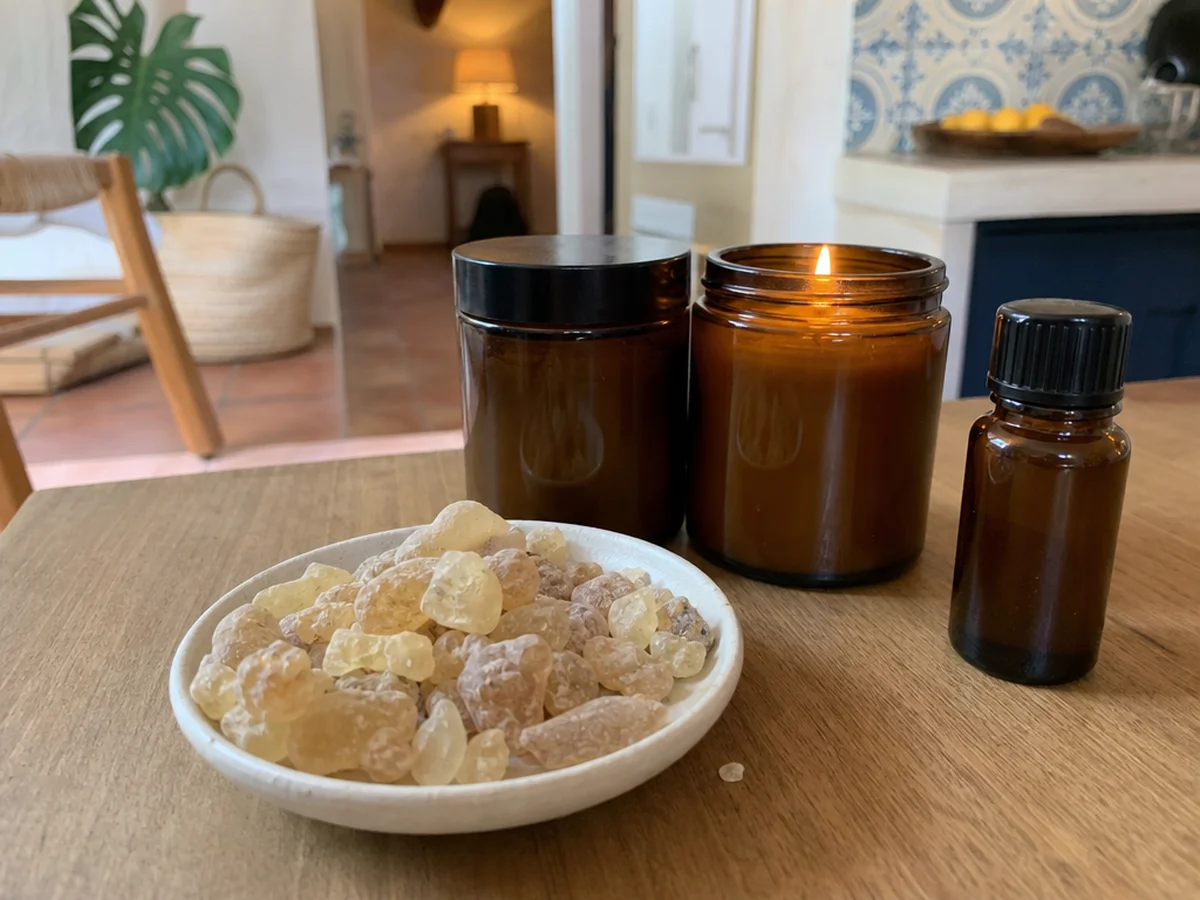
It also helps to keep a little notebook beside your wax. Write down which oil you used, how much, and what you noticed once the candle burned. When one turns out the way you hoped, you will want to be able to make it again.
Combustion products from burning scented candles
Any candle gives off combustion products, scented or not, and the research is worth a sentence or two rather than a lecture. A 2014 modelling study measured emissions from scented candles in chambers, applied them to a standard European home, and concluded that under normal use they pose no known health risks to consumers. A 2026 chamber study of one paraffin candle found the highest polycyclic aromatic hydrocarbon levels at the lowest ventilation rate it tested, and its authors stress adequate ventilation. Neither study burned frankincense, and the practical lesson is the same in both: burn a candle in a room that gets some fresh air, and let it do its work there.
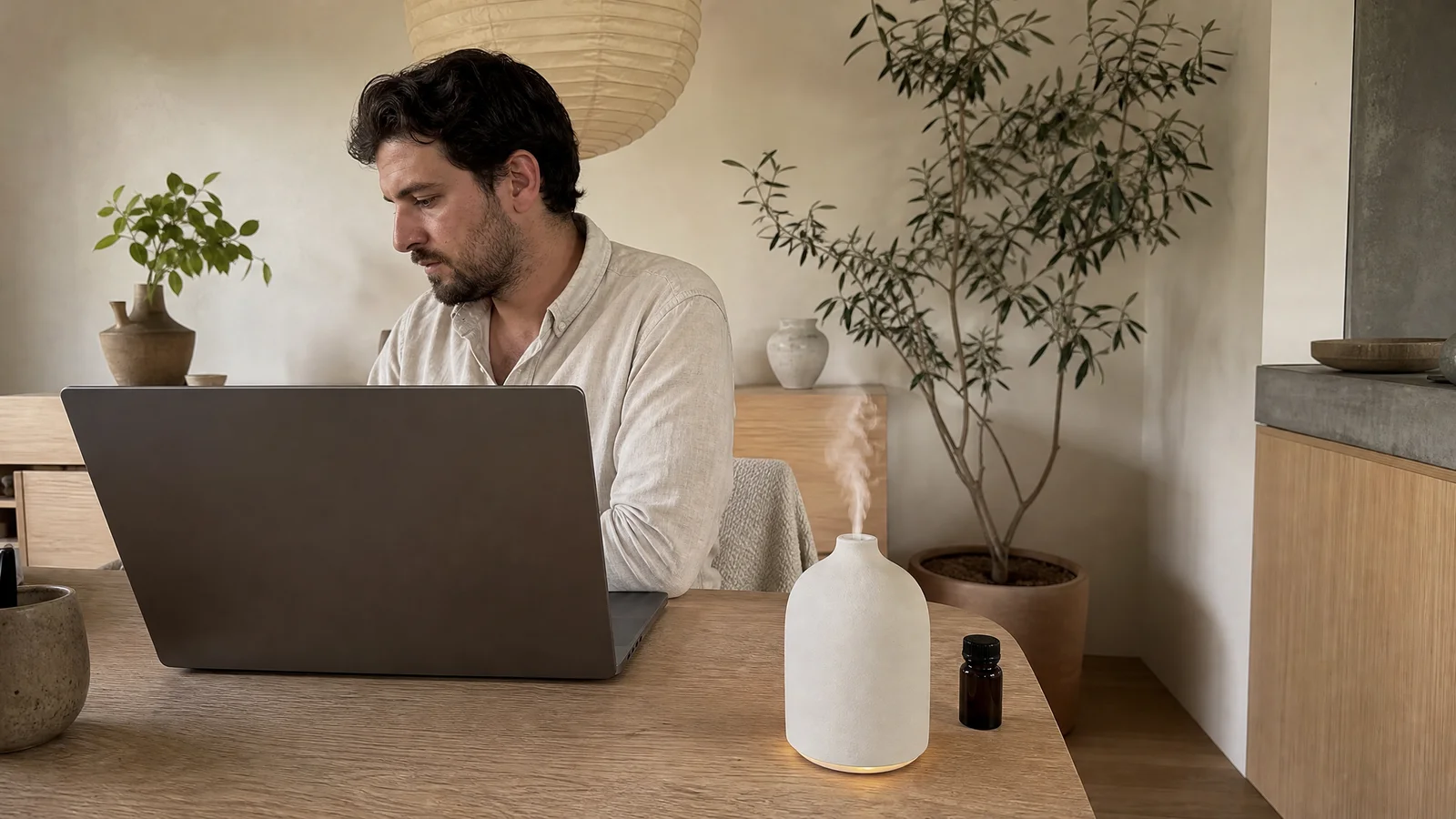
Scent without a flame is also an option. Storing the oil cool and dark protects it either way (how to store frankincense oil), and an ultrasonic unit is the flame-free alternative (diffuser guide).
Labeling rules when selling scented candles
Regulation follows what you say. The FDA notes that scented candles fall under the Consumer Product Safety Commission, not the cosmetics rules, and that for aromatherapy products what the label and advertising claim decides how a product is treated. A candle sold for its fragrance has the simplest path: describe the scent, leave out the wellness promises, and follow your wax supplier's labeling and burn guidance.
A good frankincense candle is mostly a good candle with a lovely scent in it, and once the wax and wick are right, picking the oil is the fun part.
Frankincense Essential Oil
Serrata, carterii, sacra, frereana, neglecta and rivae: steam-distilled, GC/MS verified, in sizes from 0.5 oz to bulk.
From $12.99 $10.40 with code BLACKFRIDAY
Sources & Further Reading
- Tisserand Institute. Safety Guidelines. tisserandinstitute.org/safety-guidelines
- Petry T et al., 2014. Human health risk evaluation of selected VOC, SVOC and particulate emissions from scented candles. Regulatory Toxicology and Pharmacology. PubMed 24582651
- Chen CY et al., 2026. Emissions of Polycyclic Aromatic Hydrocarbons (PAHs) from the Use of Scented Candles Under Different Environmental Conditions. Toxics. PubMed 42515130
- US Food and Drug Administration. Aromatherapy. fda.gov/cosmetics/cosmetic-products/aromatherapy