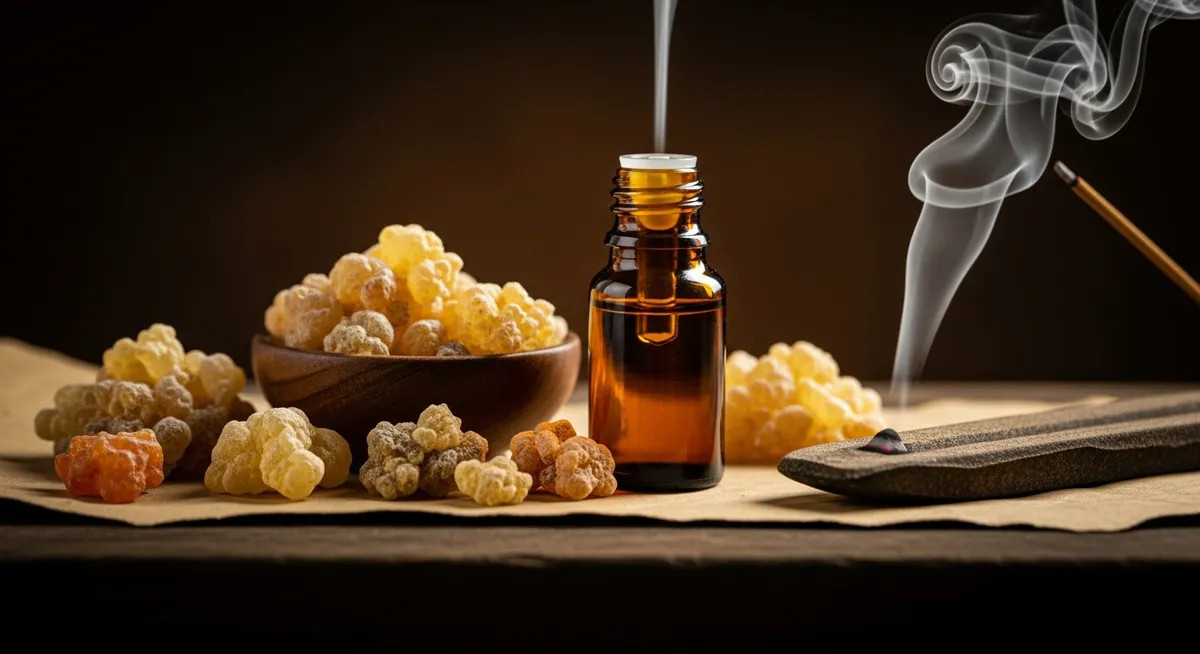
Case Study: How Frankincense Oil Helped One Woman's Battle with Chronic Eczema
In the realm of natural skincare, few essential oils command the reverence accorded to frankincense. This ancient resin, treasured by civilizations for millennia, continues to capture modern attention through emerging research and compelling personal accounts. The following case study examines one woman's journey incorporating frankincense essential oil into her comprehensive approach to managing eczema-prone skin, offering valuable insights into the potential role this sacred oil may play in supporting skin wellness.
Frankincense Essential Oil
Six single-origin frankincense varieties, steam-distilled and GC/MS verified.
From $12.99
Shop Frankincense Oil →Disclaimer: This case study is presented for educational purposes only and does not constitute medical advice. Individual experiences may vary, and essential oils should not replace professional medical approach. Always consult with qualified healthcare providers regarding skin conditions.
The Challenge: Living with Chronic Eczema
Sarah Mitchell*, a 34-year-old graphic designer from Portland, had been managing eczema since childhood. Like many adults with this common skin condition, she experienced periodic flare-ups characterized by dry, itchy, and inflamed patches primarily on her hands, inner elbows, and neck. Despite working closely with dermatologists and trying various conventional treatments, Sarah found herself seeking complementary approaches that might support her overall skin wellness routine.
"I wasn't looking to replace my medical care," Sarah explains. "I was hoping to find natural additions to my routine that might help me feel more comfortable in my own skin." Her research into natural skincare led her to explore the traditional uses of frankincense, particularly its historical reputation for supporting skin health and comfort.
The Context: Understanding Eczema's Complex Nature
Eczema, medically known as atopic dermatitis, affects an estimated 31.6 million Americans according to the National Eczema Association. This complex condition involves multiple factors including genetics, immune system responses, and environmental triggers. While conventional treatments focus on managing symptoms and reducing inflammation, many individuals seek complementary approaches that may support their skin's natural processes.
Research into frankincense for eczema has revealed interesting properties that traditional practitioners have long recognized. Studies suggest that boswellic acids, the active compounds in frankincense, may possess anti-inflammatory properties that could theoretically support skin comfort, though more research is needed to fully understand these mechanisms.
The Approach: Integrating Frankincense into Daily Care
Working with a qualified aromatherapist and with her dermatologist's knowledge, Sarah developed a careful protocol for incorporating high-quality frankincense essential oil into her existing skincare routine. The approach emphasized safety, proper dilution, and gradual introduction to observe how her skin might respond.
Product Selection and Quality Considerations
Sarah chose to work with premium-grade Boswellia carterii frankincense oil, sourced from sustainable Omani suppliers. Quality proved crucial, as she learned that the purity and authenticity of frankincense oil can vary significantly between suppliers. She specifically sought oils that were:
- Steam-distilled from authentic Boswellia species
- Third-party tested for purity and authenticity
- Free from synthetic additives or adulterants
- Properly stored to maintain therapeutic compounds
"I realized that not all frankincense oils are created equal," Sarah notes. "The quality and sourcing made a noticeable difference in how my skin responded to different products."
Dilution and Application Protocol
Following aromatherapy safety guidelines, Sarah used frankincense oil only in properly diluted forms. Her protocol included:
Daily Moisturizing Blend:
- 2 drops frankincense essential oil
- 1 ounce unscented, gentle carrier oil (jojoba)
- Applied to damp skin after showering
Targeted Spot Approach:
- 1 drop frankincense oil
- 1 teaspoon carrier oil
- Applied to specific areas as needed
Safety Measures:
- Patch testing before first use
- Gradual introduction over several weeks
- Careful monitoring for any adverse reactions
- Maintaining regular dermatologist appointments
Observations and Outcomes
Over a six-month period, Sarah carefully documented her experiences and observations. While individual results cannot be generalized, her detailed notes provide valuable insights into how one person incorporated frankincense for skin support into a comprehensive wellness routine.
Initial Phase (Weeks 1-4)
During the first month, Sarah reported primarily sensory observations. "The frankincense blend felt incredibly soothing when I applied it," she describes. "There was something almost meditative about the ritual of applying it mindfully to my skin." She noted that the oil absorbed well without leaving a greasy residue, which was important for her daily routine.
From a comfort perspective, Sarah observed that her skin felt more moisturized throughout the day when using the frankincense-enriched blend compared to her previous routine. However, she was careful to continue her established medical treatments and didn't attribute changes to any single factor.
Mid-Term Observations (Weeks 5-12)
As Sarah continued her routine, she began noticing what she described as improved skin texture in the areas where she consistently applied the frankincense blend. "My skin seemed to feel smoother and looked less irritated," she reports. "But I was also being more consistent with moisturizing overall, so it's hard to say what contributed to what."
During this period, Sarah experienced her typical seasonal flare-up as autumn weather became drier. She noted that while the flare-up still occurred, the affected areas seemed to respond well to her enhanced moisturizing routine that included the frankincense blend.
Long-Term Experience (Weeks 13-24)
By the six-month mark, Sarah had fully integrated frankincense oil into her daily routine. She reported feeling more confident in her skin's comfort and appearance. "I felt like I had more tools in my toolkit for supporting my skin wellness," she explains. "The frankincense became a cornerstone of my self-care routine."
Importantly, Sarah emphasized that her success came from a holistic approach that included:
- Continued medical supervision and approach
- Consistent use of gentle, fragrance-free skincare products
- Stress management techniques
- Dietary awareness of potential triggers
- Regular exercise and adequate sleep
The Science Behind the Experience
While Sarah's experience is anecdotal, emerging research provides context for understanding why frankincense oil might support skin wellness. Studies have identified several compounds in frankincense that may contribute to skin comfort:
Boswellic Acids and Skin Support
Research published in various dermatological journals suggests that boswellic acids, the primary active compounds in frankincense, may possess properties that could theoretically support skin health. Some studies indicate these compounds might help modulate inflammatory pathways, though more research is needed to understand their specific effects on eczema-prone skin.
A 2018 study in the International Journal of Molecular Sciences examined the potential anti-inflammatory properties of frankincense extracts, noting their traditional use in supporting skin comfort. However, researchers emphasized that clinical trials specifically focused on eczema management are still needed.
Skin Barrier Function Support
Preliminary research suggests that certain compounds in frankincense oil may help support the skin's natural barrier function. This is particularly relevant for individuals with eczema, as compromised skin barrier function is often a key feature of the condition. The research on frankincense for inflammation continues to evolve, providing insights into potential mechanisms of action.
However, it's crucial to note that these studies often use concentrated extracts or isolated compounds rather than essential oils applied topically, making direct comparisons to personal use experiences challenging.
Key Learnings and Considerations
Sarah's experience offers several important insights for others considering frankincense oil as part of their skin wellness routine:
Quality Matters Significantly
"The difference between high-quality, authentic frankincense and lower-grade products was immediately apparent," Sarah reflects. "Investing in premium oil from reputable sources made a noticeable difference in how my skin responded." This underscores the importance of sourcing frankincense from established suppliers who provide transparency about their distillation processes and authenticity testing.
Patience and Consistency Are Essential
Sarah's most significant observations didn't emerge until she had been consistent with her routine for several months. "This isn't a quick fix," she emphasizes. "It's about supporting your skin over time as part of a comprehensive approach to wellness."
Professional Guidance Enhances Safety
Working with both her dermatologist and a qualified aromatherapist helped Sarah navigate potential interactions and ensure her approach complemented rather than complicated her medical care. "Having professional support gave me confidence to explore this option safely," she notes.
Individual Responses Vary
Perhaps most importantly, Sarah recognizes that her experience may not translate directly to others. "What worked for me might not work for someone else," she acknowledges. "Everyone's skin is different, and eczema can have so many different triggers and presentations."
Limitations and Important Disclaimers
This case study, while detailed and thoughtfully documented, has several important limitations that readers should consider:
Single Subject Design
As an individual case study, these results cannot be generalized to others with eczema. Each person's skin condition, triggers, and responses to treatments are unique. What Sarah experienced may not reflect what others might observe.
Multiple Variables
Sarah's improved skin comfort occurred alongside multiple interventions and lifestyle factors. It's impossible to attribute outcomes solely to frankincense oil use, as she was simultaneously maintaining medical treatments, practicing stress management, and following other skin-supportive practices.
Subjective Assessments
Many of Sarah's observations were subjective measures of comfort and appearance rather than objective medical assessments. While valuable for understanding personal experience, these don't constitute medical evidence of efficacy.
Moving Forward: Integrating Ancient Wisdom with Modern Care
Sarah's journey illustrates how traditional remedies like frankincense can potentially complement modern medical care when used thoughtfully and safely. Her experience suggests that for some individuals, incorporating high-quality frankincense oil into a comprehensive skin wellness routine may provide additional comfort and support.
"I've learned that managing eczema is really about having multiple strategies," Sarah concludes. "Frankincense became one valuable tool in my approach, but it works best as part of a bigger picture that includes medical care, lifestyle factors, and other supportive practices."
For those considering a similar approach, Sarah recommends:
- Consulting with healthcare providers before making changes
- Starting slowly with proper dilution and patch testing
- Maintaining realistic expectations and focusing on long-term support
- Investing in high-quality, authentic frankincense oil
- Keeping detailed records of observations and experiences
As research into frankincense and skin health continues to evolve, case studies like Sarah's provide valuable real-world context for understanding how ancient remedies might support modern wellness approaches. While not a substitute for medical approach, frankincense oil may offer some individuals a meaningful addition to their comprehensive skin care routine.
*Name has been changed to protect privacy. This case study is presented for educational purposes only and should not be considered medical advice. Always consult qualified healthcare providers regarding skin conditions and approach options.
Frankincense Essential Oil
Serrata, carterii, sacra, frereana, neglecta and rivae: steam-distilled, GC/MS verified, in sizes from 0.5 oz to bulk.
From $12.99
Shop Frankincense Oil →