How to Use Frankincense Oil for Headaches and Migraines
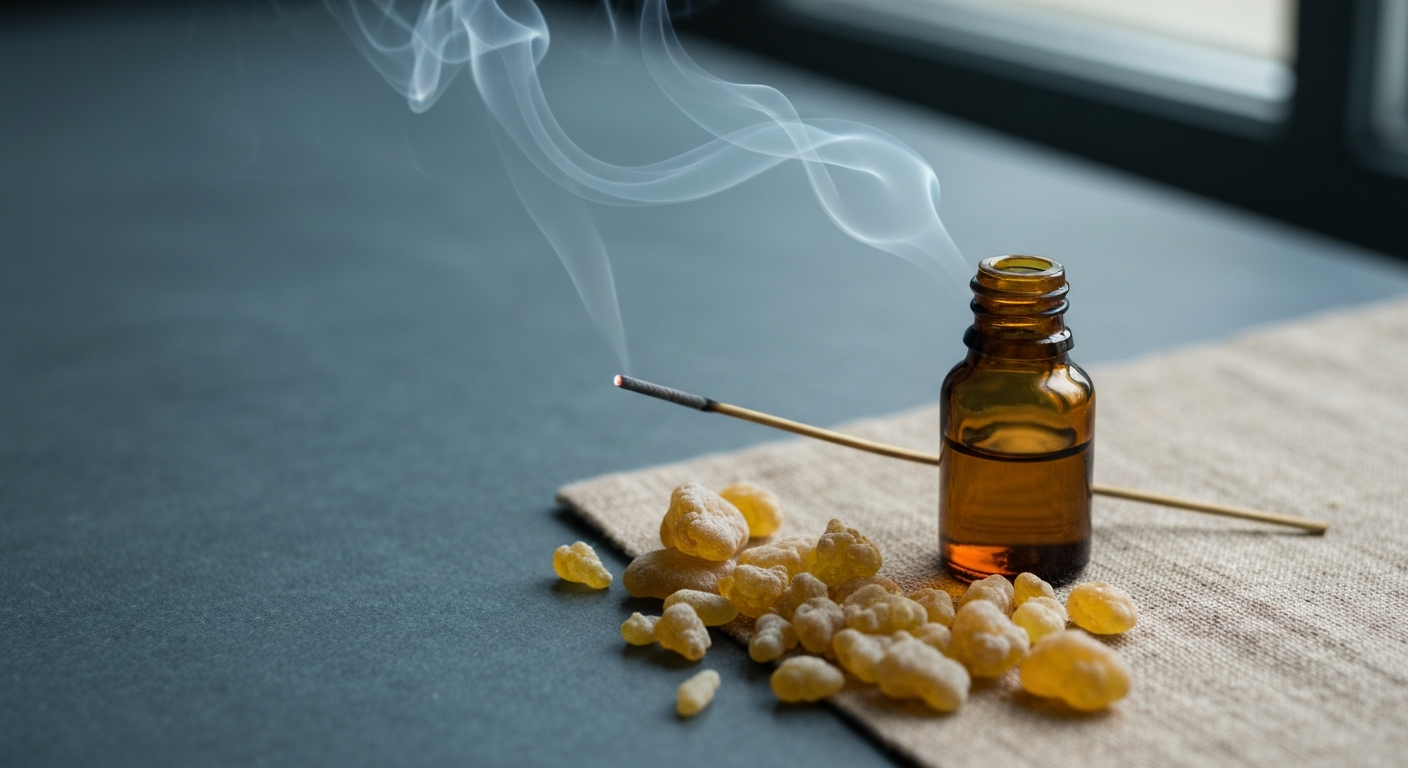
For thousands of years, frankincense has held a revered place in traditional wellness practices across ancient civilizations. From the temples of Egypt to the monasteries of Ethiopia, this precious resin has been treasured for its aromatic properties and potential to promote a sense of calm during times of discomfort. Today, many people explore frankincense for headaches as part of their natural wellness routines, seeking gentle, aromatic support during challenging moments.
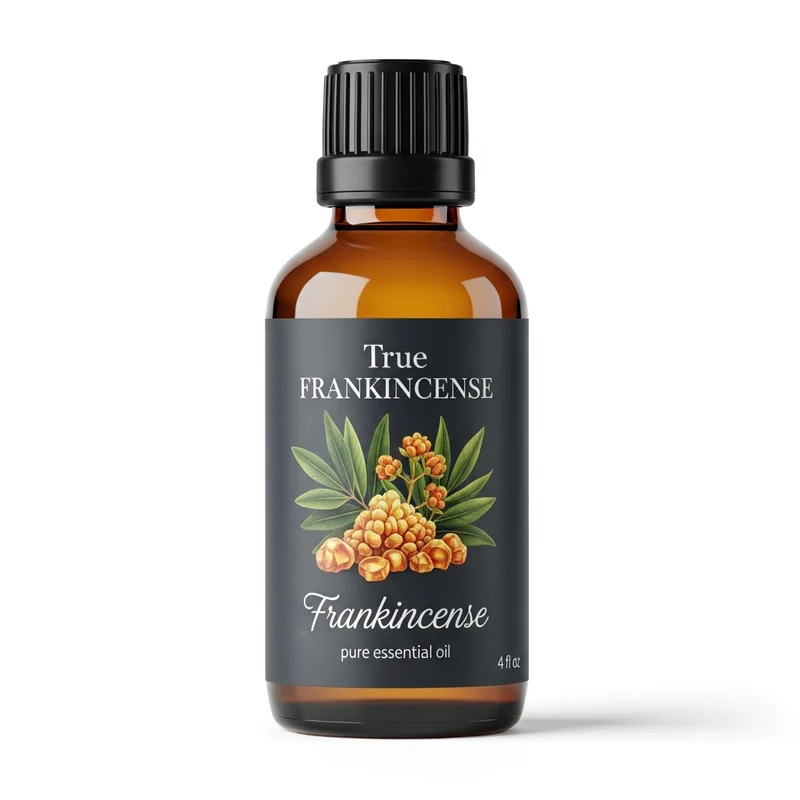
Frankincense Essential Oil
Six single-origin frankincense varieties, steam-distilled and GC/MS verified.
From $12.99
Shop Frankincense Oil →While frankincense oil cannot treat, cure, or prevent medical conditions, some individuals report finding the aromatic experience helpful when incorporated into their self-care practices. This comprehensive guide explores traditional methods and modern aromatherapy techniques for using frankincense oil when experiencing head tension, always emphasizing the importance of proper dilution and safe application.
Understanding Frankincense Oil and Head Discomfort
Before exploring application methods, it's essential to understand what we're working with. Authentic frankincense essential oil, distilled from Boswellia species, contains various aromatic compounds that have been studied for their potential properties. Some research suggests that certain components may support relaxation and promote a sense of well-being, though individual responses vary significantly.
Traditional systems have long incorporated frankincense into practices aimed at promoting comfort during times of head tension. However, it's crucial to emphasize that frankincense oil is not a medical approach. If you experience frequent, severe, or unusual headaches, consult a qualified healthcare provider for proper evaluation and approach.
When to Consider Professional Help
Before exploring aromatherapy approaches, recognize when professional medical attention is necessary:
- Sudden, severe headaches unlike any you've experienced
- Headaches accompanied by fever, stiff neck, or vision changes
- Headaches that worsen progressively over time
- Head pain following injury or trauma
- Chronic headaches that interfere with daily life
Essential Materials and Safety Preparations
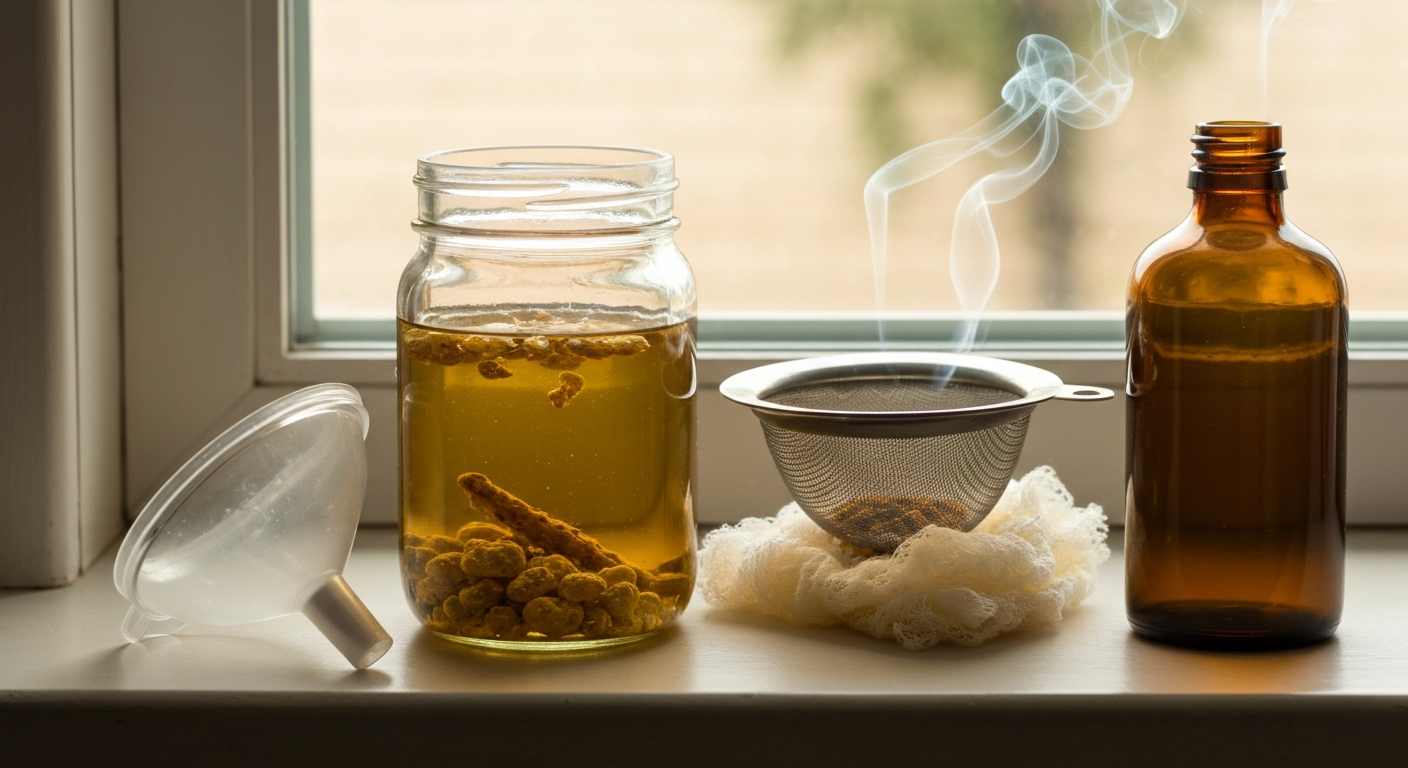
Success with frankincense aromatherapy begins with quality materials and proper safety measures. Gathering the right supplies ensures both effectiveness and safety in your practice.
Required Materials
Primary Ingredients:
- High-quality frankincense essential oil (preferably Boswellia carterii or Boswellia sacra)
- Carrier oil (jojoba, fractionated coconut oil, or sweet almond oil)
- Distilled water (for sprays and compresses)
Equipment Needed:
- Glass measuring spoons or pipettes
- Small glass bottles (5-10ml) for blends
- Clean washcloths or cotton pads
- Essential oil diffuser (optional)
- Small glass spray bottle (optional)
Safety Supplies:
- Patch test materials
- Mild soap for washing hands
- Clean towels
Critical Safety Considerations
Before beginning any aromatherapy practice, understand these essential safety guidelines:
Important: Always dilute frankincense oil properly. Undiluted essential oils can cause skin irritation, sensitization, or allergic reactions. Never apply essential oils directly to the skin without proper dilution.
Contraindications and Warnings:
- Pregnancy and nursing: Consult healthcare provider before use
- Children under 6: Avoid topical application
- Skin sensitivity: Always perform patch testing
- Medication interactions: Discuss with healthcare provider
- Asthma or respiratory conditions: Use with caution in aromatherapy
Method 1: Topical Application with Proper Dilution
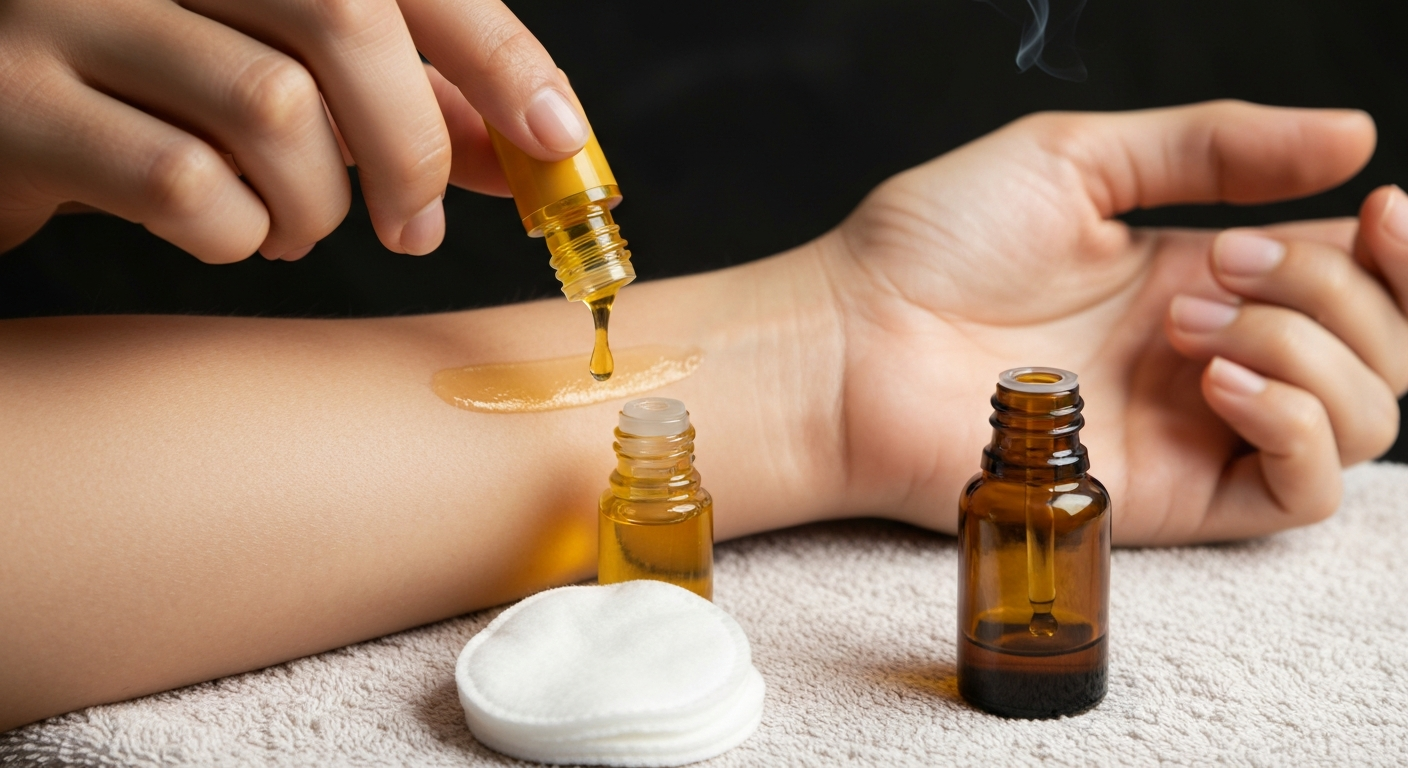
Topical application allows for localized aromatic experience and is one of the most traditional approaches to using frankincense oil. This method requires careful attention to dilution ratios and application techniques.
Step-by-Step Topical Application
Step 1: Perform a Patch Test
- Mix 1 drop of frankincense oil with 1 teaspoon of carrier oil
- Apply a small amount to your inner wrist or behind your ear
- Wait 24 hours and observe for any redness, itching, or irritation
- Proceed only if no adverse reactions occur
Step 2: Prepare Your Diluted Blend
- In a small glass bottle, combine:
- 2-3 drops frankincense essential oil
- 1 tablespoon (15ml) carrier oil
- Cap tightly and gently roll between palms to mix
- Label with contents and date
Step 3: Apply to Appropriate Areas
- Wash your hands thoroughly
- Dispense a small amount (3-5 drops) of diluted blend onto fingertips
- Gently massage into temples using circular motions
- Apply to back of neck and base of skull if desired
- Avoid contact with eyes, mucous membranes, and broken skin
- Wash hands after application
Target Application Areas
Traditional practices suggest focusing on these areas for frankincense migraine relief approaches:
- Temples: Apply gentle circular pressure while massaging
- Forehead: Light application across the brow line
- Base of skull: Where neck meets the head
- Behind ears: Gentle application to the soft area
- Pulse points: Wrists and sides of neck
Common Mistakes to Avoid
- Using undiluted oil directly on skin
- Applying too much pressure during massage
- Getting oil too close to eyes
- Skipping the patch test
- Using expired or oxidized oils
Method 2: Aromatherapy Inhalation Techniques
Inhalation methods offer a gentle way to experience frankincense's aromatic benefits without direct skin contact. This approach aligns well with traditional frankincense aromatherapy guide principles and may be suitable for those with sensitive skin.
Direct Inhalation Method
Step 1: Prepare for Inhalation
- Find a comfortable, quiet space
- Have a tissue or handkerchief ready
- Ensure good ventilation in the room
Step 2: Apply Oil to Tissue
- Place 1-2 drops of frankincense oil on a clean tissue
- Hold tissue 6-8 inches from your nose
- Inhale slowly and deeply for 30 seconds to 1 minute
- Take breaks between inhalations
Steam Inhalation Technique
Step 1: Set Up Steam Bowl
- Fill a large bowl with hot (not boiling) water
- Add 2-3 drops of frankincense oil to water surface
- Stir gently with a wooden spoon
Step 2: Practice Steam Inhalation
- Position your face 12 inches above the bowl
- Drape a towel over your head and bowl
- Inhale slowly through your nose for 5-10 minutes
- Take breaks if you feel lightheaded
- Keep eyes closed to avoid irritation
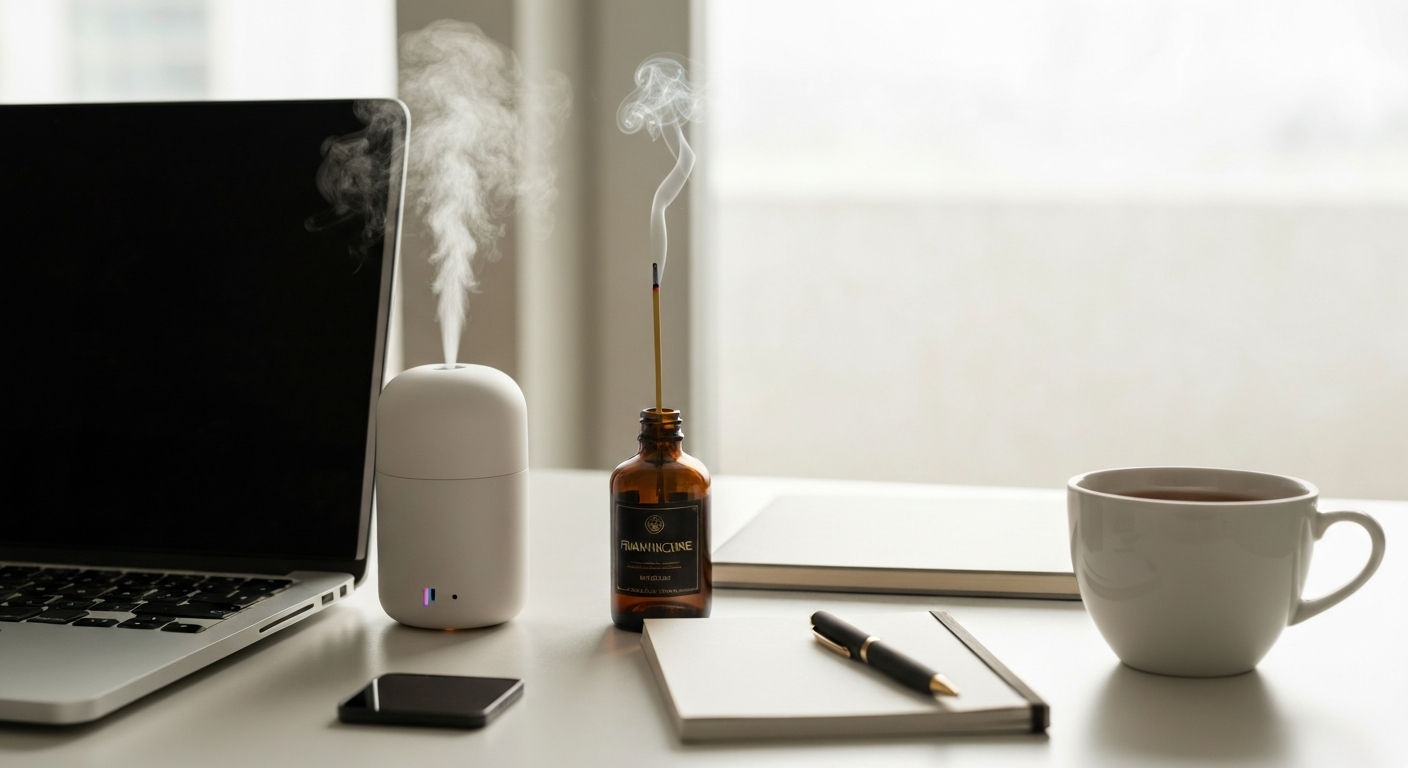
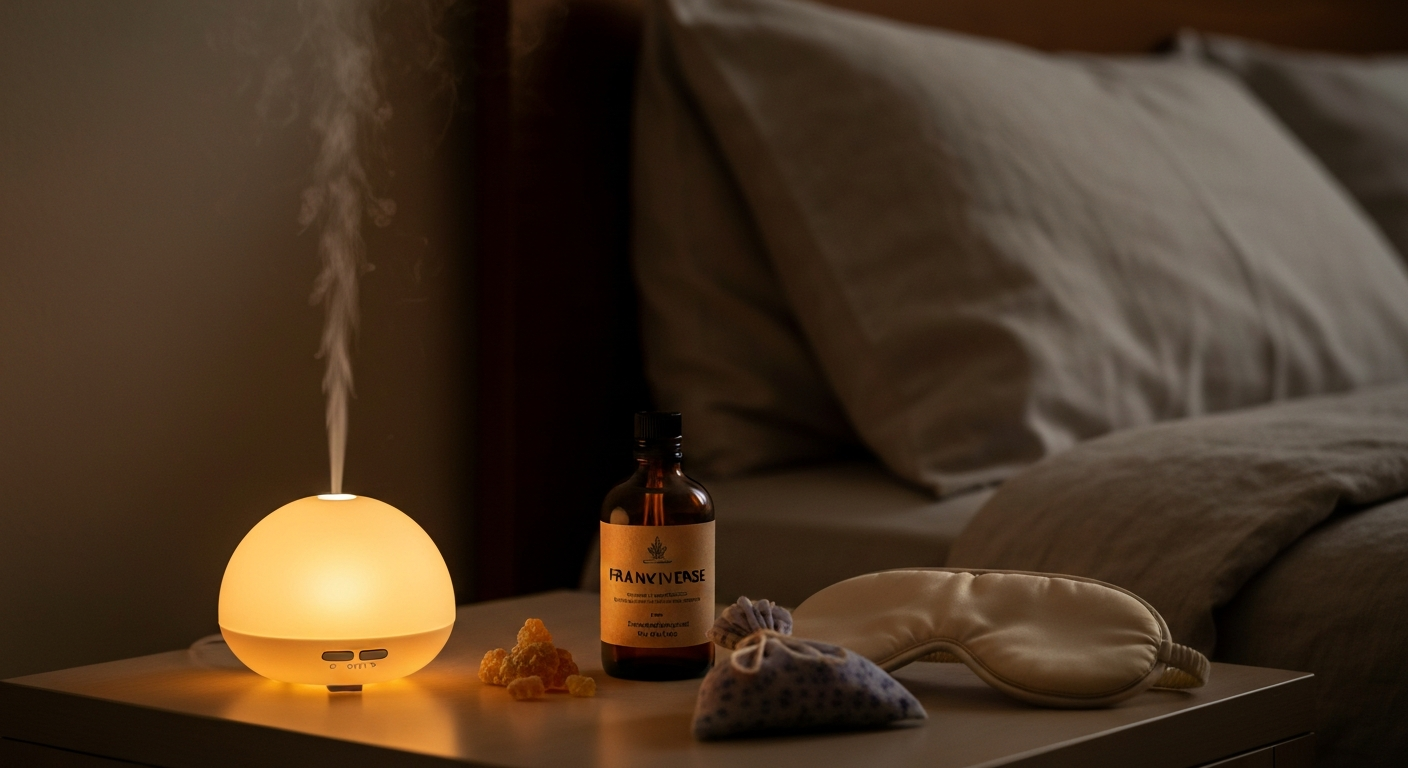
Diffuser Method
For extended aromatherapy benefits:
- Add 3-5 drops of frankincense oil to your diffuser
- Fill with water according to manufacturer instructions
- Run for 15-20 minute intervals
- Ensure adequate room ventilation
- Take breaks between diffusion sessions
Method 3: Creating a Soothing Compress
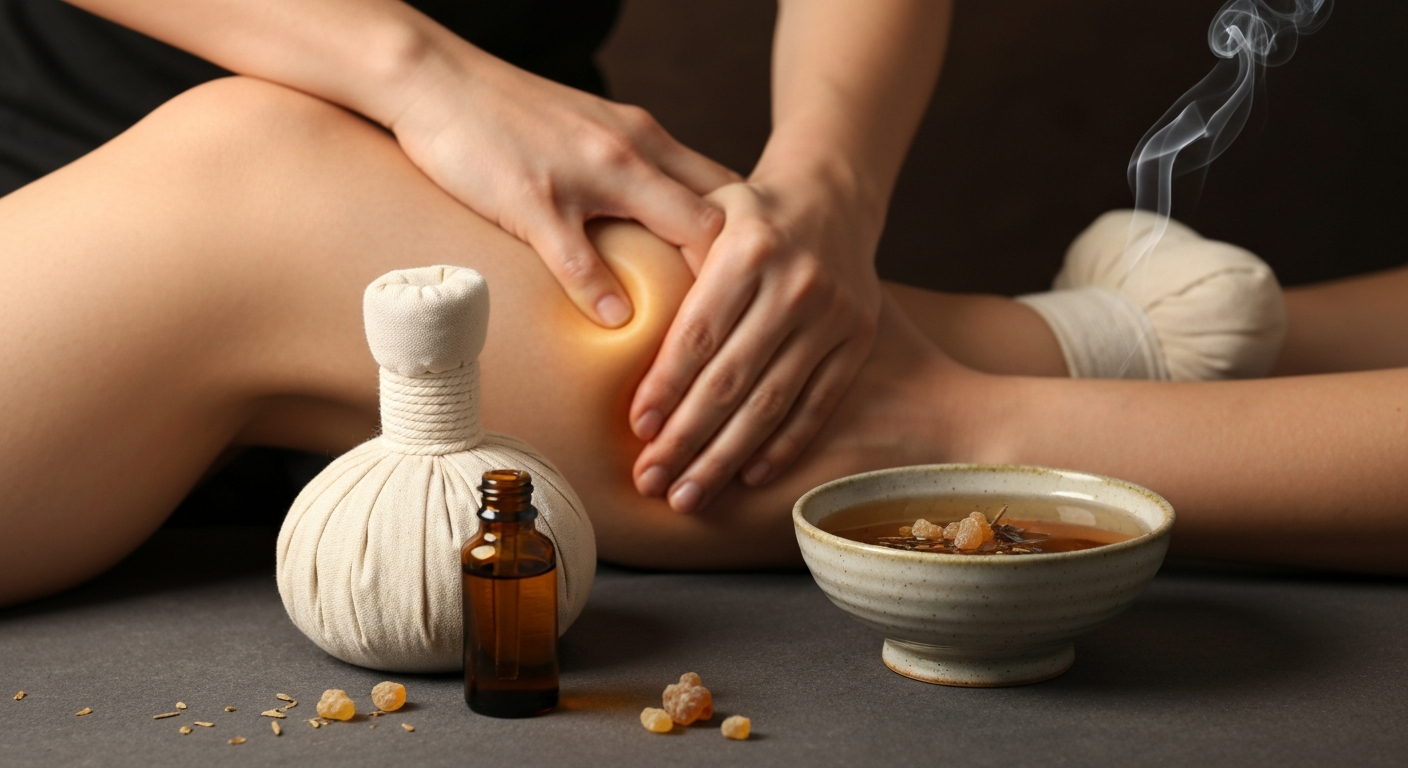
Compresses combine the benefits of aromatherapy with gentle temperature therapy, offering a traditional approach that many find comforting during times of head tension.
Cold Compress Preparation
Step 1: Gather Materials
- Clean washcloth or soft cotton pad
- Bowl of cool water
- 2-3 drops frankincense oil
- 1 teaspoon carrier oil (for better dispersion)
Step 2: Prepare the Compress
- Mix frankincense oil with carrier oil in a small dish
- Add mixture to bowl of cool water
- Stir gently to distribute oils
- Soak washcloth in the aromatic water
- Wring out excess water, leaving cloth damp
Step 3: Apply the Compress
- Lie down in a comfortable position
- Place compress across forehead or over eyes
- Relax for 10-15 minutes
- Replace with fresh compress if desired
- Rest quietly during application
Warm Compress Variation
Some individuals prefer warm compresses. Follow the same steps using comfortably warm (not hot) water. Test temperature on your wrist before applying to face.
Method 4: DIY Roll-On Blend for Convenience
Creating a frankincense roll-on DIY blend provides convenient, portable relief for those who frequently experience head tension. This method ensures proper dilution and easy application.
Basic Roll-On Recipe
Ingredients for 10ml Roll-On:
- 6-8 drops frankincense essential oil
- 2-3 drops lavender oil (optional, for additional calming properties)
- Carrier oil to fill (jojoba or fractionated coconut oil work well)
Step-by-Step Instructions:
- Remove cap and roller ball from clean 10ml bottle
- Add essential oils using a pipette or careful drops
- Fill remainder with carrier oil, leaving small air space
- Replace roller ball and cap
- Roll between palms to mix thoroughly
- Label with contents and creation date
- Allow to sit 24 hours before first use
Application Guidelines
To use your frankincense oil headache remedy roll-on:
- Shake gently before each use
- Apply to temples, avoiding eye area
- Roll along hairline if comfortable
- Apply to pulse points on wrists
- Massage gently after application
- Use up to 3-4 times daily as needed
Advanced Techniques and Combinations
Once comfortable with basic methods, you might explore more sophisticated approaches that combine frankincense with complementary practices.
Layered Aromatherapy Approach
This method combines multiple application techniques:
- Begin with 5 minutes of diffuser aromatherapy
- Apply diluted topical blend to temples
- Follow with cool compress for 10 minutes
- End with gentle neck and shoulder massage using the blend
Synergistic Oil Combinations
Some practitioners combine frankincense with other traditionally used oils. Popular combinations include:
- Frankincense + Lavender: May promote relaxation — see our guide to blending frankincense and lavender for ratios that work
- Frankincense + Peppermint: Provides cooling sensation (use very sparingly) — or try our quick frankincense and peppermint headache balm recipe
- Frankincense + Roman Chamomile: Traditional calming combination
Always research individual oils and their safety profiles before combining. Maintain proper dilution ratios even when using multiple oils.
What to Expect and Monitoring Your Experience
Understanding realistic expectations helps create a positive experience with frankincense aromatherapy while maintaining safety awareness.
Potential Experiences People Report
Individual responses vary significantly, but some people report:
- A sense of relaxation during application
- Enjoyment of the pleasant, woody aroma
- Feeling more centered during stressful times
- Enhanced meditation or relaxation practices
- Improved ability to rest during discomfort
Important: These are anecdotal reports, not medical claims. Frankincense oil does not treat, cure, or prevent headaches or migraines.
Timeline Considerations
Aromatherapy experiences typically occur:
- Immediate (0-5 minutes): Aromatic experience begins
- Short-term (5-20 minutes): Full aromatic immersion
- Session duration: Benefits typically last during application period
- Individual variation: Responses differ greatly between people
When to Discontinue Use
Stop using frankincense oil and consult a healthcare provider if you experience:
- Skin irritation, redness, or rash
- Respiratory difficulty or wheezing
- Headaches that worsen after use
- Any allergic reactions
- Unusual or severe symptoms
Integration with Overall Wellness Practices
Frankincense aromatherapy works best as part of a comprehensive approach to wellness that may include stress management, adequate rest, proper hydration, and professional healthcare when needed.
Complementary Practices
Consider incorporating these supportive practices:
- Stress reduction techniques: Deep breathing, meditation
- Sleep hygiene: Regular sleep schedule, dark environment
- Hydration: Adequate water intake throughout the day
- Gentle movement: Light stretching, walking
- Environmental factors: Reducing bright lights, loud noises
For those interested in exploring broader applications, consider reading about frankincense for pain management in other areas of wellness practice.
Creating a Supportive Environment
Enhance your frankincense aromatherapy practice by:
- Choosing quiet, comfortable spaces
- Dimming harsh lighting
- Maintaining comfortable room temperature
- Minimizing distracting sounds
- Having water nearby for hydration
Storage and Maintenance of Your Oils
Proper storage ensures your frankincense oil maintains its aromatic properties and remains safe for use.
Optimal Storage Conditions
- Temperature: Store in cool, stable temperatures (60-70°F ideal)
- Light: Keep in dark glass bottles away from direct sunlight
- Air exposure: Tighten caps securely after each use
- Location: Store upright in a dedicated aromatherapy box
Quality and Freshness Indicators
Monitor your oils for:
- Aroma changes: Fresh frankincense has a woody, slightly citrusy scent
- Color shifts: Significant darkening may indicate oxidation
- Consistency changes: Unusual thickness or separation
- Expiration awareness: Most essential oils last 2-3 years when properly stored
Final Thoughts on Natural Wellness Approaches
Exploring frankincense oil as part of your wellness routine represents a connection to ancient traditions while embracing modern safety practices. While aromatherapy cannot replace professional medical care, many find it a valuable addition to their self-care practices.
Remember that consistency and patience often yield the best results in natural wellness approaches. Keep realistic expectations, prioritize safety, and maintain open communication with healthcare providers about your wellness practices.
Whether you're drawn to the rich historical tradition of frankincense use or simply enjoy exploring natural aromatherapy options, approaching these practices with respect, knowledge, and proper safety measures creates the foundation for a positive experience.
Always consult with a qualified healthcare provider before using essential oils if you have medical conditions, take medications, or experience frequent headaches. This information is for educational purposes only and is not intended as medical advice.
Frankincense Essential Oil
Serrata, carterii, sacra, frereana, neglecta and rivae: steam-distilled, GC/MS verified, in sizes from 0.5 oz to bulk.
From $12.99
Shop Frankincense Oil →