How to Use Frankincense Essential Oil for Eczema and Psoriasis
For thousands of years, the sacred resin of Boswellia trees has been revered across ancient Egypt, Ayurvedic tradition, and traditional Chinese medicine as one of nature's most precious offerings. Today, frankincense essential oil occupies a fascinating intersection between ancestral wisdom and modern botanical research — and it's no surprise that those living with chronic skin conditions like eczema and psoriasis are increasingly turning to this storied oil as part of their daily wellness rituals.
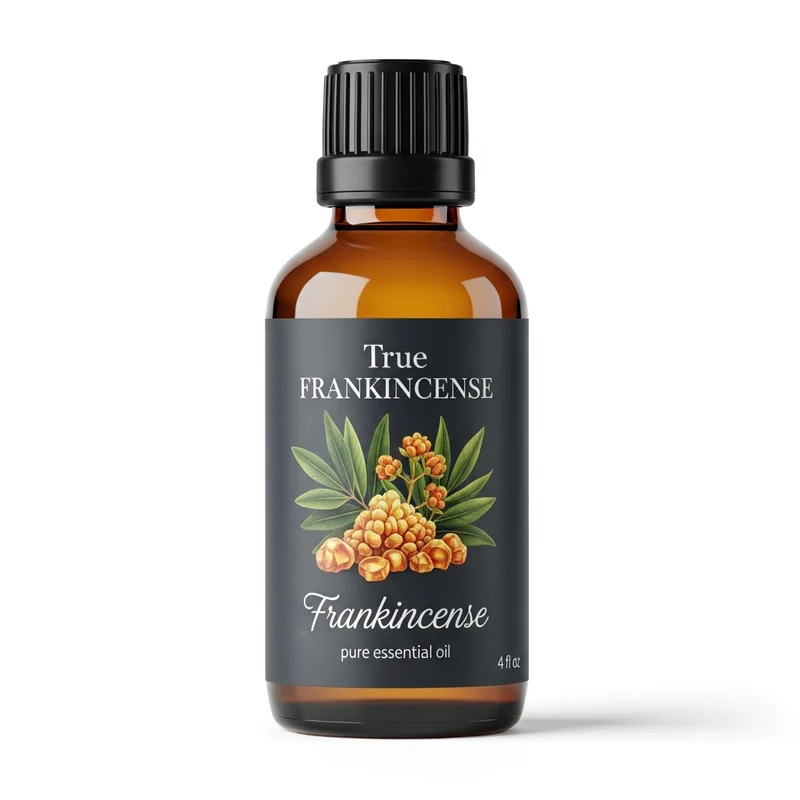
Frankincense Essential Oil
Six single-origin frankincense varieties, steam-distilled and GC/MS verified.
From $10.99
Shop Frankincense Oil →This guide is designed to educate you on how to thoughtfully and safely incorporate frankincense for skin conditions into a complementary self-care routine. We'll walk you through the materials you'll need, step-by-step blending instructions, essential safety protocols, and realistic expectations — all grounded in responsible, evidence-informed language.
Important Disclaimer: The information in this article is for educational purposes only. Frankincense essential oil is not a medical treatment and should never replace the advice, diagnosis, or treatment plan provided by a licensed healthcare professional. Always consult your dermatologist or physician before introducing new topical products, especially if you have a diagnosed skin condition.
Understanding Frankincense and Skin Wellness: A Brief Background
Frankincense essential oil is steam-distilled from the hardened resin of Boswellia species trees — most notably Boswellia sacra, Boswellia carterii, and Boswellia serrata. Its complex aromatic profile — earthy, balsamic, with subtle citrus top notes — has made it a cornerstone of spiritual and wellness traditions for millennia.
From a scientific perspective, researchers have shown considerable interest in the compounds found in frankincense, particularly boswellic acids (present in the whole resin) and alpha-pinene and incensole acetate (found in the essential oil). Some research suggests frankincense may support the body's natural response to inflammatory processes, which is one reason it has attracted attention from individuals managing conditions like eczema and psoriasis — both of which involve the skin's inflammatory pathways.
It's important to note that most clinical research has been conducted on Boswellia resin extracts rather than the steam-distilled essential oil itself. The essential oil, while sharing certain chemical families with the resin, has a different compositional profile. With that context established, let's explore how to use frankincense for skin conditions in a responsible and informed way. You can also read our deeper guide on frankincense for skin for a broader overview of this oil's wellness tradition.
What You'll Need: Materials and Ingredients
Before you begin blending, assembling high-quality materials is non-negotiable. The purity of your ingredients directly influences the experience — and your safety.
Essential Oils
- Frankincense essential oil — Choose a 100% pure, GC/MS-tested oil from a reputable supplier. Look for the Latin botanical name on the label (e.g., Boswellia sacra or Boswellia carterii). Avoid fragrance oils or synthetic "frankincense" products, which offer no meaningful botanical benefit.
- Optional complementary oils — Lavender (Lavandula angustifolia) and German chamomile (Matricaria chamomilla) are popular companions in blends people traditionally use for skin comfort, and may complement frankincense's aromatic character well.
Carrier Oils
Essential oils must always be diluted in a carrier oil before skin application. This is non-negotiable for safety. The choice of carrier oil matters significantly — for sensitive, reactive skin, consider:
- Jojoba oil — Technically a liquid wax, jojoba closely mimics the skin's natural sebum and is widely regarded as exceptionally well-tolerated.
- Rosehip seed oil — Cold-pressed rosehip is rich in essential fatty acids and has a long tradition of use in skin wellness rituals.
- Marula oil — A luxuriously lightweight oil with a high oleic acid content, often favored for dry, compromised skin.
- Calendula-infused oil — Calendula flowers infused into a base like sunflower or olive oil have a centuries-long history in soothing skin traditions.
Equipment and Vessels
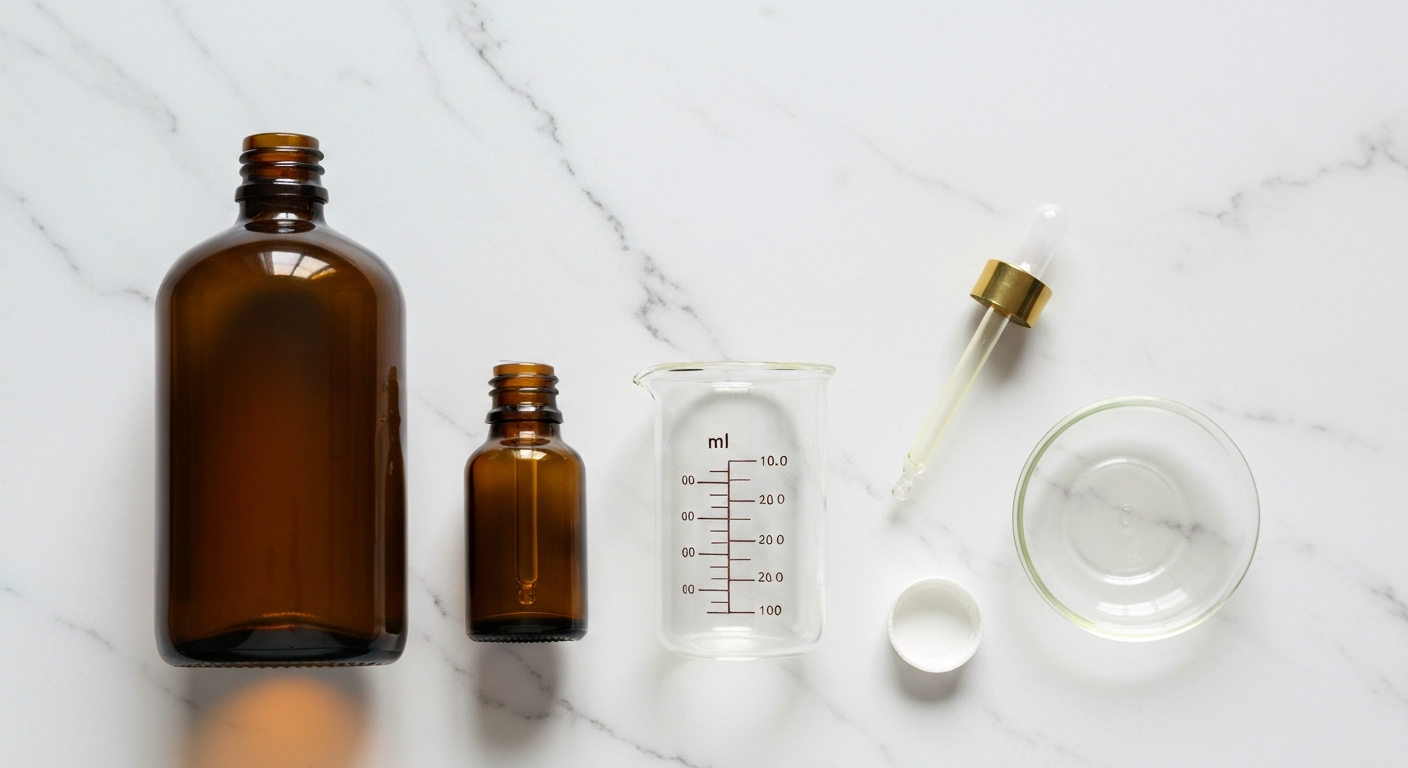
- Dark amber or cobalt glass bottle (10 ml, 30 ml, or 60 ml depending on your batch size)
- Glass measuring pipette or graduated dropper
- Small funnel (optional but helpful)
- Labels and a permanent marker for dating and noting your blend ratio
- Clean, dry workspace
Step-by-Step Instructions: Creating a Frankincense Skin Blend
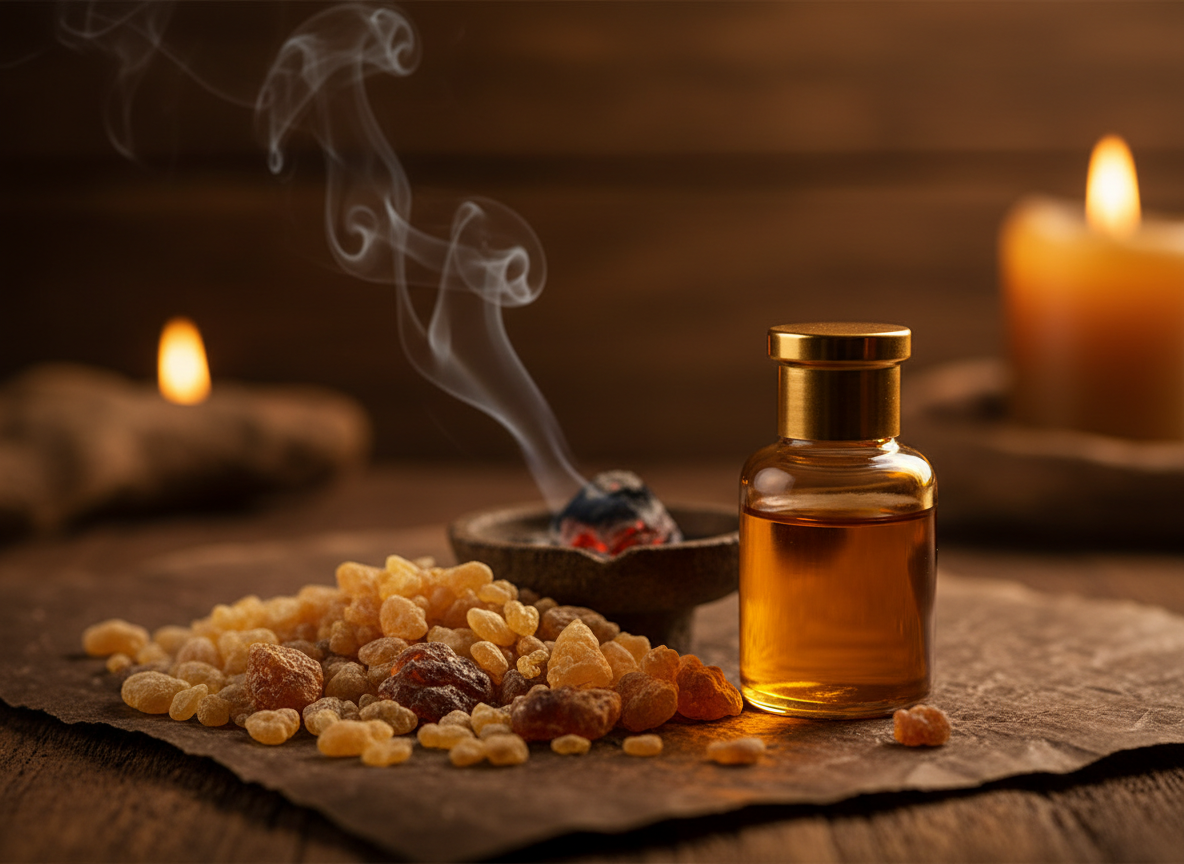
The following steps guide you through creating a topical frankincense oil blend intended for external use as part of a skin wellness routine. This is not a medical treatment. Results, if any, will vary from person to person.
Step 1: Research and Consult Your Healthcare Provider
Before applying any new topical product to skin affected by eczema or psoriasis, speak with your dermatologist or a qualified healthcare practitioner. Skin conditions can be complex, and what benefits one person's skin may aggravate another's. This step is not optional — it's the foundation of responsible self-care.
Step 2: Determine Your Dilution Ratio
Dilution is the single most important safety principle in aromatherapy. The following general guidelines are widely cited by professional aromatherapy organizations such as the Alliance of International Aromatherapists (AIA):
| Use Case | Recommended Dilution | Drops of EO per 1 tsp (5 ml) Carrier |
|---|---|---|
| Sensitive or compromised skin (eczema/psoriasis) | 0.5% – 1% | 1–2 drops |
| General adult facial use | 1% | 2–3 drops per 10 ml |
| General adult body use | 2% | 4–6 drops per 10 ml |
| Children under 12 / Elderly | 0.5% or avoid unless guided by a professional | Consult a certified aromatherapist |
For sensitive, reactive skin conditions like eczema and psoriasis, always start at the lowest dilution (0.5%) and observe your skin's response before gradually increasing.
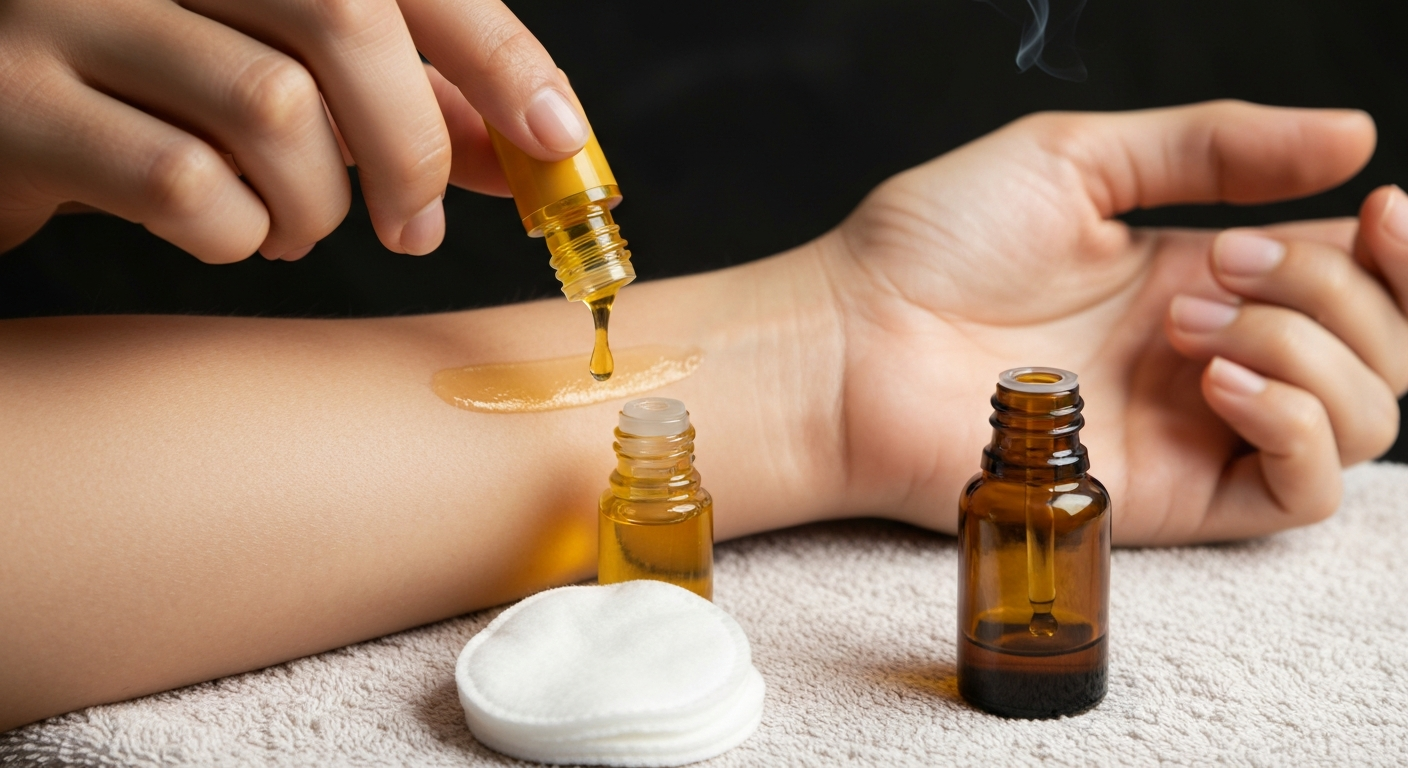
Step 3: Perform a Patch Test
A patch test is mandatory before applying any new blend to affected areas. Here's how:
- Prepare a small amount of your diluted blend (e.g., 1 drop frankincense in 1 teaspoon of carrier oil).
- Apply a small amount — roughly the size of a dime — to the inner forearm or behind the ear on unaffected skin.
- Leave it undisturbed for 24–48 hours. Do not wash the area.
- Observe for any redness, itching, burning, swelling, or rash. If any reaction occurs, discontinue use immediately and consult a healthcare provider.
- Only if no reaction occurs should you proceed to apply the blend more broadly.
Step 4: Prepare Your Blend
Once you've confirmed tolerance via patch test, you're ready to prepare your blend in a larger batch.
- Choose your vessel. A 30 ml amber glass dropper bottle is ideal for a personal blend that will last a few weeks.
- Add your carrier oil first. Pour your chosen carrier oil into the bottle up to approximately the 28–29 ml mark, leaving a small air gap. This "carrier first" method prevents accidental over-concentration of essential oils.
- Add your frankincense essential oil. Using a clean, calibrated glass dropper or pipette, add your calculated number of drops based on your chosen dilution percentage.
- For a 1% dilution in 30 ml: approximately 9 drops of frankincense essential oil.
- For a 0.5% dilution in 30 ml: approximately 4–5 drops.
- Optional: Add complementary oils. If incorporating lavender or German chamomile, reduce the frankincense slightly and account for all essential oils in your total dilution calculation. For example, in a 1% blend of 30 ml: 5 drops frankincense + 4 drops lavender = 9 total drops.
- Cap and gently roll the bottle between your palms to blend the oils. Do not shake vigorously.
- Label your bottle with the blend name, date, dilution percentage, and ingredients. Store in a cool, dark location away from heat and sunlight.
Step 5: Apply the Blend Mindfully
- Cleanse the skin area gently with a mild, fragrance-free cleanser and pat dry.
- Dispense 2–4 drops of your blend onto clean fingertips.
- Apply using light, circular massage motions to the area of concern — avoid broken, weeping, or open skin, as essential oils should never be applied to broken skin barriers.
- Allow the oil to absorb for several minutes before covering with clothing.
- Apply once or twice daily, preferably after bathing while skin is still slightly damp to enhance absorption.
Step 6: Observe and Adjust
Keep a simple wellness journal. Note the date, application frequency, skin appearance, and any sensations. If you notice increased redness, irritation, or discomfort at any point, discontinue use and consult your dermatologist. If after 4–6 weeks of consistent use you observe no personal benefit, it may be worth exploring different carrier oil options or discussing alternative approaches with your healthcare provider.
What to Expect: Realistic Outcomes (With Appropriate Hedging)
It's crucial to approach any natural wellness practice with calibrated expectations. Frankincense essential oil is not a solution for eczema or psoriasis, and no responsible practitioner or brand should suggest otherwise.
That said, many people who incorporate frankincense eczema or frankincense psoriasis blends into their routines report the following observations — though individual experiences vary widely and these are anecdotal rather than clinically validated outcomes:
- A general sense of comfort and calm when applying the oil, which some attribute to the ritualistic nature of the practice itself.
- Skin that feels more supple and moisturized — likely attributable significantly to the carrier oil component of the blend.
- A grounding, meditative quality to the daily application ritual, which some find supports overall emotional well-being.
- Some users report that over time, their skin appears calmer-looking, though this is subjective and may be influenced by multiple lifestyle factors.
Some research suggests that certain compounds in frankincense may support the body's natural inflammatory response, and this is an area of ongoing scientific interest. However, peer-reviewed research specifically on frankincense essential oil applied topically for eczema or psoriasis in human clinical trials remains limited. Do not interpret preliminary research as confirmed medical efficacy.
Tips for Best Results
- Source matters enormously. A low-quality or adulterated frankincense oil is not only less effective aromatically — it may contain synthetic additives that could irritate already-sensitive skin. Always request GC/MS (gas chromatography/mass spectrometry) test reports from your supplier.
- Consistency is key. A single application is unlikely to yield noticeable results. Integrate the practice into your daily routine for at least 4–6 weeks before drawing conclusions.
- Layer your moisture. For very dry, flaky skin (common in both eczema and psoriasis), consider applying your frankincense blend over a fragrance-free moisturizer as a "seal" layer rather than on bare skin.
- Seasonal adjustment: You may find your skin responds differently to oil blends in winter versus summer. Lighter carrier oils like jojoba may be preferred in warmer months; richer options like marula or avocado oil in colder, drier months.
- Less is more. Resist the urge to increase your essential oil concentration if results aren't immediate. Higher concentrations do not mean better outcomes and increase the risk of sensitization.
Common Mistakes to Avoid
1. Applying Undiluted (Neat) Essential Oil
This is perhaps the most dangerous mistake in aromatherapy practice. Applying neat frankincense — or any essential oil — directly to the skin, especially skin compromised by eczema or psoriasis, risks severe sensitization, chemical burns, and potentially permanent allergic reactions. There are very few scenarios where a certified aromatherapist would recommend neat application, and reactive skin conditions are certainly not among them.
2. Skipping the Patch Test
Even "gentle" essential oils like frankincense can trigger reactions in sensitized individuals. Never skip this step, especially when your skin barrier is already compromised.
3. Applying to Broken, Weeping, or Infected Skin
Essential oil blends should only be applied to intact skin. Open lesions, bleeding areas, or infected patches require medical attention — not essential oils. If your eczema or psoriasis is in a flare with active skin breakdown, wait until the skin has sufficiently recovered and consult your doctor.
4. Using Fragrance Oils Instead of Pure Essential Oils
Many "frankincense" products on the market are synthetic fragrance compounds with no botanical relationship to Boswellia resin. These offer no wellness potential and may be skin irritants. Always verify the botanical source and purity of your oils.
5. Abandoning Prescribed Medical Treatments
If your dermatologist has prescribed topical corticosteroids, biologics, or other medications for your eczema or psoriasis, do not discontinue these in favor of essential oils. Frankincense blends may potentially be used as a complementary wellness practice alongside conventional treatment — but only with your doctor's knowledge and approval.
6. Storing Oils Incorrectly
Frankincense essential oil is susceptible to oxidation, which can both diminish its aromatic quality and increase its potential to cause skin sensitization. Store your oils and blends in dark glass bottles, away from heat, light, and humidity. Most blends are best used within 3–6 months.
A Note on Contraindications and Special Populations
While frankincense essential oil has a strong safety profile in general aromatherapy practice when properly diluted, there are important contraindications to be aware of:
- Pregnancy and breastfeeding: The safety of frankincense essential oil during pregnancy and lactation has not been established. Consult a qualified healthcare provider before use.
- Children under 12: Essential oil use in young children requires specific guidance from a pediatric aromatherapist or healthcare provider. The dilution ratios and oils considered appropriate differ significantly from adult use.
- Known resin or terpene allergies: If you have known allergies to tree resins, balsams, or related compounds, frankincense may not be appropriate for you.
- Blood-thinning medications: Some preliminary research suggests compounds in Boswellia preparations may have anticoagulant properties. If you are on blood-thinning medication, consult your physician before using frankincense products topically or otherwise.
The Philosophy Behind the Practice
There is something deeply human about the act of tending to our skin with intention — selecting botanicals with care, preparing a blend with mindfulness, and applying it as a daily ritual of self-regard. For those navigating the chronic discomfort and emotional weight of conditions like eczema and psoriasis, that ritual can hold its own value, separate from any measurable physical outcome.
Frankincense has been humanity's companion in moments of ceremony, reflection, and comfort for over five thousand years. Whether you're drawn to it for its rich, resinous scent, its storied history, or the emerging research interest in its botanical compounds, incorporating frankincense for skin conditions into your self-care practice is a step worth taking thoughtfully — with full information, appropriate safety measures, and the guidance of your healthcare team.
Explore more in our foundational guide to frankincense for skin wellness, our deep dive into frankincense and the body's inflammatory response, and our comprehensive resource on choosing the right carrier oils for frankincense blends.
Final Reminder: This article is educational in nature and does not constitute medical advice. Eczema and psoriasis are complex medical conditions that deserve professional diagnosis and treatment. Essential oils are complementary wellness tools — not replacements for dermatological care. Always work with a qualified healthcare provider to manage your skin health.