Frankincense Essential Oil in Aromatherapy: Scent, History, and Diffuser Use
In the realm of aromatherapy, few essential oils command the reverence and intrigue of frankincense. This precious resin, transformed into liquid gold through distillation, carries within its molecular structure millennia of sacred tradition and an olfactory complexity that continues to captivate modern practitioners. From ancient temple rituals to contemporary wellness sanctuaries, frankincense aromatherapy represents a bridge between timeless wisdom and present-day sensory experiences.
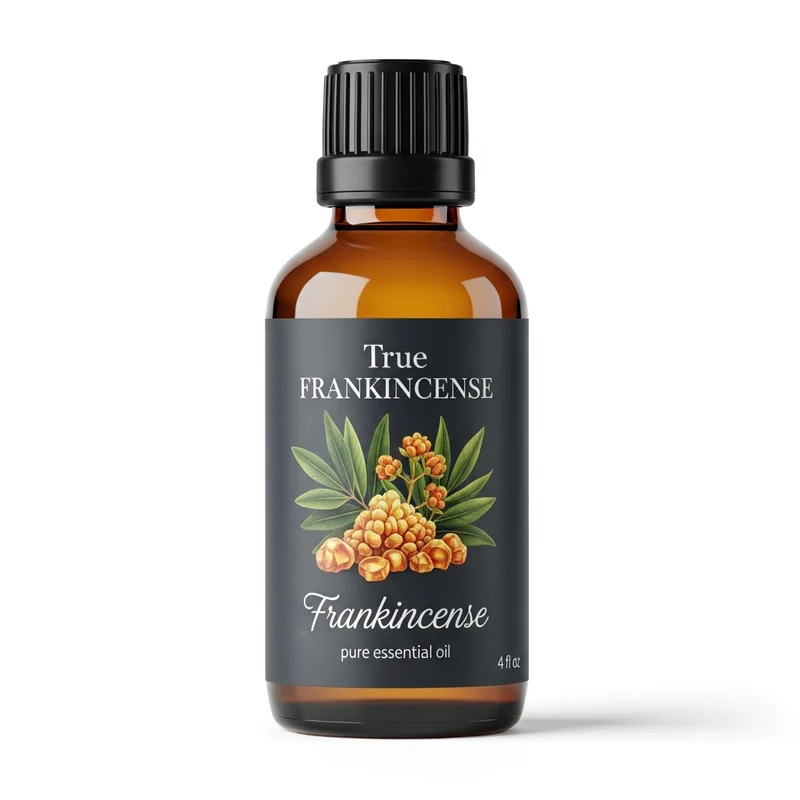 Frankincense Essential Oil
Six single-origin frankincense varieties, steam-distilled and GC/MS verified. From $10.99.
Shop Frankincense Oil →
Frankincense Essential Oil
Six single-origin frankincense varieties, steam-distilled and GC/MS verified. From $10.99.
Shop Frankincense Oil →
The distinctive frankincense scent—at once grounding and transcendent—has made this essential oil a cornerstone of aromatherapy practice worldwide. Its unique ability to create atmosphere while supporting contemplative states has earned frankincense a place of honor in both personal wellness routines and professional therapeutic environments.
The Ancient Origins of Frankincense Aromatherapy
The aromatic use of frankincense predates recorded history, with archaeological evidence suggesting its ceremonial burning across ancient civilizations spanning from Egypt to Mesopotamia. The practice of frankincense aromatherapy, though not termed as such in antiquity, emerged from humanity's earliest recognition of scent's profound influence on consciousness and well-being.
Sacred Smoke and Spiritual Practice
Ancient practitioners understood what modern science is beginning to quantify: that the inhalation of frankincense compounds may influence neurological pathways associated with mood and perception. Egyptian priests burned frankincense resin during sacred ceremonies, creating aromatic environments that people reported enhanced their spiritual experiences. Similarly, in ancient Greece, the aromatic properties of frankincense were incorporated into healing temples where the scent was believed to purify both space and spirit.
The transition from burning raw resin to utilizing essential oil represents a refinement of these ancient practices. Modern distillation techniques allow us to capture and concentrate the volatile compounds that gave frankincense its revered status across cultures and centuries.
Trade Routes and Aromatic Treasures
The legendary incense trade routes that connected the Arabian Peninsula to the Mediterranean world were fundamentally aromatherapy highways. Merchants didn't simply trade commodities; they transported olfactory experiences that would transform the sensory landscapes of distant lands. The value placed on frankincense—often worth more than gold—reflected not just its rarity, but its unparalleled aromatic properties.
Historical accounts describe how the scent of frankincense could transform the atmosphere of royal courts and sacred spaces, creating environments that people associated with luxury, spirituality, and elevated consciousness. This aromatic legacy continues to inform modern frankincense diffuser blend formulations.
Understanding the Frankincense Scent Profile
The complexity of frankincense scent defies simple categorization, presenting a multi-layered olfactory experience that evolves throughout its aromatic journey. This sophisticated scent profile makes frankincense essential oil particularly valuable in aromatherapy applications where depth and longevity are desired.
Primary Aromatic Components
Frankincense essential oil's distinctive aroma emerges from its rich composition of monoterpenes, sesquiterpenes, and other volatile organic compounds. The primary contributors to its scent signature include:
- α-pinene: Provides fresh, pine-like top notes that create initial olfactory impact
- Limonene: Contributes subtle citrusy brightness that balances earthier base notes
- α-thujene: Adds woody, slightly spicy undertones characteristic of quality frankincense
- Sabinene: Imparts warm, slightly peppery nuances that enhance complexity
Research suggests that these compounds work synergistically to create frankincense's unique aromatic fingerprint, with each component contributing to different phases of the scent's evolution during aromatherapy use.
Scent Evolution and Longevity
Unlike many essential oils that present their full aromatic character immediately, frankincense scent reveals itself in distinct phases, making it particularly suited for extended aromatherapy sessions:
Opening Notes (0-15 minutes): Fresh, slightly citrusy brightness with subtle resinous undertones announces frankincense's presence without overwhelming the senses.
Heart Development (15-60 minutes): The scent deepens, revealing its characteristic woody-balsamic profile that many describe as simultaneously grounding and uplifting.
Base Persistence (1-3 hours): A warm, meditative quality emerges, creating the profound aromatic foundation that has made frankincense essential for contemplative practices across cultures.
This extended aromatic journey makes frankincense particularly valuable in aromatherapy protocols designed for meditation, relaxation, or creating sustained atmospheric enhancement.
Modern Diffuser Applications and Techniques
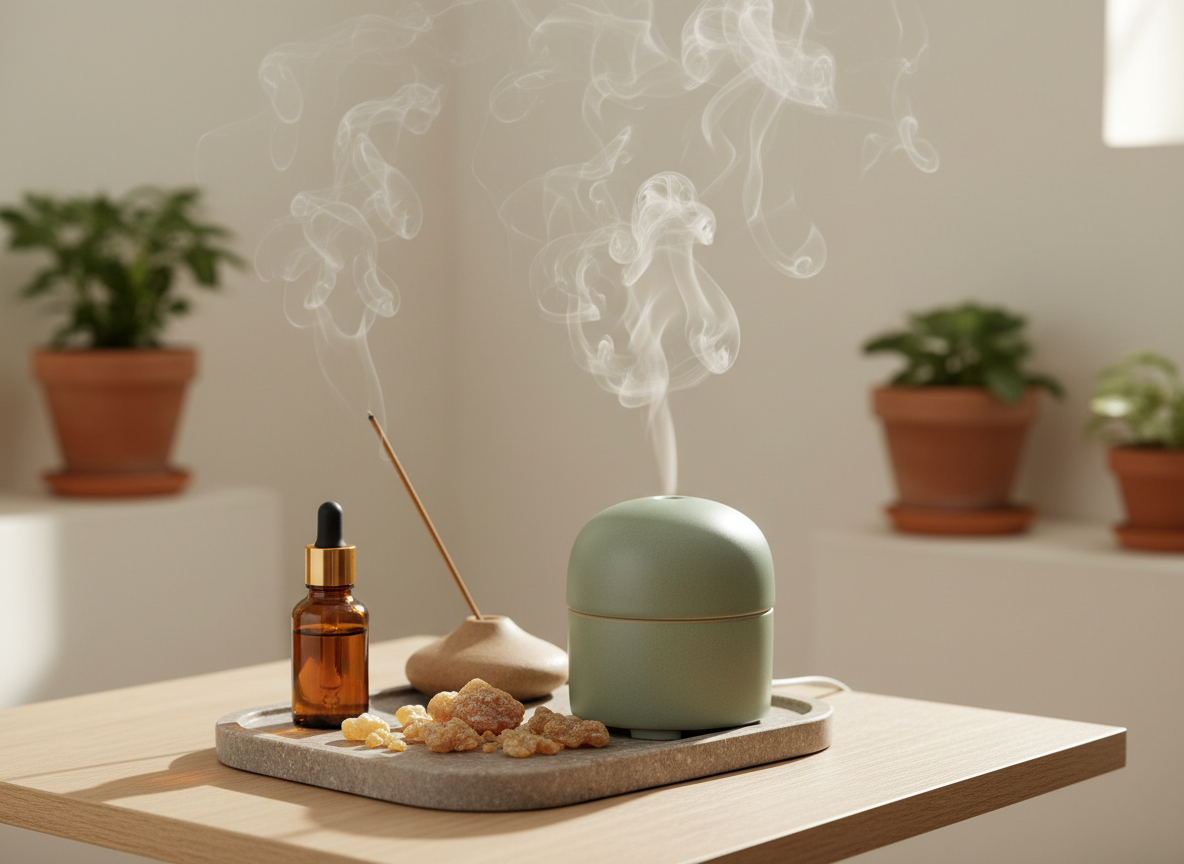
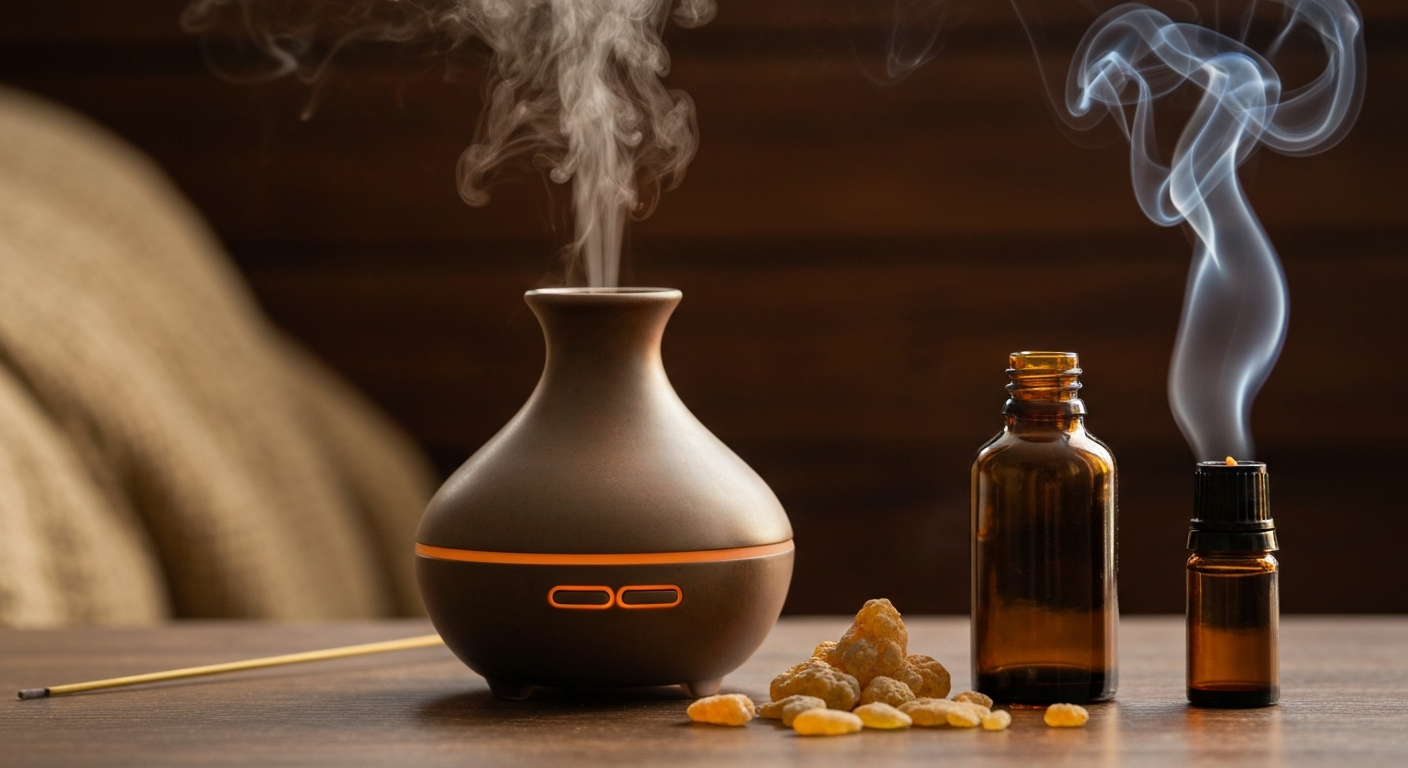
Contemporary aromatherapy has embraced frankincense essential oil through sophisticated diffusion methods that honor its traditional uses while maximizing its aromatic potential. Understanding proper diffuser application ensures optimal sensory experience while maintaining the oil's integrity.
Optimal Diffusion Parameters
Frankincense's complex molecular structure requires specific diffusion considerations to preserve its full aromatic spectrum:
Ultrasonic Diffusers: The gentle vibration method preserves heat-sensitive compounds while providing excellent scent dispersion. Recommended ratio: 3-5 drops per 100ml water capacity.
Nebulizing Diffusers: Direct oil atomization delivers the most concentrated aromatic experience, ideal for meditation spaces or when seeking maximum scent intensity. Use 5-10 drops for 15-30 minute sessions.
Reed Diffusers: Provide continuous, gentle aromatic release perfect for maintaining ambient frankincense presence. Mix 10-15 drops per ounce of carrier oil.
Heat-based Diffusion: While traditional, excessive heat can alter frankincense's delicate aromatic compounds. If using warming methods, maintain temperatures below 105°F (40°C).
Creating Effective Frankincense Diffuser Blends
The art of frankincense diffuser blend creation lies in understanding complementary aromatic relationships that enhance rather than compete with frankincense's natural complexity:
Grounding Meditation Blend
- 4 drops Frankincense
- 2 drops Sandalwood
- 1 drop Vetiver
This combination creates a deeply centering aromatic environment traditionally used for contemplative practices.
Uplifting Clarity Blend
- 3 drops Frankincense
- 2 drops Bergamot
- 2 drops Sweet Orange
Balances frankincense's grounding qualities with citrus brightness for enhanced mental clarity.
Evening Tranquility Blend
- 3 drops Frankincense
- 3 drops Lavender
- 1 drop Chamomile
Combines frankincense's calming properties with traditional relaxation oils for bedtime aromatherapy.
Purifying Sacred Space Blend
- 4 drops Frankincense
- 2 drops Myrrh
- 1 drop Cedarwood
Recreates the ancient aromatic experience of temple incense in modern diffuser form.
Aromatherapy Applications and Considerations
Frankincense aromatherapy extends beyond simple scent diffusion, offering versatile applications that may support various aspects of daily wellness routines when used appropriately and safely.
Personal Aromatherapy Practices
Inhalation Methods: Direct inhalation from the bottle or a few drops on a tissue provides immediate aromatic contact. Some practitioners report this method helpful for moments when they seek grounding or clarity.
Aromatic Jewelry: Essential oil diffuser necklaces or bracelets allow personal aromatherapy throughout the day. Apply 1-2 drops to the diffuser material, refreshing as the scent fades.
Meditation Enhancement: Many meditation practitioners incorporate frankincense aromatherapy into their practice, finding that the scent may help create a focused, contemplative atmosphere.
Sleep Environment: Gentle diffusion 30 minutes before bedtime may help establish aromatic cues that people associate with relaxation and rest preparation.
Professional Aromatherapy Settings
Wellness practitioners increasingly incorporate frankincense into professional environments:
Massage Therapy: Background diffusion creates atmospheric enhancement that clients often find deeply relaxing. Typical usage: 3-4 drops in a medium-sized treatment room.
Yoga Studios: Many instructors use frankincense aromatherapy during restorative or meditation-focused classes, finding it may support the contemplative atmosphere.
Wellness Spas: Frankincense's luxury associations and calming properties make it popular for creating premium sensory experiences in relaxation areas.
Safety Guidelines and Precautions
While frankincense essential oil is generally considered safe for aromatherapy use, proper precautions ensure optimal experience:
- Pregnancy Considerations: Pregnant individuals should consult qualified healthcare providers before using frankincense aromatherapy
- Respiratory Sensitivity: Those with asthma or respiratory conditions should introduce frankincense gradually and discontinue if any discomfort occurs
- Quality Sourcing: Use only high-quality, pure frankincense essential oil from reputable suppliers to avoid synthetic additives
- Proper Dilution: Never use undiluted essential oil directly on skin; always follow proper dilution guidelines
- Pet Safety: Ensure adequate ventilation when diffusing around pets, as some animals may be sensitive to essential oils
The Science Behind Frankincense Aromatherapy
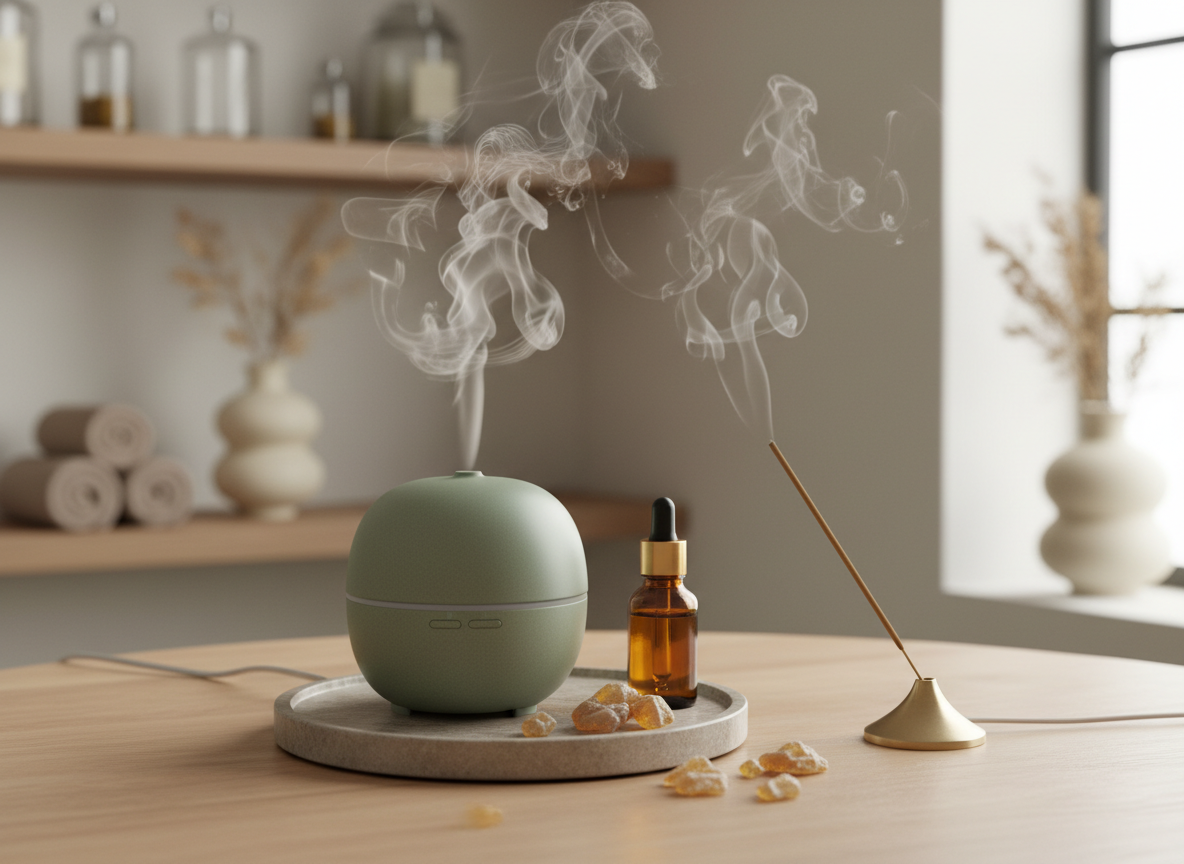
Modern research is beginning to illuminate the mechanisms behind frankincense's traditionally reported effects, offering scientific context for its enduring popularity in aromatherapy applications.
Olfactory Pathway Research
Studies suggest that aromatic compounds from frankincense may interact with the limbic system through olfactory pathways. Some research indicates that certain terpenes found in frankincense essential oil might influence neurotransmitter activity, though more research is needed to fully understand these complex interactions.
A 2008 study published in the Journal of Ethnopharmacology examined incensole acetate, a compound found in frankincense, and its potential effects on neural pathways. While this research focused on the isolated compound rather than essential oil aromatherapy specifically, it provides insight into why frankincense has maintained its reputation for supporting contemplative states.
Stress Response and Aromatic Compounds
Preliminary research suggests that inhalation of certain essential oil compounds may influence cortisol levels and stress response markers. While specific studies on frankincense aromatherapy remain limited, anecdotal reports consistently describe feelings of calm and centeredness associated with its use.
The complex interaction between aromatic molecules and human physiology continues to be an active area of investigation, with researchers exploring how traditional aromatherapy practices might align with measurable biological responses.
Selecting Quality Frankincense for Aromatherapy
The efficacy of frankincense aromatherapy depends significantly on essential oil quality, making informed selection crucial for optimal aromatic experience.
Species and Source Considerations
Different Boswellia species produce frankincense with varying aromatic profiles:
- Boswellia carterii (Somali): Offers bright, fresh top notes with classic resinous depth
- Boswellia sacra (Omani): Provides rich, complex aroma with pronounced woody undertones
- Boswellia frereana (Maydi): Features unique citrusy brightness uncommon in other species
- Boswellia serrata (Indian): Delivers earthy, grounding aroma with subtle spicy notes
Each species brings distinct aromatic characteristics to frankincense diffuser blend formulations, allowing for customized sensory experiences.
Quality Indicators
Premium frankincense essential oil for aromatherapy should exhibit:
- Clear, pale yellow to light amber coloration
- Complex, evolving scent profile without harsh or chemical notes
- Proper botanical nomenclature and origin disclosure
- Third-party testing documentation for purity verification
- Appropriate pricing reflecting genuine sourcing costs
Authentic frankincense essential oil represents a significant investment, but its superior aromatic properties and longevity often provide better value than lower-quality alternatives.
Conclusion: Embracing Ancient Wisdom in Modern Practice
Frankincense aromatherapy represents more than mere scent diffusion; it embodies a connection to humanity's earliest understanding of aromatic wellness. From ancient temple ceremonies to contemporary diffuser blends, this precious essential oil continues to offer a gateway to sensory experiences that many find profoundly centering and uplifting.
The distinctive frankincense scent, with its complex evolution and lasting presence, provides aromatherapy practitioners with a versatile tool for creating atmospheric enhancement. Whether used in simple diffusion or sophisticated blending protocols, frankincense essential oil maintains its position as aromatherapy royalty—a testament to the enduring power of authentic, high-quality natural aromatics.
As we continue to explore the intersection of traditional wisdom and modern understanding, frankincense aromatherapy remains a bridge between past and present, offering contemporary practitioners access to the same aromatic experiences that have supported human wellness for millennia. In embracing frankincense diffuser blends and aromatherapy applications, we participate in an unbroken chain of aromatic tradition that spans cultures and centuries.
Note: This information is for educational purposes only and is not intended to diagnose, treat, cure, or prevent any disease. Consult with a qualified healthcare provider before incorporating new aromatherapy practices into your wellness routine.