Boswellic Acids Explained: The Active Compounds That Make Frankincense Powerful
For millennia, frankincense has held a place of reverence across cultures, valued not merely for its celestial fragrance but for properties that ancient healers could only describe through observation. Today, modern science has begun to unravel the molecular mysteries behind this sacred resin, revealing a sophisticated orchestra of bioactive compounds known as boswellic acids. These remarkable molecules may help explain why frankincense has maintained its esteemed position in traditional wellness practices across centuries.
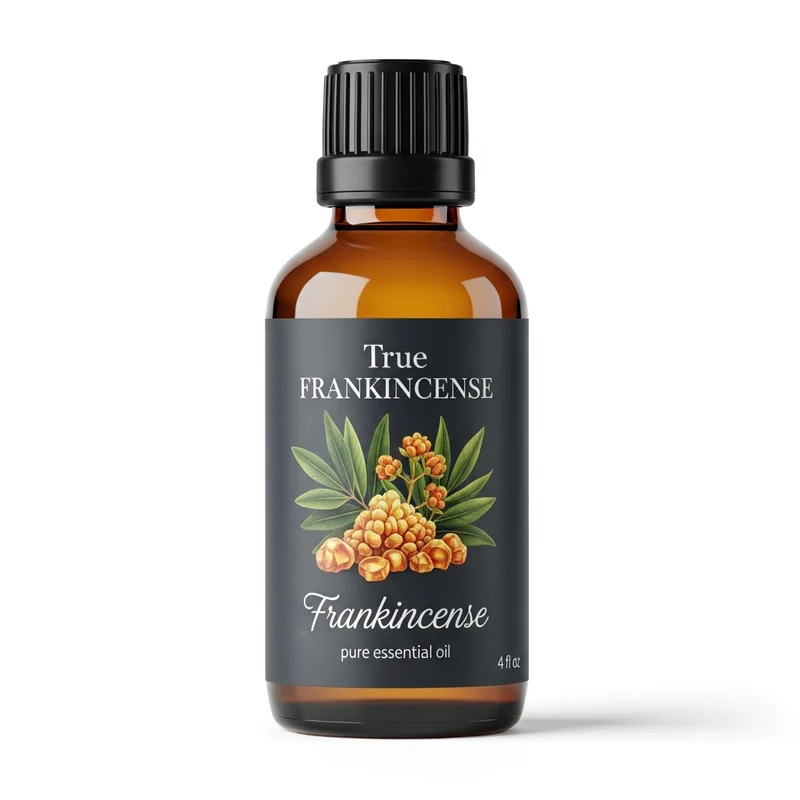
Frankincense Essential Oil
Six single-origin frankincense varieties, steam-distilled and GC/MS verified.
From $12.99
Shop Frankincense Oil →Understanding boswellic acids opens a window into the intricate chemistry that transforms simple tree resin into one of nature's most treasured aromatic substances. As we explore these fascinating compounds, we discover how ancient wisdom aligns with contemporary research, offering insights that bridge traditional knowledge with modern scientific understanding.
The Chemistry Behind Frankincense: Understanding Boswellic Acids
Boswellic acids represent a class of pentacyclic triterpene compounds found exclusively in the resin of Boswellia species trees. These complex molecules form through intricate biosynthetic pathways within the tree, created as part of the plant's natural defense mechanisms and soothing responses to environmental stressors.
When Boswellia trees are wounded—whether naturally through environmental factors or through traditional harvesting cuts—they respond by producing resin rich in these bioactive compounds. This defensive response concentrates boswellic acids in the oleoresin, creating the precious frankincense that has been treasured throughout history.
The Six Primary Boswellic Acids
Research has identified six major boswellic acids that occur naturally in frankincense resin, each with distinct chemical structures and potential properties:
- β-Boswellic Acid (BA): The foundational compound from which other boswellic acids derive
- Acetyl-β-Boswellic Acid (ABA): The acetylated form of β-boswellic acid
- 11-Keto-β-Boswellic Acid (KBA): Features a ketone group that may influence its activity profile
- Acetyl-11-Keto-β-Boswellic Acid (AKBA): Often considered the most significant compound in frankincense research
- α-Boswellic Acid: An isomer of β-boswellic acid with slightly different spatial arrangement
- Acetyl-α-Boswellic Acid: The acetylated version of α-boswellic acid
Among these compounds, AKBA (Acetyl-11-Keto-β-Boswellic Acid) has garnered particular attention from researchers due to its unique structural features and the observations made in various studies. Some research suggests that AKBA may be one of the most bioactive components of frankincense, though the full spectrum of boswellic acids likely works synergistically.
AKBA: The Crown Jewel of Frankincense Active Compounds
Acetyl-11-Keto-β-Boswellic Acid, commonly abbreviated as AKBA, represents what many researchers consider the most noteworthy of the frankincense active compounds. This particular boswellic acid possesses a unique chemical structure that includes both an acetyl group and a ketone group, modifications that appear to significantly influence its biological activity profile.
Structural Significance
The molecular architecture of AKBA distinguishes it from other boswellic acids in several important ways. The presence of the ketone group at the 11th carbon position, combined with the acetyl group, creates a molecule with enhanced lipophilicity—meaning it may have improved ability to cross cell membranes and interact with cellular targets.
Research observations suggest that this structural configuration may contribute to AKBA's distinct activity profile. Studies have noted that AKBA appears to have different interaction patterns with various biological systems compared to other boswellic acids, though researchers emphasize that these are preliminary findings requiring further investigation.
Concentration Variations
The concentration of AKBA in frankincense varies significantly depending on several factors:
- Species Source: Boswellia serrata typically contains higher AKBA levels compared to other Boswellia species
- Harvesting Methods: Traditional tapping techniques may influence the concentration of active compounds
- Processing Methods: Heat exposure and extraction methods can affect AKBA preservation
- Storage Conditions: Light, heat, and oxygen exposure may degrade AKBA over time
- Resin Age: Fresh resin typically contains higher concentrations than aged material
Premium frankincense products often specify AKBA content as a quality indicator, with concentrations ranging from 1% to over 10% depending on the source and processing methods used.
Research Observations: What Science Suggests About Boswellic Acid Benefits
Contemporary research into boswellic acids has yielded intriguing observations that may help explain the traditional reverence for frankincense. While it's important to note that most studies have been conducted in laboratory settings or with animal models, these findings provide valuable insights into the potential mechanisms behind frankincense's historical uses.
Cellular Activity Observations
Laboratory studies have observed various interactions between boswellic acids and cellular systems. Research suggests that these compounds may influence several biological pathways, though the clinical significance of these observations remains an area of active investigation.
Some studies have noted that boswellic acids appear to interact with certain enzyme systems within cells. Researchers have observed that AKBA, in particular, may influence the activity of 5-lipoxygenase, an enzyme involved in various biological processes. However, scientists emphasize that these are preliminary observations that require extensive further research to understand their potential implications.
Anti-Inflammatory Research Insights
One of the most extensively studied areas of boswellic acid research relates to inflammatory processes. Multiple laboratory studies have observed that various boswellic acids may influence inflammatory pathways, though researchers caution that laboratory observations don't necessarily translate to clinical benefits.
In vitro studies have suggested that boswellic acids may interact with nuclear factor-kappa B (NF-κB), a protein complex involved in cellular responses to various stimuli. Some research has observed that certain boswellic acids might influence the expression of inflammatory mediators, though the clinical relevance of these findings remains unclear.
For those interested in learning more about frankincense for inflammation, it's important to understand that while research observations are promising, they should not be interpreted as medical recommendations.
Cancer Research Observations
Perhaps some of the most intriguing, yet preliminary, research involves laboratory observations of boswellic acids in cancer cell studies. Various in vitro and animal studies have noted interesting interactions between certain boswellic acids and cancer cell lines, though researchers consistently emphasize that these early-stage observations require extensive additional research.
Some studies have observed that AKBA and other boswellic acids may influence cellular processes related to cell growth and programmed cell death in laboratory settings. However, it's crucial to understand that laboratory observations with isolated compounds and cell cultures are vastly different from clinical applications in living systems.
Those interested in exploring frankincense cancer research should approach this topic with appropriate scientific caution, understanding that preliminary research does not constitute medical evidence or approach recommendations.
Pain-Related Research Findings
Traditional uses of frankincense often included applications for discomfort, and some modern research has attempted to investigate these historical uses. Animal studies have suggested that certain boswellic acids might influence pain-related pathways, though human applications remain largely theoretical.
Some research has observed that boswellic acids may interact with pain-processing mechanisms in laboratory animals, though the translation of these findings to human experience is uncertain. Researchers note that pain is a complex phenomenon involving multiple biological systems, and laboratory observations may not reflect real-world applications.
For more information about traditional and research perspectives on frankincense for pain, it's essential to maintain realistic expectations based on current scientific understanding.
Bioavailability Considerations
One important aspect of boswellic acid research involves understanding how these compounds behave when consumed or applied topically. Studies have observed that boswellic acids may have varying absorption rates and metabolic patterns, factors that could influence their potential effects.
Research suggests that the bioavailability of boswellic acids may be influenced by:
- Formulation methods (standardized extracts vs. whole resin)
- Delivery mechanisms (oral, topical, or aromatic applications)
- Individual metabolic variations
- Presence of other compounds that might enhance or inhibit absorption
- Food interactions and timing of consumption
Safety Profile and Contraindications
While frankincense has a long history of traditional use, it's important to understand the safety considerations associated with boswellic acids, particularly when used in concentrated forms or therapeutic applications.
General Safety Observations
Most research suggests that boswellic acids are generally well-tolerated when used appropriately. Clinical studies investigating frankincense extracts have typically reported minimal adverse effects, though individual responses may vary.
Commonly reported minor side effects in studies have included:
- Mild gastrointestinal discomfort when consumed orally
- Occasional skin sensitivity when applied topically
- Rare allergic reactions in sensitive individuals
- Possible interactions with certain medications
Contraindications and Precautions
Certain populations should exercise particular caution when considering products containing concentrated boswellic acids:
Pregnancy and Nursing: Limited safety data exists for concentrated boswellic acid preparations during pregnancy and lactation. While traditional aromatic use of frankincense is generally considered safe, therapeutic doses of standardized extracts should be approached with caution. Pregnant and nursing individuals should consult healthcare providers before using frankincense products beyond occasional aromatic applications.
Children: Safety data for boswellic acid preparations in pediatric populations is limited. Traditional aromatic uses are generally considered safe, but concentrated extracts or therapeutic applications should involve pediatric healthcare provider guidance.
Medication Interactions: Some research suggests that boswellic acids might influence certain enzyme systems, potentially affecting medication metabolism. Individuals taking recommendation medications should consult healthcare providers before using frankincense products therapeutically.
Autoimmune Conditions: Given observations about boswellic acids' potential influence on immune system pathways, individuals with autoimmune conditions should seek medical guidance before using concentrated frankincense preparations.
Topical Application Safety
When using frankincense essential oil or preparations containing boswellic acids topically, several safety considerations apply:
- Dilution: Essential oils should always be properly diluted (typically 1-3% concentration) before topical application
- Patch Testing: Perform a patch test on a small skin area before widespread topical use
- Photosensitivity: While frankincense is not typically photosensitizing, individual reactions may vary
- Mucous Membrane Avoidance: Avoid contact with eyes, mouth, and other sensitive mucous membranes
Sourcing and Quality Indicators for Boswellic Acid Content
The therapeutic potential of boswellic acids depends heavily on the quality and authenticity of the frankincense source. Understanding quality indicators helps consumers make informed decisions about frankincense products and their potential boswellic acid content.
Species Identification and Geographic Origin
Different Boswellia species produce varying profiles of boswellic acids:
Boswellia serrata (Indian Frankincense): Often contains the highest concentrations of AKBA, making it popular for extract production. (See: NIH — Boswellia Research.) This species typically yields resin with 1-10% AKBA content depending on processing methods.
Boswellia carterii/sacra (Arabian Frankincense): Prized for aromatic quality and balanced boswellic acid profiles. While AKBA content may be lower than B. serrata, the overall compound complexity is often superior.
Boswellia frereana (Maydi Frankincense): Contains unique boswellic acid variations and is traditionally valued for specific applications. Research on this species' specific compound profile is ongoing.
Boswellia papyrifera (African Frankincense): Generally contains lower boswellic acid concentrations but offers distinct aromatic properties and other bioactive compounds.
Harvesting and Processing Quality Indicators
The concentration and integrity of boswellic acids can be significantly affected by harvesting and processing methods:
Traditional vs. Modern Harvesting: Traditional tapping methods that allow natural oleoresin exudation may preserve higher boswellic acid concentrations compared to aggressive extraction methods that might damage the tree or compromise compound integrity.
Processing Temperature: Heat exposure during distillation or extraction can degrade heat-sensitive boswellic acids. CO2 extraction and low-temperature steam distillation generally preserve more bioactive compounds than high-heat methods.
Storage and Transportation: Proper storage away from light, heat, and oxygen helps maintain boswellic acid integrity. Quality suppliers provide detailed storage and handling information.
Analytical Testing and Standardization
Premium frankincense products often include detailed analytical information about boswellic acid content:
Gas Chromatography-Mass Spectrometry (GC-MS) Analysis: Provides detailed compound profiles including specific boswellic acid concentrations and ratios. Quality suppliers provide current GC-MS reports for their products.
AKBA Standardization: Some products are standardized to specific AKBA percentages, ensuring consistent bioactive compound levels. Standardized extracts typically range from 10-65% total boswellic acids with varying AKBA concentrations.
Purity Testing: Comprehensive testing for adulterants, synthetic additions, and contamination helps ensure product integrity and safety.
Quality Assessment Criteria
When evaluating frankincense products for boswellic acid content, consider these quality indicators:
- Species Verification: Botanical identification and source verification
- Geographic Origin: Specific regional sourcing information
- Analytical Certificates: Current testing reports for bioactive compounds
- Processing Methods: Extraction and distillation technique transparency
- Storage Conditions: Proper handling and storage practices
- Supplier Reputation: Established relationships with sustainable sources
- Pricing Considerations: Realistic pricing that reflects quality production costs
Synergistic Compounds: Beyond Boswellic Acids
While boswellic acids represent the most studied bioactive compounds in frankincense, the complete chemical profile includes numerous other constituents that may contribute to the overall properties of this remarkable resin. Understanding this broader chemical context helps appreciate the complexity of frankincense as a whole botanical preparation.
Essential Oil Components
Frankincense essential oil contains volatile compounds that work alongside boswellic acids:
- Monoterpenes: Including α-pinene, limonene, and sabinene, which contribute to aromatic properties
- Sesquiterpenes: Such as β-caryophyllene and germacrene, which may have their own bioactive properties
- Esters: Including octyl acetate and various other aromatic esters
- Alcohols: Such as linalool and various terpene alcohols
Research suggests that these volatile compounds may work synergistically with boswellic acids, potentially enhancing or modifying the overall activity profile of frankincense preparations.
Other Triterpenes and Sterols
Beyond boswellic acids, frankincense contains other triterpene compounds and sterols that may contribute to its traditional uses:
- Lupeolic acids and their derivatives
- Various sterol compounds including β-sitosterol
- Pentacyclic triterpenes beyond the boswellic acid family
- Polysaccharides and gum components
The Entourage Effect Concept
Some researchers propose that frankincense may demonstrate an "entourage effect," where the combination of multiple bioactive compounds produces different results than isolated individual components. This concept suggests that standardizing to single compounds like AKBA might not capture the full potential of whole frankincense preparations.
This perspective emphasizes the value of high-quality, minimally processed frankincense that preserves the natural balance of compounds rather than focusing solely on isolated boswellic acids.
Future Research Directions and Considerations
The scientific understanding of boswellic acids continues to evolve, with researchers pursuing various avenues to better comprehend these fascinating compounds and their potential applications.
Current Research Limitations
Most current research on boswellic acids faces several limitations that affect the interpretation of findings:
- Laboratory vs. Clinical Settings: Many studies use isolated compounds in laboratory conditions that may not reflect real-world applications
- Dosage and Standardization: Lack of standardized dosing protocols makes it difficult to compare study results
- Long-term Safety Data: Limited long-term studies on the safety of concentrated boswellic acid preparations
- Individual Variation: Genetic and metabolic differences may affect how individuals process and respond to boswellic acids
Emerging Research Areas
Scientists are exploring several promising areas for future boswellic acid research:
Bioavailability Enhancement: Research into formulation methods that might improve the absorption and utilization of boswellic acids, including combination with other natural compounds or novel delivery systems.
Personalized Applications: Investigation of how individual genetic variations might influence boswellic acid metabolism and response, potentially leading to more personalized approaches to frankincense use.
Synergistic Combinations: Studies examining how boswellic acids interact with other natural compounds, both from frankincense and from other botanical sources.
Sustainable Production: Research into cultivation methods and sustainable harvesting practices that could ensure long-term availability while preserving bioactive compound quality.
Practical Considerations for Consumers
For individuals interested in frankincense products containing boswellic acids, several practical considerations can help guide informed decision-making while maintaining appropriate safety and realistic expectations.
Product Selection Guidelines
When choosing frankincense products, consider these factors:
- Purpose and Application: Aromatic use requires different considerations than topical applications or oral supplements
- Quality Documentation: Look for suppliers who provide detailed analytical information about their products
- Processing Methods: Understand how extraction and processing methods might affect compound integrity
- Concentration Levels: Be aware of the concentration of active compounds in different product types
- Storage Requirements: Follow proper storage guidelines to maintain product quality
Realistic Expectations
While research into boswellic acids is promising, it's important to maintain realistic expectations based on current scientific understanding:
- Laboratory studies don't necessarily predict clinical benefits
- Individual responses to natural compounds can vary significantly
- Traditional use, while valuable, doesn't constitute scientific proof of specific effects
- High-quality products are essential for any potential benefits
- Professional healthcare guidance is appropriate for therapeutic applications
Integration with Healthcare
For those considering frankincense products for wellness purposes, integration with qualified healthcare providers offers several advantages:
- Professional assessment of individual health status and needs
- Identification of potential interactions with existing treatments
- Monitoring for any unexpected responses or effects
- Guidance on appropriate products and usage protocols
- Integration with comprehensive wellness approaches
Conclusion: The Promise and Perspective of Boswellic Acids
The journey from ancient reverence to modern scientific investigation has revealed boswellic acids as remarkable molecular ambassadors of frankincense's traditional esteem. These complex triterpene compounds, particularly AKBA frankincense preparations, represent a fascinating intersection of historical wisdom and contemporary research methodology.
As our understanding of these frankincense active compounds continues to evolve, several key insights emerge. The sophisticated chemistry of boswellic acids—from the foundational β-boswellic acid to the structurally complex AKBA—demonstrates nature's ability to create intricate bioactive molecules through elegant biosynthetic pathways. The research observations suggesting various biological interactions, while preliminary, offer intriguing glimpses into potential mechanisms that might explain frankincense's enduring reputation.
Yet perhaps most importantly, the study of boswellic acids reminds us that scientific investigation is an ongoing process. While current research provides valuable insights into these compounds, much remains to be discovered about their full potential, optimal applications, and long-term implications. The apparent synergistic relationships between different boswellic acids and other frankincense constituents suggest that the whole may indeed be greater than the sum of its parts.
For consumers and practitioners interested in frankincense, understanding boswellic acids provides a foundation for making informed decisions about quality, sourcing, and realistic expectations. The appreciation for these compounds should be balanced with recognition that traditional botanical preparations often involve complex interactions that single-compound studies may not fully capture.
As research continues to explore the mysteries of boswellic acids, the ancient gift of frankincense continues to offer its timeless wisdom—that nature's most treasured substances often reveal their secrets slowly, requiring patience, respect, and careful observation to understand their full potential. In bridging ancient tradition with modern scientific inquiry, boswellic acids represent not just biochemical curiosities, but symbols of humanity's ongoing dialogue with the natural world's sophisticated chemistry.
The story of boswellic acids is far from complete, and future research will undoubtedly reveal new layers of understanding about these fascinating compounds. Until then, they remain ambassadors of frankincense's enduring mystery—complex, promising, and worthy of continued scientific respect and investigation.
Frankincense Essential Oil
Serrata, carterii, sacra, frereana, neglecta and rivae: steam-distilled, GC/MS verified, in sizes from 0.5 oz to bulk.
From $12.99
Shop Frankincense Oil →