Frankincense Resin vs. Essential Oil: The Ultimate Guide to Extraction, Potency, and Choosing Your Ideal Form
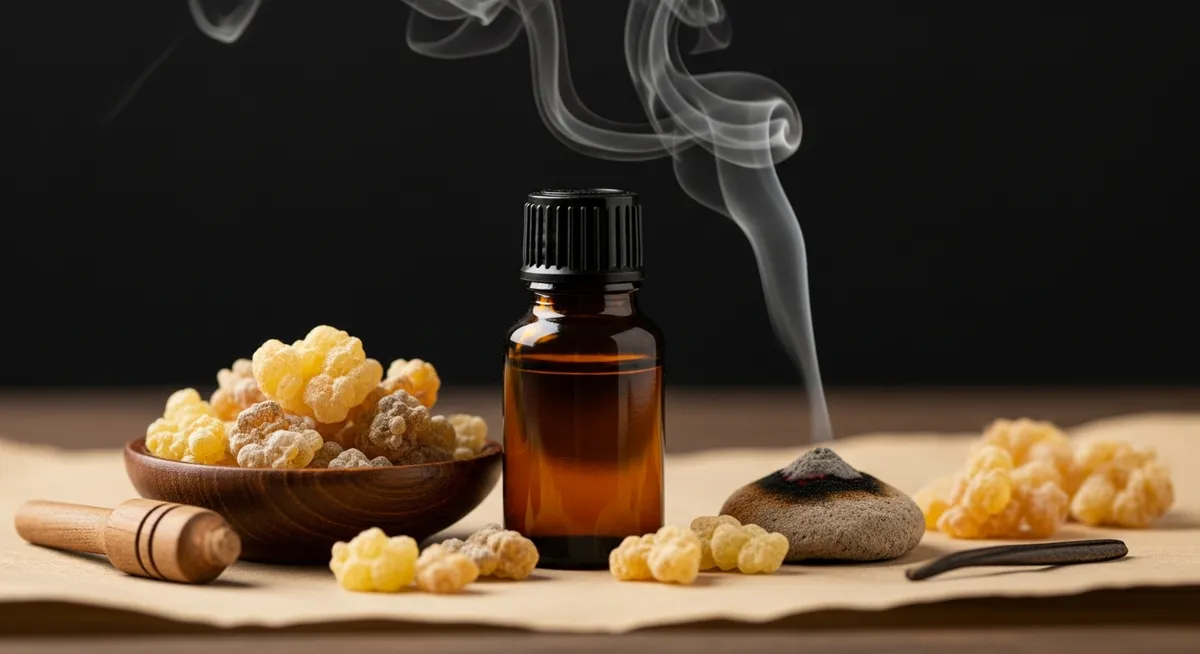
For millennia, frankincense has commanded reverence across cultures, from ancient Egyptian burial chambers to modern aromatherapy practices. Yet many enthusiasts find themselves at a crossroads: should they choose the raw, amber-hued resin tears that have been treasured for over 5,000 years, or the concentrated essential oil that captures the essence in liquid form?
Frankincense Essential Oil
Six single-origin frankincense varieties, steam-distilled and GC/MS verified.
From $12.99
Shop Frankincense Oil →This comprehensive guide illuminates the fundamental differences between frankincense resin and essential oil, exploring their unique extraction processes, potency characteristics, and practical applications. Whether you're a seasoned practitioner or new to the world of frankincense, understanding these distinctions will empower you to make informed choices that align with your specific needs and preferences.
Key Takeaways
- Frankincense resin is the raw oleoresin directly harvested from Boswellia trees, while essential oil is a concentrated extract obtained through distillation
- Resin offers a fuller aromatic profile with non-volatile compounds, while essential oil provides concentrated volatile compounds in a convenient form
- Extraction methods significantly impact the final product's composition and aromatic characteristics
- Each form has distinct advantages for different applications, from traditional burning practices to modern aromatherapy
- Quality assessment criteria vary between resin and oil, requiring different evaluation approaches
- Cost considerations include initial investment, yield ratios, and long-term value
Table of Contents
- Understanding the Fundamentals: What Sets Resin Apart from Essential Oil
- Extraction Methods: From Tree to Final Product
- Chemical Composition and Potency Analysis
- Practical Applications and Usage Methods
- Quality Assessment: Evaluating Both Forms
- Cost and Value Analysis
- Choosing the Right Form for Your Needs
- Storage and Longevity Considerations
Understanding the Fundamentals: What Sets Resin Apart from Essential Oil
The Nature of Frankincense Resin
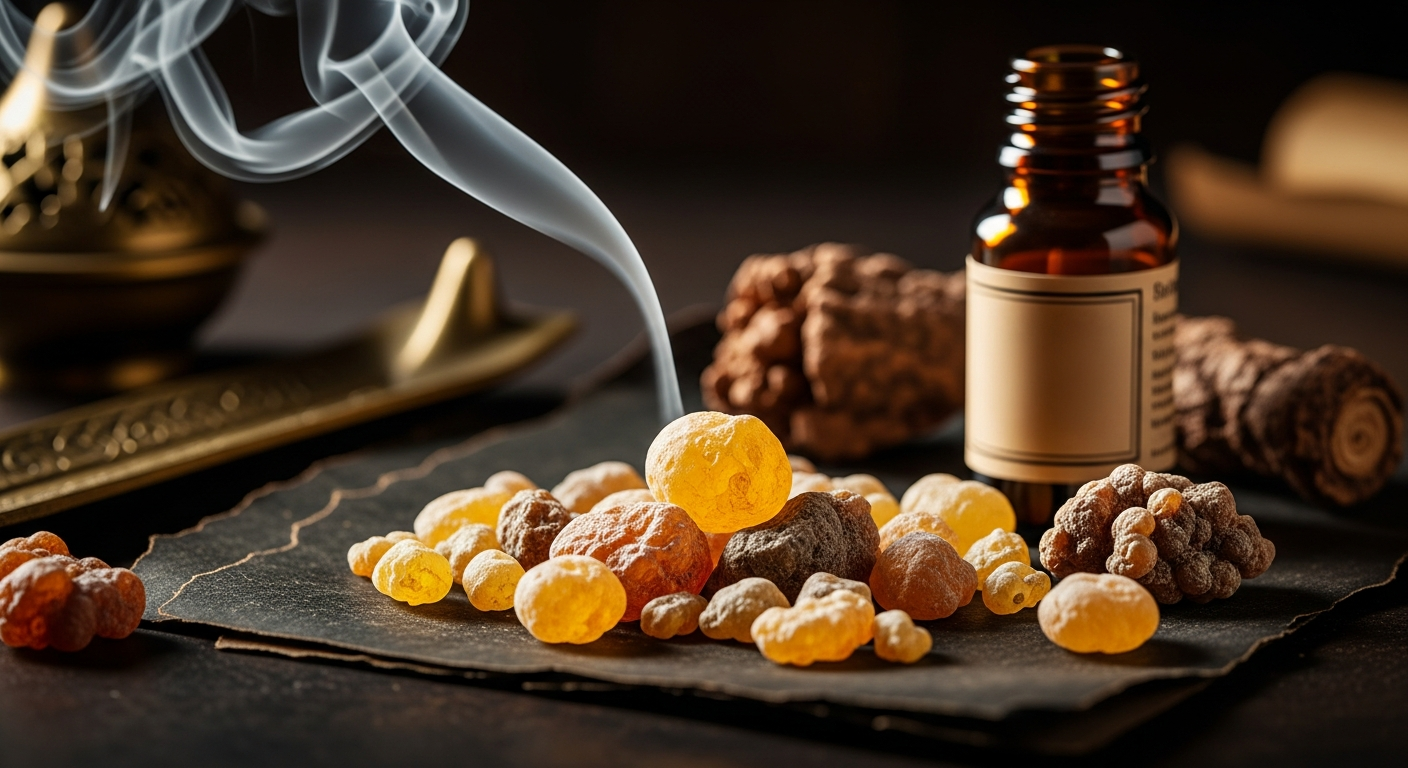
Frankincense resin represents nature's purest offering from the Boswellia tree species. These golden to amber-colored tears form when the tree's bark is carefully scored, allowing the protective oleoresin to seep out and harden upon contact with air. This raw material contains the complete spectrum of compounds naturally produced by the tree, including both volatile and non-volatile elements.
The resin's composition is remarkably complex, containing not only the aromatic volatile oils but also gums, mucilages, and other plant compounds that contribute to its traditional burning properties and distinctive fragrance profile. Each tear represents a concentrated defense mechanism of the Boswellia tree, rich with compounds that have been valued across cultures for their aromatic and ceremonial significance.
Essential Oil: Concentrated Volatile Essence
Frankincense essential oil, in contrast, represents a refined extraction containing primarily the volatile aromatic compounds from the resin. Through various distillation processes, the water-soluble and volatile oil-soluble components are separated from the resin matrix, creating a concentrated liquid that captures the essence of frankincense in a more portable and versatile form.
This concentrated nature means that essential oil typically contains higher levels of specific volatile compounds like α-pinene, limonene, and boswellic acid derivatives, making it particularly suitable for applications where concentrated aromatic impact is desired. The oil form also allows for easier blending with carrier oils and integration into various modern applications.
Key Philosophical Differences
Beyond the technical distinctions lies a philosophical divide between these two forms. Resin represents the traditional, unaltered gift of the Boswellia tree, maintaining the complete chemical matrix as nature intended. This wholeness appeals to those who value authenticity and traditional practices, particularly in ceremonial or meditative contexts.
Essential oil, while derived from this same source, represents human ingenuity in concentrating and refining nature's offerings. This form appeals to those who prioritize convenience, precise application control, and integration with modern lifestyle practices.
Extraction Methods: From Tree to Final Product
Resin Harvesting: Ancient Traditions Preserved
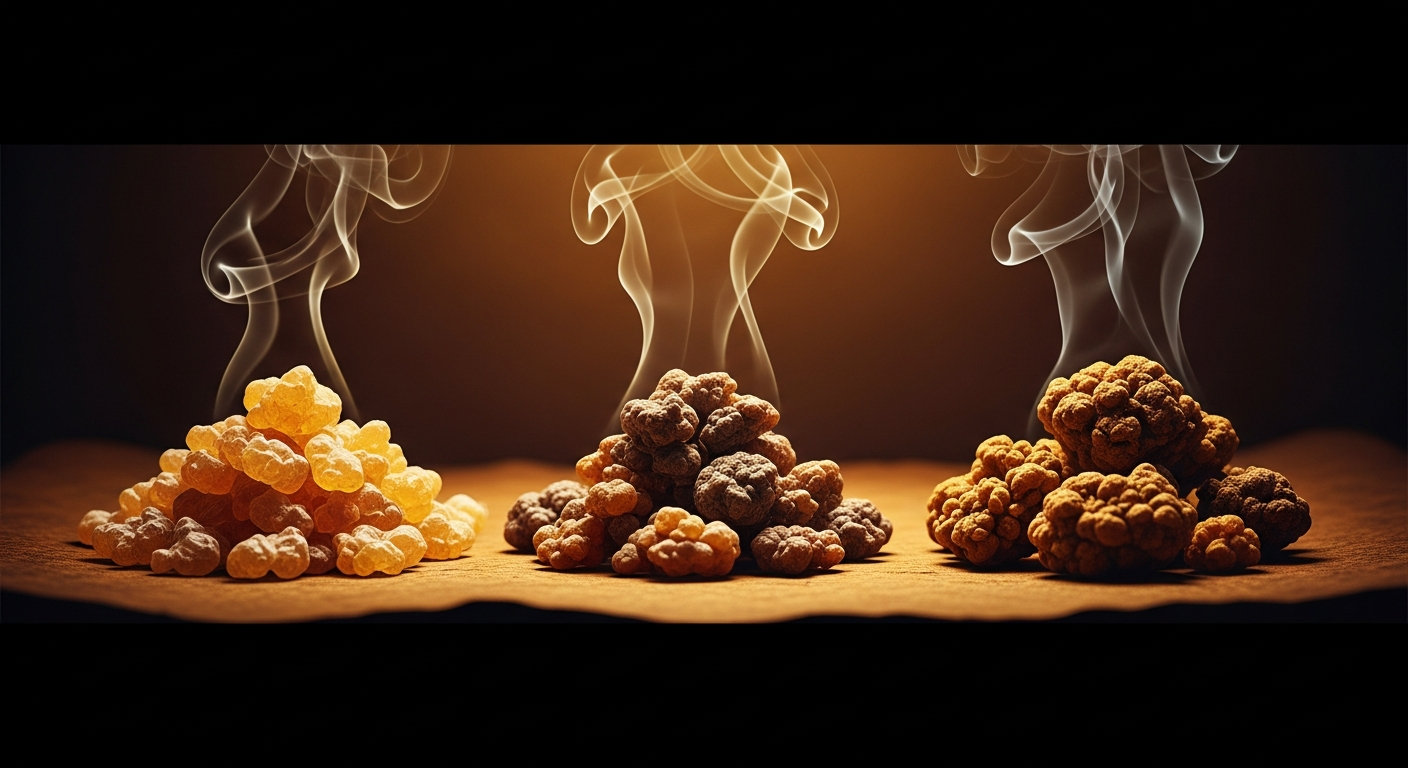
The harvesting of frankincense resin follows methods largely unchanged for millennia. Skilled harvesters make precise incisions in the Boswellia tree's bark during optimal seasons, typically when temperatures are moderate and the tree's sap flow is most active. The initial cuts often produce lower-grade resin, while subsequent harvests from the same incisions yield increasingly pure, light-colored tears.
The process requires careful timing and technique. Too shallow cuts fail to stimulate adequate resin flow, while too deep incisions can damage the tree. Master harvesters understand the subtle indicators—bark color, seasonal timing, and tree health—that determine optimal harvesting conditions. The resin then undergoes a natural curing process, hardening and developing its characteristic translucent appearance over several weeks.
| Harvest Grade | Appearance | Characteristics | Traditional Use |
|---|---|---|---|
| First Cut | Darker, opaque | Higher bark content | General burning, less ceremonial |
| Second Cut | Lighter, translucent | Purer resin content | Daily ceremonial use |
| Third Cut and Beyond | Pale, crystal-clear | Highest purity | Sacred ceremonies, premium applications |
Essential Oil Extraction: Modern Refinement Techniques
The transformation of frankincense resin into essential oil involves several sophisticated extraction methods, each producing oils with distinct characteristics and applications.
Steam Distillation
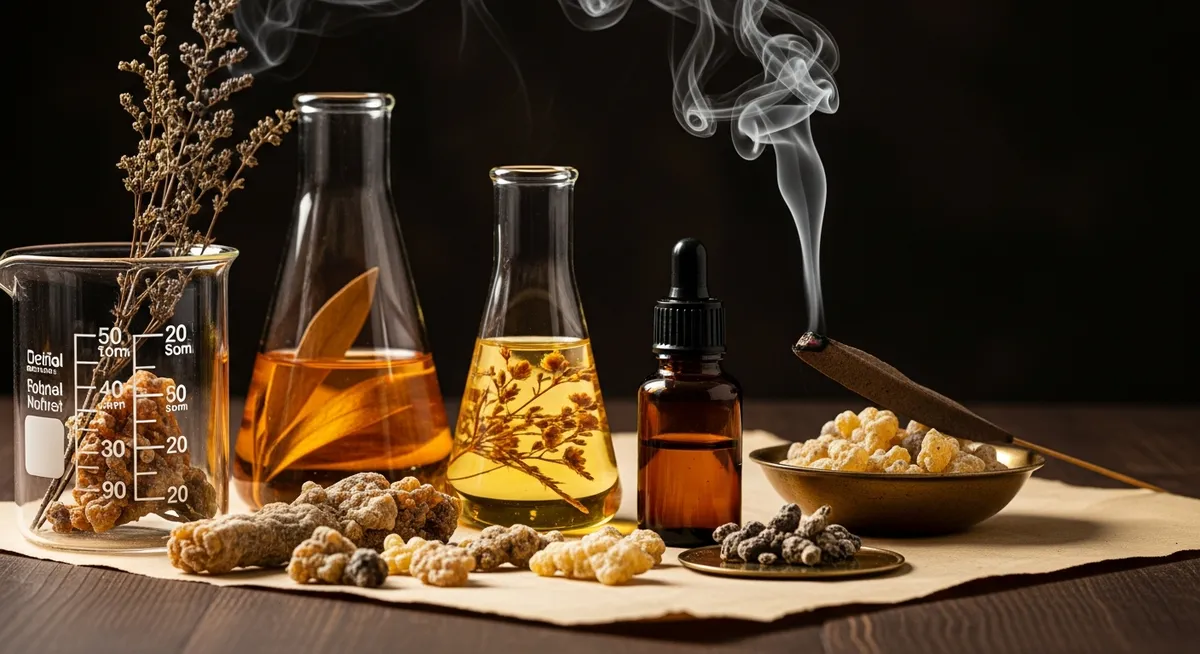
Steam distillation remains the most common method for frankincense essential oil extraction. This process involves placing crushed resin in a distillation apparatus where steam passes through the material, vaporizing the volatile compounds. The steam and volatile oils are then condensed, and the oil is separated from the water through decantation.
This method typically yields oils rich in monoterpenes and sesquiterpenes, creating a bright, fresh aromatic profile that differs somewhat from the deep, complex fragrance of burning resin. Steam distillation generally produces yields of 3-10% essential oil from raw resin, depending on the resin quality and distillation parameters.
CO2 Extraction
Supercritical CO2 extraction represents a more modern approach, using carbon dioxide under high pressure to extract aromatic compounds. This method operates at lower temperatures than steam distillation, potentially preserving more delicate aromatic components and producing oils with profiles closer to the original resin.
CO2 extraction often yields oils with more complex aromatic profiles, including some heavier molecular weight compounds that might be lost in steam distillation. However, this method requires specialized equipment and typically results in higher production costs.
Hydrodistillation
Hydrodistillation involves direct contact between the resin and water during the distillation process. This method can extract both water-soluble and oil-soluble compounds, sometimes producing oils with unique characteristics not found in steam-distilled versions.
Impact of Extraction on Final Product
The chosen extraction method significantly influences the final product's aromatic profile, chemical composition, and potential applications. Steam-distilled oils tend to be lighter and more volatile, while CO2 extracts often maintain more of the resin's complex depth. Understanding these differences helps consumers select products that align with their specific preferences and intended uses.
Chemical Composition and Potency Analysis
Resin's Complex Matrix
Frankincense resin contains an intricate blend of compounds that work synergistically to create its distinctive properties. Research suggests that raw resin typically contains 5-15% volatile oils, 25-35% alcohol-soluble resins, and 30-60% water-soluble gums and mucilages. This complex matrix includes:
- Volatile oils: Including α-pinene, β-pinene, limonene, and other terpenes that contribute to the immediate aromatic impact
- Resin acids: Such as boswellic acids and their derivatives, which contribute to the resin's traditional significance
- Gums and mucilages: Water-soluble compounds that affect burning characteristics and provide structural integrity
- Non-volatile aromatic compounds: Heavier molecules that contribute to the deep, lasting fragrance when the resin is heated
This comprehensive composition means that when resin is burned or heated, users experience the full spectrum of aromatic compounds as they are released at different temperatures, creating the characteristic complex fragrance profile that has been prized for millennia.
Essential Oil Concentration
Frankincense essential oil represents a concentrated extraction of primarily volatile compounds, typically containing 60-80% monoterpenes and 15-25% sesquiterpenes, along with smaller amounts of other volatile organic compounds. The concentration process means that what might represent trace amounts in raw resin becomes significant percentages in the essential oil.
Key components commonly found in frankincense essential oil include:
- α-Pinene (30-60%): Contributes to the fresh, piney top notes
- Limonene (10-20%): Provides citrusy brightness
- β-Pinene (5-15%): Adds woody, resinous undertones
- Myrcene (2-8%): Contributes to the oil's distinctive character
- Sabinene (2-6%): Adds spicy, woody nuances
The concentration of these compounds in essential oil form means that even small amounts can provide significant aromatic impact, making essential oils particularly efficient for applications requiring consistent, measurable dosing.
Potency Considerations
When comparing potency between resin and essential oil, the definition of "potency" becomes crucial. If measuring aromatic impact per gram of material, essential oils typically demonstrate higher immediate potency due to their concentrated nature. A single drop of quality frankincense essential oil can provide aromatic impact equivalent to burning several small pieces of resin.
However, if considering the breadth and complexity of aromatic experience, resin offers a different type of potency—one that unfolds over time and provides layers of fragrance not typically captured in essential oil form. The burning process releases compounds in a sequential manner, creating an evolving aromatic journey that many practitioners find spiritually and aesthetically superior.
Bioavailability and Absorption
The form of frankincense affects how aromatic compounds become available for sensory perception. When resin is burned, compounds are released gradually and in combination with combustion products, creating a complex sensory experience. The particle size and combination of compounds may affect how the fragrance is perceived and how long the aromatic experience lasts.
Essential oils, being pre-concentrated and in liquid form, offer immediate availability of aromatic compounds. When diffused or applied (properly diluted), the volatile compounds become airborne quickly, providing rapid aromatic impact. This immediate availability makes essential oils particularly suitable for applications requiring quick aromatic response or precise timing.
Practical Applications and Usage Methods
Traditional Resin Applications
Frankincense resin's traditional applications center around burning practices that have remained virtually unchanged across cultures and centuries. Proper burning techniques release the resin's complex aromatic profile gradually, creating an atmosphere conducive to meditation, prayer, and ceremonial practices.
The burning process itself holds significance beyond mere fragrance production. As the resin slowly melts and releases its aromatic compounds, practitioners often find the visual element—the curling smoke and glowing ember—as meaningful as the olfactory experience. This multi-sensory engagement has made resin burning a cornerstone of contemplative practices worldwide.
Modern Resin Applications
Contemporary uses for frankincense resin have expanded beyond traditional burning:
- Cold infusions: Some practitioners create alcohol or oil infusions from resin for non-combustion aromatic applications
- Decorative purposes: High-grade resin tears serve as natural decorative elements in meditation spaces
- Blending practices: Resin can be combined with other aromatic resins and herbs for custom incense blends
- Grinding applications: Pulverized resin can be incorporated into natural perfume blends or potpourri
Essential Oil Versatility
Frankincense essential oil's liquid form and concentrated nature provide remarkable versatility in modern applications. The oil integrates seamlessly into contemporary lifestyle practices while maintaining connection to frankincense's traditional significance.
Aromatherapy Applications
Essential oil excels in modern aromatherapy applications:
- Diffusion: Electronic diffusers can disperse frankincense oil efficiently throughout spaces
- Personal inhalers: Portable options for individual aromatic experiences
- Room sprays: When properly diluted, creates instant aromatic environments
- Blending: Combines readily with other essential oils for custom aromatic profiles
Topical Applications
Important Safety Note: Essential oils must always be properly diluted before topical application. Perform patch tests and consult qualified practitioners for guidance on appropriate dilution ratios.
When properly diluted with appropriate carrier oils, frankincense essential oil may be used in:
- Massage oil blends: Typically diluted to 1-3% concentration for general use
- Skincare formulations: Often incorporated into facial oils and serums
- Bath applications: Added to carrier oils or bath salts for aromatic bathing experiences
Comparative Convenience Factors
The practical convenience of each form varies significantly based on application context:
| Factor | Frankincense Resin | Essential Oil |
|---|---|---|
| Setup Time | Requires charcoal preparation, ventilation | Immediate use in diffusers or blends |
| Portability | Bulky, requires burning equipment | Compact, travel-friendly bottles |
| Dosage Control | Less precise, depends on resin size | Precise drop-by-drop control |
| Duration Control | Burns until consumed | Can be turned off instantly |
| Safety Considerations | Open flame, smoke, ventilation needs | No combustion, but requires proper dilution |
Quality Assessment: Evaluating Both Forms
Assessing quality in frankincense products requires different approaches for resin and essential oil, as each form presents unique indicators of excellence and purity.
Resin Quality Indicators
Premium frankincense resin exhibits specific visual, textural, and aromatic characteristics that distinguish it from lower grades. Understanding these quality markers empowers consumers to make informed purchasing decisions.
Visual Assessment
Superior resin tears display:
- Color clarity: Ranging from pale yellow to light amber, with minimal dark inclusions
- Translucency: High-grade resin allows light to pass through, creating an almost crystal-like appearance
- Surface texture: Smooth, natural formations without excessive dust or debris
- Size consistency: Premium grades often feature larger, more uniform tear sizes
Aromatic Evaluation
Quality resin produces distinctive aromatic characteristics when burned:
- Initial fragrance: Fresh, clean scent when first heated, without harsh or acrid notes
- Smoke quality: White to light gray smoke that dissipates cleanly
- Burning behavior: Melts and bubbles gently without excessive crackling or popping
- Aromatic evolution: Complex fragrance development from initial heating through complete consumption
Essential Oil Quality Standards
Evaluating frankincense essential oil quality requires attention to both technical specifications and sensory characteristics.
Technical Quality Indicators
- Botanical source: Clearly identified Boswellia species and geographic origin
- Extraction method: Specified distillation or extraction technique
- Testing documentation: GC/MS (Gas Chromatography-Mass Spectrometry) analysis when available
- Batch tracking: Production date and batch identification for quality control
Sensory Evaluation
- Appearance: Clear to pale yellow liquid without cloudiness or sediment
- Consistency: Appropriate viscosity—not too thin or unusually thick
- Aromatic profile: Balanced fragrance reflecting the specific Boswellia species
- Longevity: Sustained aromatic presence when properly diffused
Authentication and Purity Concerns
Both resin and essential oil markets face challenges with adulteration and misrepresentation. Authentic frankincense commands premium prices, creating incentives for less scrupulous suppliers to cut corners or misrepresent their products.
Common adulteration practices include:
- Resin mixing: Blending high-grade tears with lower-quality material or other resins
- Essential oil dilution: Cutting pure frankincense oil with carrier oils or synthetic compounds
- Species substitution: Representing common Boswellia species as rare, premium varieties
- Geographic misrepresentation: Claiming prestigious origins for products from other regions
Purchasing from reputable suppliers who provide transparent sourcing information and quality documentation offers the best protection against these practices.
Cost and Value Analysis
Initial Investment Considerations
The upfront costs for frankincense resin versus essential oil involve different considerations and long-term value propositions. Understanding these economic factors helps consumers make choices aligned with both their budgets and usage patterns.
Resin Cost Structure
Frankincense resin pricing reflects several factors:
- Grade and purity: Premium tears command significantly higher prices than commercial grades
- Geographic origin: Renowned producing regions often carry price premiums
- Harvest timing: Later-season harvests typically cost more due to higher purity
- Quantity packaging: Bulk purchases usually offer better per-unit pricing
Additional equipment costs include charcoal tablets, censers or burning bowls, and proper ventilation considerations for indoor use.
Essential Oil Investment
Essential oil costs involve different variables:
- Concentration factor: Higher initial cost per unit, but greater aromatic yield per application
- Extraction method: CO2 extracts typically cost more than steam-distilled oils
- Bottle size: Smaller bottles offer convenience but higher per-milliliter costs
- Purity levels: Pure, undiluted oils command premium pricing over blended products
Additional equipment might include diffusers, carrier oils for dilution, and proper storage containers.
Usage Efficiency and Yield
Comparing value requires understanding how much aromatic experience each form provides per unit cost:
| Usage Scenario | Resin Efficiency | Essential Oil Efficiency |
|---|---|---|
| 30-minute meditation session | 2-3 small tears (approx. 1-2g) | 3-5 drops in diffuser |
| Room scenting (2 hours) | 4-6 tears, multiple charcoal tablets | 10-15 drops, minimal electricity |
| Personal aromatherapy | Requires dedicated burning space | 1-2 drops on personal inhaler |
| Blending applications | Must be ground, limited compatibility | Easily measured and mixed |
Long-term Value Considerations
Beyond initial costs, several factors affect long-term value:
Storage and Longevity
Properly stored frankincense resin can maintain quality for decades, making it an investment that appreciates over time. High-grade tears may even improve with age, developing deeper, more complex aromatic profiles.
Essential oils, while more volatile, typically maintain quality for 2-5 years when stored properly. The concentrated nature means a small bottle provides numerous applications, potentially offering better long-term value for regular users.
Versatility Value
Essential oils offer greater application versatility, potentially replacing multiple aromatic products and serving various purposes from room scenting to personal care applications. This multifunctionality can represent significant value for consumers seeking simplified, effective aromatic solutions.
Resin excels in specific applications—particularly traditional ceremonial uses—where its unique burning characteristics and complete aromatic profile cannot be replicated by essential oils.
Choosing the Right Form for Your Needs
Selecting between frankincense resin and essential oil ultimately depends on your specific needs, lifestyle preferences, and intended applications. This decision framework helps clarify which form aligns best with your circumstances.
Lifestyle Compatibility Assessment
Choose Resin If You:
- Value traditional practices: Prefer authentic, historical methods of frankincense use
- Have appropriate burning space: Can safely accommodate open flames and smoke in your environment
- Enjoy ceremonial elements: Appreciate the ritual aspects of preparation and burning
- Seek complete aromatic experience: Want the full spectrum of compounds only available through burning
- Practice meditation or prayer: Use frankincense primarily for spiritual or contemplative purposes
- Have time for preparation: Don't mind the setup and cleanup associated with burning practices
Choose Essential Oil If You:
- Need convenience and portability: Require quick, easy aromatic solutions
- Have safety restrictions: Live in environments where open flames aren't permitted
- Want precise control: Need exact dosing and timing capabilities
- Seek versatile applications: Plan to use frankincense in multiple ways (diffusion, topical, blending)
- Prefer modern methods: Favor contemporary aromatherapy approaches
- Have respiratory sensitivities: Need smoke-free aromatic experiences
Application-Specific Recommendations
For Meditation and Spiritual Practices
Both forms can support contemplative practices, but they create different atmospheric experiences. Resin burning offers the traditional approach valued in many spiritual traditions, where the act of preparation and the visual element of burning smoke contribute to the meditative experience.
Essential oil provides a cleaner, more controlled aromatic environment that some practitioners prefer, particularly for practices requiring clear air or when burning isn't practical. The consistent aromatic delivery can help maintain focus without the distraction of tending to burning materials.
For Home Scenting
Essential oils generally offer superior convenience and control for home scenting applications. Modern diffusion technology allows for automated, timed aromatic delivery that integrates seamlessly with daily routines.
Resin works exceptionally well for special occasions or when creating specific atmospheric conditions, but the smoke production and ventilation requirements make it less suitable for regular home scenting in most modern environments.
For Personal Care Applications
Essential oil clearly dominates personal care applications due to its mixability with carriers and precise dosing capabilities. When properly diluted, frankincense oil integrates well into skincare routines, massage practices, and personal aromatherapy applications.
Resin has limited direct personal care applications, though some traditional practices involve creating oil infusions from ground resin.
Budget-Based Decision Making
Budget-Conscious Approaches
For those with limited budgets, starting with a small quantity of quality resin often provides the best introduction to frankincense. The long shelf life and potent aromatic impact mean that even modest quantities can provide extensive use.
Essential oil represents a higher initial investment but may offer better long-term value for regular users due to its versatility and precise dosing capabilities.
Premium Investment Strategies
Enthusiasts with larger budgets might consider acquiring both forms to enjoy their complementary benefits. Premium resin for special occasions and ceremonial use, combined with high-quality essential oil for daily applications, provides the full spectrum of frankincense experiences.
Combination Approaches
Many experienced users find that combining both forms offers optimal flexibility. This approach allows for:
- Situational selection: Choosing the most appropriate form for specific circumstances
- Aromatic variety: Experiencing the full range of frankincense's olfactory possibilities
- Backup options: Having alternatives when one form isn't practical
- Learning opportunities: Understanding the subtle differences between forms through direct comparison
Storage and Longevity Considerations
Optimal Resin Storage Conditions
Proper storage significantly extends frankincense resin's lifespan and preserves its aromatic qualities. Unlike many organic materials, resin actually improves with age when stored correctly, developing deeper, more complex fragrance profiles over time.
Environmental Requirements
- Temperature control: Store in cool, stable temperatures between 60-75°F (15-24°C)
- Humidity management: Maintain low humidity levels to prevent mold or degradation
Frankincense Essential Oil
Serrata, carterii, sacra, frereana, neglecta and rivae: steam-distilled, GC/MS verified, in sizes from 0.5 oz to bulk.
From $12.99
Shop Frankincense Oil →