6 Frankincense and Food Pairings: Culinary Uses You Didn't Expect
Long before frankincense became synonymous with aromatherapy and spiritual practices, this precious resin graced the tables of emperors and adorned the finest culinary creations of the ancient world. From Roman banquets to Middle Eastern delicacies, food-grade frankincense has been treasured for its complex, citrusy-pine flavor profile that transforms ordinary dishes into extraordinary experiences.
While many associate frankincense purely with incense and essential oils, culinary-grade frankincense offers a sophisticated dimension to modern gastronomy. These six unexpected pairings reveal how this ancient treasure can elevate contemporary cuisine, bridging millennia of culinary tradition with today's innovative cooking techniques.
1. Frankincense-Infused Honey with Artisan Cheeses
The marriage of frankincense and honey creates one of nature's most luxurious flavor combinations. When food-grade frankincense resin is gently warmed with premium honey, it releases its distinctive citrus and pine notes, creating a complex sweetener that transforms cheese boards from ordinary to extraordinary. This ancient pairing, documented in texts from medieval monasteries, brings together the resin's subtle bitterness with honey's natural sweetness.
Aged cheeses like Parmigiano-Reggiano, Manchego, or aged Gouda particularly benefit from this combination. The frankincense's aromatic compounds complement the nutty, crystalline textures of well-aged cheeses, while the honey provides a bridge between the resin's intensity and the cheese's richness. For those interested in exploring more applications, our guide to frankincense-infused honey offers detailed preparation techniques.
Practical Takeaway: Start with a small amount – just a pinch of powdered food-grade frankincense per quarter cup of honey. Warm gently and allow the flavors to meld for at least 24 hours before serving.
2. Middle Eastern Rice Dishes with Frankincense Aromatics
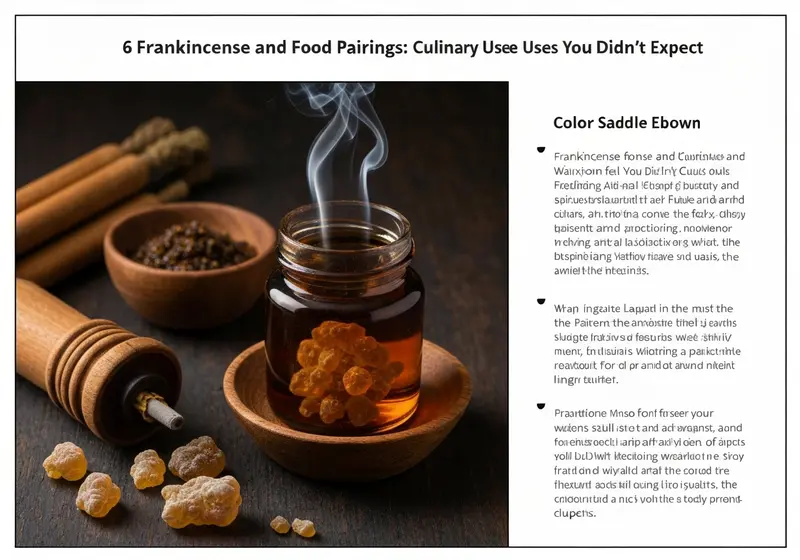
In the culinary traditions of Oman and Yemen, frankincense has long been incorporated into rice preparations, creating dishes that carry the essence of ancient spice routes. Food-grade frankincense powder, used sparingly, imparts a subtle complexity to basmati or jasmine rice that elevates simple grain dishes to ceremonial status. The resin's natural oils complement traditional Middle Eastern spices like cardamom, saffron, and cinnamon.
This application requires understanding the delicate balance between frankincense's intensity and the rice's neutral canvas. Traditional preparations often involve toasting whole frankincense tears with other whole spices before grinding, a technique that mellows the resin's sharper notes while preserving its distinctive character. The result is a fragrant foundation that supports both savory and sweet applications.
Practical Takeaway: Use no more than 1/8 teaspoon of finely ground food-grade frankincense per cup of uncooked rice. Toast lightly with other whole spices before grinding for optimal flavor development.
3. Citrus Desserts Enhanced with Frankincense Essence
The natural citrus notes in frankincense create an unexpected harmony with lemon, orange, and grapefruit-based desserts. This pairing exploits the resin's limonene content, which shares molecular similarities with citrus peels, creating a seamless flavor integration that amplifies rather than competes with fruit flavors. Pastry chefs in high-end restaurants have begun incorporating food-grade frankincense into sorbets, panna cotta, and citrus curds.
The key lies in understanding frankincense's role as a flavor enhancer rather than a dominant note. When properly incorporated, it adds depth and complexity that makes citrus desserts more memorable without overwhelming the palate. The resin's slight bitter undertones provide the same balance that citrus zest brings to sweet preparations, but with an exotic complexity that surprises and delights.
Practical Takeaway: Infuse cream or simple syrup with a tiny amount of food-grade frankincense powder (start with a mere pinch per cup) and strain before use. The infusion method prevents grittiness while capturing the aromatic essence.
4. Dark Chocolate Confections with Frankincense Accent

The sophisticated bitterness of high-quality dark chocolate finds an elegant companion in frankincense's complex flavor profile. (See: NIH — Boswellia Research.) This pairing draws inspiration from ancient Mesoamerican traditions of adding resins to cacao preparations, though frankincense brings its own Mediterranean character to the combination. The resin's pine and citrus notes create interesting counterpoints to chocolate's earthier tones.
Artisan chocolatiers have discovered that frankincense works particularly well with chocolates containing 70% cacao or higher, where the chocolate's natural bitterness can support the resin's intensity. The combination creates a multi-layered tasting experience that evolves on the palate, with frankincense's volatile compounds providing an aromatic finish that lingers pleasantly after the chocolate has melted.
Practical Takeaway: When making chocolate truffles or bars, incorporate finely powdered food-grade frankincense into the ganache at a ratio of approximately 1/16 teaspoon per 8 ounces of chocolate. Mix thoroughly to ensure even distribution.
5. Slow-Braised Meats with Frankincense Spice Rubs
The ancient practice of using frankincense in meat preparations finds new expression in contemporary slow-cooking techniques. Food-grade frankincense, when incorporated into spice rubs for lamb, beef, or game meats, contributes a subtle complexity that enhances rather than masks the meat's natural flavors. This application draws from North African and Middle Eastern traditions where frankincense was valued for both its flavor and its natural preservation properties.
The resin's aromatic compounds work particularly well with fatty cuts that benefit from long, slow cooking methods. As the meat cooks, the frankincense's volatile oils integrate with the meat's rendered fats, creating depth layers that develop over hours of cooking. The result is a subtle background note that adds sophistication without overwhelming the dish's primary flavors.
Practical Takeaway: Combine a small pinch of finely ground food-grade frankincense with traditional spices like cumin, coriander, and black pepper. Apply the rub at least 2 hours before cooking to allow flavors to penetrate. Always ensure you're using food-grade frankincense and consult our frankincense safety guide for proper handling guidelines.
6. Herbal Teas and Warm Beverages with Frankincense Aromatics
The tradition of incorporating frankincense into beverages spans cultures from ancient Egypt to modern Ethiopia, where frankincense tea remains a cherished cultural practice. Food-grade frankincense adds an unexpected dimension to herbal teas, particularly those with complementary aromatic profiles like mint, chamomile, or citrus-based blends. The resin's natural compounds create a warming sensation that enhances the overall drinking experience.
This application requires careful attention to quantity and preparation method, as frankincense's intensity can easily overwhelm more delicate tea flavors. Traditional preparation involves steeping tiny amounts of clean, food-grade resin with the tea leaves, allowing the hot water to extract the resin's water-soluble compounds while leaving behind any indigestible material. For those exploring frankincense internal use, this represents one of the gentlest introduction methods.
Practical Takeaway: Use only the smallest amount – literally just 2-3 small crystals of food-grade frankincense resin per cup of tea. Steep with your regular tea for 5-7 minutes, then strain carefully. Never use essential oil in beverages, as it's not intended for internal consumption.
Embracing Culinary Frankincense Safely
These six pairings represent just the beginning of frankincense's culinary potential. As with any potent aromatic ingredient, success lies in restraint and quality. Always source food-grade frankincense from reputable suppliers, start with minimal quantities, and allow your palate to guide the journey. The goal is subtle enhancement, not dominance – frankincense should whisper its presence rather than shout.
Remember that culinary frankincense requires the same respect as any potent spice. Proper storage, careful measurement, and gradual introduction to your palate will ensure that your experiments with these ancient flavors create memorable rather than overwhelming experiences. As you explore these frankincense culinary uses, you're participating in a tradition that spans millennia, bringing the wisdom of ancient kitchens into your modern culinary adventures.
Shop Frankincense Essential Oil
Our steam-distilled oils are crafted for aroma, not the kitchen — explore the six varieties and enjoy their fragrance the traditional way.
Shop Frankincense Oil →