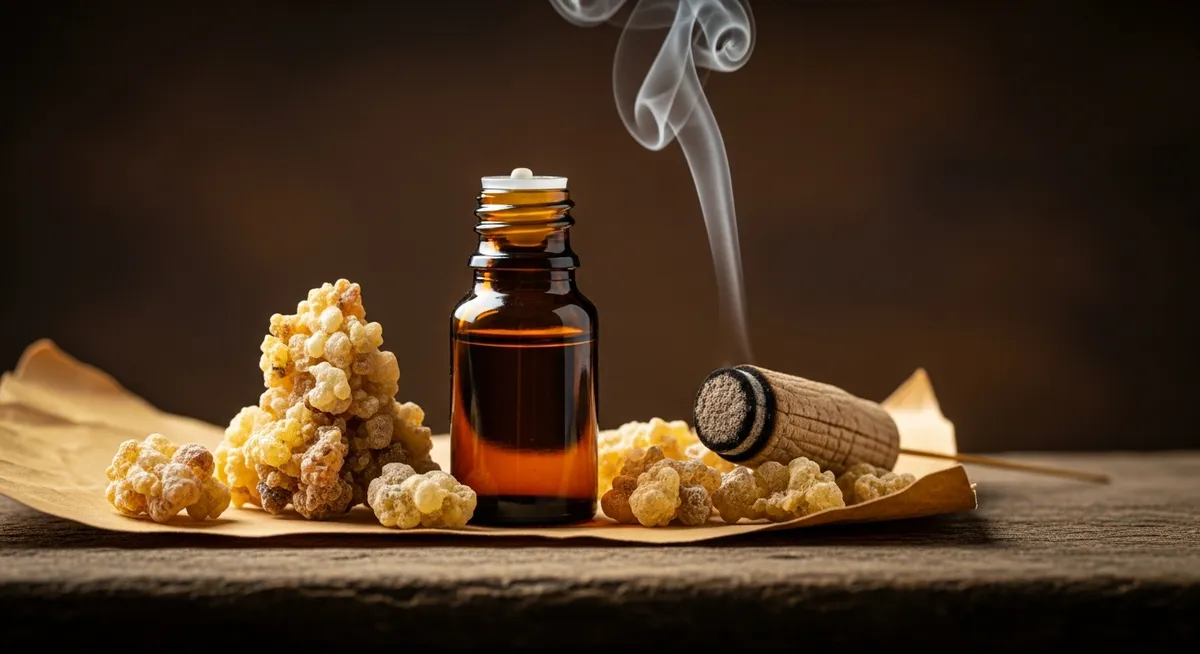
10 Signs Your Frankincense Essential Oil Is Fake or Adulterated
In the world of essential oils, few substances command as much reverence—and unfortunately, as much counterfeiting—as genuine frankincense. With prices ranging from modest to extraordinary depending on species and sourcing, the temptation for unscrupulous suppliers to cut corners through adulteration or outright fakery runs high. For the discerning aromatherapy enthusiast, learning to identify these fake frankincense signs becomes not just a matter of value, but of preserving the authentic experience this ancient resin has provided for millennia.
The complexity of frankincense oil composition, with its intricate bouquet of boswellic acids, monoterpenes, and sesquiterpenes, makes it particularly vulnerable to sophisticated adulteration techniques. From synthetic fragrances masquerading as sacred Boswellia serrata to genuine frankincense diluted beyond recognition, the modern market presents challenges that would have been unimaginable to ancient traders along the incense routes.
1. Suspiciously Low Pricing
Authentic frankincense essential oil represents one of nature's most precious aromatic investments. When you encounter bottles priced significantly below market standards—particularly for premium species like Boswellia sacra or Boswellia carterii—this serves as perhaps the most reliable indicator of potential adulteration. Genuine frankincense oil requires substantial quantities of resin for distillation, with yields often measuring in mere percentages of the original material.
Consider the economics: a single pound of high-quality Omani frankincense resin can cost upward of $200 wholesale, before factoring in the distillation process, testing, bottling, and distribution. When you see 10ml bottles of "pure frankincense oil" retailing for under $15, the mathematics simply don't support authenticity. Quality suppliers maintain transparent pricing structures that reflect these inherent costs.
Practical takeaway: Research current market prices from reputable suppliers before making any purchase. If a deal seems too good to be true, it likely signals adulterated frankincense or synthetic substitution.
2. Absence of Botanical Nomenclature
Professional-grade frankincense oils always specify their exact botanical source using proper Latin nomenclature. Labels should clearly indicate whether you're purchasing Boswellia carterii, Boswellia sacra, Boswellia serrata, or another specific species. Generic labels reading simply "frankincense oil" or "frankincense essential oil" without botanical identification represent a significant red flag in authenticity verification.
Each frankincense species possesses distinct chemical profiles, aromatic characteristics, and traditional applications. Omani Boswellia sacra differs markedly from Indian Boswellia serrata in both scent and composition. Legitimate suppliers understand these distinctions and ensure proper labeling to honor both regulatory requirements and consumer education. The absence of this specificity often indicates either ignorance of the product or intentional obfuscation of inferior contents.
Practical takeaway: Only purchase frankincense oils that clearly specify the exact Boswellia species and geographic origin. This information should appear prominently on both the label and product description.
3. Missing or Vague Country of Origin Information
Authentic frankincense carries the geographical signature of its homeland, and reputable suppliers proudly declare these origins. Oman, Somalia, Ethiopia, and specific regions of India each produce frankincense with characteristic profiles shaped by climate, soil composition, and harvesting traditions. When suppliers remain vague about geographic sourcing or omit this information entirely, it often signals adulterated frankincense or synthetic blending.
Traditional frankincense regions maintain centuries-old relationships with global suppliers, and these connections represent sources of pride within the industry. Suppliers working directly with farmers and cooperatives in places like Dhofar, Oman, or the Somali highlands understand the value of transparency in sourcing narratives. Conversely, suppliers dealing in synthetic blends or heavily adulterated products prefer to maintain anonymity around their supply chains.
Practical takeaway: Seek suppliers who provide detailed geographic information about their frankincense sources, ideally including specific regions or districts. This transparency typically correlates with product authenticity.
4. Inconsistent or Artificial Coloration
Genuine frankincense essential oil exhibits characteristic coloration that varies predictably based on species, age, and distillation methods. Fresh Boswellia sacra oil typically presents as nearly colorless to pale yellow, while aged specimens may develop deeper amber tones. Boswellia serrata often shows slight green tinges when freshly distilled. These color variations represent natural chemical processes and seasonal influences on the source material.
Synthetic frankincense oils frequently display unnaturally vibrant or consistent coloring that lacks the subtle variations found in authentic specimens. Additionally, some adulterated products show unusual color shifts when exposed to light or temperature changes, indicating the presence of synthetic colorants or carrier oils not found in pure frankincense. The color should appear natural and translucent, never cloudy or artificially enhanced.
Practical takeaway: Familiarize yourself with the natural color ranges of different frankincense species. Be suspicious of oils with overly vibrant, artificially uniform, or unnatural coloring that doesn't match established baselines for authentic frankincense.
5. Overpowering or Synthetic Fragrance Profile
The aromatic signature of authentic frankincense unfolds in layers, revealing complexity that synthetic reproductions struggle to replicate. Genuine frankincense oil presents an initial bright, citrusy top note, followed by resinous heart notes, and concluding with warm, woody base notes that can linger for hours. This sophisticated olfactory journey reflects the intricate chemical composition that makes frankincense so prized in both spiritual and aromatic applications.
Fake frankincense oils often overwhelm the senses with single-dimensional fragrances or display harsh, chemical-like undertones that authentic oils never possess. Some adulterated versions smell initially convincing but lack the staying power and complexity of genuine frankincense. Others combine synthetic fragrances with small amounts of real frankincense, creating confused aromatic profiles that experienced users can readily identify as inauthentic.
Practical takeaway: Develop your olfactory memory by sampling authentic frankincense from reputable sources. Trust your nose—if a fragrance seems too simple, too harsh, or lacks the characteristic complexity, it's likely not genuine frankincense.
6. Lack of Gas Chromatography-Mass Spectrometry (GC-MS) Testing
Professional essential oil suppliers routinely conduct GC-MS analysis to verify the chemical composition and purity of their frankincense oils. (See: NIH — Boswellia Research.) This sophisticated testing reveals the presence of key compounds like α-pinene, limonene, and various boswellic acid derivatives that characterize authentic frankincense. Suppliers who cannot or will not provide these analytical reports often have something to hide regarding their product's composition.
GC-MS reports serve as chemical fingerprints, allowing comparison against established profiles for different frankincense species. These documents reveal not only the presence of expected compounds but also identify adulterants, synthetic additives, or diluting agents. Reputable suppliers make these reports available to customers, either upon request or as standard documentation accompanying premium products.
Practical takeaway: Always request GC-MS analysis reports when purchasing high-grade frankincense oil. Suppliers who refuse or cannot provide this documentation should be approached with caution, as this transparency represents industry standard practice for authentic products.
7. Incorrect Extraction Method Claims
Authentic frankincense essential oil is primarily produced through steam distillation of the aromatic resin, a process that requires specific temperature and pressure parameters to preserve the delicate compounds that give frankincense its distinctive character. Some suppliers make misleading claims about extraction methods, sometimes suggesting cold-pressing (impossible with resin) or CO2 extraction (which produces a different product entirely) when selling what they claim is traditional frankincense essential oil.
Understanding the legitimate extraction methods helps identify potential fraud. Steam distillation remains the gold standard for frankincense essential oil production, while CO2 extraction creates frankincense extract—a related but distinct product with different properties and applications. Suppliers who demonstrate confusion about these fundamental processes often signal deeper issues with product authenticity and quality control.
Practical takeaway: Verify that suppliers clearly understand and accurately describe their extraction methods. Steam-distilled frankincense essential oil represents the traditional and most common form, while other extraction methods produce different products that should be clearly differentiated.
8. Absence of Proper Safety Information and Dilution Guidelines
Legitimate frankincense suppliers prioritize customer safety by providing comprehensive usage guidelines, proper dilution ratios, and contraindication warnings. Essential oils are highly concentrated substances that require respect and proper handling. Suppliers who omit this crucial information often indicate either lack of expertise or involvement with synthetic products that haven't undergone proper safety evaluation.
Professional suppliers include detailed information about skin sensitivity, pregnancy considerations, and appropriate dilution ratios for different applications. They understand that customer education builds long-term relationships and prevents misuse that could reflect poorly on the entire industry. This commitment to safety education typically correlates with overall product quality and authenticity.
Practical takeaway: Choose suppliers who provide comprehensive safety information and usage guidelines. This attention to customer welfare typically indicates serious commitment to product quality and authenticity. Always perform patch tests and consult qualified healthcare providers before use.
9. Inconsistent Viscosity and Texture
Authentic frankincense essential oil possesses characteristic flow properties that remain consistent within each species and distillation batch. The oil should flow freely at room temperature while maintaining slightly more viscosity than water. Variations in thickness often indicate adulteration with carrier oils, synthetic thickeners, or other adulterants designed to increase volume or alter perceived quality.
When testing viscosity, genuine frankincense oil should leave minimal residue when a drop is placed on clean paper, evaporating completely within several hours. Oils that leave oily stains, feel unusually thick or thin, or display inconsistent flow properties across bottles from the same supplier may contain adulterants or synthetic components not found in pure frankincense.
Practical takeaway: Familiarize yourself with the normal texture and flow characteristics of authentic frankincense oil. Significant variations in viscosity or unusual residue patterns can indicate adulteration or poor quality control in the production process.
10. Unrealistic Therapeutic Claims and Marketing Language
While authentic frankincense has been treasured for millennia for its aromatic and traditional applications, suppliers making extravagant or medical-sounding claims often signal product authenticity issues. Legitimate suppliers focus on quality, sourcing, and traditional uses rather than making bold statements about therapeutic effects. This restraint reflects both regulatory compliance and genuine respect for the product's traditional heritage.
Professional suppliers understand the importance of educational, rather than promotional, language when describing frankincense. They may reference historical uses, share information about traditional applications, or discuss aromatic properties, but they avoid language that sounds medical or makes specific health-related promises. This measured approach typically correlates with serious commitment to product authenticity and customer education.
Practical takeaway: Be wary of suppliers making dramatic claims about frankincense oil's effects. Focus on companies that emphasize quality, authenticity, and traditional uses rather than those promising specific therapeutic outcomes.
Protecting Your Investment in Authentic Frankincense
Identifying fake frankincense signs requires developing a sophisticated understanding of this complex aromatic material. The investment in authentic frankincense oil pays dividends in aromatic satisfaction, traditional authenticity, and the continuation of ancient trade relationships that have sustained frankincense-producing communities for generations. By applying these identification techniques, you join a lineage of discerning users who have treasured genuine frankincense across millennia.
For comprehensive guidance on evaluating frankincense quality, explore our detailed frankincense quality guide and frankincense buyer's guide. Understanding these quality markers empowers you to make informed decisions and support suppliers committed to authenticity and transparency. For additional authentication techniques, our guide on how to spot fake frankincense provides complementary strategies for ensuring product authenticity.
Remember that authentic frankincense oil represents far more than an aromatic purchase—it connects us to ancient traditions, supports traditional communities, and honors the sacred trees that have provided this precious gift for thousands of years. By choosing carefully and supporting reputable suppliers, we participate in preserving this remarkable tradition for future generations while ensuring our own aromatic experiences remain authentic and meaningful.
Shop Frankincense Essential Oil
Skip the guesswork entirely — every oil in our shop is single-species, single-origin, and GC/MS verified so you never wonder what's inside.
Shop Frankincense Oil →