How to Read a Frankincense GC/MS Report: Buyer's Purity Guide
A small brown bottle arrives at your door. The label says "100% Pure Frankincense Essential Oil" and the price felt reasonable. But how do you actually know what is inside? Marketing language is easy to print. Chemistry is harder to fake.
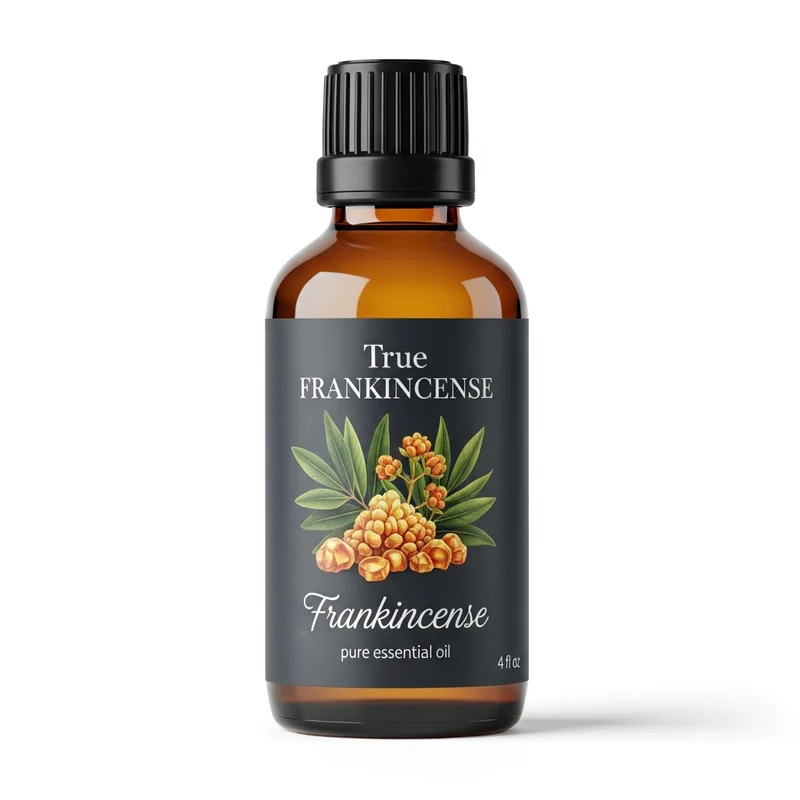
Frankincense Essential Oil
Six single-origin frankincense varieties, steam-distilled and GC/MS verified.
From $12.99
Shop Frankincense Oil →This is where frankincense quality testing through Gas Chromatography/Mass Spectrometry (GC/MS) becomes your most reliable ally as a consumer. A GC/MS report is a detailed chemical fingerprint of an essential oil, listing every detectable compound and its percentage by weight. Learning to read one takes roughly fifteen minutes. The knowledge lasts a lifetime of smarter purchasing.
This guide walks you through every column, every marker worth watching, and the red flags that signal adulteration or poor sourcing before you spend a cent.
What Is a GC/MS Report, and Why Does It Matter for Frankincense?
Gas Chromatography separates the individual chemical components of an oil by running a vaporized sample through a long capillary column. Mass Spectrometry then identifies each component by measuring its molecular mass. The result is a compound-by-compound breakdown expressed as a percentage of the total oil.
Frankincense is one of the most complex and most frequently adulterated essential oils on the market. Boswellia sacra, Boswellia carterii, Boswellia serrata, and Boswellia frereana all produce resins used to make frankincense oil, yet their chemical profiles differ meaningfully. A fraudulent supplier can blend in cheaper carrier oils, synthetic terpenes, or turpentine-derived compounds and still call the product "frankincense." A legitimate frankincense purity test exposes all of it.
Reputable suppliers publish GC/MS reports for every batch they sell, typically as a downloadable PDF tied to the lot number on your bottle. If a supplier cannot provide one on request, that absence alone is informative.
The Anatomy of a GC/MS Report: Column by Column
Reports vary slightly in layout depending on the laboratory, but most share the same core columns. Here is what each one tells you.
Retention Time (RT)
This is the time (in minutes) it took a compound to travel through the chromatography column and reach the detector. Lighter, more volatile molecules travel faster and show lower retention times. Heavier sesquiterpenes appear later. You do not need to memorize these numbers. They are primarily how the lab cross-references compounds internally.
Compound Name
This column lists the chemical identity of each constituent. For frankincense, you will encounter names like alpha-pinene, limonene, alpha-thujene, and incensole acetate. Some reports use IUPAC systematic names; others use common names. Both are acceptable. What matters is recognizing the key compounds for the species you are evaluating.
Percentage Composition (%)
This is the most important column for most buyers. It expresses each compound as a share of the total oil. The percentages should add up to approximately 100%. If the total falls significantly below 95% or exceeds 100%, ask the lab for clarification. Minor rounding is normal. A gap of 10% or more is not.
Match Quality or Library Score
Many reports include a confidence score (often expressed as a percentage or a value out of 100 or 999) indicating how closely the mass spectrum of a detected compound matches the laboratory's reference library. Scores above 90% or above 900 out of 999 are considered reliable identifications. Lower scores suggest the compound may be unusual, degraded, or unidentified, and that warrants a follow-up question.
Key Compounds to Look For by Species
Knowing what a clean profile looks like by species is the foundation of frankincense quality testing. Below is a practical reference table covering the four most commercially significant Boswellia species.
| Species | Key Marker Compounds | Typical Range | Notes |
|---|---|---|---|
| Boswellia sacra (Omani) | Alpha-pinene, alpha-thujene, sabinene | Alpha-pinene 40-70% | Monoterpene-dominant; very low sesquiterpene content |
| Boswellia carterii (East African) | Alpha-pinene, limonene, incensole acetate | Alpha-pinene 30-55% | Often confused with sacra; slightly more oxygenated compounds |
| Boswellia serrata (Indian) | Alpha-thujene, para-cymene, incensole | Alpha-thujene 40-60% | Richer incensole and acetate fraction than African species |
| Boswellia frereana (Kenyan) | Alpha-phellandrene, limonene, cembrene | Highly variable; cembrene A notable | Low in boswellic acid; distinct citrus-resinous character |
When a supplier labels a product "Boswellia sacra" but the GC/MS report shows alpha-thujene as the dominant compound rather than alpha-pinene, you are likely looking at Boswellia serrata mislabeled, or a blend. Neither is pure sacra. The frankincense GC/MS report makes this immediately visible.
Red Flags: What Should Not Be in Your Oil
Reading for purity is partly about confirming what belongs and partly about spotting what does not. Here are the most common adulterants and how they appear on a report.
Synthetic Alpha-Pinene or Turpentine Derivatives
Alpha-pinene is the dominant compound in several frankincense species, which also makes it the most common adulterant. Synthetic alpha-pinene derived from turpentine is inexpensive. On a chromatograph it may appear nearly identical to natural alpha-pinene, but the enantiomeric ratio (the balance between the left-handed and right-handed molecular forms) will differ. A premium lab report includes chiral analysis. If yours does not, ask whether one is available. A natural Boswellia sacra oil is overwhelmingly composed of the (+)-alpha-pinene enantiomer. A turpentine-derived addition skews this ratio noticeably.
Unexpected Fatty Acids or Triglycerides
The presence of compounds such as oleic acid, linoleic acid, or other fatty acids in notable percentages (above 1-2%) suggests the oil has been extended with a carrier oil. Genuine steam-distilled frankincense essential oil contains no significant fatty acid fraction because these heavy molecules do not distill over with steam.
Diethyl Phthalate (DEP) or Synthetic Fixatives
DEP is a common solvent and fixative used in fragrance. It should not appear in any pure essential oil. Its presence is an unambiguous sign of adulteration.
Camphor or Borneol at Elevated Levels
Small trace amounts of camphor or borneol can appear naturally in some frankincense varieties. Percentages above 2-3% warrant scrutiny, as these compounds are also found in cheaper botanical oils sometimes used to extend frankincense.
How to Cross-Reference a Report Against Published Research
You do not need to be a chemist to validate a frankincense purity test. Published peer-reviewed research on Boswellia species chemistry is publicly accessible through databases like PubMed and Google Scholar. Searching "Boswellia sacra essential oil chemical composition" returns multiple studies that publish reference profiles. Compare the compound list and dominant percentages from those studies to the report your supplier provides.
The ranges in scientific literature reflect natural variation due to harvest season, geographic origin, and distillation method. A difference of 5-10 percentage points in a dominant compound is generally within the range of natural variation. A difference of 20 points or more, or the presence of compounds not found in any reference study for that species, warrants a direct conversation with the supplier.
Questions to Ask Your Supplier Before You Buy
A GC/MS report is more useful when paired with context. These questions help you evaluate both the document and the company behind it.
- Is the report batch-specific? A report dated years ago and applied to current stock is not a current batch certification. Ask for the lot number match.
- Which accredited laboratory ran the analysis? Reputable third-party labs include Eurofins, Alpha Analytics, and several university-affiliated laboratories. In-house testing is not the same as independent third-party verification.
- Does the report include chiral analysis? This is the gold standard for detecting synthetic terpene adulteration.
- What was the distillation method and duration? Steam distillation time affects which compounds are captured. Shorter distillations tend to be monoterpene-rich; longer ones pull through more oxygenated sesquiterpene compounds.
- Can you provide the country and region of harvest? "Frankincense" without provenance is a starting point for doubt, not confidence.
A Practical Walkthrough: Reading a Report in Under Five Minutes
- Confirm the species matches the label. Check the dominant monoterpene. Alpha-pinene dominance points to sacra or carterii. Alpha-thujene dominance points to serrata. If the label says sacra but alpha-thujene leads the report, the species claim is incorrect.
- Verify the total adds up. Sum the percentage column. It should reach 95-100%. Significant gaps suggest unlisted components, which is a concern.
- Scan for red-flag compounds. Search the compound list for phthalates, fatty acids, and camphor above 3%. A single finding of any phthalate disqualifies the oil.
- Check the lab identity and date. The issuing laboratory name and the analysis date should both appear on the document. Undated reports are unreliable.
- Compare two or three key compounds to published reference ranges. Five minutes on PubMed gives you a working reference. If the numbers fall within natural variation ranges, the profile is plausible. If they are dramatically outside, ask why.
Why This Matters Beyond Price
Frankincense has been revered across cultures for millennia, from the ancient trade routes of southern Arabia to the sacred spaces of medieval Europe. The oils distilled from Boswellia resins carry that lineage. When adulteration dilutes or falsifies that chemistry, you lose the integrity of what you are actually diffusing, applying, or incorporating into your daily rituals.
Some research suggests that specific oxygenated compounds unique to genuine Boswellia species, particularly incensole acetate and certain diterpene fractions, are what give authentic frankincense its distinctive aromatic character. You cannot replicate that with a bottle of synthetic alpha-pinene and a clever label. A frankincense GC/MS report makes the distinction legible to anyone willing to look.
Suppliers who publish transparent, batch-specific, third-party verified reports are signaling something meaningful about how they source and what they value. That transparency is a reasonable baseline expectation for any premium essential oil. The frankincense purity test exists precisely so that standard can be verified, not just promised.
Keep a copy of the GC/MS report for each oil you purchase. Over time, you will build an intuitive sense of what authentic profiles look like across species, and you will spot anomalies faster than any marketing claim can mislead you.